World
Egyptian officials cancel plan to renovate ancient pyramid over concerns: 'The pyramids of Giza are safe'


Egyptian officials canceled their plans to renovate the pyramid of Menkaure last week, citing preservation-related concerns over the project.
Officials planned to install cladding made of ancient granite on the pyramid of Menkaure, which is smallest of the three main Giza pyramids. The site is one of the seven wonders of the world.
The Menkaure Pyramid Review Committee announced on Thursday that its plans had been scrapped.
“The Menkaure Pyramid Review Committee has unanimously objected to the reinstallation of the granite casing blocks, scattered around the base of the pyramid since thousands of years ago,” the committee’s statement read.
NETANYAHU DECLARES ‘VICTORY IS WITHIN REACH’ AS HAMAS REDUCED TO ‘LAST REMAINING BASTION’
This picture taken on July 1, 2020 shows a general view of (R to L) the Great Great Pyramid of Khufu (Cheops), the Pyramid of Khafre (Chephren), and the Pyramid of Menkaure (Menkheres) at the Giza Pyramids necropolis on the southwestern outskirts of the Egyptian capital Cairo. (KHALED DESOUKI/AFP via Getty Images)
The head of the Menkaure Pyramid Review Committee, Zahi Hawass, was concerned about cladding the blocks with cement, which could ruin the ancient structure. He also said it would be impossible to determine exactly where each block had been.
“What I want to say is don’t worry, the pyramids of Giza are safe, and nothing will happen to them,” Hawass said to Reuters. “People everywhere are calling me, writing letters, emails. They are worried.”
STRIKES BETWEEN ISRAEL AND HEZBOLLAH ARE ESCALATING
Tourists pose for a “selfie” photo on a cell phone at an overlook by the Pyramid of Menkaure (Menkheres) at the Giza pyramids necropolis on the southwestern outskirts of the Egyptian capital on March 13, 2020. (MOHAMED EL-SHAHED/AFP via Getty Images)
“Don’t be worried at all, the pyramids are safe, and no one can touch the pyramid of Menkaure.”
The secretary general of the Supreme Council of Antiquities, Mostafa Waziri, had called the proposal “the project of the century” when it was announced last month. Hawass emphasized the importance of adequate planning with such projects.
“In archaeology, don’t be in a hurry. If you are in a hurry, you will ruin the site,” he said. “It is important for any kind of work to be done at the site of the pyramids, is to make a study and to tell us what to do.”
CLICK TO GET THE FOX NEWS APP
Tourists visit the Great Pyramid of Khufu (Cheops) at the Giza Pyramids necropolis on the southwestern outskirts of Cairo, on March 2, 2023. (KHALED DESOUKI/AFP via Getty Images)
Reuters contributed to this report.


European Union monitors say the first half of 2026 was ‘marked by sustained and exceptional ocean warmth’ and forecast more to come.
Published On 1 Jul 2026
The world’s oceans experienced their “warmest June ever observed” and could see further record-breaking highs in the months ahead as El Niño and climate change push temperatures higher, according to a new report.
The European Union’s Copernicus Marine Service said on Wednesday that “record global sea surface temperatures” of 21.0 degrees Celsius (69.8 degrees Fahrenheit) in June beat the previous records in the same month in 2023 and 2024.
list of 4 itemsend of listRecommended Stories
“The first six months of 2026 were characterised by persistently elevated sea-surface temperatures and widespread marine heatwaves across much of the global ocean,” the EU’s marine environment monitor said in a statement.
“Marine heatwaves expanded steadily throughout the period, ultimately affecting around 82 percent of the global ocean,” said Simon van Gennip, lead oceanographer for the Copernicus Marine Service.
“The Mediterranean, the central North Atlantic and the equatorial Pacific all emerged as hotspots, and these regional signals paint a consistent picture of an ocean under sustained thermal stress,” Van Gennip said in a statement.
The onset of a potentially powerful El Nino weather pattern could boost global heat in the oceans and atmosphere even further in 2026, and into next year, according to scientists.
“Current conditions could indicate the beginning of a new phase, leading, once more, to uncharted territory,” said Carlo Buontempo, director of the Copernicus Climate Change Service, the EU’s climate monitor.
“With ocean temperatures at these levels and El Nino on the horizon, we are likely to see more temperature records fall in the coming months,” Buontempo said in a statement.
El Nino is marked by unusually warm waters in parts of the Pacific Ocean, releasing more heat into the atmosphere and influencing wind, cloud and weather patterns around the globe. This can raise the risk of weather extremes, ranging from floods in Peru to droughts in parts of Africa and wildfires in Australia.
Land and sea temperatures reached an all-time high in 2024 at the tail end of the last El Nino, and 2026 could be among the warmest years recorded with the onset of the next El Nino this year.
The Copernicus report follows a warning issued in a major UN scientific assessment last month, which declared that the world’s oceans were in a “deepening crisis” as seas were warming and rising faster.
Oceans are a key regulator of Earth’s climate because they absorb some 90 percent of the excess heat caused by humanity’s release of greenhouse gases, such as carbon dioxide.
Warmer oceans increase moisture in the atmosphere, providing fuel for tropical cyclones and destructive rainfall.
Hotter seas also directly contribute to sea-level rise – water expands when it warms up – and create unbearable conditions for tropical reefs, whose corals can bleach and die during prolonged marine heatwaves.
World
Neon Closing in on Luca Guadagnino’s Sam Altman Open AI Movie ‘Artificial’ After Amazon Drops Controversial Film

“Artificial,” Luca Guadagnino‘s movie about Sam Altman and OpenAI, is about to get a new home.
Neon is closing in on a deal to acquire the nearly-completed $40 million film — set during the tumultuous time when Altman (played by Andrew Garfield) was fired and then rehired by the AI giant — after Amazon MGM Studios announced that it believed it would “be better served if it were released by a different studio.”
Variety reported that, of those who had seen the movie in screenings put on by CAA Media Finance — which is handling sales — Netflix, A24 and Focus chose not to pursue it. Mubi was also in the mix for the distribution rights.
Amazon’s decision came just months after the company signed a major partnership with OpenAI, including a $50 billion investment, and less than a year Altman’s relationship with Jeff Bezos was underlined by his appearance at the Amazon boss’s wedding. Variety heard that test screenings had been positive, but the studio still chose to exit, raising eyebrows about its motivations.
According to various people who have seen the film and read the script, “Artificial” portrays Altman as deeply untrustworthy and Elon Musk (played by Ike Barinholtz) as highly dislikable.
Alongside Garfield and Barinholtz, “Artificial” has a starry cast including Monica Barbaro as former OpenAI CTO Mira Murati and Yura Borisov as former OpenAI chief scientist Ilya Sutskever. Cooper Hoffman, Jason Schwartzman, Cooper Koch, Billie Lourd, Zosia Mamet, Angus Imrie, Chris O’Dowd and Mark Rylance also feature. The film was written by “SNL” alum Simon Rich.
Currently in the final stages of post-production, “Artificial” had been eyeing a festival launch at SXSW before Amazon’s departure. Given the latest acquisition, the movie could now potentially be in play for a slot at the Venice Film Festival, where Guadagnino’s previous films debuted.
Spokespeople for Amazon and CAA declined to comment, and a spokesperson from Neon did not immediately respond to a request for comment. Puck first reported Neon’s pole position in the dealmaking.
Angelique Jackson contributed to this report.

NEWYou can now listen to Fox News articles!
The conservative, pro-U.S. government of President Rogrigo Paz is being challenged in the streets by radical elements led by a former socialist president recently forcing the new Bolivian government to introduce a state of emergency.
The landlocked mineral-rich nation is facing one of its deepest political crises in decades as economic turmoil, nationwide protests and a battle over the country’s future threaten to reshape the balance of power in South America.
The unrest comes after years of political divisions following the tenure of socialist President Evo Morales, whose Movement Toward Socialism (MAS) dominated Bolivian politics for nearly two decades. Internal fractures, economic decline and public frustration have weakened the movement and opened a new chapter of uncertainty.
US, SHIELD OF THE AMERICAS CONDEMN ‘ONGOING EFFORTS’ TO OVERTHROW BOLIVIA’S ELECTED PRESIDENT AMID UNREST
Bolivia’s President Rodrigo Paz delivers a speech in La Paz on June 3, 2026, after naming Ernesto Justiniano as defense minister following the resignation of Marcelo Salinas amid protests. (Claudia Morales/Reuters)
The Trump administration recently signaled strong backing for the Paz government while condemning efforts to destabilize the country.
Secretary of State Marco Rubio said the United States “Will not allow criminals and drug traffickers to overthrow democratically elected leaders in our hemisphere” and reaffirmed Washington’s commitment to Bolivia’s “stability, security, and a better future for all Bolivians.”
Speaking on background, a State Department spokesperson told Fox News Digital that, “The United States strongly supports President Rodrigo Paz’s decision on June 20 to declare a State of Exception to restore order and ensure the free flow of food, medicine, and essential supplies to the Bolivian people. We are glad that the blockades in Bolivia have ended and the government has restored order.”
Bolivia’s crisis has been driven by Morales and his supporters furious at the Paz reforms. Protests and road blockades have disrupted transportation, caused shortages and increased pressure on the Paz government.
José Luis Lupo, chief of staff and minister of the presidency of Bolivia told Fox News Digital: “After more than 50 days of blockades that severely disrupted the supply of food, fuel, and medicines, paralyzing much of the country’s economic activity and straining its democratic stability, I am convinced that Bolivia now faces a unique opportunity to transform a deep crisis into the starting point for a new phase of national reconstruction.”
26 June 2024, Bolivia, La Paz: Military police stand amid tear gas fired in front of the presidential palace on Plaza Murillo. (Photo by Radoslaw Czajkowski/picture alliance via Getty Images)
He noted that “for weeks, we sought agreements with various sectors because we believe that, in a democracy, every avenue for mutual understanding must be exhausted before resorting to extraordinary measures.”
He said the state of emergency [state of exception] “was the constitutional last resort to restore freedom of movement, protect critical infrastructure and ensure that Bolivians could once again access essential goods. It was not a measure intended to restrict rights, but rather to protect lives, preserve democracy and restore freedom of movement to millions of citizens.”
PETE HEGSETH WARNS NARCO-TERRORISTS AS US BACKS BOLIVIA’S GOVERNMENT AMID COUP WARNINGS
The turmoil has also had consequences beyond Bolivia’s borders. The country holds some of the world’s largest lithium resources, a key mineral for electric vehicles, batteries and advanced technology supply chains. Competition for influence in resource-rich Latin America has become increasingly important for Washington as China and other global powers expand their presence in the region.
Bolivia’s political crisis reflects a broader trend across Latin America, where voters in the last few election cycles have elected conservatives who challenged the left’s business-as-usual politics and in doing so have taken the continent in a rightward direction.
The socialist Morales remains an influential figure and continues to command support among rural and indigenous groups, keeping Bolivia’s political divisions alive even as the country searches for a path out of the crisis.
Mauricio Ríos García, manager of Crusoe Research and editor of FRACTAL Index in Bolivia, told Fox News Digital, “The 50-day blockades have caused estimated losses of $2.5 billion and the closure of around 13,000 companies. Once the blockades end, a rebound in demand combined with excess liquidity is expected to drive inflation higher.”
A police convoy clears one of the main highways after Bolivian President Rodrigo Paz declared a state of emergency following 50 days of blockades, in El Alto, Bolivia, on June 20, 2026. (Jorge Mateo Romay Salinas/Anadolu via Getty Images)
Ríos said, “The government is nearing an IMF agreement that would likely include a new devaluation (exchange rate unification) and other adjustments in exchange for financing of around $3.3–5 billion. This marks growing dependence on the IMF and the United States, while the gradualist approach has left the economy with very little room for maneuver and risks further instability.
“Expectations for Bolivia’s economy in the second half of the year have been revised downward. Blockades and deeper structural problems rooted in the government’s gradualist fiscal and monetary policies have worsened the difficult inheritance from the previous administration,” he concluded.
COLOMBIA’S ‘EL TIGRE’ SECURES PRESIDENCY AS LEFTIST RIVAL FINALLY CONCEDES DEFEAT
For Washington, Bolivia’s future represents more than a domestic political dispute. The outcome could influence America’s strategic position in the Western Hemisphere, the future of critical minerals, and whether Latin America’s recent political shift continues moving away from the left-wing movements that dominated parts of the region during the last two decades.
“I am convinced that stability will only endure if it is accompanied by inclusion. There can be no peace where neglect and inequality persist. That is why we are driving a development agenda for historically marginalized regions, particularly the provinces of La Paz, focused on infrastructure, basic services, productive development and the participation of the communities themselves,” Lupo said.
And as the barricades have lessened, Lupo, chief of staff and minister of the presidency of Bolivia, says, “A different phase is now beginning. I believe the country needs a broad political and social agreement involving the government, parliamentary forces, the regions, the productive sector, and civil society. Bolivia needs to pass reforms that provide legal certainty, promote investment, and modernize strategic sectors such as hydrocarbons, mining, lithium, renewable energy and the justice system. Such consensus is essential to restoring confidence, stabilizing the economy and generating sustainable growth.
“I hope to see Bolivia definitively replace confrontation with dialogue, strengthen its institutions, and build a more robust economy characterized by clear rules, democratic stability and greater opportunities for all,” Lupo concluded.
CLICK HERE TO DOWNLOAD THE FOX NEWS APP
The Trump administration had increased emergency humanitarian assistance to help address food and medical shortages caused by weeks of unrest, underscoring U.S. concerns that prolonged instability could have broader implications for regional security and democracy.
-
 Business2 minutes ago
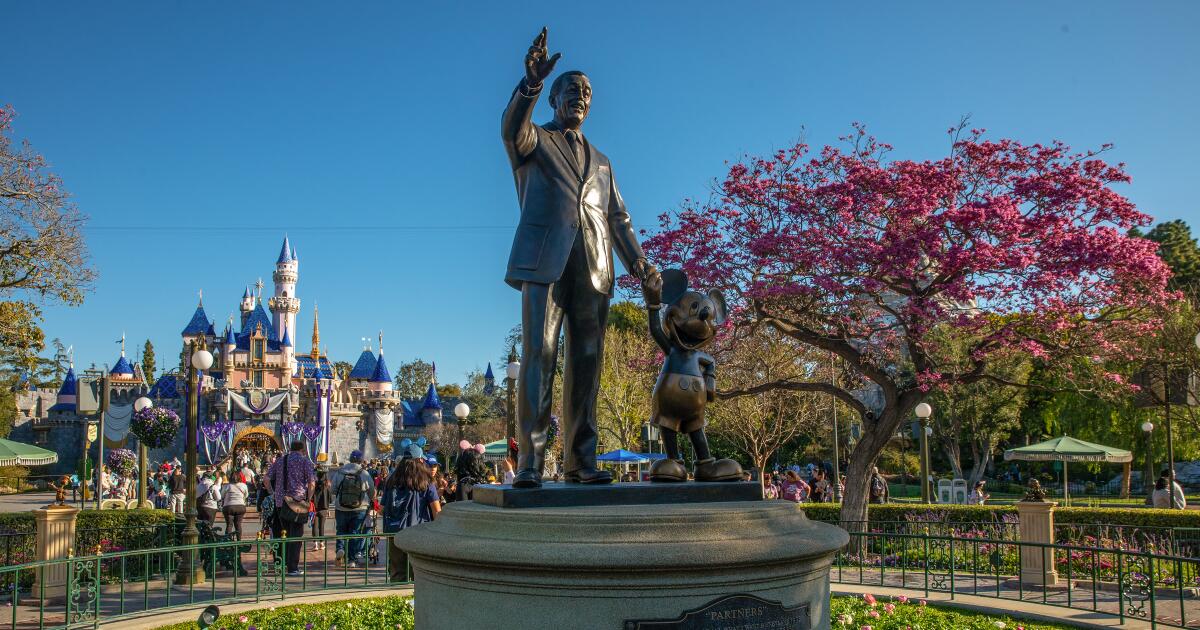
Disneyland to offer $59 evening tickets next month
-
 Entertainment4 minutes ago
After Amazon drops OpenAI movie ‘Artificial,’ film finds new home at Neon
-

 Lifestyle10 minutes ago
ICICLE: Capturing Interest in Chinese Brands
-
 Politics17 minutes ago
Newsom signs off on 100% California tax for money from Trump’s $1.8-billion ‘slush fund’
-
 Science19 minutes ago
After bold pledge, EPA shelves microplastics testing in U.S. drinking water
-
 Sports25 minutes ago
Walter Alston, Dave Roberts and everyone in between: The 10 managers in L.A. Dodgers history
-

 World34 minutes ago
World’s oceans experience hottest June ever, scientists say more heat ahead
-
 News1 hour ago
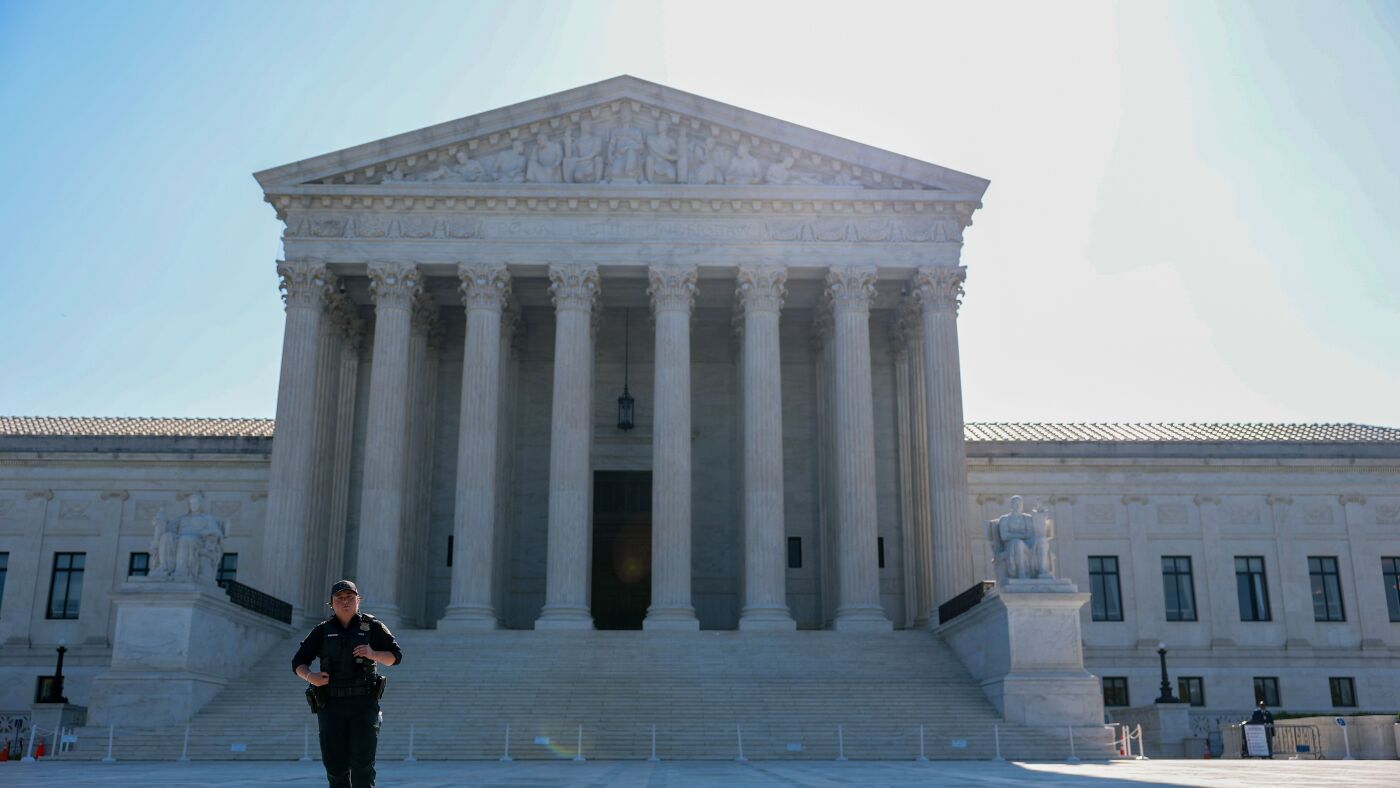
What the Supreme Court did on the final day of its term

