World
DMA should urgently apply to cloud and AI, lead lawmaker warns


According to German MEP Andreas Schwab, the digital EU regulation should apply to cloud and AI services to prevent their providers from dominating the market before it’s too late.
Big tech’s cloud and AI services urgently need to be regulated by the EU’s landmark platform regulation the Digital Markets Act, otherwise American and Chinese competitors will dominate the market, German European People’s Party MEP Andreas Schwab said at an event in Brussels on Wednesday.
“We need a common European strategy on how to face the digital strength” of China and the US, the lawmaker said, adding: “We want a strong European commitment of the European Commission to make sure that cloud and AI are considered core platform services under the Digital Market Act (DMA) because there is so much potential that if we act now the choice remains for the users and not in the hands of those that can attract investment and thereby can start controlling the market.”
There are currently 24 core platform services which fall under the DMA, the EU digital antitrust regulation which entered into force in 2022. They are provided by the so-called “Gatekeepers” – Alphabet, Amazon, Apple, ByteDance, Meta, Microsoft, Booking – designated by the European Commission as big enough to be regulated by the DMA. But cloud and AI services, despite their exponential growth worldwide remain untouched.
In the United Kingdom, the market dominance of Amazon and Microsoft in the cloud sector was flagged on Tuesday by the British Competition and Markets Authority (CMA) in the provisional findings of an investigation into the sector launched in October 2023. “We have provisionally found that Amazon Web Services and Microsoft have been generating sustained returns from their cloud services substantially above their cost of capital in cloud services for a number of years,” it said.
The CMA also found that large investments can foreclose competitors: “There are also economies of scale, whereby larger cloud providers have lower ongoing costs. The largest cloud providers are making very large investments to expand their services in coming years, and while this investment can have procompetitive effects and benefit cloud customers, it may also deter market entry or expansion by potential rivals.”
In the cloud sector, competition among the Tech giant is fierce. Google, which is the third player, after Amazon and Microsoft, filed a complaint last September to the European Commission against alleged anti-competitive practices by Microsoft designed to lock customers into its cloud platform Azure.
At another event on Tuesday, Schwab advocated applying the DMA to cloud platform services saying that changing cloud providers “is extremely complicated” because the companies “have invested your data and have accommodated your system.”
However while cloud computing services are included among the “core platform services” monitored under the DMA, none have reached the designation thresholds.
The artificial intelligence market, in which the Trump administration has announced recently massive investments, and which has seen Deepseek, a new Chinese player, emerge in the last few days, is even less easy for legislators to define for antitrust enforcement purposes. Is it a service or a technology ?
“AI is a technology that underpins a wide range of digital applications and services – including some core platform services, such as search engines and social networks,” head of the tech lobby CCIA Europe, Daniel Friedlaender, told Euronews adding: “However, the underlying technology as such cannot be considered a core platform service under the DMA. AI is simply one of many enabling technologies behind a multitude of different services.”
Schwab conceded: “Now cloud and AI are interdependent because all AI services are run by the cloud, but at the same time AI is not yet that much part of the gatekeeper services as cloud is already.” But he added that there’s an urgency to consider dealing with AI earlier in the same way as cloud services.
American Chatgpt, owned by Microsoft-backed Open AI, leads the market of artificial intelligence. Microsoft’s Copilot and Google’s Gemini are second and third.



World
Argentinian flight instructor jumps to death from plane, 22-year-old student forced to land alone

NEWYou can now listen to Fox News articles!
A flight instructor jumped to his death out of a small aircraft over Argentina, forcing the student pilot he was teaching to land the plane herself.
Leandro Andrés Bertazzo, 42, was on board a two-seat Cessna 150G on Saturday when he made the decision to jump out over the province of Córdoba, according to CNN, which cited its Argentinian affiliate TN.
“He made this tragic decision on board an aircraft with another person by his side,” Eduardo Álvarez, director of the Flying Parrot Córdoba flying school where Bertazzo worked, told TN. “It’s impossible to think about it or understand it, but the human mind is so complex.”
An undated photo of Leandro Andrés Bertazzo, a 42-year-old pilot who jumped to his death from a plane on Saturday, July 4 in Argentina. (Instagram/Leandro Bertazzo)
PILOT DECLARES MAYDAY BEFORE SEAPLANE COMES DOWN IN NEW YORK CITY’S EAST RIVER
Rosario, the 22-year-old student, later told authorities that Bertazzo told her, “You know what you have to do, carry on,” before taking off his gear, opening the door and leaping out, according to Álvarez.
Opening the door of a plane midair is incredibly difficult. Álvarez said it would be akin to trying to open the door of a car traveling 124 miles per hour.
Cessna 150m FRA150M climbing out after take-off with flaps deployed and hills behind. (aviation-images.com/Universal Images Group via Getty Images)
FRANTIC SEARCH UNDERWAY FOR CREW AFTER BOEING 737 WRECKAGE FOUND BY OFFICIALS
Álvarez said that Rosario managed to land the plane safely, despite being in “complete shock.” There was no damage to the plane, according to TN.
Álvarez noted that Bertazzo had gone on a flight with another student earlier in the day.
A view from the main road of the flight school Bertazzo worked at, Flying Parrot Córdoba. (Google Maps)
CLICK HERE TO DOWNLOAD THE FOX NEWS APP
Álvarez also told TN that Bertazzo had visited a psychiatric institute, something that was only known by his family prior to his death.
Prosecutors in Córdoba will lead the investigation into Bertazzo’s death. The plane he jumped from is now in police custody.

Former Olympic canoeist David Hearn denies damaging US President Donald Trump’s Washington, DC reflecting pool renovation.
Published On 9 Jul 2026
A former US Olympian has pleaded not guilty to vandalising the newly renovated Lincoln Memorial Reflecting Pool, in a case that has drawn national attention amid accusations that the administration of US President Donald Trump is trying to shift blame for a troubled renovation.
David “Davey” Hearn, a 67-year-old three-time Olympic canoe racer, entered his plea in federal court on Thursday after prosecutors accused him of “maliciously” damaging the “American flag blue” lining installed at the bottom of the reflecting pool at Trump’s request ahead of celebrations taking place at Washington’s National Mall for the 250th anniversary of the United States’ independence on July 4.
list of 4 itemsend of listRecommended Stories
Federal prosecutors allege Hearn pulled at the liner on June 19, causing more than $1,000 in damage. He has been charged with destruction of government property, an offence that carries a maximum prison sentence of 10 years.
Hearn denied the allegations. He admitted he stopped at the pool during a bike ride, reached inside and touched a section of lining that was already peeling away, but that he did not remove or damage it. He told The Associated Press he let go when a park employee told him to stop.
Hearn’s lawyers argue the prosecution is an attempt by the Trump administration to deflect attention from what they describe as a botched renovation project.
“This indictment reflects the administration’s effort to shift blame for their own failures,” they said in a statement. “The justice system exists to determine facts, not to provide political cover.”
The 620-metre (2,030-foot) reflecting pool reopened in June after Trump ordered the new liner to be installed across the bottom. He said he was compelled to go ahead with the $14.7m renovation after a friend visiting from Germany called the pool dark and disgusting.
But within days, algae began to spread across the surface, the water turned chartreuse green, and sections of the liner began peeling away.
Experts have explained that the dark new coat of paint at the bottom of the pool would elevate the temperature and allow algae to grow, and that algae blooms in water are common at this time of year, especially in shallow, stagnant water like that of the pool.
Trump blamed the issues on vandals, claiming without evidence that “corrosive and destructive chemicals” were poured into the pool and that vandals “took some form of knife or blade” and put a long “gash into the beautiful facade”, although no one has been charged over those alleged acts.
The US president warned that anyone who allegedly damaged the pool could face long prison terms. “Please remember that there is a 10 year prison sentence for the destruction, or even the attempted destruction, of such things — Which will be fully enforced!” he wrote on Truth Social.

Last week, US Attorney for the District of Columbia Jeanine Pirro announced the indictment against Hearn, accusing him of intentionally damaging the liner.
The US Department of the Interior has said that at least six people were arrested on suspicion of vandalising the pool in the weeks after it reopened. National Guard troops and US Park Police were deployed to protect the site, which was fenced off during July 4 celebrations.
Thursday’s hearing drew a packed courtroom, with dozens of supporters waiting outside after Hearn entered his plea.
The reflecting pool’s problems have continued, with Trump acknowledging it will need to be drained again so the damaged liner can be repaired.

-
Culture21 minutes ago
Which Version of the ‘Odyssey’ Should You Read?
-
 Lifestyle24 minutes ago
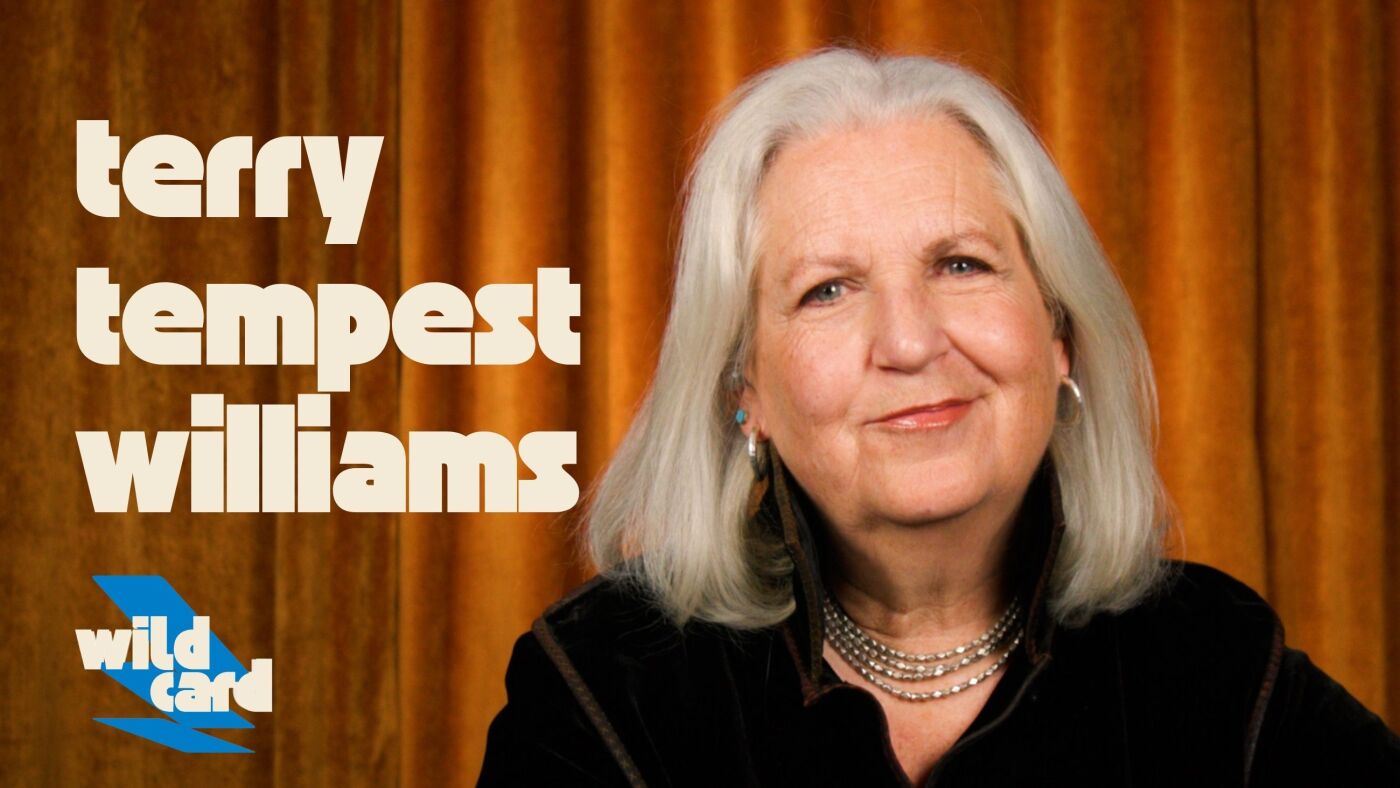
Terry Tempest Williams on why women with big ideas get labeled ‘crazy’ : Wild Card with Rachel Martin
-

 Technology36 minutes ago
Google’s Nest Thermostat has hit its best price of the year
-

 World39 minutes ago
Argentinian flight instructor jumps to death from plane, 22-year-old student forced to land alone
-

 Politics44 minutes ago
Omar’s disclosures erased millions, leaving her with potential negative net worth. She won’t explain why.
-

 Health51 minutes ago
Dr Oz links obesity to chronic disease surge, says GLP-1s can ‘jumpstart’ better health
-

 Sports54 minutes ago
Pirates star pitcher makes unfortunate history after being taken out in middle of perfect game bid
-

 Technology59 minutes ago
Medical identity theft follows you into the doctor’s office

