Wyoming
Wyoming’s Healthcare Problem: Doctors are Few & Far Between


A new national study is putting a spotlight on a growing healthcare crisis—and placing Wyoming at the center of it.
More than 80% of counties across the United States lack adequate access to healthcare, according to recent data, with so-called “healthcare deserts” continuing to expand since 2021. In fact, nearly 1 in 3 Americans may now be affected by limited access to hospitals, clinics, or providers.
To address the issue, the federal government launched the Rural Health Transformation Program—a $50 billion effort aimed at improving care in rural communities. But some analysts are saying the investment may not be enough to offset broader cuts and system challenges, meaning access gaps could continue to grow.
Now, a new study from healthcare staffing platform Nursa breaks down where those gaps are most severe—and Wyoming ranks at the top.
Wyoming leads the nation in healthcare deserts
According to the study, 31.76% of Wyoming residents—about 186,000 people—live in healthcare deserts, the highest percentage of any state in the country.
Distance plays a major role. On average, Wyoming residents must travel more than 26 miles to reach the nearest healthcare facility, the second-longest distance nationwide. For more than a third of residents, that trip stretches beyond 30 miles.
The state also faces a shortage of providers. Wyoming has just over 220 doctors per 100,000 residents—one of the lowest rates in the U.S.—and ranks near the bottom in several key specialties, including pediatricians and cardiologists.
There are some bright spots. Wyoming has the highest number of nurses per capita in the country and sits near the middle nationally for hospital beds. But experts say staffing alone doesn’t solve the broader access problem.
Rural states dominate the rankings
Wyoming is not alone. Rural states make up the bulk of the top 10:
North Dakota ranks second, with nearly 29% of residents in healthcare deserts
South Dakota follows at just over 20%
Alaska and Idaho round out the top five.
In Alaska, distance is an even bigger barrier, with residents traveling an average of nearly 34 miles to reach care—the longest in the nation.
A stark contrast nationwide
At the other end of the spectrum, eight states—including New Jersey, Massachusetts, and Maryland—report zero residents living in healthcare deserts.
In those states, access is dramatically different. Patients typically live just 2 to 5 miles from the nearest facility, and provider availability is significantly higher. Massachusetts, for example, has the highest number of doctors per capita in the country.
Strain on patients—and providers
Healthcare workers say the numbers reflect a deeper, on-the-ground reality.
Registered nurse Miranda Belcher described working in understaffed hospital units where just two nurses were responsible for entire floors, often caring for patients with needs beyond their training.
“It was hard to give patients the attention they needed or deserved,” she said, noting frequent staff shortages, limited supplies, and cases where critically ill patients were not transferred to larger facilities.
Belcher says additional staffing and expanded telehealth services could help ease the burden, particularly in rural areas where resources are stretched thin.
While federal funding is beginning to flow, the data suggests that for states like Wyoming, closing the gap may take far more time—and resources—than initially expected.
Wyoming’s Oldest Churches: From Prairie Tents to Steepled Landmarks
Gallery Credit: Wyoming State Archives, Historic Photograph Collection; Kolby Fedore
Casper Through the Years: A Walk Among the City’s First Landmarks
Casper, Wyoming, features a rich collection of buildings listed on the National Register of Historic Places, largely showcasing early 20th-century commercial, oil-boom, and residential architecture. Huge thanks to the Wyoming State Historic Preservation Office for keeping records and archived photographs to make this gallery possible.



CASPER, Wyo. — The Boys & Girls Clubs of Central Wyoming recently announced that Cathy Holman, founder of the Prairie Wife brand, has been selected as the 2026 Mick & Susie McMurry Cowboy Code Try Award recipient.
A release from the Boys and Girls Clubs says that Holman will be recognized during the 28th Annual Awards & Recognition Breakfast, happening on Wednesday, September 16 at the Ford Wyoming Center.
“The Mick & Susie McMurry Cowboy Code Try Award recognizes individuals who exemplify the values of the Cowboy Code through integrity, perseverance, service, and leadership,” the release states. “Holman embodies those qualities through her entrepreneurial spirit, commitment to strengthening Wyoming communities, and willingness to use her voice to help others.”
Known as the Prairie Wife, Holman launched PrairieWifeInHeels.com in 2013 to share stories about her life, her family, and the Wyoming way of living.
“What began as a personal blog has grown into one of Wyoming’s most recognizable digital brands, reaching more than 65,000 followers across social media,” the release states. “Through honest storytelling, humor, and authenticity, she has built a community centered on grit, grace, faith, and finding purpose through life’s challenges.”
Throughout the years, Holman has become a much sought-after speaker, emcee, auctioneer and media personality, and she uses her platform to encourage others while championing causes that strengthen families and communities, all across Wyoming.
Due to her own family’s experiences, Holman became a leading advocate for stronger protections for children.
“Working alongside fellow advocates, legislators, and law enforcement, she helped raise awareness that contributed to the passage of House Bill 8, strengthening Wyoming’s stalking laws to better protect minors,” the release continues. “She continues to educate parents, schools, and organizations about online safety, digital responsibility, and protecting children in today’s technology-driven world.”
Holman said that the Cowboy Try represents choosing courage when life is difficult and using adversity to help others.
“The Cowboy Try is what we admire in everybody,” Holman said. “You’re knocked down and you get up again. And if you’re willing to share about getting knocked down, you’re going to help a lot of other people get up again too.”
Holman said that the mission of Boys & Girls Clubs of Central Wyoming reflects her own belief that investing in young people strengthens the future of every community.
“Our children are our future. We are only as strong as they are,” she said. “The Boys & Girls Club is creating a strong future for our communities. From providing a safe place for kids to mentoring, career education, and giving parents peace of mind, the Club is a beacon of hope.”
Holman encouraged young people to move forward with courage.
“Don’t let fear decide your future,” she said. “If you feel there’s something you’re supposed to do, charge forward. Ask for help when you need it, learn from those who have gone before you, and don’t be afraid to try.”
In addition to Holman, the 28th Annual Awards & Recognition Breakfast will honor Bob and Celia Kirkwood for their generosity and lasting impact on the Boys & Girls Clubs of Central Wyoming, as well as the community itself. It will feature nationally recognized speaker, Coach Ken Carter.
The event is open to the public and there is no cost to attend. Guests will have the opportunity to support the Boys & Girls Clubs of Central Wyoming and its mission of inspiring and enabling all young people to reach their full potential.
For tickets or table sponsorships, contact the Boys & Girls Clubs of Central Wyoming at https://bgccw.org/our-events/, email Vanessa at vwarner@bgccw.org, or call (307)235-4079.
Related
Wyoming
Wyoming coal company wins federal money to extract critical minerals from Powder River Basin – WyoFile

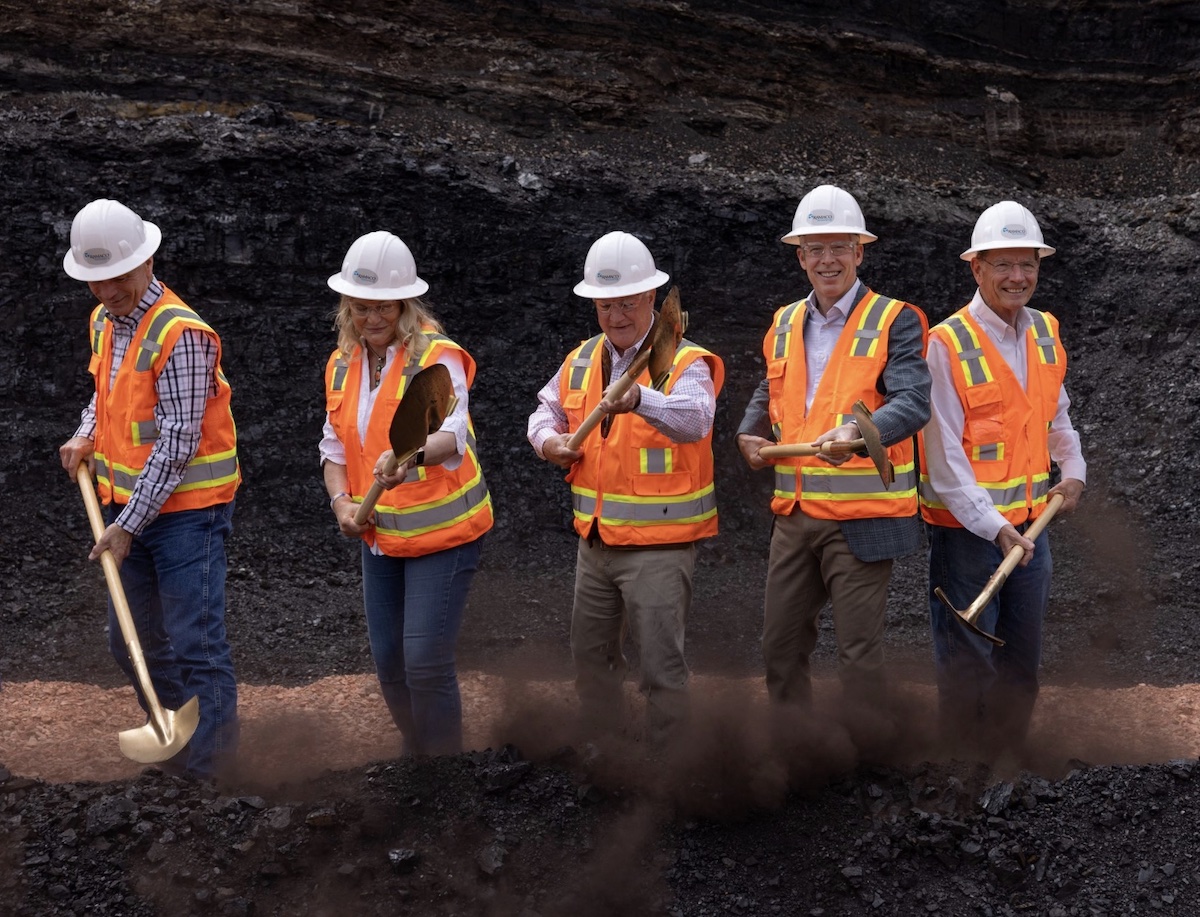
Coal mining giant Peabody Energy, with massive operations in Wyoming’s Powder River Basin, is among five entities that will share a total of $75 million from the U.S. Department of Energy to advance production of rare-earth elements and critical minerals.
As of press time, it wasn’t clear exactly how much Peabody might receive from the department’s Office of Critical Minerals and Energy Innovation, but it will be added to the $6.25 million in taxpayer money granted to the company earlier this year via Wyoming’s Energy Matching Funds program for the same project.
Peabody plans to build a pilot processing facility at its Rawhide mine just north of Gillette to extract rare earth and critical minerals from coal, according to a Peabody document submitted to the state. It would produce “market-ready mixed rare-earth concentrate,” which can be further refined to produce oxides and metals used in modern technology. Once complete, the facility would support 55 new jobs, Peabody says.
“Coupled with the Wyoming Energy Authority grant awarded earlier this year, this [DOE grant] selection reflects the meaningful progress Peabody has made in advancing promising unconventional rare earth and critical mineral opportunities,” Peabody President and Chief Executive Officer Jim Grech said in a prepared statement this week.
The DOE’s support of Peabody’s effort in Wyoming demonstrates the value of Wyoming coal beyond burning it to generate electricity, Wyoming Mining Association Executive Director Travis Deti said.
“Whether it be energy or the domestic supply chain for needed critical minerals and rare earths, Wyoming coal will be needed for the foreseeable future,” Deti told WyoFile. “Of course this all translates into jobs and revenue.”
St. Louis-based Peabody Energy, with a market value of $2.8 billion, is the largest coal producer in Wyoming and the nation. It owns and operates the Rawhide, North Antelope Rochelle and Caballo coal mines in northeastern Wyoming. Rawhide shipped 7.8 million tons of coal in 2025, according to federal data, while Caballo produced nearly 11.7 million tons and North Antelope scooped nearly 65 million tons.
Peabody reorganized after filing for bankruptcy and laying off 235 Wyoming miners in 2016. Today, the company employs about 1,480 coal miners in Wyoming.
Push for rare earth, critical minerals
Rare-earth elements and critical minerals occur all over the world, typically in minute quantities. The metals are increasingly in demand as building blocks for everything from magnets to batteries in devices like cell phones and MRI machines. They’re also frequently used in military equipment.
The U.S. has lagged behind China in producing and refining the metals, giving China an economic advantage in the rocky relationship between the two nations. The U.S., and the Trump administration in particular, has pushed a rare-earth and critical minerals supply chain buildout toward the top of its mining and manufacturing priorities.
Last year, President Donald Trump issued the Immediate Measures to Increase American Mineral Production executive order while invoking the Defense Production Act to fast-track permitting and help finance mining and processing efforts.
With increasing government and private-sector interest, Rare Element Resources recently built a rare-earth demonstration processing plant near Upton. Others are pursuing new mining operations in the Laramie Range and southern Bighorn Mountains. Those are all traditional, hardrock resources. As for Wyoming coal, researchers have known for years that it contains rare-earth and critical minerals, but it’s only a relatively new focus.
Although Ramaco Resources, for years, has said it is reactivating its Brook coal mine near Sheridan to extract critical minerals, Peabody Energy’s entrance into the market brings another level of corporate prowess to the prospect of putting Wyoming on the world map. And the Trump administration’s focus on coal for the metals dovetails with other priorities.
“Today’s announcement advances the Trump administration’s efforts to strengthen the U.S. coal sector,” the Department of Energy said. It “reflects a broader commitment to unlock the value of coal and coal-based feedstocks as domestic sources of critical minerals and materials.”
Gov. Mark Gordon agrees.

“I was happy to support a $6.25 million grant from the Wyoming Energy Authority’s Energy Matching Fund earlier this year to build a pilot processing facility at the Rawhide mine near Gillette,” he told WyoFile this week. “If we are going to get back in the game of supplying our nation’s need for rare-earth elements and critical minerals, we need to look at all sources, including those in and around coal seams. The federal contribution is a great addition to this effort.”
Meantime, Wyoming is investing significant taxpayer money beyond the $6.25 million already granted to Peabody.
Visionary Metals Corp recently received a $250,000 Energy Matching Funds grant for a nickel-and-copper project in the Granite Mountains. Also this year, the Legislature created the Wyoming Rare Earths Fund with $16 million “for commercial deployment projects focused on the processing and separation of rare-earth resources located in Wyoming.”

-
Business33 seconds ago
Commentary: Trump wants to let companies make fewer disclosures, thus keeping investors in the dark
-
 Entertainment8 minutes ago
Justin Baldoni and wife break silence after ‘It Ends With Us’ legal battle with Blake Lively
-
 Lifestyle10 minutes ago
A meal with an animated Mona Lisa? Immersive dining goes high tech — but will L.A. eat it up?
-
 Politics16 minutes ago
Nexstar launches its first digital subscription service with The Hill Insider, aimed at political junkies
-
 Science23 minutes ago
Not everyone is leaving California. A new commercial battery maker just landed in Sacramento
-
 Sports25 minutes ago
Mookie Betts’ eighth-inning single gives Dodgers the win over the Rockies
-
World38 minutes ago
From sewers to swimming sites: how Europe's cities reclaim their rivers
-

 News1 hour ago
Three more people charged with damaging Reflecting Pool after Trump’s multimillion-dollar restoration | CNN Politics


