Wyoming
Wyoming Man Says He Tried To Gun Down Relatives Because He Was ‘Pretty Mad’


RAWLINS — A 74-year-old Rawlins, Wyoming, man confessed Friday to shooting his nephew and his nephew’s wife in an attempt to kill them both last year because he was “pretty mad.”
Melvin Bagley sat hunched in a grey and white jail-issue jumpsuit, turned away from the third-floor windows of the Carbon County District Court room at his change of plea hearing.
Barely visible outside, the tops of the spruce trees leaned away from the wind.
Bagley’s nephew Marvin “JR” Bagley and Marvin’s wife Stephanie sat in the second bench on the prosecutor’s side of the courtroom. They’re generally healed up from the bullets that tore through Marvin’s face and hand, and through Stephanie’s shoulder, on Sept. 3, 2023, the couple said.
On that date, Melvin Bagley pulled his truck up next to theirs on the couple’s ranch near Bairoil and opened fire. Melvin Bagley had been struggling with dementia for a long while, and Marvin and Stephanie had struggled to rein in his paranoid outbursts, Stephanie told Cowboy State Daily earlier in this case.
During the melee, Marvin found a .22 revolver he keeps in his truck and fired back. Then he sped off in his own truck and made a snap decision to break through his gate to escape. Later, he flagged down a Wyoming Highway Patrol trooper by waving his bloody hand out the window.
What The Plea Agreement Says
“I’m here to plead,” said Melvin Bagley on Friday when Carbon County District Court Judge Dawnessa Snyder asked him if he understood why he was there.
He wore headphones so he could hear the judge. Squinting, he spoke softly with a Southern accent and answered most of the judge’s questions with a nod and a truncated “yeh.”
Melvin Bagley’s plea agreement says he will have his other charges — aggravated assault and reckless driving — dropped in exchange for pleading guilty to two counts of attempted second-degree murder. His defense attorney Sergio Lemus and prosecutor Carbon County Attorney Sarah Chavez Harkins have agreed upon a sentence of 20-40 years in prison, Snyder said.
The judge doesn’t have to accept the plea agreement, she warned, adding that judges nevertheless regard those recommendations with respect.
Melvin Bagley may also have to pay restitution.
The Confession
“Tell me what happened,” said Snyder.
“Well, I shot my nephew and his wife,” said Melvin Bagley, leaning forward toward the microphone on the defense table.
Snyder asked if he intended to kill them.
“At the time I was pretty mad,” Melvin Bagley said.
Harkins elaborated, saying Melvin Bagley suspected his family members of stealing money from him, a fact that was never proven, and he went to them and shot them both. Later, he told investigators he was trying to kill them, said the prosecutor.
Both Lemus and Snyder were satisfied that this evidence would support Bagley’s pleas, and Snyder accepted both guilty pleas and entered convictions against him.
Melvin Bagley will be sentenced in about 90 days, after a probation agent conducts a report on his history and character, and at that time Snyder will decide if she’s going to accept Bagley’s plea agreement, the judge said.
Clair McFarland can be reached at clair@cowboystatedaily.com.


Wyoming State Historic Sites Superintendent Sharie Mooney Shada made an appearance on Sheridan Media’s Public Pulse to speak on the upcoming Immersion in Crow Culture program at Fort Phil Kearny on July 16.
The event begins at 6 p.m. Thursday, July 16 at the Fort Phil Kearny Interpretive Center.
S. Mooney Shada
The rangers host free, family-friendly evening talks and presentations throughout the summer. Shada said the Native American Student Interpretive Ranger Program has enriched the visitor experience at Fort Phil Kearny. In its fourth year at the fort, the program allows a perspective from the indigenous side of history.
Keep up with events at Fort Phil Kearny by clicking here.
Wyoming
‘Not just coloring tipis,’ experts debate quality of Indian education in Wyoming schools – WyoFile

RIVERTON—Nine years after the Wyoming Legislature passed the Indian Education for All Act, education experts say there is still more work to be done.
“I think it is a key priority across the state. Having grown up in Wyoming as a Native student in an off-reservation school, there was never a priority about learning about either tribe; and I still see that today,” Fremont County School District 21 Superintendent Deb Smith told the Wyoming Legislature’s Select Committee on Tribal Relations. “And I’m well into my 50s. So I think we need to push more.”
When the Legislature passed the Indian Education for All Act in 2017, lawmakers did not create an office of Indian education similar to the ones already in place in states such as Montana. Now, some experts and tribal members say they hope Wyoming will move in that direction in the future. But regardless of the particulars of future steps, reservation school leaders told lawmakers that the Indian Education for All Act needs more support and better integration into Wyoming schools.
“As a Native person, we shouldn’t always have to be the one advocating on behalf of our tribes,” Smith said. “People that are Wyomingites should know. They should be sharing that great history.”
Fremont County School District 14 Superintendent Blakke Bertram agreed.
“When there are questions on our state assessment that are geared towards Indian Ed. for All, then I’ll know that we’ve taken it serious,” Bertram told the tribal relations committee during its June meeting in Riverton. “I feel like I have yet to see that.”
The Legislature, he pointed out, recently passed new requirements for literacy education — and backed it up with grant funds and rulemaking. “So when we say something’s important, when we put support and money behind it, we’re saying it’s important. Have we really done that for Indian Ed. for All?”
Revisions underway
When she takes Lander fourth graders on their annual tour of the Wind River Reservation, Fremont County School District Native American Liaison Lisa McCart said one of the highlights is often the visit to Sacajawea’s grave. Having read “Naya Nuki,” the kids usually know who Sacajawea is — but seeing her grave, and hearing Fort Washakie Schools Librarian Robin Levin explain the history of disputes over her burial place, is special.
Fremont County School District 1 is not among the schools regularly invited to testify at tribal relations meetings. However, district representatives sat down with the Lander Journal in the days following the meeting.
As the Lander schools’ Native American liaison, McCart explained, her job involves keeping track of all of the district’s Native students and working with the district’s curriculum coordinator to coordinate learning and cultural experiences. McCart invites in tribal experts, organizes field trips, and works with extracurricular clubs in addition to helping Native students get to, stay in and feel supported at school.
Not every Wyoming school district has a significant population of Native American students, or a Native American liaison. Schools like those in Lander, which are close to the Wind River Reservation, have a bit of an advantage when it comes to integrating Indian education into their classrooms, the Lander district’s Curriculum Coordinator Deidre Meyer explained.

Scotty Ratliff, a member of the Wyoming Department of Education’s relatively new Native American Education Cabinet and a former legislator, said the Wyoming Department of Education could do more to provide districts with resources, teaching materials and curriculum to support the implementation of Indian Education for All statewide. Not every school in Wyoming, he pointed out, is close enough to the Wind River Reservation to have easy access to tribal experts.
The Indian Education for All Act requires that the state take another look at its social studies standards related to the act every nine years. Last updated in 2018, the state is currently in the process of putting together those new standards, the department’s Native American Liaison Rob Black told legislators.
Meyer worked in the Montana Office of Indian Education for years before moving to Lander and was at one point the principal of Fort Washakie Elementary School. She is among several Fremont County educators represented on the committee revising those standards.
Beyond her role as her district’s Native American liaison, McCart is also a member of the Wyoming Department of Education’s Native American Cabinet. In particular, she’s involved in an Essential Understandings subgroup that will be reviewing the updates to social studies standards currently underway to ensure they adequately incorporate tribal perspectives and Native American culture and history.
Learning language
Accessing Shoshone and Arapaho language classes also can be difficult for students, especially for those seeking successive years of Shoshone or Arapaho to qualify for the highest tier of Wyoming’s Hathaway Scholarship, Native American Education Director Roy Brown said. Brown works for Fremont County School District 25, which oversees Riverton schools. Part of the problem is a lack of qualified teachers, Brown and Fremont County School District 38 Superintendent David Holbert noted. Riverton has only ever offered one year of Arapaho language, Brown explained, which means that the district’s students wanting to take Arapaho can’t meet the high-tier Hathaway requirement of two successive years of a foreign language unless they actually take three years of foreign languages.
There are very few available and certified teachers of the Arapaho language, the group of superintendents explained — and even fewer for Shoshone.

McCart recalled that several years ago, Lander pursued its own attempts to bring Northern Arapaho and Shoshone language classes into the district. But, she said, her district found that there are very few people with the appropriate certifications to teach either language as part of a public school class. One of the ideas that she and Meyer have discussed is bringing in tribal elders or others who are fluent in Arapaho and Shoshone outside of a formal class setting, where they might not need to meet the same certification requirements as a teacher but can still help interested students start to learn.
‘[Not just] coloring tipis’
Bertram also challenged the implementation of the current standards for Indian Education for All, even in schools close to the reservation.
“My kids, they go to a neighboring school district, an off-reservation school district. I’ve seen the work that’s going toward Indian Ed. for All in that school district,” Bertram said. “It is not teaching my daughter, my son, about what Indian Ed. for All stands for and what it means to be a Northern Arapaho or Eastern Shoshone tribal member on our reservation.”
He continued: “We’re talking coloring tipis. That’s the kind of stuff we’re seeing on our off-reservation schools when it comes to Indian Ed. for All. And that’s a border school.”
If the district in question had called, Bertram’s district would likely be willing to work with them to share resources, he said.
“I appreciate his passion,” Lisa McCart said of Bertram’s remarks. However, she added, the superintendents at Fremont County school districts meet monthly, and she isn’t aware of any concerns along those lines having been raised at any of those meetings.
McCart and Meyer explained some of the ways Lander schools work to incorporate Indian Education for All into Lander’s curriculum, including reservation tours, cultural events, and the incorporation of Native American literature, history, and legal texts into classes from kindergarten through 12th grade.
For example, a few years ago McCart worked to bring musician and artist Gabriel Ayala, a member of the Yaqui tribe of Arizona, to Lander schools. Ayala worked with a variety of grade levels, McCart said, including teaching kids at Gannett Peak Elementary about the meanings of different symbols in Yaqui culture through an activity that involved the elementary students selecting symbols that would be meaningful to their family and drawing them on a tipi.
“If we weren’t confident in what we’re doing and trying to do in this district, we wouldn’t be vocal at the state level,” Meyer pointed out. “It’s not just coloring tipis.”
To characterize the district’s approach as such, McCart added, “is disrespectful for the [Native] families that choose to be in this district.”
McCart and Meyer noted that communication is key, and they hope Fremont County and Wyoming school districts can work together to ensure all Wyoming students receive an adequate education concerning tribal peoples and issues. If someone has concerns, they said, they both hope they will bring them to them directly so Lander can work to address those concerns.
Wyoming
At 6,000-year-old crossing, Gov. Gordon OKs Wyoming’s first-ever designated pronghorn migration route

Some Green River Basin pronghorn migrate more than 200 miles. Now, Wyoming has designated the landscapes they move through in an effort to protect the route.
by Mike Koshmrl, WyoFile
SUBLETTE COUNTY — Gov. Mark Gordon heralded Wyoming’s first-ever designation to protect a pronghorn migration corridor — a more than 2 million-acre web of habitat — at Trapper’s Point, which he called a “wonderful passageway.”
“How incredibly valuable it is that you are standing here today,” Gordon told the crowd, “to witness this remarkable moment.”
Gordon commemorated the moment with his feet planted on the narrow bulge of high country that splits the Green and New Fork rivers. Thousands of years ago, the site was a well-used hunting ground for Native Americans — it’s the earliest known killing and processing site for pronghorn in North America. Now it boasts a wildlife overpass.
No pronghorn were to be seen during the especially windy Friday afternoon gathering, which attracted 75 attendees from nearby Pinedale and other western Wyoming communities.
Now Trapper’s Point is officially classified as a “bottleneck” for the Sublette Pronghorn Herd — one of 13 such bottlenecks. That classification is supposed to prevent any surface-disturbing activity, with the intent that pronghorn can keep passing through Trapper’s Point for generations to come.

Protecting the ability of the fleet-footed, tawny-and-white ungulates to migrate is a “key factor” in sustaining their population, Wyoming Game and Fish Director Angi Bruce said.
“This becomes even more important in severe winters or extreme droughts,” Bruce said. “Pronghorn are long overdue for recognition.”
Pronghorn in Sublette, Teton, Sweetwater and Lincoln counties travel a long road — some migrate more than 200 miles to escape harsh winters, trekking south into the lower Green River Basin, a semi-arid sweep of sagebrush steppe between Pinedale and Rock Springs. Then in the spring, they retrace those paths, returning to summer ranges, lush with verdant vegetation, even going as far as Grand Teton National Park.
There was also a long road of bureaucracy to get to this point.
Nearly three decades of effort preceded the formal designation of the migration routes used by the Sublette Pronghorn Herd, which is the farthest-traveling and among the largest pronghorn herds in the West.
Jackson Hole biologists long knew that the valley’s pronghorn left in the winter. But details were hazy on where they went and how they got there until around the turn of the century. Using data from tracking collars, biologists like Joel Berger, Steve Cain, Hall Sawyer and Doug Brimeyer helped delineate the route.
 Wyoming ecologist Hall Sawyer fits a tracking collar onto a migratory pronghorn near the Tetons in 1998. Twenty-seven years later, state wildlife managers are pressing to designate the pronghorn herd’s migration path. Photo: Mark Gocke // Wyoming Game and Fish Department
In 2008, a Bridger-Teton National Forest plan amendment established a portion of the path as the nation’s first designated wildlife migration corridor.
Popularized by its branding as the “Path of the Pronghorn,” the route has received press in national publications like High Country News and the New York Times.
But the southern reaches of the migration through the energy-rich Green River Basin have faced major political opposition since the early 2000s. Wyoming first attempted to protect those travel corridors in 2019, under a policy administered by the Wyoming Game and Fish Department. That effort was halted after a coalition of industry trade groups and counties protested.
Then, in early 2020, Gordon revamped the migration policy with an executive order. Still, the Sublette Pronghorn Herd proposal gathered dust, even as development threatened the route.

Game and Fish revived efforts to protect the migration in late 2023 and early 2024. Biologists pulled together one of North America’s most comprehensive migration datasets, benefiting from approximately two decades of GPS collar information collected from more than 400 pronghorn.
Some controversy followed the process until near the end. There was a debate about whether to designate the migration’s two easternmost segments, in the Red Desert and east of Farson. The Game and Fish Department proposed excluding the routes, but was overridden by its commission. Then Gordon upended that decision, excluding the two segments.
Vetting the migration corridor through a Gordon-appointed working group was the second-to-last step in the designation process.
“Today’s designation demonstrates that voluntary, locally driven conservation works,” said Robb Slaughter, who chaired the group, during the commemoration at Trapper’s Point.
Time will tell if that’s the case. Wyoming’s migration policy is, by design, permissive of development. Private land is exempt from protections, and designation is not an assurance that new stressors won’t be added to the landscape.

“Today is not the end of the process,” Slaughter said. “It’s the beginning of the next chapter. Continued monitoring, adaptive management, research, and cooperation will ensure these recommendations remain effective as conditions change.”
But Friday was the end of the migration designation process. The governor’s informal OK — no signature was needed — was the last step, said Sara DiRienzo, the governor’s deputy policy advisor.
Wildlife advocates celebrated the moment.
“This is historical,” Bruce said. It’s the first effort to protect the full length of a pronghorn migration corridor in the nation, she said.
WyoFile is an independent nonprofit news organization focused on Wyoming people, places and policy.
-

 Sports24 seconds ago
2026 World Cup Quarterfinal Odds: Which Squads Will Make Final 8?
-

 Technology6 minutes ago
Warehouse robots move packages without human handoff
-
 Business13 minutes ago
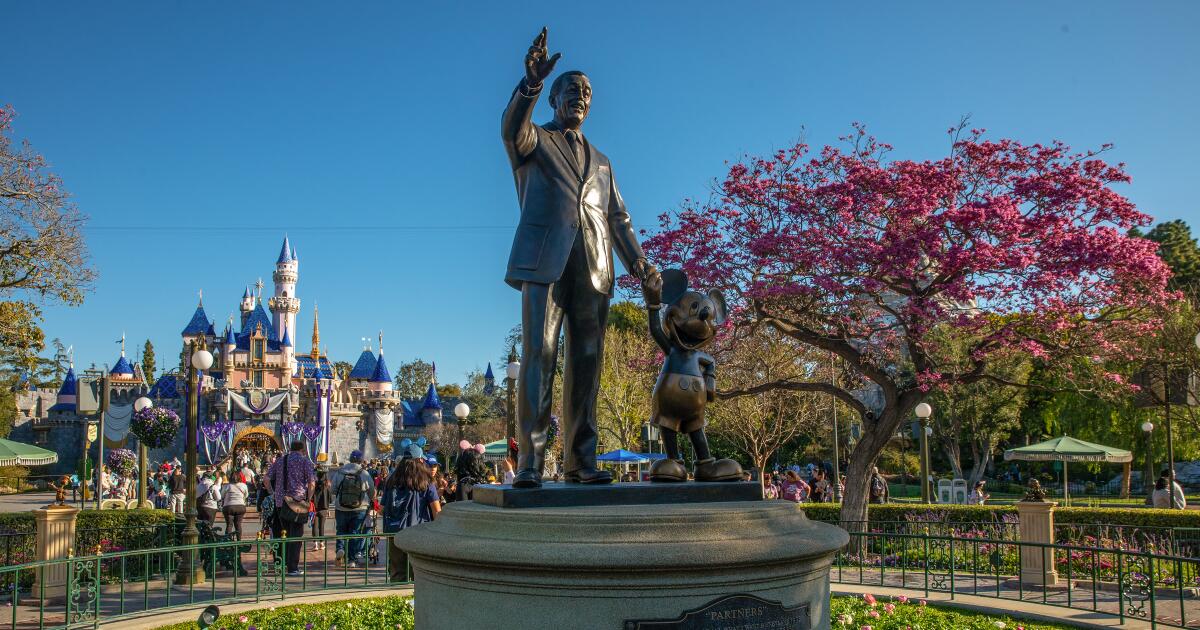
Disneyland to offer $59 evening tickets next month
-
 Entertainment15 minutes ago
After Amazon drops OpenAI movie ‘Artificial,’ film finds new home at Neon
-

 Lifestyle21 minutes ago
ICICLE: Capturing Interest in Chinese Brands
-
 Politics28 minutes ago
Newsom signs off on 100% California tax for money from Trump’s $1.8-billion ‘slush fund’
-
 Science30 minutes ago
After bold pledge, EPA shelves microplastics testing in U.S. drinking water
-
 Sports36 minutes ago
Walter Alston, Dave Roberts and everyone in between: The 10 managers in L.A. Dodgers history

