TAIPEI, Taiwan — Taiwanese voters have made it clear — for the third time in a row — that they don’t want a leader who will kowtow to China. The democratic island elected as president Saturday Lai Ching-te, the current vice president and former independence advocate whom Beijing views as a dangerous “separatist.”
Washington
After attempts to meddle in Taiwan’s elections fail, China takes stock


Now, Beijing must craft a response.
For Beijing, Lai’s victory is a loss that deepens anxiety about its ability to bring Taiwan under its control, a long-held goal of the ruling Communist Party and a key part of Chinese leader Xi Jinping’s legacy. The result gives Taiwan’s ruling Democratic Progressive Party (DPP), which Beijing refuses to engage with, an unprecedented third term.
“A Lai win will mean that Xi loses face,” said Chen Fang-Yu, assistant professor of political science at Soochow University in Taipei. “It means his Taiwan policy has failed. So now he must do something to show his muscle.”
In the months ahead, Beijing is expected to dial up its efforts to intimidate Taiwan using familiar coercive tactics including military harassment and economic pressure.
But actual conflict or invasion is unlikely — at least for now — officials and analysts in Taiwan and the United States say. China’s immediate actions will be tempered by a desire to maintain recently stabilized relations with Washington.
A U.S. delegation including former national security adviser Stephen Hadley and former deputy secretary of state James Steinberg was set to arrive in Taipei on Sunday, according to the American Institute of Taiwan, the de facto U.S. Embassy here.
China’s initial response to Lai’s victory was predictable: Officials used the usual strongly worded statements on Sunday, and Beijing’s embassies in countries that congratulated Lai condemned them for “interfering in China’s internal affairs.” The Chinese Embassy in London wrote: “No matter how the situation in Taiwan changes, the basic fact that Taiwan is part of China will not change.”
Four military vessels had been detected near Taiwan, the island’s Defense Ministry said Sunday morning, while a high-altitude Chinese balloon floated off the northwest coast near the capital.
For the past eight years, since the DPP took power, Beijing cut off all official ties with President Tsai Ing-wen, and it is even less likely to engage with Lai, who has previously pushed for outright independence.
Lai has moderated his position while serving as Tsai’s vice president and pledged to continue her policy of maintaining the fragile status quo and avoiding a war in the Taiwan Strait. He has said several times that he would engage with Beijing “as equals.”
But Beijing has already rejected the DPP position that Taiwan is a sovereign country under its official name, the Republic of China, and that there is no need to formalize independence and risk conflict.
Taiwanese voters, those who supported Lai and those who chose two opposition candidates, are girding themselves for a rocky four years.
“I expect the Chinese to intensify pressure on Taiwan, but I’m not afraid of them,” said Akira Chiu, 60, who works in tourism and voted for Lai. “We are ready to protect our country at any time.”
Hsieh Hsin Jung, a 26-year-old office worker in Taipei who voted for the main opposition party, the Kuomintang, which supports closer ties with China, said the DPP would bring Taiwan closer to war with China.
“I’m quite worried about Taiwan’s future because the DPP has a history of confronting China. What if China runs out of patience in the next four years and declares war? It’s not impossible,” she said.
Analysts say Beijing is not likely to take drastic action before Lai’s inauguration on May 20, the next key marker that will determine how his election will affect the uneasy relationship between Taiwan, China and the United States.
Before then, Beijing will attempt to strike a balance between intimidating Taipei and urging Washington to rein in Lai without provoking a backlash that pushes the Taiwanese public further away.
“China will keep its military pressure high to deter Lai from ‘crossing the red line’ during the inauguration speech,” said Yun Sun, director of the China program at the Stimson Center in Washington.
Few expect the level of force shown after then-U.S. House Speaker Nancy Pelosi’s visit to Taipei in 2022, when the Chinese military launched nearly a dozen missiles in four days of military exercises surrounding Taiwan. But Beijing can deploy other methods.
Since December, China sent more than 31 high-altitude balloons — similar to the one shot down over the United States last year — into Taiwan’s airspace, representing a new form of “gray zone” tactics meant to intimidate and use up Taiwan’s military resources.
Before the election, Beijing canceled preferential tariffs on 12 types of chemicals imported from Taiwan, part of a trade agreement in place for the past decade, and threatened to halt more.
“The cumulative impact of those steps is, Lai will become less, not more flexible on his cross-strait positions,” said Rick Waters, managing director of Eurasia Group’s China practice and formerly the State Department’s top China policy official.
Beijing will be able to use that pressure to exploit some of Lai’s weaknesses. On Sunday, Chinese state media emphasized how Lai won the presidency with only 40 percent of the vote and his party lost its majority in the legislature.
“The results of the two elections prove that the [DPP] does not represent the mainstream public opinion on the island,” China’s Taiwan Affairs Office said in a statement late Saturday.
Although Lai’s election was a setback for China, said Minxin Pei, a political scientist at Claremont McKenna College, Beijing can console itself with the knowledge that the new government is weaker than the departing one. The main opposition, the Kuomintang, now has a slight lead in the legislature.
“So except for losing face, China is substantively in a slightly better position than before,” Pei said.
Still, Beijing appears reluctant to erase the gains made when Xi and President Biden met in November, which helped reopen key channels of communication, including between the two militaries.
For that reason, China will probably hold its fire, said Bonnie Glaser, managing director of the Indo-Pacific program at the German Marshall Fund.
“I think the Chinese will hold back on some of the bigger things — maybe flying a fighter jet inside Taiwan’s territorial airspace — because they need to be able to have some things to roll out later on and because they don’t want to upset the fragile stability in U.S.-China relations,” she said.
The Biden administration reiterated in the lead-up to the election that it does not support Taiwanese independence and that it does not take a position on “the ultimate resolution of cross-Strait differences, provided they are resolved peacefully.”
That’s meant to reassure Beijing, said Amanda Hsiao, senior China analyst at the Crisis Group think tank. “It’s a clear attempt on the two sides to maintain the momentum generated out of the Xi-Biden meeting.”
Even if high-level political dialogue between Beijing and the incoming Lai administration is not possible, there is room for moderating tensions. Signaling through public statements or communicating through unofficial back channels would all help, according to Hsiao.
“This window of time we’re in is really important. It really depends on what’s communicated between the three parties. It’s an opportunity to set expectations,” she said, referring to Beijing, Taipei and Washington.
In Taipei, some residents see little point in trying to reason with Beijing. “If China wants to launch a war, no matter what Taiwan does or which party is in power, it wouldn’t be able to stop them,” said Dora Chang, a 27-year-old translator who has recently signed up for a civil-defense training course. “We all know the provocative side has always been China, not Taiwan.”
Ellen Nakashima in Washington and Lyric Li, Vic Chiang and Pei-Lin Wu in Taipei contributed to this report.

Washington
CDCR Seeking Incarcerated Person Who Walked Away from Washington Ridge Conservation Camp in Nevada County – News Releases

NEVADA COUNTY, Calif. – California Department of Corrections and Rehabilitation (CDCR) officials are searching for incarcerated person Miguel Banuelos, who walked away from Washington Ridge Conservation Camp in Nevada County on July 4, 2026.
Banuelos was last seen at approximately 12:35 p.m. During a 2 p.m. count, staff discovered he was missing and immediately began searching the camp grounds. After staff were unable to locate him, escape procedures were initiated and local law enforcement was notified.
Banuelos, 49, was received from San Diego County on July 23, 2025. He was sentenced to seven years for transportation or sale of a controlled substance and possession or purchase of heroin/cocaine exceeding four kilograms. He was scheduled to be released on April 20, 2028.
Banuelos is 49 years old, five feet, seven inches, weighs approximately 189 pounds, and has brown eyes and black hair.
Anyone who sees Banuelos or has information about his whereabouts should contact 911 or the Nevada County Sheriff’s Office. Anyone with information may also contact Lt. Wayland Hanks at (916) 200-6127 or OCS Special Agent Tim Keeney at (916) 210-9159.
Since 1977, 99 percent of the people who have escaped or walked away from an adult institution, camp, in-state contract bed, or community-based program placement have been apprehended.
FOR IMMEDIATE RELEASE
Contact: OPEC@cdcr.ca.gov
###

National stand guard near the Washington Monument at the national mall, during an Independence Day event honoring the nation’s 250th anniversary on Saturday.
Rahmat Gul/AP
hide caption
toggle caption
Rahmat Gul/AP
Washington’s National Independence Day Parade has been canceled, according to an announcement from organizers late Friday night.

The parade had been scheduled to mark the nation’s 250th birthday and begin at 10:30 a.m EST. Saturday.
Todd Marcocci, president of Under The Sun Productions, which was overseeing the parade, said the move followed consultation with the National Park Service, the D.C. city government and Freedom 250, the nonprofit overseeing the anniversary celebrations. “This decision was made after extensive and careful consideration of the safety of our participants, spectators, and staff as the top priority,” he said.
The National Weather Service (NWS) issued an extreme heat warning for the D.C. area, in effect from 10 a.m. to 9 p.m. ET Saturday. The agency said heat index values, which combine temperature and humidity, are expected to reach between 110°F and 115°F, and warned that “heat related illnesses increase significantly during extreme heat and high humidity events.”
The NWS said that alongside the high humidity, early morning low temperatures in the 70s and 80s would mean “little to no overnight relief.” The service also warned that “prolonged excessive heat may impact power, water, and transportation systems.” A separate Code Purple air quality alert — indicating “very unhealthy” — is also in effect for D.C. on Saturday.
The cancellation came hours after Washington recorded its hottest day in decades. Reagan National Airport hit 102°F on Friday afternoon, breaking a record of 101°F for that specific date, which had stood since 1966. Saturday’s temperatures are forecast to approach or match that figure, which would make it the hottest July Fourth on record for the city.
The parade cancellation affected participants who had traveled specifically for the event, including 80 students in the Grand Island Senior High marching band from Nebraska, who had been due to perform. Their school district confirmed to a local TV station Friday night the band would no longer participate.
The heat has already disrupted other celebratory events in the city. The Great American State Fair on the National Mall shut its doors for several hours Friday afternoon before reopening at 5 p.m. U.S. Capitol police also confirmed that entry to Friday night’s “A Capitol Fourth” concert was delayed.
Cancellations and disruptions extend nationwide
Multiple events in Philadelphia, where the Declaration of Independence was signed in 1776, were impacted by the extreme temperatures. A Friday Salute to Independence Semiquincentennial Parade was canceled, while a Saturday fireworks show was postponed until midnight.

People watch as the French Air Force acrobatic squad Patrouille de France perform a flyover during the International Aerial Review on Saturday in New York.
Sydney Schaefer/AP
hide caption
toggle caption
Sydney Schaefer/AP
Many communities in Colorado, including Durango and Vale, have canceled their fireworks displays due to the risk of wildfires.
In Haddon Township, New Jersey, authorities canceled the Independence Day parade due to “oppressive heat and humidity” that was predicted. Parades in Leesburg and Fairfax, Virginia, and in Takoma Park and Laurel, Maryland, were also canceled because of the heat.
The heat wave extends well beyond the capital region. Around 120 million Americans across a swathe of the eastern and southern U.S. are facing some form of major or extreme heat risk on Saturday, according to the NWS’ National Oceanic and Atmospheric Association.
The backdrop to all of this is an anniversary for which the Trump administration has spent months preparing. In a proclamation issued Friday from Mount Rushmore, President Trump marked the semiquincentennial by invoking the Founders, Washington’s crossing of the Delaware and Valley Forge.

Runners in patriotic-colored tutus participate in a run on Independence Day in Huntington Beach, Calif. on Saturday.
Jae C. Hong/AP
hide caption
toggle caption
Jae C. Hong/AP
He also outlined a series of future ambitions — returning Americans to the Moon, reaching Mars, and leading in artificial intelligence. The administration organized tonight’s National Mall celebrations under the Freedom 250 banner, drawing criticism from Democrats.
Saturday’s fireworks display, billed by the White House as the largest in the country’s history, remains scheduled and is set to begin at 10:30 p.m. from the Washington Monument grounds, after a presidential speech that Trump promised would be “really long.”

However the NWS also warned of the possibility of “severe thunderstorms” into the afternoon and evening, that could produce “destructive wind gusts up to 70 to 80 mph.”

There are some movies you admire. There are others that surprise you.
“Young Washington” grazes the first category while falling into the second.
I wasn’t expecting to be swept away by a relatively modest historical drama about George Washington before he became the father of a nation. And for a while, I wasn’t.
The film takes its time introducing the future president, and that deliberate pace occasionally borders on sluggish. The first half struggles to find its rhythm, and there are moments when the story feels more interested in checking historical boxes than pulling us into the drama.
But somewhere along the way, something changed.
I stopped watching a history lesson and started watching a young man trying to figure out who he wanted to become.
By the end, I found myself surprisingly invested. Not because “Young Washington” is a perfect movie. Because it reminded me why stories about imperfect people often make for the best history.
A surprisingly ambitious production
One of the first things that stood out was just how good this movie looks.
This isn’t a blockbuster with the budget of films like “The Patriot” or “The Last of the Mohicans.” In fact, when you consider what those productions cost – and adjust for inflation – the difference is enormous.
That’s what makes this film’s production value so impressive.
The costumes, locations, and battle sequences all feel authentic enough to transport you back to colonial America. There are moments where it’s clear the filmmakers had to be creative with their resources, but more often than not they make those limitations disappear.
It’s a reminder that good filmmaking isn’t always about having the biggest budget.
Sometimes it’s about knowing exactly where to spend the money you do have.
An uneven cast, but strong performances where it matters
The acting is a bit of a mixed bag.
There are performances that occasionally feel stiff and a few scenes where the dialogue doesn’t land with the emotional weight it’s reaching for.
Fortunately, those moments never completely pulled me out of the movie.
Ben Kingsley brings a welcome sense of gravitas whenever he appears, and Andy Serkis continues his remarkable ability to disappear into whatever role he’s given. Their performances help ground the film and elevate several key moments.
More importantly, the actor portraying the young Washington succeeds where it matters most.
He made me curious.
Rather than presenting Washington as the flawless hero we’ve seen in countless paintings and history books, the film allows him to be uncertain, ambitious and, at times, deeply conflicted.
That humanity gives the story life.
The best history asks bigger questions
What I appreciated most wasn’t simply learning facts about George Washington’s early life. It was watching the experiences that slowly shaped the leader he would become.
The movie explores questions that feel surprisingly relevant today.
Why do we chase success? Is ambition about building our own legacy? Seeking recognition? Or is it about leaving the world a little better than we found it?
Washington makes mistakes, he learns hard lessons and his failures become just as important as his victories.
Whether every conversation happened exactly as portrayed is almost beside the point. The film captures something emotionally true about leadership – wisdom is usually earned, not inherited.
That’s where “Young Washington” found its strongest footing.
A finale worth waiting for
For much of its runtime, I’d describe “Young Washington” as good. Not great.
The pacing continues to wobble, and I occasionally found myself wishing the story would move with a little more urgency.
Then came the final act.
Without spoiling anything, the emotional payoff finally arrives.
The themes the movie has been quietly building suddenly click into place, and what felt like a slow burn becomes something genuinely moving.
I left the theater feeling more invested than I expected, and that ending elevated the entire experience.
Sometimes a great conclusion doesn’t erase a movie’s flaws. It simply reminds you why the journey mattered.
What parents should know
“Young Washington” is PG-13, and that seems appropriate. There is no vulgar language, no sexual content, but it is a war movie, and it can get violent. It’s not gruesome or graphic, but there are battle scenes, deaths, and some blood. Young viewers may find it unsettling, and some older viewers may cover their eyes a time or two.
The violence is not romanticized but rather shown to depict the horrors of war.
Conclusion
“Young Washington” isn’t the definitive Revolutionary War epic.
It has pacing issues, some performances are uneven, and the script occasionally struggles to maintain momentum.
But I also found myself thinking about it long after the credits rolled.
In an era when so many historical films try to overwhelm audiences with spectacle, “Young Washington” focuses on something much simpler: the formation of character.
It asks how ordinary choices become extraordinary leadership. How failure shapes conviction. How service ultimately matters more than personal glory.
Watching it on the eve of the Fourth of July felt especially fitting.
As America celebrates 250 years, this movie serves as a reminder that the nation’s founding wasn’t accomplished by mythical figures who always knew the right answer. It was shaped by real people who stumbled, learned, and ultimately chose something bigger than themselves.
That’s a story worth telling.
And despite its imperfections, “Young Washington” tells it well enough that I walked away feeling just a little more grateful, and a little more excited, to celebrate this great country I have the opportunity to call home.
-
 Business7 minutes ago
China-backed AI tool behind fake Brad Pitt fight making Hollywood inroads
-
 Entertainment10 minutes ago
Don Was produced the Rolling Stones, Bob Dylan and Ozzy. At 73, he found his voice in Detroit — and the Dead
-
 Politics22 minutes ago
Commentary: Happy Birthday, America! You’ve weathered another rough year
-
 Sports30 minutes ago
Dodgers’ Eliezer Alfonzo praying his sister and stepmother will be found in Venezuela
-

 World40 minutes ago
Reform UK’s Farage failed to disclose funds from convicted criminal: Report
-
 News1 hour ago
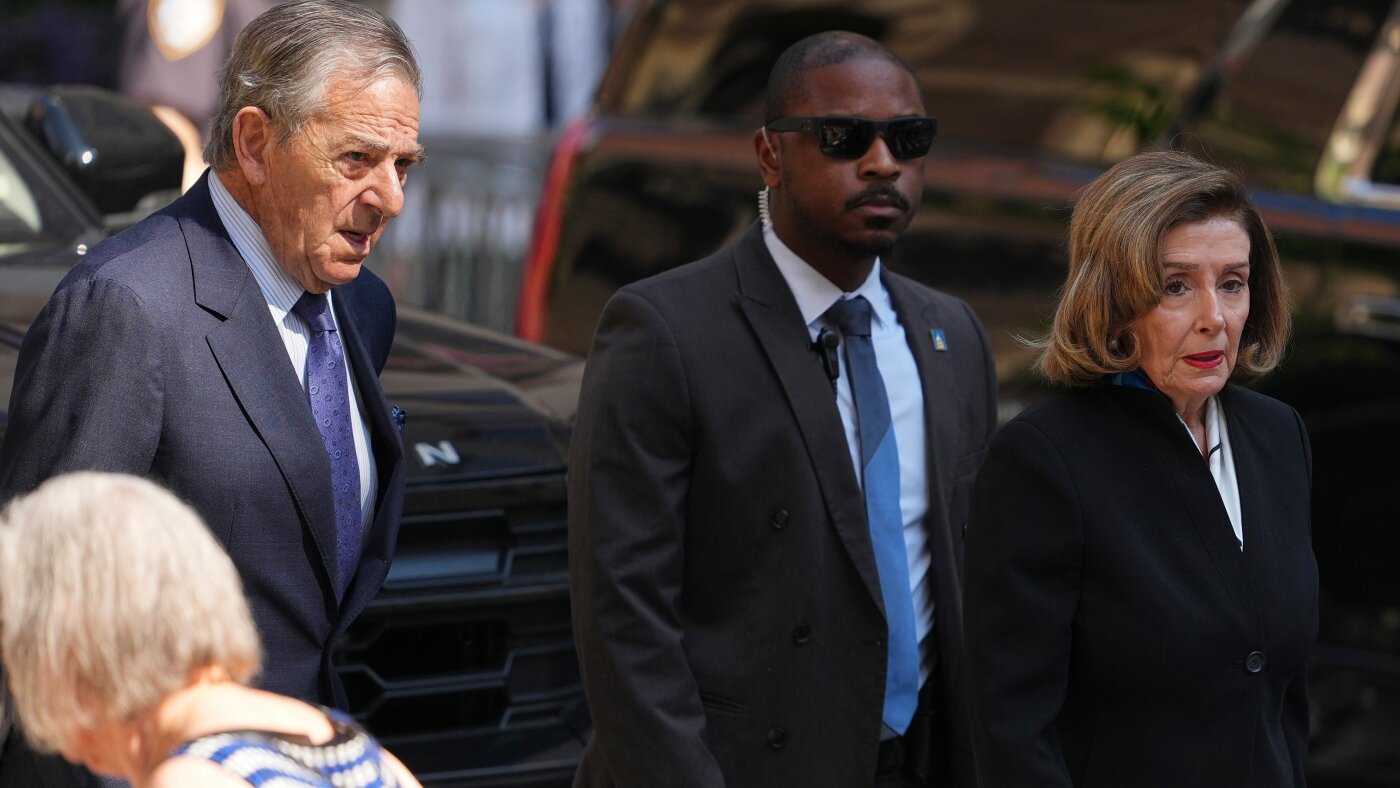
Paul Pelosi in hit-and-run in California, car left with major damage, authorities say
-

 Los Angeles, Ca2 hours ago
Firefighters battle Fourth of July blazes around Los Angeles
-

 Detroit, MI3 hours ago
Storm chances linger into the start of the week across Metro Detroit

