Connect with us

West

Washington legislators push bill making it a felony to threaten election workers

Published

on

Washington legislators push bill making it a felony to threaten election workers
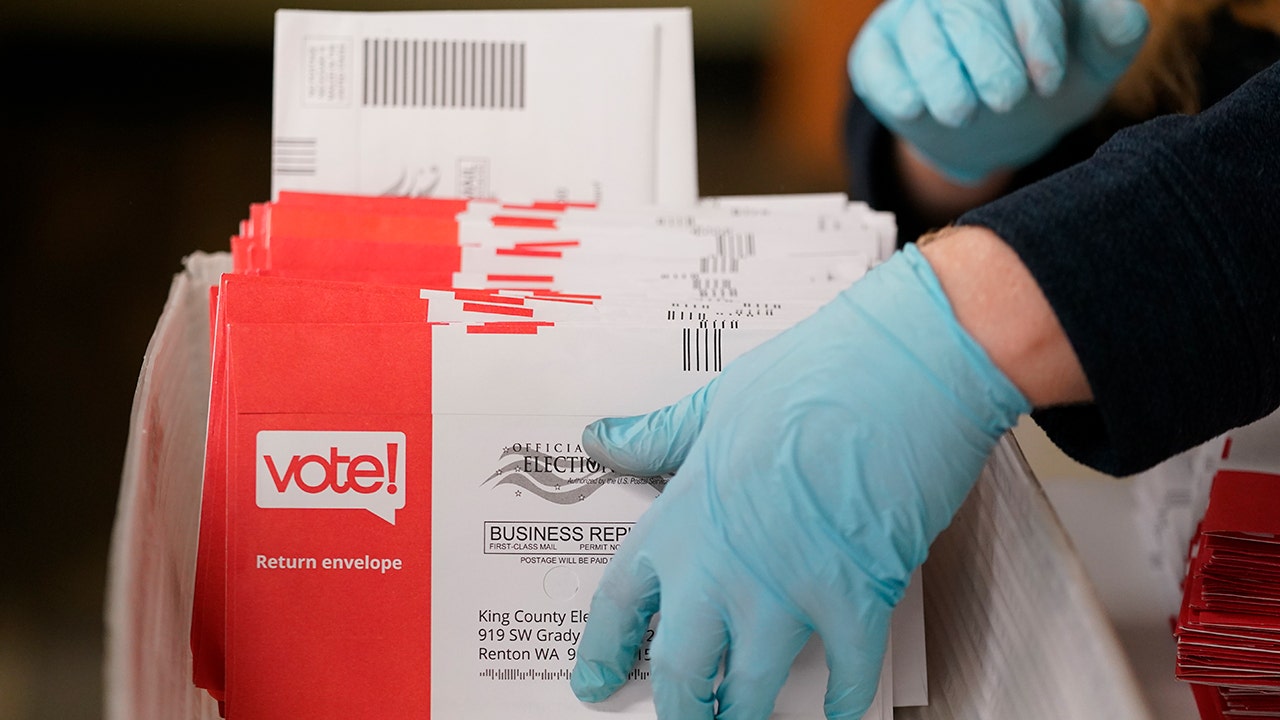
The Washington state Senate voted overwhelmingly Thursday to make harassing election workers a felony, three months after four county election offices received envelopes containing suspicious powder — including three testing positive for fentanyl — and had to be evacuated.

“This cannot be something we take as normal,” Democratic Sen. Manka Dhingra said during the vote. “We have to make sure that our election workers are protected, that people who participate and engage in our democracy have faith that the system works well and that we don’t have bad actors that can actually disrupt vote counts.”

COAST GUARD LAUNCHES WHALE SIGHTING ALERTS IN SEATTLE SO BOATS WILL STEER CLEAR

The bill is among a wave of legislation across the U.S. seeking to boost protections for these workers in the lead-up to the 2024 election amid an increasing number of threats some attribute to false claims by former President Donald Trump and his allies that the 2020 election was stolen.

Twenty-three states are considering bills addressing protections, according to the nonprofit advocacy group Public Citizen. In Maryland, for example, lawmakers are considering legislation to enable authorities to prosecute people who threaten to harm election officials or their immediate family members.

Advertisement

The bill in Washington would increase the possible penalty for harassing an election worker in person or by mail from up to one year in jail to up to five years in prison. It would also give targeted workers the opportunity to join a program run by the secretary of state’s office designed to keep their address confidential.

Erik Thurston prepares ballots from a drop box for the sorting machines on Election Day at the King County Elections headquarters, Nov. 7, 2023, in Renton, Wash. The Washington state Senate has voted Thursday, Feb. 22, 2024 to make harassing election workers a felony. The decision comes three months after several county election offices received envelopes containing suspicious powders and had to be evacuated. (AP Photo/Lindsey Wasson)

The measure has already been approved by the House but will need to go back to that body for verification before heading to Gov. Jay Inslee’s desk. Mike Faulk, spokesperson for the Democratic governor, said in an email that they haven’t reviewed the bill in detail but that Inslee is “generally supportive of efforts to protect our democratic process and the people who carry it out.”

Some Republican lawmakers pushed for the bill to include protections for election observers and people gathering initiative signatures.

“They are physically, I would say, unprotected,” Republican Sen. Keith Wagoner said during a vote on an amendment to protect people collecting signatures. “They’re not inside impressive looking buildings like some of our elected election folks are. They don’t have access to security, but they are vulnerable.”

Advertisement

The amendments were voted down, with Dhingra explaining that individuals collecting signatures are already protected under a harassment statute.

The legislation comes two years after the state made online harassment of an election worker a felony. Democratic Rep. Mari Leavitt, sponsor of the latest bill, said it will better align the punishment for in-person and virtual threats.

“Our election workers are unsung heroes,” she told The Associated Press. “They’re workers of democracy and we need to demonstrate to them that we value them and we want them to show up to work and feel safe, and this is one method to be able to do that.”

In November, four county elections offices in Washington were evacuated the day after election day after receiving envelopes with powder and a message that said, “End elections now.” Three tested positive for fentanyl, according to a spokesperson for the Washington secretary of state.

Linda Farmer, auditor for Pierce County, where one of the elections offices was evacuated, said she remembers over 100 workers being evacuated that morning and hazmat teams along with the FBI and fire department swarming the area, while paramedics made sure the staff member who opened the letter was safe.

Advertisement

“It was terrifying,” she said. “I was nauseous and really scared for the staffer who had opened the letter, but I put on a brave face for the staff.”

Read the full article from Here

Continue Reading
Click to comment

Leave a Reply

Your email address will not be published. Required fields are marked *

This site uses Akismet to reduce spam. Learn how your comment data is processed.

Alaska

‘The birds are a global citizen’: Indigenous groups in Australia and Alaska team up to track a feathered adventurer’s epic journey

Published

on

‘The birds are a global citizen’: Indigenous groups in Australia and Alaska team up to track a feathered adventurer’s epic journey


Short-tailed shearwaters used to blacken the skies on the south-west coast of Australia, so abundant were they in their coastal homes each Djilba season – the time in the calendar of the Noongar peoples between August and September, when days shift from blustery cold and wet winds to warmer weather.

A short-tailed shearwater in flight. Photograph: Wildscotphotos/Alamy

In Wudjari Noongar, the language of the traditional owners of this place they call Kepa Kurl, but which since colonisation has been called Esperance, the birds are called yowli. To other cultures they are muttonbirds.

At the other end of the year, on the other side of the globe, flocks of shearwaters would darken the skies in Alaska, ready to feast on the teeming fish and squid from melting ice and snow in the Arctic summer. Like the Wudjari, the Yup’ik would mark their arrival.

But First Nations peoples on both coasts have noticed that something is wrong. They began to see sick and dying shearwaters washing up on beaches: emaciated, their bellies filled with microplastics instead of food. Birds were turning up in places they hadn’t been seen before, veering far away from their fixed migration routes as they searched farther afield for food.

Advertisement

Jennell Reynolds, healthy country program coordinator and senior ranger with Esperance Tjaltjraak Native Title Aboriginal Corporation, grew up hearing stories of the yowli. More than 30 million return each year to breeding colonies off Australia’s southern coastline, mostly concentrating in the eastern states – but large numbers also return to burrows in the craggy archipelagos off Western Australia’s southern coast as well as the sand hills near Esperance, an area known for its pristine waters and white sandy beaches.

“It’s so graceful seeing them skip across the water when they’re feeding and diving,” Reynolds says. “They are such inquisitive birds when they come into the land.”

In April they return north to make the 15,000km journey back to Alaska, with newly fledged chicks in tow.

A net in place to safely catch the birds. Photograph: Andy McGregor

In an attempt to understand the birds’ perilous journey, Tjaltjraak rangers are working with Yup’ik and other Alaskan traditional owners. The global research project combinesecological, scientific and ancestral knowledge.

“It was one of those things where you know that you’ve got this connection through this one bird,” Reynolds tells Guardian Australia. “It’s a special moment because we are all on the same page in relation to taking care of country. We both have a kinship with the animals and wildlife and we’re making sure that we have that same responsibility for looking after them.”

Advertisement

The collaboration began by building on pre-existing relationships between the Tjaltjraak rangers and their Eyak, Iñupiaq, Yup’ik and Alutiiq community counterparts. Early conversations revealed shared concerns about declining numbers.

David Guilfoyle, a coordinator with the Tjaltjraak rangers, spent many years living and working in Alaska. He says those longstanding community ties helped fast‑track what is now a formal cross‑cultural partnership.

Tjaltjraak rangers say the birds are not only culturally significant but vital to the area’s ecosystem. Photograph: Andy McGregor

The project aims to form a clearer picture of how the birds live: their migration patterns; how deep they plunge the ocean in their quest for food; and ultimately the risks they are facing in a changing environment.

“It’s very holistic,” Guilfoyle says. “It’s not just looking at the species so much as looking at the whole ecosystem and what role these birds play, and what we can do to protect and manage them. But we can’t do that until we get a lot of data.”

The rangers knew the birds returned each year to colonies off Esperance; Alaskan communities knew when they arrived in their waters. But the exact route, the staging areas and what was happening in between remained largely invisible.

Advertisement
Safe in hand … a captured yowli. Photograph: Andy McGregor

To answer those questions, Tjaltjaak rangers had to catch and tag the yowli. That meant working quietly and quickly in cold, dark and potentially snake-infested sand dunes on an island in the middle of the Southern Ocean, with only red torchlight to see by, says one ranger, Hayleigh Graham.

The team placed tiny, almost weightless sensors and tags on them – which required a little finessing to ensure the technology would adhere to delicate legs and tails.

“We had to sort of sand it back, so we made a bit of glue but the glue didn’t really work as well, so then we tried double-sided tape but, nope, that wasn’t so good,” Graham says.

“We ended up having to get some smaller zip ties to try and trim it off and make sure the ethics of the way we put it on wasn’t hurting or damaging the birds, and then as the sun started to go down, within a few minutes, we got our first yowli.”

By the end of the night, they had tagged 21 birds.

Advertisement

“It’s still really early days,” Guilfoyle says. “We’re really nervous. I can’t sleep since we’ve tagged these birds – every hour I’m checking the map about where they’re going. It’s like being an expectant parent.

“We watch them every day, so now it seems like they’re starting to slowly track towards Tassie, and then eventually they’ll just start missioning north to Alaska.”

Tjaltjraak rangers say the birds are not only culturally significant but vital to the area’s delicate ecosystem. The shearwater’s fixed habits make it a warning sign for the health of their breeding and feeding grounds.

“It’s like an alarm bell,” Guilfoyle says. “If we don’t see them as much now, what have we lost? At the very basic level, that observational data is a call to action: we need to make sure that we’re not just falling for the trap of shifting baselines.”

Climate threats

Estelle Thomson is a Yup’ik leader and president of the Native Village of Paimiut Traditional Council. She lives in Anchorage and works closely with Indigenous rangers and wildlife ecologists as a bird migration advocate and vice-chair for the Yukon River Inter-Tribal Commission, which represents 43 tribes from the Bering Sea to territories bordering Canada.

Advertisement
The birds will have to be caught again in November to remove the tags. Photograph: Andy McGregor

She says the shearwater were not originally one of the hundreds of birds that flew to the vast Yup’ik lands but were usually found on a cluster of islands in the Bering Sea. But they have been recorded as far south-west as the Kuskokwim River, far from their traditional migration path.

“They typically go to the Aleutian Islands … but because of climate change and because of a whole bunch of extenuating circumstances, they’ve actually been starting to come into my region,” Thomson says.

“We can tell when things are starting to go a little bit awry with the birds. We can tell when they’re not getting enough food, if they’re not coming in at the times that they normally do. We can tell when they’re late. We can tell if their food sources are having difficulty.”

The permafrost tundra is melting, leaving the region vulnerable to typhoons and other extreme weather events. The climate emergency is displacing Indigenous peoples from their lands. Once-abundant traditional food sources are becoming scarcer.

Many of those food sources are migratory birds – some 220 species of which spent part of the year in Alaska. Thomson has partnered with Indigenous peoples around the globe through a collective calledChildren of the Sky, which brings First Nations people together to gain a deeper shared understanding of migratory birds and their place in our ecosystem.

Advertisement
Rangers hope the project will lead to other cross-cultural endeavours. Photograph: Andy McGregor

“Our peoples have specific, traditional ecological and Indigenous knowledge about our non-human relatives,” she says. “The people on the other side of flyway that we’re on also carry knowledge. So when we get together, we’re able to share what we know from each of our perspectives …

“The birds are a global citizen. This bird has no allegiance to any specific country. It doesn’t look at the boundaries of borders.”

Reynolds says she hopes the project will open the way to other cross-cultural endeavours.

First, though, rangers will have to catch the birds again next November to remove their tags.

“We’re all custodians now,” Reynolds says. “It’s not just us. It’s everyone’s responsibility to be able to care for country.”

Advertisement


Source link

Continue Reading

Arizona

Bears NFL Draft 2026: Chicago selects Keyshaun Elliott, Arizona State, LB

Published

on

Bears NFL Draft 2026: Chicago selects Keyshaun Elliott, Arizona State, LB


With the 166th pick in the fifth round of the 2026 NFL Draft, the Chicago Bears have selected Arizona State linebacker Kehshaun Elliott.

Elliot (6’1 3/4 ”, 231 pounds) started for the last three plus years, the last two at Arizona State, and while with the Sun Devils, he was the defensive play caller with the green dot at the Mike. He was Second Team All-Big 12 in 2025 with 98 tackles, a team-leading 14.5 tackles for loss, and a team-leading 7 sacks.

He’s a physical player within the box, but his pursuit speed and coverage skills aren’t the best. He didn’t run at the Combine, but he hit a 4.58 forty at his pro day.

“Elliott must prove his value on passing downs,” writes The Athletic’s Dane Brugler, “but his instincts and football character are attractive qualities for what NFL teams desire at middle linebacker.”

Advertisement

Brugler had a third-round grade on Elliot, and he was his eighth linebacker overall. If he maxes out his potential, he could eventually be the heir apparent to T.J. Edwards in the middle, and he should back up at the Mike and at the Sam as a rookie.

We’ll stream our breakdown/reaction video of the selection right after the draft, so check it out here as soon as it’s published on our 2nd City Gridiron channels.


Source link

Continue Reading

California

Budget Rent a Car heiress assaulted and strangled during a California home invasion

Published

on

Budget Rent a Car heiress assaulted and strangled during a California home invasion


Margaux Mirkin, the 70-year-old heiress whose father founded Budget Rent a Car, was the apparent victim of a home invasion on Thursday in which she was assaulted and strangled, according to police.

Officers arrived at her Hollywood Hills home in Los Angeles and learned that the attackers had left the woman inside the residence after allegedly smashing her jaw and choking her.

Property records obtained by NBC4 confirmed Mirkin owns the residence.

Although the full extent of the theft remains unclear, police said the suspects stole cash and jewelry from the home. Neighbors said some of the jewelry belonged to the woman’s late husband, who died in a house fire two years ago.

After the incident, Kristen Stavola, executive director of We Are Laurel Canyon, spoke to NBC4.

“She’s pretty shaken up, as anyone would be after being assaulted in your home and watching your valuables get stolen and driven away,” Stavola said.

Advertisement

An individual who did not want to be identified said the street is “dark” and a “dead-end street.”

“Not many people are on it, so of course it’s like the perfect street for a break-in,” the neighbor said.

NBC4 reported that the robbers dropped a bag containing a large amount of jewelry while leaving the home. When a neighbor saw them and shined a flashlight in their direction, they took off.

The police department’s robbery-homicide division is now managing the investigation.


Source link

Advertisement
Continue Reading
Advertisement

Trending