


In the beginning … there was a thud. It was an unwanted sound, and one that resonated around the world.
Think back over 20 years ago to Sept. 8, 2004. That’s when NASA’s Genesis sample return capsule slammed into an isolated part of the U.S. Army’s Dugway Proving Ground in Utah. It was an unintended, full-stop, smashing occasion. Held tight within that canister were delicate wafers that were prized samples of atoms and ions, gathered up from wisps of solar wind accumulated over hundreds of days by the Genesis spacecraft as it loitered at Lagrange Point 1, a select spot in space between Earth and the sun. The capsule met the Utah desert at an estimated speed of 193 miles per hour (311 kilometers per hour). On impact, those wafers were shattered to bits.
The Lockheed Martin-built Genesis spacecraft failed to deploy a set of parachutes that were designed to slow it down, a glitch later attributed to improper installation of gravity-switch sensor hardware. A planned and well-rehearsed mid-air retrieval via helicopter of the returning capsule was for not. But now, over two decades later, call it “late breaking” news as scientists studying Genesis samples recovered from the crash continue to make new discoveries.
Contingency plan
This March, a special Genesis sample return 20th anniversary event is being held at the Lunar and Planetary Science Conference in Texas, a look at what scientists have uncovered from the Genesis samples, while casting an eye toward the future.
As for the capsule crash, “as you might guess, everybody was shocked and alarmed,” recalled Caltech’s Don Burnett, the mission’s principal investigator and lead scientist. “When 2,700 feet was called out, and no parachute, I knew we were in trouble,” he told Space.com.
Burnett said that there was a contingency plan for a hard landing. It was activated in as-soon-as-possible fashion. That plan had all been previously reported to Jet Propulsion Laboratory (JPL) that managed the Genesis mission for NASA management, “but they didn’t remember,” he said.
On crash day, NASA management wanted to call an urgent meeting about what to do, with Burnett advising that upper management should be told “go to hell.”
“We needed to go out to pick up the pieces,” Burnett said. The Genesis science team at the crash site swung into action. “The important point was that the crash would not destroy solar wind atoms … all we had to do was find them,” he said.
Sample returns are forever
The banged up Genesis sample capsule was transported to NASA’s Johnson Space Center in Houston, Texas. Once in curatorial hands, the painstaking work to reclaim science from collector fragments earnestly began.
The solar wind atoms were there, Burnett said, “but all but one of our 200-plus beautiful 4-inch hexagons were broken into small pieces.”
As luck would have it, Burnett added, the one complete hexagon was the least important scientifically. The pieces, down to one-quarter inch, were picked from the mangled capsule one by one with tweezers. There were nine different materials in the hexagons, he said, and with the help of supervision team members the researchers learned to recognize the different types.

As clearly indicated by the Apollo lunar samples, pointed out Burnett, “sample returns are forever,” with science gained as new ideas and analytical techniques become available.
“With a bit of luck here and there, we were able to deliver our required science results for official mission success, but it took until 2010,” Burnett said.
“Genesis analyses were always going to be hard,” Burnett said, “but they were much harder because of the loss of material in the crash and contamination from sample return capsule materials and Utah dirt.”
Rescue science
Amy Jurewicz, project scientist for Genesis, is now an assistant research professor at Arizona State University’s Center for Meteorite Studies in Tempe, Arizona.
When the Genesis capsule was finally wheeled into the high bay for inspection at the Utah Test and Training Range, “the sight was a shock,” said Jurewicz. “But, we could see that pieces of collectors were still there so we knew that we could rescue at least some of the science.”
As both project scientist and the only materials engineer on the science team, Jurewicz knew her expertise would be greatly needed. The work on Genesis demanded a pace to enable the retrieval of the science she knew was there. “And, I have stayed focused on Genesis to this day.”

Cosmochemistry
Genesis data is now producing high impact science in cosmochemistry, solar physics, coronal mass ejections, and space weathering, said Jurewicz, sharing recent work in Japan that uses Genesis data to identify the magnitude of massive solar storms.
“There are opportunities for more Genesis sample science in all these areas and more, and techniques developed will support other research in planetary materials,” Jurewicz reports.
Kevin McKeegan of the University of California Los Angeles is a Genesis mission science team member.
Like other Genesis researchers, McKeegan underscores that, unfortunately, what many people remember about Genesis is the crash.
“What they should know, however, is that the Genesis mission was very successful, achieving all of its major scientific objectives,” McKeegan told Space.com. “This is an excellent demonstration of the resilience of sample-return, and is due to the diligence and creative efforts of a large team of curators and scientists led by our indefatigable principal investigator, Don Burnett,” he said.
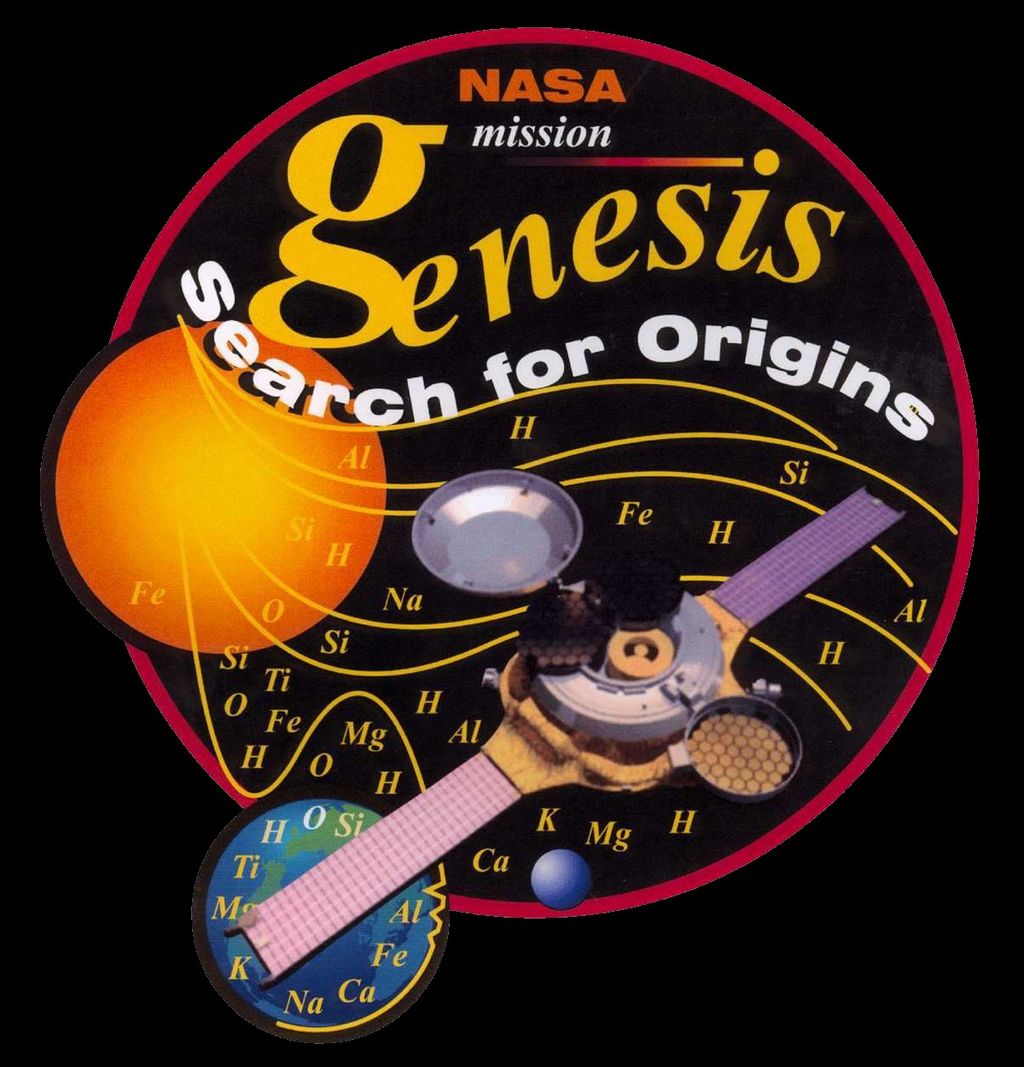
Genesis-provided output
In terms of isotopic compositions of the most important volatile elements, oxygen and nitrogen isotopes in chondrite meteorites and inner solar system planetary materials, “we now know that the standard model is grossly wrong,” McKeegan reported late last year at the annual gathering of the American Geophysical Union.
Genesis showed that the Earth and all (rocky) planetary materials are not made out of the average matter of the solar nebula, especially with respect to the abundant volatile elements, McKeegan said. An output from Genesis-provided data, he said, is yielding constraints on fundamental chemical and isotopic fractionation processes occurring in the early solar system.
Steady and creative
Caltech’s Burnett concludes that while success seemed remote, he salutes the 20 years of steady and creative processing and cleaning along with analytical improvements that have led to clutching scientific success from the jaws of defeat.
“The cosmochemistry community has risen to the challenge with a continuous stream of important papers,” he said, with Genesis results raising new questions and sparking new ideas for further scrutiny.
“There is still much important science feasible from Genesis sample analysis,” Burnett concluded.


