West
Therapists reveal how wildfire survivors can help their children cope with trauma

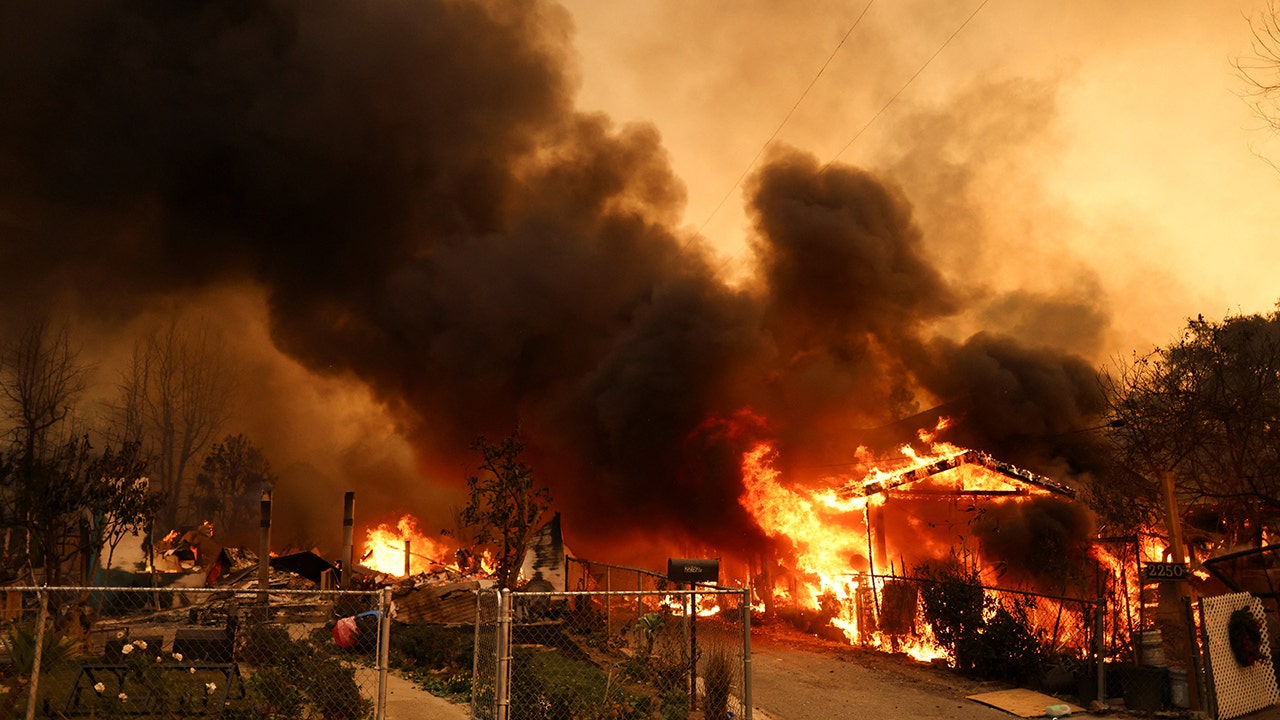
Therapists say survivors of the California wildfires can help their children heal from the trauma of leaving everything they know behind by continuing on with their daily routines, providing an empathetic ear and reinforcing their safety.
While fire crews continue to combat the wildfires consuming Los Angeles County, officials as of Saturday said at least 30 people remain missing while two additional deaths brought the toll to 27.
“Many children are facing the devastation of the fires in California. As parents and caregivers, it’s crucial to support children during this crisis, giving them space to share what they saw, heard, and felt,” Dr. Cindy Davis, clinical director of Positive Development in Pasadena, Calif., told Fox News Digital. “Encourage them to share their experiences and be open to any form of communication. Some may repeat the same story, while others may prefer not to talk much. Let them choose when and how to share. Consider your child’s experience with the disaster — did they evacuate, see homes burning, or witness fear? Use these clues to guide your conversations. For younger children specifically, pay attention to the themes in their play, as it often reflects their concerns and helps them process their feelings.”
CALIFORNIA WILDFIRES: ESSENTIAL PHONE NUMBERS FOR LOS ANGELES-AREA RESIDENTS AND HOW YOU CAN HELP THEM
Dr. Gail Saltz, associate professor of psychiatry at the New York Presbyterian Hospital Weill Cornell School of Medicine, explained that the fires have caused “tremendous and ongoing loss” for both adults and children.
Burned out classic cars sit like ghosts after being destroyed by wildfire, Altadena, California, Friday, January 10, 2025. (Derek Shook for Fox News Digital)
“The most important thing for children now is to make them feel that they and you, their parents, are safe,” she advised. “Parents should often explain, ’We are safe because’ or ‘here is our safety plan’ or ‘we need to start our safety plan and once we get there, I can answer all your questions.’ Expect and answer repeated concerns from children about safety of themselves and their loved ones. Try to do nice things together demonstrating that it feels safe for all of you, like playing a game. Remind them no matter what you have lost, the most important thing is that you are together and safe. Home is, and will be, where you are.”
One way to help children feel safe amid the chaos of relocating is letting them express their preferences about what they can control, such as a new room, school or activity, therapist Samantha Silverman, LCSW, told Fox News Digital.
“Plan activities together to explore the new city and make it feel like home,” Silverman suggested. “Maintain consistent daily routines to provide a sense of stability and security. Incorporate comforting traditions or activities that remind them of home, such as family meals or bedtime rituals. Help your child acclimate by exploring the new city together, visiting local parks, schools or libraries. Encourage participation in community or extracurricular activities to help them make new friends and build a sense of belonging.”
La Jolla, Calif., child psychiatrist Josh Feder, M.D., who explained children “need extra support” during this time, advised parents to make sure their children are in a safe place with clean air and cautioned against watching news of the fires around children.
“Use alerts on your phone to get important updates,” he said. “It’s important to tell the truth but not make it too scary. For example, ‘Our house burned down but we are safe now.’ Our job is to protect kids and make them feel as safe as we can!”
A helicopter drops water on the Palisades Fire in Mandeville Canyon, Friday, Jan. 10, 2025, in Los Angeles. (Ethan Swope/AP)
Saltz explained that while the wildfires make for a stressful situation for both adults and children, they can make it through the hardship.
“Human capacity for resilience is such that the majority of these people will eventually make their way through these losses to recoup their lives, but the more coping tools and support they can receive, the more likely that is and the less painful it will be,” she said.
Fox News Digital’s Stephen Sorace contributed to this report.
Read the full article from Here


A Northern California brewery has become the latest victim of declining alcohol consumption after it announced the closure of its taproom in a trendy San Francisco neighborhood.
“We’re sharing that our San Francisco Tasting Room will close Today, Monday, June 29,” a message on Ballast Point Brewing’s Instagram page read about the closure of its location in Mission Bay.
“We’re grateful to everyone who visited, shared a beer, celebrated milestones, and made this location part of the local craft beer community over the years.”
“Thank you for your support and for the memories we’ve made together,” it added.
Started in San Diego’s Home Brew Mart in 1992, the craft beer company has been a favorite of IPA lovers for decades, according to their website.
Known for fan-favorite brews like Fathom, Sculpin and Longfin IPA — the San Diego beer maker rocketed from local favorite to craft brewing giant after opening a flagship brewery and restaurant in the city’s Little Italy neighborhood in 2013.
By 2015, Ballast Point had become one of the country’s top craft breweries by sales volume — and landed a staggering $1 billion buyout from Constellation Brands.
But the brewery’s fortunes quickly went flat.
Just five years later, Constellation unloaded Ballast Point to Chicago-based brewer Kings & Convicts in a deal reportedly worth less than $100 million, according to Food & Wine.
Even as ownership changed hands, Ballast Point continued expanding its footprint, opening restaurants and tasting rooms across California between 2013 and 2023 — including its San Francisco location, which debuted in 2023, the San Francisco Chronicle reported.
Three years later the company announced to fans it was leaving, with no explanation as to why. It also pointed out people could still visit their tasting rooms in “Little Italy, Anaheim, and Long Beach” and find their beers at their favorite “local bars, restaurants, and grocery stores.”
“To everyone who supported our San Francisco Tasting Room over the years, thank you,” the message added.
“Your enthusiasm and loyalty have meant the world to us, and we look forward to raising a glass with you again soon.”
Other craft beer companies and wine makers have experienced similar situations amid declining sales of liquor, beer and wine over the past few years.
Earlier this year, major winemaker Gallo announced the closure of a large production facility and the elimination of nearly 100 jobs across the wine growing region of Napa and Sonoma counties.
The company said there would be staff cuts at Louis M. Martini Winery and the Orin Swift Tasting Room in St. Helena, as well as J Vineyards and Frei Ranch in Healdsburg.
In January, Constellation Brands notified more than 200 people at the Mission Bell Winery in Madera that they would be out of work. And Jean-Charles Boisset Collection closed two Napa Valley tasting rooms.
Last year, two big Northern California brewing company’s — San Francisco’s Fort Point Beer Co and Sonoma County-based HenHouse brewing — merged in order to keep operating.
The number of American adults who say they consume alcohol has fallen to 54%, according to an August 2025 Gallup poll.

Fire crews gained some containment on one of five wildfires burning across Colorado on Tuesday, while others forced more people to evacuate their homes. The fires charred roughly 148 square miles and destroyed at least 100 buildings.
The Snyder, Gold Mountain, Ferris, Willow and Aspen Acres fires have consumed 94,189 acres as of Tuesday evening.
While fire officials said crews made good progress, firefighters are also facing terrain that’s often extremely steep or inaccessible as well as high temperatures, low humidity and gusty winds.
Aspen Acres fire in Custer and Pueblo counties
Driven by 100 mph winds, the Aspen Acres fire has consumed 28,362 acres — roughly 44 square miles — since it sparked Monday, destroyed at least 100 structures and forced evacuations, according to the Pueblo County Sheriff’s Office.
Damage assessment teams are still working on getting to the structures destroyed by the wildfire and will contact property owners directly whenever possible, Pueblo County Sheriff David Lucero said during an update Tuesday afternoon.
Fire activity picked up Tuesday night, leading Pueblo County officials to issue new evacuation orders for people living in the North Creek area, including Central Road to the Custer County Line.
“DO NOT WAIT. PLEASE EVACUATE NOW,” the Pueblo County Sheriff’s Office said in a post on X.
Mandatory evacuations in the Beulah, Rye, San Isabel Lake, Aspen Acres, Lazy Acres and Bishops Castle areas and surrounding roads are still in place.
Snyder fire in Mesa County and Utah
Colorado’s largest wildfire saw a small amount of growth overnight Monday and into Tuesday as firefighters worked on building lines along eastern and southern edges to prevent more spread.
The Snyder fire, which killed three firefighters and injured two others Saturday, scorched 30,209 acres, or 47 square miles, with 10% containment as of Tuesday evening.
The wildfire’s footprint grew about 200 acres between Monday night and Tuesday afternoon, mostly by smoldering and creeping along the eastern edge, Operations Section Chief Nick Ostrom said in an update posted on social media.
Lighter winds have helped firefighters in the past few days, Ostrom said, but National Weather Service forecasters on Tuesday issued a red flag warning for critical fire weather conditions that are expected until at least Thursday.
Colorado Parks and Wildlife officials on Tuesday closed the boat ramp to the Colorado River in the James M Robb State Park for firefighter safety.
Gold Mountain fire near Ouray
A complex incident management team took over the Gold Mountain fire near Ouray on Monday night as the wildfire continued to burn across “very steep, inaccessible country.”
Fire officials mapped the wildfire at 12,376 acres, or almost 20 square miles, as of Tuesday night, up from 7,103 acres on Monday.
Ouray County officials ordered more mandatory evacuations on Tuesday afternoon, including Lower Cow Creek east of county roads 12 and 12A to the Owl Creek U.S. Forest Service Boundary. Previous mandatory evacuation orders for other areas of Ouray County are still in place, sheriff’s officials said, and part of U.S. 550 is closed.
Ferris fire in San Juan National Forest, near Dolores
The lightning-sparked Ferris fire continued burning on 21,495 acres, or 33 square miles, with no containment northwest of Dolores, but firefighters managed to stop it from spreading into a nearby subdivision despite strong winds and low humidity.
Mandatory evacuations are still in place for people living north and east of the wildfires, including the Glade Ranch subdivision, according to the Dolores County Office of Emergency Management.
Firefighters are focused on protecting homes and the historic Benchmark Lookout, operations section chief Pat Seekins said in an update.
Federal and state wildlife officials have closed public access to lands near the fire for safety, including the Bradfield Bridge Campground, Lone Dome State Wildlife Area and surrounding roads.
Willow fire near Leadville
People living near Turquoise Lake west of Leadville remained under mandatory evacuation on Tuesday as crews continued fighting the Willow fire.
The wildfire is burning on 2,011, or 3 square miles, with no containment in the San Isabel National Forest near the Leadville National Fish Hatchery.
Firefighters are focused on building lines to stop the fire from moving west, toward homes near the Halfmoon Diversion Dam, and east toward Leadville, Operations Chief William Dudley said Tuesday night.
Campgrounds around Turquoise Lake, the Colorado Trail and Hagerman Pass into Pitkin County are also under evacuation orders, Lake County officials said.
The cause of the fire is under investigation.
Get more Colorado news by signing up for our Mile High Roundup email newsletter.

SEATTLE — Seattle Mayor Katie Wilson is wading into a series of high-profile Democratic primaries, backing progressive challengers against longtime state lawmakers in a move that could test both her political reach and Seattle’s relationship with Olympia.
Wilson has endorsed several local candidates, including Ron Davis in the 46th Legislative District and Hannah Sabio Howell in the 43rd District. Both are running from the left against veteran Democratic legislators, including Senate Majority Leader Jamie Pedersen.
The endorsements come as Democrats in Washington state face a series of intraparty challenges, with younger and more progressive candidates arguing that longtime lawmakers have not moved quickly enough on affordability, housing, taxation and social services.
An image of Mayor Wilson and Gov. Bob Ferguson giving an update on how the World Cup matches have played out so far in Seattle. (KOMO)
Political analyst Sandeep Kaushik called Wilson’s decision “a high-risk roll of the dice,” saying she is not only challenging veteran Seattle Democrats but also potentially putting at risk the city’s relationship with state leaders in Olympia.
“It’s definitely going to be” a test of her political influence, Kaushik said, noting that Pedersen can point to a long list of progressive credentials, including work on LGBTQ rights and the state’s new millionaires’ tax.
Wilson’s endorsements follow a national trend in which progressive candidates have tried to build momentum by challenging establishment Democrats in deeply blue areas. Kaushik said the timing did not appear coincidental, coming shortly after New York City Mayor Zohran Mamdani endorsed several candidates who went on to win their races. But he also noted a key difference: Wilson won Seattle’s mayoral race by a much narrower margin and has faced a bumpier start in office.
Davis, who is running against Rep. Gerry Pollet in the 46th District, said he entered the race after working on statewide housing legislation and deciding Olympia was a place where he could make a larger impact.
“Urgency” has been missing in Olympia, Davis said, arguing that too many lawmakers treat the job as a side role while families struggle with the cost of living. He said he wants the state to move faster on housing, transit, Sound Transit accountability, and progressive taxation.
Davis said Wilson’s endorsement matters because of her role in Seattle’s JumpStart payroll tax and broader progressive organizing.
“Katie Wilson is one of the people who has done more to bring taxation on the rich in Washington state than anyone else,” Davis said, calling JumpStart a measure that “broke the legal dam” for other forms of progressive taxation.
Davis also defended a challenge from the left after Democrats delivered the millionaires’ tax, saying internal competition is healthy and necessary.
“I think it’s needed,” Davis said. “There needs to be disagreement, and there needs to not be a cling to the status quo.”
According to a Washington Public Disclosure Commission candidate finance chart, Democrat William Dreher has raised about $258,000 in the race and spent $21,000. Davis has raised about $140,000 and spent $26,000.
Pollet has raised about $96,000 and spent $14,000.
Kaushik noted that Dreher, a prosecutor who worked on cases connected to the Jan. 6 attack on the US. Capitol, makes that race a three-way contest.
In the 43rd District, Sabio-Howell is challenging Pedersen, one of the most powerful Democrats in the Legislature. Sabio-Howell said she is running because the affordability crisis has worsened under current leadership.
“I believe in Washington’s potential to be the best place in the country to build good lives if we can afford it,” Sabio Howell said. “Status quo leaders, career politicians who have been in office as the crisis of affordability has only gotten worse, are not the people who are going to make an affordable future possible.”
Sabio Howell acknowledged the millionaires tax as a “historic win,” but argued it came only after a severe budget deficit forced lawmakers to act. She said progressive leadership from the 43rd District should have pushed for the policy earlier.
She also rejected arguments from large employers that Washington has reached a tipping point on taxes, comparing the current debate to warnings made during the fight for a $15 minimum wage. Sabio-Howell said voters have repeatedly shown support for funding social services through measures such as the capital gains tax, the Climate Commitment Act and the Long Term Care Act.
Sabio-Howell said Wilson’s endorsement aligns with her campaign’s focus on affordability, housing, schools, public transit and shifting political power away from corporate interests.
The fundraising gap in the 43rd District remains significant. The PDC chart shows Pedersen has raised about $348,000 and spent $77,000. Sabio-Howell has raised about $82,000 and spent $23,000. A third candidate, Heather-Marie P. Wilson, reported no contributions or expenditures on the chart.
Wilson did not return a request for comment.
The Washington State Labor Council also issued a statement, “Jamie Pedersen is the most progressive Senate Majority Leader we have ever had, delivering on major progressive priorities like progressive tax reform and rent stabilization when previous majority leaders couldn’t. If he is not re-elected, the next majority leader will most likely be less progressive and less willing to tackle the toughest problems. Campaigning is an extended job interview and Pedersen has demonstrated he can do the job effectively and in-line with his district’s values. Our unions and community allies should be united in fighting back against a right-wing authoritarian government, not divided against legislators like Jamie Pedersen and Gerry Pollet, who have strong progressive voting records. We have a common foe: the conservative forces in Washington seeking to take over our State Supreme Court, attack our trans community, and repeal the Millionaire Tax and force deep cuts to education and healthcare.”
His campaign also cited a statement from Katy Ozog, the Executive Director of the Washington Senate Democratic Campaign, “Jamie Pedersen is the most progressive Senate Majority Leader in state history, and the author of landmark legislation like the Millionaires Tax, a champion for affordability measures like rent stabilization, and a leader in the fight for LGBTQ+ equality. He is proud to be the only candidate in the race to have sole endorsements from labor unions and Planned Parenthood.”
Kaushik said the broader picture is a Democratic Party “at war with itself” in Washington, with younger, outsider candidates challenging incumbents they view as part of a failed establishment.
“The mayor doesn’t see herself as just another typical Democratic politician,” Kaushik said. “She very much sees herself as part of and a leader of a movement, a progressive political movement that really aims to take over and change the Democratic Party.”
Whether Wilson’s endorsement can help deliver victories for those challengers remains uncertain. Her allies see the move as part of a broader push for progressive leadership at every level of government. Her critics may view it as an unnecessary risk at a time when Seattle still depends on Olympia for housing, transportation, public safety, and budget support.
For now, the races offer a clear test of whether Wilson’s narrow mayoral victory has grown into broader political power or whether longtime Democratic incumbents can withstand a challenge from their own left flank.
-

 Los Angeles, Ca55 minutes ago
Los Angeles County man convicted of sex trafficking, abusing woman he was dating
-

 Detroit, MI1 hour ago
Detroit Tigers tee off on New York Yankees with 5 homers in win
-

 San Francisco, CA1 hour ago
Popular brewery shutters San Francisco location amid industry woes
-

 Dallas, TX2 hours ago
Eight arrested after repeated attempts to enter World Cup matches without tickets
-

 Miami, FL2 hours ago
Reports: Heat add potent bench scorer in Tim Hardaway Jr.
-

 Boston, MA2 hours ago
Boston Pops gearing up for major July 4th celebration: ‘You only turn 250 once’ – Boston News, Weather, Sports | WHDH 7News
-

 Denver, CO2 hours ago
Colorado wildfires destroy more than 100 structures, force more evacuations
-

 Seattle, WA2 hours ago
Will Katie Wilson’s endorsements help or hurt Seattle’s position in Olympia?

