West
Suspect in plot to kill famous rapper leaves jail

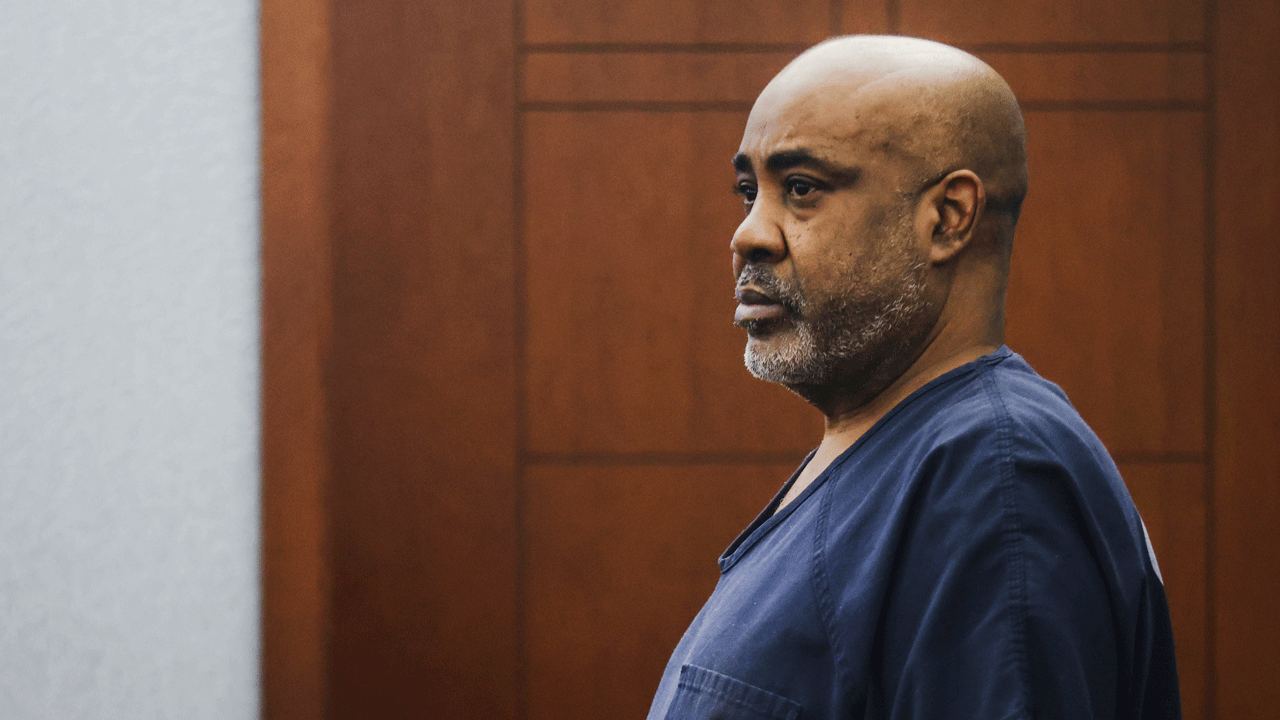
LAS VEGAS (AP) — A Nevada judge set bail Tuesday at $750,000 for a former Los Angeles-area gang leader charged with orchestrating the killing of hip-hop legend Tupac Shakur in 1996, saying he can serve house arrest with electronic monitoring ahead of trial on a murder charge.
Court-appointed attorneys for Duane “Keffe D” Davis told The Associated Press after the judge’s decision that they believe Davis can post that amount. They had asked for bail of not more than $100,000 and noted for the judge that the demands of preparing a defense based on two decades of evidence may require a postponement of the current June trial date.
MAN INDICTED IN TUPAC SHAKUR’S 1996 MURDER
Clark County District Attorney Steve Wolfson told reporters that he expects Clark County District Judge Carli Kierny will hold a “source hearing” to determine whether money posted for bail is legally obtained. The judge did not set a new trial date but called for a status check Feb. 20.
Prosecutors Binu Palal and Marc DiGiacomo argued Tuesday that Davis has never left gang life, that his 15 years of admissions about his role in Shakur’s killing show he is guilty of murder, and that a jailhouse phone call in October suggested he poses a threat to witnesses.
“There is one constant,” Palal told the judge. “Mr. Davis has consistently admitted to being architect of the murder.”
DiGiacomo called Davis “a very, very high danger to the community.”
The judge, in her ruling, acknowledged that Davis “made a living talking about his past life as a leader of the South Side Crips,” a street gang in his hometown of Compton, California, “and also the killing of Mr. Shakur in graphic detail.”
Arroyo and co-counsel Charles Cano argued that police and prosecutors could have arrested Davis 15 years ago but didn’t, and that the prosecutors were wrong with their interpretation of the jail telephone call and a list of names provided to Davis’ family. The defense lawyers said it is Davis and his family who are at risk.
Arroyo and Cano said their 60-year-old client is in poor health after battling cancer, which is in remission, and said he would not flee to avoid trial.
They also downplayed evidence against Davis as the product of tales told by witnesses with gang backgrounds that make them not credible, and noted the prosecution lacks evidence, including the gun and the car involved in the September 1996 drive-by shooting that killed Shakur.
Arroyo focused Tuesday on what he called “the obvious question” dating to 2008 and 2009 — when Davis talked with police in Los Angeles and Las Vegas. He went on to write a 2019 tell-all memoir and began giving interviews on social media in which he described his role as gang leader and “shot-caller” in Shakur’s death.
“If his guilt is so overwhelming, what’s been happening for 15 years?” Arroyo asked in court Tuesday. “Why did we wait 15 years to make the arrest?”
Davis was arrested Sept. 29 outside his home in suburban Henderson, which Las Vegas police had searched in mid-July. He pleaded not guilty in November to first-degree murder and has been jailed without bail at the Clark County Detention Center in Las Vegas, where detainees’ phone calls are routinely recorded. If convicted at trial, he could spend the rest of his life in prison.
Arroyo argued Tuesday that his client’s accounts in “the YouTube world” accentuated violence to attract viewers and make money.
“Conflict sells,” Arroyo said. “They get on these interviews, they puff out their chest. They’re trying to get clicks.”
Prosecutors say Davis’ own words are strong evidence that he is responsible for the crime, even if he didn’t pull the trigger. DiGiacomo said other people who have described Davis’ role in other media interviews, and to police, corroborate his accounts.
Davis is the only person still alive who was in the car from which shots were fired, mortally wounding Shakur and wounding rap mogul Marion “Suge” Knight. Knight is serving 28 years in a California prison for an unrelated fatal shooting in the Los Angeles area in 2015.
Davis’ attorneys noted that Knight is an eyewitness to the Shakur shooting but did not testify before the grand jury that indicted their client.
Davis maintains he was given immunity from prosecution in 2008 by an FBI and Los Angeles police task force investigating the killings of Shakur in Las Vegas and rival rapper Christopher Wallace, known as The Notorious B.I.G. or Biggie Smalls, six months later in Los Angeles.
DiGiacomo and Palal say any immunity agreement was limited. Last week, they submitted to the court an audio recording of a December 2008 task force interview during which they said Davis was told that what he said in the room would not be used against him, but that if he talked to other people he could be in legal jeopardy.
Davis’ attorneys responded with a reference to the publication 12 years ago of a book written by former Los Angeles police Detective Greg Kading, who attended those interviews.
“Duane is not worried,” the attorneys said, “because his alleged involvement in the death of Shakur has been out in the public since … 2011.”
Read the full article from Here


Jury convicts Meta of child exploitation in trial
A New Mexico jury has delivered a landmark blow to Meta finding the social media company knowingly harmed childrens mental health and hid what it knew about child sexual exploitation on its platforms, prioritizing profits over safety.
OAKLAND, Calif. – A New Mexico jury found the Meta willfully violated the state’s unfair practices laws, which resulted in child exploitation to the tune of more than a third of a billion dollars.
What we know:
There are many employees inside social media companies working to make them safer, but insiders say market share and money override much of those efforts.
The New Mexico judge read from the jury’s decision. “Did Meta violate the Unfair Practices Act by engaging in unconscionable trade practices act? The jury’s answer is yes,” said Chief Judge Bryan Biedscheid, a New Mexico justice.
The New Mexico Attorney General’s Office proved its case to a civil jury that awarded $375 million in damages. Meta’s response through a spokesperson: “We respectfully disagree with the verdict and will appeal.”
Local perspective:
Larry Magid is a long-time Bay Area tech analyst, journalist, founder of ConnectSafely and a pioneer in online safety, especially for children. “I think that verdict indicates that there was convincing evidence, at least to that jury, that Meta did fail to fully protect children in ways that would guarantee that they would not be approached by predators.”
Kaitlin Soule is a licensed Marriage and Family Therapist as well as an author. “I think it means that we’re entering a new era hopefully where the tech firms are gonna be held more accountable for creating safer spaces just like we would in public spaces,” said Soule.
The days of blaming parents are over. “What we’ve been feeling as parents and I can speak for myself as a parent of three, is like somehow, we’re doing bad parenting and we are getting it wrong when really the system was rigged in the first place,” said Soule.
What they’re saying:
Folks we met at the Larkspur Ferry Terminal said this, “I think especially with the rise of all the advertisements and just like trying to steal other people, like younger generations or data, and just like things to make you scroll and stay on longer and I do think that is a problem in our society like addicting,” said Clementine Glineur a young social media user.
“I’ve seen a lot of mental health issues, especially compared in our generation compared to a lot of other ones. And a lot of mental health ones, such as ADHD, which can really affect not being able to focus well,” said Brittanya Green, another young social media user.
Green says fines are in order. “Paying for it is definitely a start to help with the damages,” she said,
The jury surely believed it. “I think the jury system is the only way that we really get to participate in our government. It’s hands-on; you’re in the room, you’re talking to people who make decisions, you’re hearing evidence,” said Amanda Ebey of San Rafael.
Is the punishment significant?
But is it really a meaningful penalty?
“This particular financial judgment is not even a slap on the wrist. If a typical Bay Area family were fined this amount, it would basically be $300 out of their pocket, probably not even a traffic ticket,” said Magid.
But, with so many other states suing, an enormous liability bill would be damaging to both its reputation, share price and loss of freedom from regulation.
“It’s best probably to have federal rules because they’re doing business in every state,” said Ebey.
Magid said many people at Meta are working hard to make it safer, but the bad guys with new ways of being bad are winning the battle so far.
The Oregon Lottery offers several draw games for those aiming to win big.
Here’s a look at March 24, 2026, results for each game:
Winning Mega Millions numbers from March 24 drawing
04-13-52-53-69, Mega Ball: 10
Check Mega Millions payouts and previous drawings here.
Winning Pick 4 numbers from March 24 drawing
1PM: 7-1-0-7
4PM: 4-8-8-9
7PM: 4-2-6-1
10PM: 8-9-1-8
Check Pick 4 payouts and previous drawings here.
Feeling lucky? Explore the latest lottery news & results
When are the Oregon Lottery drawings held?
- Powerball: 7:59 p.m. on Monday, Wednesday and Saturday.
- Mega Millions: 7:59 p.m. on Tuesday and Friday.
- Pick 4: 1 p.m., 4 p.m., 7 p.m. and 10 p.m. daily.
- Win for Life: 7:30 p.m. on Monday, Wednesday, and Saturday.
- Megabucks: 7:29 p.m. on Monday, Wednesday, and Saturday.
This results page was generated automatically using information from TinBu and a template written and reviewed by an Oregon editor. You can send feedback using this form.

It was a close game through the first 30 minutes; however, 11:24 into the second period the floodgates opened. There were several quick momentum shifts as all four goals in the middle frame were scored in a span of 3:40. After Matt Savoie scored shorthanded and put Edmonton up by a goal, associate captain Lawson Crouse’s 20th of the season evened things up 35 seconds later, 2-2. However, Oilers Captain Connor McDavid’s 400th career NHL goal eight seconds after Crouse’s tally took back momentum for the visitors. Jack Roslovic scored his second goal of the game three minutes later which gave Edmonton a two-goal lead.
“I thought (the) first half of the game was good, showed some compete and then obviously the power play goal that we tied up was big,” MacKenzie Weegar shared. “Then they scored right after that, and then again quickly right after that, and then I thought we lost the momentum. We didn’t have the energy after that. The compete level in 50/50 battles wasn’t really there either. Definitely something that comes within, it’s not something that you can teach. That’s definitely look yourself in the mirror type stuff, but I trust in this group, and we’ll bounce back the right way.”
“We obviously just didn’t have enough of a pushback, in the third especially,” Kerfoot explained. “We’re down two goals in a game, fighting for a playoff spot against a team who’s also fighting, and we didn’t even make them work for it, didn’t make them earn it. Disappointing. It’s on us.”
Utah was held to 18 total shots and Edmonton blocked 24 of Utah’s attempts. The Mammoth were kept outside due to the Oilers structure, and they needed to get more pucks through to challenge Edmonton goaltender Tristan Jarry.
“Just putting more pucks on net,” Kerfoot said. “Don’t even know about quality. We didn’t even really get many looks. Against a team like that, who kinds of allows you to have a little bit of possession on the outside, you have to break them down by shooting, recovering pucks, getting them out of structure. We allowed them to be in structure way too much.”
“Your biggest enemy when you trail is you think you want to score, Tourigny said. “So, instead you keep your tank, your energy for to go on offense … you defend because you don’t have the same aggression, you don’t create a stop, you don’t create a hit where there’s a battle then you can recover the puck and go on offense. So, you end up spending all your energy defending instead (of spending) quick energy defensively, recovering pucks, and then you can go on the offense.”
Center Barrett Hayton was hurt on his first shift of the game and did not return. He played 0:17. Postgame, Tourigny said there will be more tests tomorrow and they will figure out “what’s the nature” of his injury.
Utah’s final game in a four-game homestand is on Thursday against the Washington Capitals. Tickets are available here!
Additional Notes from Tonight (per Mammoth PR)
- Tonight was Tourigny’s 400 NHL game as a head coach. He started his head coaching career with the Arizona Coyotes during the 2021-22 campaign, and this is his fifth season as a head coach. 154 of his 400 games have been with the Utah Mammoth franchise.
- Crouse scored his 20th of the campaign against the Oilers. He has reached the 20-goal mark four times in his last five seasons. He is currently fifth on the Mammoth with goals.
- Karel Vejmelka played the first two periods before Vítek Vaněček took over for the third period. Vejmelka stopped 11 of the 15 shots he faced while Vaněček turned away all 10 shots he saw in the final frame.
- The Mammoth did not take a single penalty in tonight’s game. Utah is 173-for-219 this season on the penalty kill (79.0%).
- Utah has five skaters with 20 or more goals. They are tied with the Carolina Hurricanes and Vegas Golden Knights for most in the NHL.
Upcoming Schedule

Monmouth County town named one of New Jersey’s best places to live

Meta loses $375 million lawsuit to New Mexico AG

Today in History: March 25, 1958 – North Dakota Press plans UND headquarters

More than half of Ohio Immigrant Hotline reports came from Columbus area

Senate approves slate of bills increasing teacher pay, investing in school security

Florida High School Football Rankings: Top 25 teams – Oct. 21

How old is Bo Nix? What to know about Oregon quarterback ahead of 2024 NFL Draft

Cleary's 21 help Le Moyne down Central Connecticut State 69-64 in OT

99th annual Pony Swim held in Virginia

Indiana Members Credit Union announced as new anchor tenant at Bottleworks District

LaGuardia Crash Timeline: Moments Before Air Canada Plane Collided With Fire Truck

Chicago alderwoman apologizes for ‘wrong place at the wrong time’ comment on slain student

Fake Euronews website targets Hungary election with false claims
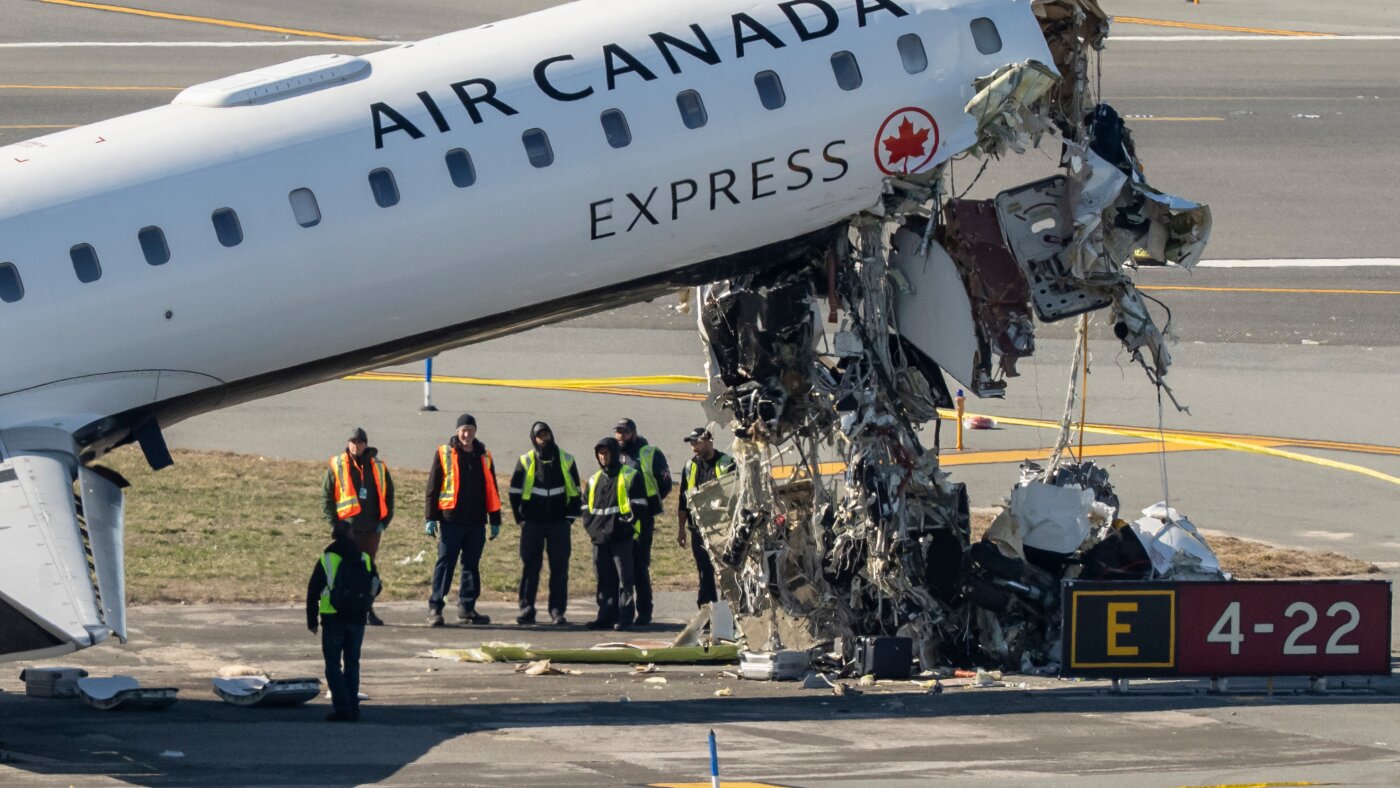
An air traffic controller was juggling extra roles during the LaGuardia plane crash

Iran War: Pentagon set to send thousands of elite 82nd Airborne troops to region | BBC News
-

 Detroit, MI6 days ago
Drummer Brian Pastoria, longtime Detroit music advocate, dies at 68
-

 Georgia1 week ago
How ICE plans for a detention warehouse pushed a Georgia town to fight back | CNN Politics
-

 Movie Reviews6 days ago
‘Youth’ Twitter review: Ken Karunaas impresses audiences; Suraj Venjaramoodu adds charm; music wins praise | – The Times of India
-

 Alaska1 week ago
Police looking for man considered ‘armed and dangerous’
-

 Education1 week ago
Video: Turning Point USA Clubs Expand to High Schools Across America
-

 Sports4 days ago
IOC addresses execution of 19-year-old Iranian wrestler Saleh Mohammadi
-
 Science1 week ago
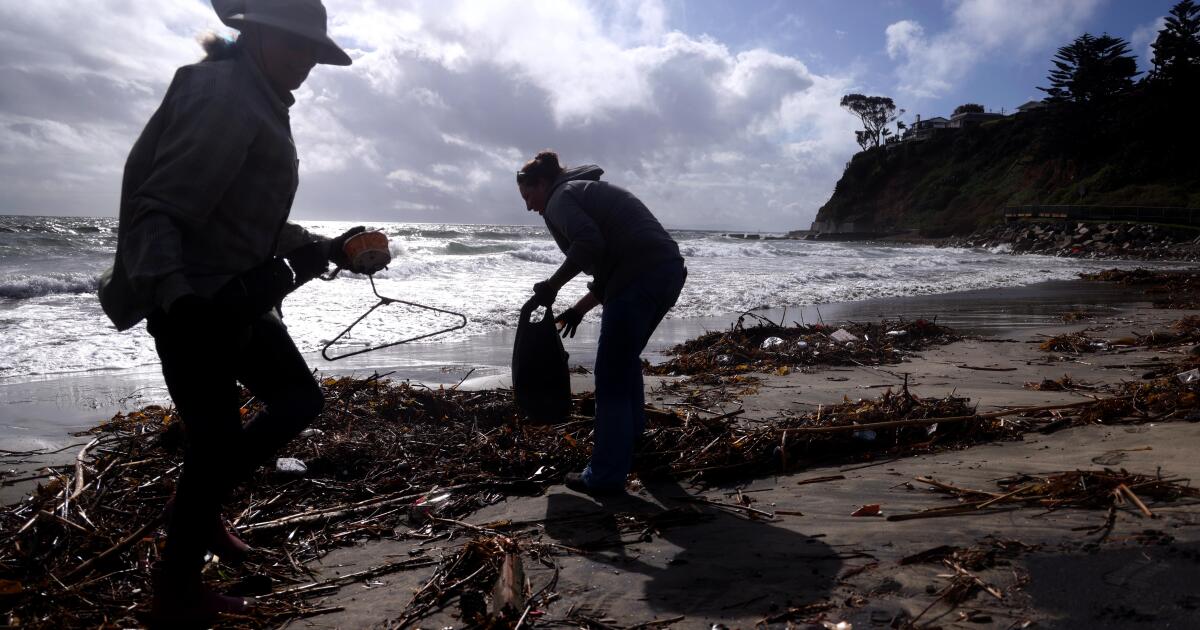
Industrial chemicals have reached the middle of the oceans, new study shows
-

 Science1 week ago
How a Melting Glacier in Antarctica Could Affect Tens of Millions Around the Globe