West
Suspect accused of killing newlywed nurse had been 'deliberately cruel': report

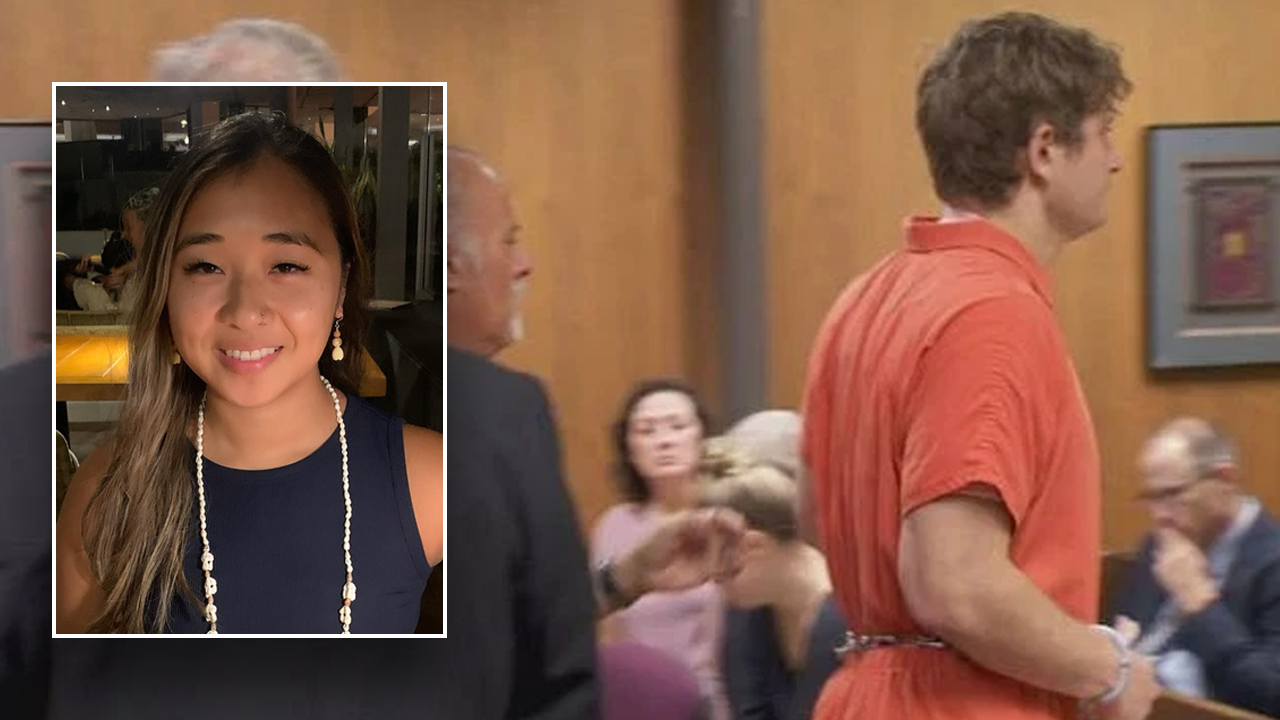
New details have been released in the murder case of a newlywed Oregon nurse who was discovered dead two days after she went missing in early September.
The Beaverton Police Department arrested Jonathan Bryce Schubert, 27, who authorities say was a neighbor to Melissa Jubane, 32, whose body was found days after she was reported missing when she failed to show up for her shift at work.
Court documents obtained by KGW8 stated that Schubert was “deliberately cruel to [the] victim” and used a weapon and “posed a threat of actual violence” which resulted in permanent injury to Jubane prior to her death.
Prosecutors argued that “future efforts to rehabilitate the defendant will not be successful.”
The documents also stated that the “degree of harm or loss was significantly greater than typical for such an offense” and that there is a “need” to ensure public safety.
NEIGHBOR ACCUSED OF KILLING MISSING OREGON NEWLYWED NURSE MAKES FIRST COURT APPEARANCE
New details in the case of Melissa Jubane, a nurse who was discovered dead two days after she went missing in early September, are shedding light on the man accused of her murder. (KATU)
During his first court hearing back in September, Schubert appeared on video and did not enter a plea during his arraignment, according to KATU News.
Officials said that as a result of an extensive investigation, it was determined that Schubert was involved in Jubane’s disappearance.
MISSING OREGON NURSE FOUND DEAD DAYS AFTER RETURNING HOME FROM HER WEDDING, NEIGHBOR ARRESTED
Oregon nurse Melissa Jubane was found dead days after marrying her longtime boyfriend Bryan Llantero. (KHON2)
Jubane’s coworkers reported that she was missing shortly after she missed her shift on Wednesday, Sept. 4.
Beaverton Police confirmed that the remains of Jubane were found following a three-day search and just two weeks after she tied the knot on Aug. 24 on Oahu in Hawaii, with her longtime partner of 10 years, Bryan Llantero, a native of Kalihi, Hawaii.
WOMAN GOES MISSING IN MAINE FOREST FOR DAYS, IS RESCUED HUNDREDS OF FEET FROM DEAD HUSBAND
An Oregon nurse who vanished days after she returned home from her Hawaii wedding was found dead Saturday amid a 3-day search as police accused her 27-year-old neighbor of murder. (Beaverton Police Department)
FOX 12 reported that Schubert worked as a nurse at Providence Portland Medical Center from September 2022 to October 2023. However, Schubert was not employed at Providence St. Vincent, where Melissa worked, Providence said in a statement Saturday morning.
It is still not known if Jubane and Schubert knew each other.
Officials said Schubert is charged with second-degree murder, first-degree kidnapping, and second-degree abuse of a corpse. He is being held without bail at the Washington County jail due to the murder charge.
Read the full article from Here


GILLETTE, Wyo. — As the Aug. 18 primary election approaches, County 17 is introducing candidate questionnaires to help voters make informed decisions at the ballot box.
Every candidate in the primary field was sent the same three questions and given a limit of 500 words, which could be distributed among their answers as they saw fit. To ensure a fair and direct line to the community, all responses are published exactly as submitted, without edits or alterations.
Candidates were asked:
- What are the most crucial challenges your constituents are facing?
- If elected, how will you address these challenges?
- What qualities or qualifications do you possess that have prepared you to meet these challenges?
Questionnaires are being published on a rolling basis online through Aug. 11. They will be accessible via the County 17 Election Tracker.
Qwenton Eagle Oviatt (R), Wyoming secretary of state
What are the most crucial challenges your constituents are facing?
The most crucial challenges my constituents are facing are low voter turnout, outdated election processes that make voting harder than necessary, a business registration system being exploited by scammers, and a wide fracture within the Wyoming Republican Party.
If elected, how will you address these challenges?
If elected, I will address these directly. I will push for a long overdue election cleanup bill to make voting easier while ensuring strong security. I will implement top tier screening software and a small enforcement team to stop fraud using commercial registered agents. I will also work closely with county clerks to give them the training and uniformity they’ve requested. On party division, I will focus on repairing our Republican Party by practicing Alan Simpson’s collaboration and Mike Enzi’s 80/20 rule, bringing people together instead of tearing them apart.
What qualities/qualifications do you possess that have prepared you to meet these challenges?
What prepares me for these challenges is my diverse real world experience. I have worked in Wyoming’s oil fields, supported National Science Foundation research in Antarctica, built small businesses, and currently serve as an academic advisor at Central Wyoming College. As a certified mediator, I’ve learned how to bring people together to solve problems. This practical background gives me the judgement and skills needed to deliver real results for Wyoming.
Related
San Francisco, CA
Terrified passengers film Waymo autonomous vehicle driving into live fireworks in San Francisco

NEWYou can now listen to Fox News articles!
Passengers in a Waymo vehicle were terrified as the car drove into lit fireworks in the middle of a San Francisco street during Independence Day celebrations over the weekend.
Video footage of the incident shows a group of passengers who were shocked as the driverless car seemingly approaches lit fireworks in the middle of a street as the explosives are about to launch.
As the car gets closer, someone on the street appears to warn the vehicle to stop by waving their hand.
DELTA FLIGHT STRUCK BY FIREWORKS WHILE LANDING IN CHICAGO ON FOURTH OF JULY, FAA INVESTIGATES
Passengers in a Waymo vehicle were terrified as the autonomous car drove into lit fireworks in the middle of a San Francisco street during Independence Day celebrations. (Rose Peterson via Storyful)
“No, no, no, don’t go, don’t go, don’t go,” one of the passengers is heard saying off-camera.
The autonomous vehicle then passes over the colorful flames and sparks.
“Our Waymo just drove into a firework,” a passenger says in the clip.
ZOOX ROBOTAXI REDESIGN BRINGS BIG RIDER UPGRADES
A Waymo vehicle sits idling at an intersection with no operating traffic lights due to power outages, in San Francisco, Saturday, Dec. 20, 2025. (Jeff Chiu/AP Photo)
“Are we on fire, dude?” a fellow passenger asks.
A Waymo spokesperson told Fox News Digital that the company “is committed to keeping our riders safe and earning the trust of the communities where we operate.”
“We take situations like this seriously and are committed to evaluating and learning from these events,” the statement continued.
BROOKLYN BRIDGE CATCHES FIRE AMID NYC FIREWORKS DISPLAY AS TRUMP HAILS IT IN DC SPEECH
No injuries were reported to either the passengers or the vehicle, and the company reached out to the riders after their trip. The possession of fireworks, even “Safe and Sane” explosives, is illegal in San Francisco, the city’s fire department said.
One woman was killed and two other adults and a child were injured Saturday in a separate fireworks explosion, the San Francisco Chronicle reported.
Elsewhere in San Francisco, some Waymo vehicles were towed when their batteries died after vehicles became stuck in traffic for hours.
CLICK HERE TO DOWNLOAD THE FOX NEWS APP
“Our priority is keeping San Francisco moving safely, especially during major city celebrations,” the Waymo spokesperson said. “On the Fourth of July, extreme traffic congestion in northern San Francisco disrupted normal operations for several Waymo vehicles.”
“In coordination with local authorities and emergency services, our roadside assistance team worked quickly to clear our vehicles from the area,” the statement continued.
Denver, CO
Kalshi Promo Code DENVER: Trade $10, Get $10 World Cup Bonus for USA-Belgium – Denver Stiffs

As the World Cup continues, new players can take advantage of Kalshi promo code DENVER to receive a $10 sign-up bonus. Click here to start signing up.
Unlocked after making $10 in trades, this welcome offer provides a straightforward way to get involved ahead of the high-stakes USA vs. Belgium matchup in the Round of 16. Whether you are backing the United States or Belgium in this crucial knockout stage clash, you can easily apply this promotion to this game as well as any other World Cup matches taking place this week. Kalshi should have something for everyone.
Kalshi Promo Code DENVER Unlocks $10 World Cup Bonus
Before the USA and Belgium kick off their crucial playoff match, review the essential details of this exclusive welcome offer below:
Kalshi Promo Code
DENVER
New User Offer
$10 sign-up bonus
Terms and Conditions
18+ and Present in the US
Bonus Last Verified On
July 6, 2026
This exclusive promotion is strictly reserved for new Kalshi customers looking to get involved during the World Cup playoffs. Available in most states to users who are at least 18 years old, the offer requires a minimal upfront commitment. To begin, simply create your new account and make a first-time deposit of at least $1. Funding your account early ensures you are ready to trade on the prediction markets before the USA and Belgium take the pitch.
Unlocking the $10 sign-up bonus is a straightforward process. Once your account is active and funded, you must make a total of $10 in trades on Kalshi’s platform. After completing those qualifying trades, your account will be credited with the $10 bonus. This provides extra funds to navigate the various prediction markets as you follow all the high-stakes action of the USA vs Belgium Round of 16 showdown.
Round of 16 Preview: USA vs. Belgium
While specific contract pricing for this fixture is still developing, the pre-match probabilities offer a clear picture of how tightly contested this Round of 16 clash is expected to be. You can use your $10 Kalshi bonus to trade on the outright winner once the prediction markets officially open. Remember, Folarin Balogun will be active for this match despite receiving a red card against Bosnia and Herzegovina. FIFA has suspended that red card, which means the USA will have its leading goalscorer in this win-or-go-home game.
Here are the expected probabilities for the three possible match outcomes:
| Outcome | Probability |
|---|---|
| USA (Home) | 40% |
| Draw | 29% |
| Belgium (Away) | 34% |
How to Get Started With Kalshi Promo Code DENVER
Claiming your welcome bonus ahead of the USA vs Belgium match is a simple process. Follow the steps below to ensure your account is set up and your $10 bonus is unlocked before the opening whistle sounds:
- Create an Account: Register as a new user by entering your standard personal information. You will also need to provide proof of identification to verify your account.
- Enter the Promo Code: During the registration process, make sure to enter the Kalshi promo code DENVER.
- Make a Deposit: Fund your newly created account with a first-time deposit of at least $1.
- Place Your Trades: To unlock the offer, make a total of $10 worth of trades on the platform’s prediction markets.
Keep in mind that you do not need to place a single trade worth $10. As long as the sum of your trades equals $10, you will fulfill the requirement. Once your cumulative trades reach that $10 threshold, your $10 sign-up bonus will become available, giving you extra funds to trade on the remainder of the World Cup playoffs.
-

 Wisconsin10 minutes ago
Wisconsin DOT begins $6.87M I-41 ramp deck overlay upgrades in Brown County Tuesday
-

 West Virginia15 minutes ago
11 Marshall student athletes suing NCAA over new rule – WV MetroNews
-

 Wyoming22 minutes ago
Election Q&A: Qwenton Eagle Oviatt for Wyoming secretary of state
-

 Crypto25 minutes ago
An Easy-to-Miss Radio Traffic Jam Is Behind Many Home WiFi Slowdowns
-

 Finance30 minutes ago
Fayette County Public Schools Board of Education approves audit contract, new finance director position
-

 Fitness37 minutes ago
Caroline Idiens and Jenni Falconer’s time-efficient 9-exercise workout builds full-body strength in 30 minutes
-

 Movie Reviews45 minutes ago
Film reviews: ‘The Invite’ and ‘Minions & Monsters’
-

 World55 minutes ago
Feds Detail Hoopster Kerr Kriisa’s Alleged $2.2M Criminal Side Hustle

