Seattle’s LGBTQ community members say they hope that this Friday’s World Cup “Pride Match” between Egypt and Iran, two countries where homosexuality is criminalized, can be an opportunity to change minds.
West
Surprise witness in Idaho student murders says she 'saw Bryan there' on deadly night

NEWYou can now listen to Fox News articles!
A surprise second eyewitness has emerged in the Idaho student murders case and could testify against Bryan Kohberger at trial later this year.
A woman claiming to be the Idaho DoorDash driver who dropped off food to victim Xana Kernodle minutes before a home invasion stabbing spree killed her, her boyfriend, and two roommates, has emerged as an unexpected eyewitness to testify at Kohberger’s upcoming murder trial, and she told police she saw him at the scene.
The purported driver revealed herself in a police bodycam video from an alleged DUI stop taken in September 2024 and posted weeks later to the YouTube account, Officer Axon, which publishes law enforcement videos obtained through public records requests.
KEY FIGURES BROM BRYAN KOHBERGER’S PENNSYLVANIA YOUTH SUMMONED TO IDAHO FOR STUDENT MURDERS TRIAL
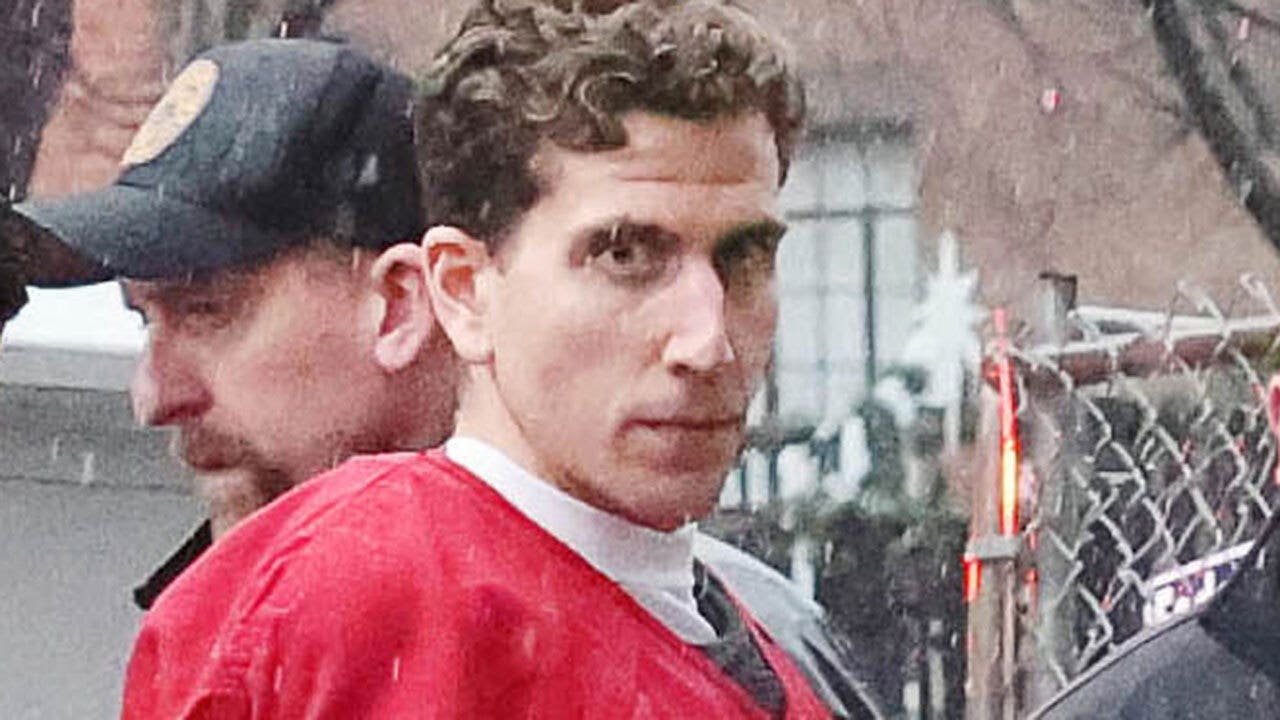
Bryan Kohberger arrives at Monroe County Courthouse in Pennsylvania in advance of an extradition hearing. He’s charged with the murders of four University of Idaho students. (The Image Direct for Fox News Digital)
Web sleuths picked up on it, and her connection to the Kohberger case was reported in the Idaho Statesman Tuesday.
“I have to testify in a big murder case here… because I’m the DoorDash driver, so yeah,” she says in the video.
An officer asks which case.
“The murder case with the college girls,” she says. “I’m the DoorDash driver. I saw Bryan there. I parked right next to him.”
She is not named in redacted court documents and may suffer from credibility issues after police in Pullman, Washington, accused her of driving while high on drugs.
BRYAN KOHBERGER DEFENSE SUGGESTS ‘ALTERNATE PERPETRATORS’ IN IDAHO MURDERS, JOINING INFAMOUS LEGAL STRATEGY
Madison Mogen, top left, smiles on the shoulders of her best friend, Kaylee Goncalves, as they pose with Ethan Chapin, Xana Kernodle, and two other housemates in Goncalves’ final Instagram post, shared the day before the four students were stabbed to death. (@kayleegoncalves/Instagram)
DoorDash is among dozens of companies that police sought information from during their investigation, Fox News Digital has previously reported.
Kernodle received a delivery less than 10 minutes before the attack, which happened just after 4 a.m. on Nov. 13, 2022.
GET REAL-TIME UPDATES AT THE FOX NEWS TRUE CRIME HUB
A surviving roommate, who is identified only by her initials in court documents, told police early on in the investigation that she came face to face with a masked man with bushy eyebrows before he left the house without attacking her.
Bryan Kohberger, who is accused of killing four University of Idaho students in November 2022, walks past a video display as he enters a courtroom to appear at a hearing in Latah County District Court, Wednesday, Sept. 13, 2023, in Moscow, Idaho. (AP Photo/Ted S. Warren, Pool)
FOLLOW THE FOX TRUE CRIME TEAM ON X
The attack also killed Ethan Chapin, who was Kernodle’s 20-year-old boyfriend, and two 21-year-old roommates, Madison Mogen and Kaylee Goncalves.
All four were University of Idaho students, and all four suffered multiple stab wounds from a large knife, according to authorities.
Police found a Ka-Bar sheath under Mogen’s body that prosecutors allege has Kohberger’s DNA on it. Police allege they linked a suspect vehicle and Kohberger’s phone pings to the scene as well.
The 30-year-old suspect, who is from Pennsylvania, was studying for a Ph.D. in criminology at Washington State University, just a 10-mile drive from the crime scene.
SIGN UP TO GET THE TRUE CRIME NEWSLETTER
A judge entered not guilty pleas on Kohberger’s behalf at his arraignment in May 2023. He faces four counts of first-degree murder and one of felony burglary. He could face the death penalty if convicted.
Read the full article from Here

Continue Reading
Denver, CO
Denver Broncos Foundation launches extension of ‘ALL IN. ALL COVERED.’ emphasizing youth football participation

DENVER (KKTV) – In extension of the Denver Broncos Foundation’s helmet distribution program, they have launched the “ALL IN. ALL COVERED.” Statewide Youth Football Participation Program, in partnership with Every Kid Sports and Good Sports.
Over the course of five years, the program will aim to reduce financial barriers to play by providing financial support and essential equipment to increase youth participation in tackle and flag football.
The Foundation will fund registration fees for underserved youth through Every Kid Sports, while increasing access to both individual and shared team equipment through Good Sports.
The program aims to serve more than 17,000 children across Colorado, using football as a pathway to drive equitable access and sustained participation in sport.
“We’re excited to work with Every Kid Sports and Good Sports to grow youth football participation across Colorado and help open doors to the sport for both boys and girls,” said Bobby Mestas, Broncos Senior Director of Youth & High School Football.
Coaches and players from across the Pikes Peak Region had their first look at the new helmets they received for free from the Denver Broncos Foundation back last year.
Copyright 2026 KKTV. All rights reserved.
Seattle, WA
Iran and Egypt to play in Seattle ‘Pride Match’ despite earlier complaints | The Jerusalem Post

Seattle revels in its reputation as a welcoming place and Pride flags are visible all over the city, all year round. Its June Pride weekend is one of the biggest in the United States.
So, ahead of December’s World Cup draw, it was only natural that local organizers designated the June 26 match to be held in the city as a “Pride Match.”
Then the draw happened — and the two teams scheduled to play the game were Egypt and Iran.
Egypt’s Football Association urged global soccer governing body FIFA to prevent any Pride-related activities, arguing such events clashed with the Muslim-majority country’s cultural and religious values. The governing body in Iran, where same-sex relations can carry the death penalty, filed an objection with FIFA.
Some in Seattle have doubts over the teams in the ‘Pride Match’
But in Seattle, there is no question that the Pride Match will go ahead as planned.
“The World Cup is going to come and go in three weeks,” Hedda McLendon, from Seattle’s local World Cup organizing committee, told Reuters. “The Pride celebration … has happened on this weekend for 50-plus years.
“It is going to happen this weekend, it is going to happen long after the World Cup.”
Some in the city’s LGBTQ community had mixed feelings given the participants, said Jon Cairns, 49, manager of local LGBTQ+ club Kremwerk.
Cairns, however, said his own view was that it provided a platform to promote acceptance that only the world’s biggest sporting event could offer.
“My reaction is let’s have them,” he told Reuters. “International sports is one of the biggest brokers historically of social change and individual rights and freedoms worldwide, including in the U.S.”
He cited black U.S. sprinter Jesse Owens’ four gold medals at the 1936 Olympic Games in Nazi Germany and Tommie Smith and John Carlos’ raised-fist protest in 1968 as moments where “only international sports could reach that big of an audience.”
“They’re not going to turn off the World Cup on state television in Iran or Egypt to block out a Pride flag in the audience,” Cairns said.
The Pride Match is “a host city initiative” and separate of FIFA, a spokesperson for soccer’s governing body told Reuters.
Seattle’s LGBTQ community sees an opportunity
Egypt and Iran’s involvement in the Pride Match is not the first time the World Cup has grappled with stark differences in attitudes between hosts and visitors.
In 2022 World Cup host Qatar, the emir said visitors should “respect our culture” when asked about gay people attending the tournament.
FIFA threatened yellow cards for captains wearing the “OneLove” armband, citing its rules against political slogans. Teams including England and the Netherlands that had been planning to wear the armbands to protest Qatar’s laws against same-sex relationships abandoned the plan.
For Ryan Webster, a 40-year-old lifestyle manager who was at Kremwerk the weekend before Pride, Seattle’s “Pride Match” was an opportunity to show solidarity with people in countries where their sexuality was outlawed.
“I’m choosing to believe that this is our moment to allow the members of the LGBTQ community that come from those countries to have the opportunity to celebrate themselves in totality that they might not have otherwise,” he said outside the club, which will host a watch party for Friday’s game.
Inside, ‘Venus Fengz’ lip-synced to Cher’s “Believe” before introducing fellow drag performers to the stage, clapped and cheered by a raucous crowd.
Fengz, who only wanted to provide their stage name, said Pride coinciding with the World Cup would bring increased visibility, anticipating perhaps some new audience members.
“I think it’s always great for us to be able to share space and share places with people who don’t have the same experiences as us,” they told Reuters.
“Sometimes you just have to be the bigger person and show grace where you can and know that everyone is a human learning (from) different experiences, but also it can get hard — because you’re on the shorter end of the stick, always trying to have to explain yourself around people who don’t grow up with the same worldview.”

San Diego Comic-Con is full of challenges: Surviving Hall H lines, navigating the Exhibit Hall, collecting exclusives, and somehow getting more than four hours of sleep a night. The Con Rangers are here to make sure those accomplishments don’t go unnoticed, and they’ve been doing it for ten years (!). For 2026, they’re returning to […]
-

 Miami, FL5 minutes ago
Hard Rock Cafe lets Downtown Miami lease lapse after 30-plus years
-

 Boston, MA6 minutes ago
Federal judge in Boston bars Trump from implementing proof of citizenship requirement to vote – The Boston Globe
-

 Denver, CO12 minutes ago
Denver Broncos Foundation launches extension of ‘ALL IN. ALL COVERED.’ emphasizing youth football participation
-
Seattle, WA14 minutes ago
Iran and Egypt to play in Seattle ‘Pride Match’ despite earlier complaints | The Jerusalem Post
-

 San Diego, CA20 minutes ago
Con Rangers San Diego Comic-Con 2026 Exclusives
-

 Milwaukee, WI27 minutes ago
Did Milwaukee Get Enough in Return for Giannis?
-

 Atlanta, GA29 minutes ago
Minnesota’s golden gift to Atlanta just became Wolves’ worst nightmare
-

 Minneapolis, MN35 minutes ago
FOX 9 Good Day: June 24, 2026


