West
Some Democrats call for changes to homeless camping laws as 'uncertainty' follows Supreme Court ruling

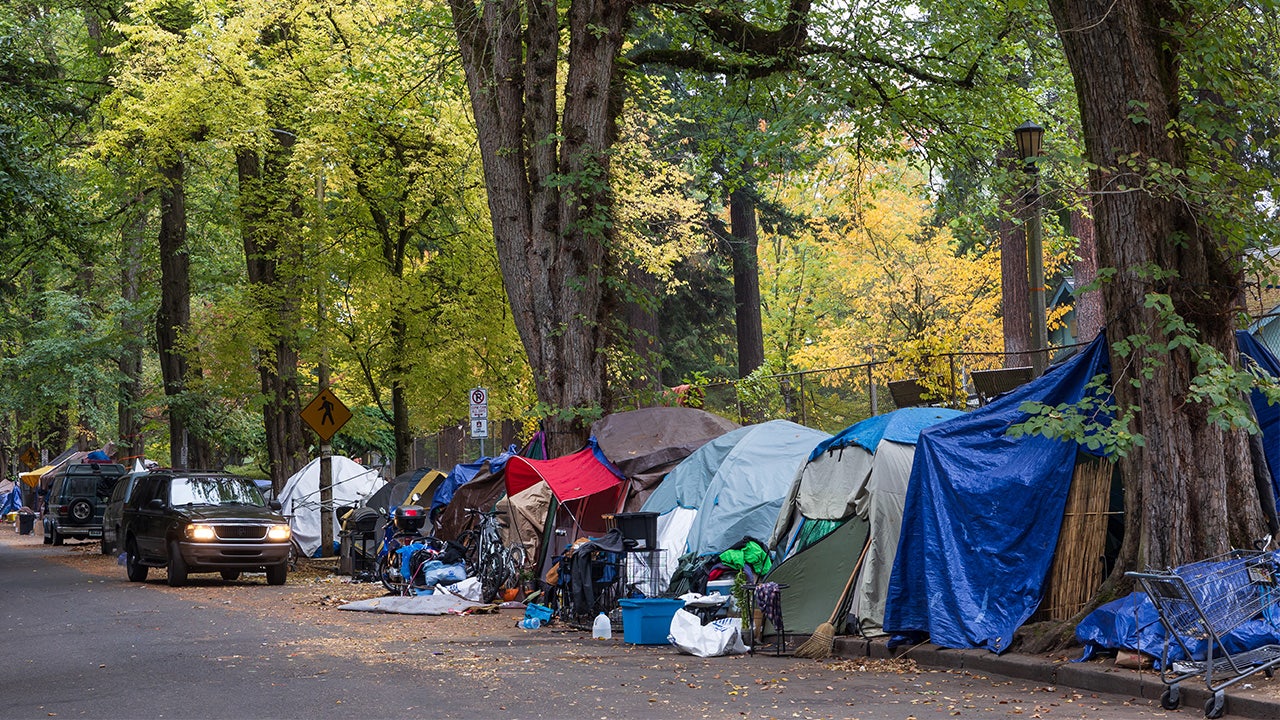
On the heels of the Supreme Court ruling that cities can outlaw homeless camps, at least two Oregon Democrats have signaled a desire to roll back a 2021 state law limiting municipalities’ ability to ban camping on public property.
“Our communities deserve streets that are safe and clean, not only for residents but also for businesses that drive our economy,” state Sen. Mark Meek said in a statement, according to the Portland Tribune. “We must reform restrictive laws… so that local communities can maintain public safety.”
A homeless man attempts to keep a fire going in the rain in a park in Salem, Oregon. (Hannah Ray Lambert/Fox News Digital)
‘ENDLESS REVOLVING DOOR’: BLUE STATE WILL RECRIMINALIZE DRUGS, BUT ONE KEY OFFICIAL IS LOOKING FOR A LOOPHOLE
In a 6-3 decision, the Supreme Court last week overturned a 9th Circuit ruling that found laws banning homeless people from sleeping in parks and on sidewalks violated the Eighth Amendment prohibition on cruel and unusual punishments. That case originated in Grants Pass, Oregon, and West Coast leaders across the political spectrum said it hamstrung efforts to clean up streets.
The new ruling gives cities more options as they grapple with an unsheltered homelessness epidemic, but in Oregon, a separate state law could still tie officials’ hands.
“Cities right now have been given so many different competing guidelines that there is a significant amount of uncertainty,” state Rep. Paul Evans said, according to OPB.
CRISIS IN THE NORTHWEST: INSIDE ONE OF OREGON’S LARGEST HOMELESS CAMPS WITH A FORMER DRUG DEALER
Oregon lawmakers passed a bill in 2021 that requires local ordinances regulating sitting, lying and sleeping on public property to be “objectively reasonable as to time, place and manner.” Then-House Speaker Tina Kotek, a Democrat who is now Oregon’s governor, championed the law.
Meek and Evans are among just three Democrats still serving who voted against the bill in 2021, OPB reported. After the Supreme Court’s ruling, they joined Republican minority leaders in calling for a change to the law, raising the likelihood that state lawmakers could take up the issue when they reconvene early next year.
But they’d have to get more of their own party on board, and the Democratic chair of the House Housing and Homelessness Committee told OPB the existing law “struck a good balance” for cities and homeless people.
Leaders like Portland Mayor Ted Wheeler disagree, arguing the word “reasonable” is too subjective.
A judge blocked Portland’s 2023 ordinance banning daytime camping in front of businesses or on sidewalks. (Hannah Ray Lambert/Fox News Digital)
SPENDING ON HOMELESSNESS SPIKES TO A ‘SHOCKING’ AMOUNT IN PORTLAND METRO AREA
Under the state law, a judge indefinitely barred Portland from enforcing a 2023 ordinance banning people from blocking access to businesses or sidewalks with tents from 8 a.m. until 8 p.m.
“The term ‘reasonable’ hasn’t been defined by the legislature, and that is one thing that I would request that they do if they want to keep some time, place and manner restrictions in place — they have to define reasonable because the court refused to do it,” Wheeler told KGW. “We thought we defined reasonable.”
A watered-down version of Portland’s ordinance took effect this week, but law professor Tung Yin told KOIN 6 News he expects it to be challenged again under the state law.
Advocates for homeless people have already promised to do just that if Oregon cities overstep.
“We intend to use that law, which is more important than ever, to protect homeless people in the state of Oregon,” Ed Johnson, lead counsel on the Grants Pass case, said in a news conference after the SCOTUS ruling.
Tents cover an open space near the Steel Bridge in Portland, Oregon, on July 7, 2023. (Hannah Ray Lambert/Fox News Digital)
If the legislature doesn’t revisit the law, Republican attorney general candidate Will Lathrop said “legalized tent cities” will remain, and act as a magnet for other homeless people.
“Not only will Oregon be unable to address our state’s widespread homelessness crisis — as other states start cleaning up their streets — I fear that we will see an influx of homeless populations flooding to Oregon where there is no accountability,” he said in a statement shared with Fox News Digital.
Read the full article from Here

West
LAPD officer hit with felony charges after allegedly skydiving while collecting full disability benefits
NEWYou can now listen to Fox News articles!
Officials on Wednesday accused a Los Angeles police officer of insurance fraud after he allegedly went skydiving multiple times while collecting full disability benefits.
Christopher Brandon Carnahan, 43, of Norwalk, was charged Monday after allegedly exaggerating an on-duty injury sustained in 2023, according to the Los Angeles County District Attorney’s Office.
Carnahan is a veteran officer who has been with the Los Angeles Police Department (LAPD) 18 years, according to WatchTheWatchers.net, citing California public records.
“This case is about honesty and accountability,” Los Angeles County District Attorney Nathan J. Hochman said in a statement.
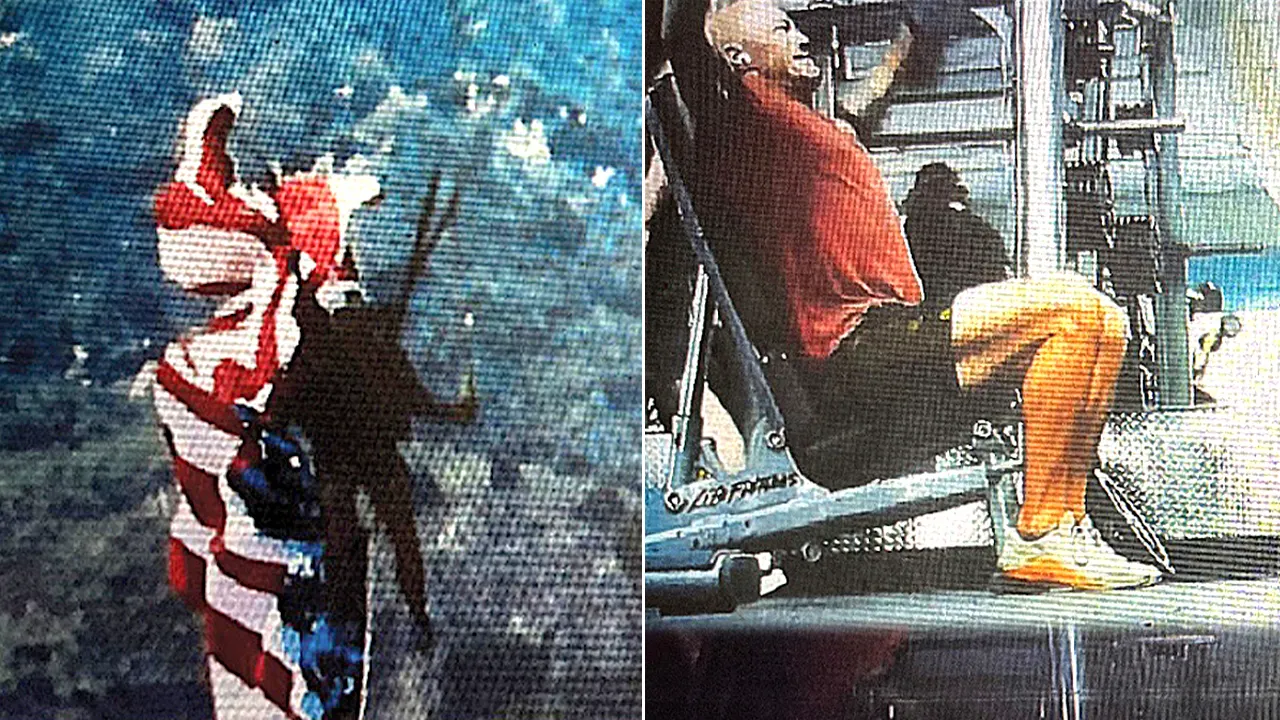
Christopher Brandon Carnahan appears to skydive at Skydive Elsinore in Lake Elsinore. (District Attorney’s Office for the Los Angeles County District)
“Claiming to be temporarily totally disabled and collecting disability benefits intended for injured workers while engaging in physically demanding activities like skydiving is a crime. This is an officer who knows the law and understands the standards he is sworn to uphold.”
On May 22, 2023, Carnahan claimed he injured his left elbow while on duty and was subsequently placed on temporary totally disabled (TTD) status, officials said.
Police under TTD are entitled to receive 100% of their base salary tax-free for up to a year and then two-thirds afterward if the injury persists.
EX-ERIC ADAMS STAFFER WHO CELEBRATED CHARLIE KIRK ASSASSINATION POCKETED $36K IN BRIBERY, FRAUD CASES: FEDS
Surveillance footage captures Carnahan working out at a fitness center with dumbbells. (District Attorney’s Office for the Los Angeles County District)
Contrary to claims of being completely disabled, Carnahan allegedly engaged in strenuous physical activity, including working out and completing “many skydives” at Skydive Elsinore in Lake Elsinore, south of Los Angeles.
The District Attorney’s Office also released photos showing what appears to be Carnahan skydiving and exercising at a fitness center. In one image, dated May 23, 2024, the LAPD officer is seen holding dumbbells in a motion that involves his elbows.
CLICK HERE TO DOWNLOAD THE FOX NEWS APP
A Los Angeles Police Department vehicle is parked in the city. (Los Angeles Police Department)
He faces two counts of felony insurance fraud and is being held on $100,000 bail. If convicted, Carnahan could be sentenced to six years in jail.
The LAPD, which is investigating the case, is expected to review Carnahan’s employment status pending the outcome of his criminal trial.
Related Article

Read the full article from Here

She acknowledged that Iranian Americans hold a range of political views, including some who support U.S. intervention, but said she believes the future of Iran should be determined by its people.
“The Iranian people in Iran can decide the future of their country,” she said. “War, I don’t think, is going to help.”
Speaking to the crowd, Mortazavi challenged what she described as a narrative that Iranians broadly support U.S. and Israeli military action.
“They want you to believe that every Iranian … is cheering on the United States and Israel,” she said. “That is unequivocally false.”
She urged attendees to continue organizing beyond the rally and announced plans for additional demonstrations.
Dina Saadeh, an organizer with the Palestinian Youth Movement, said multiple groups mobilized quickly in response to the strikes.
“I’m angered today,” Saadeh told KQED. “People here don’t want to see our country engaged in more endless war.”
Saadeh described the protest as part of a broader effort to oppose sanctions, military escalation and what she called U.S. imperialism. She said participants were calling on elected officials to redirect public funds toward domestic needs.
“People want money for jobs and education, not for war and occupation,” she said.
KQED’s María Fernanda Bernal contributed to this story.

Denver police are looking for information that could help them identify the suspect in a fatal assault overnight.
Officers were called to the scene in the 9700 block of E. Hampden Avenue around 2:08 a.m. They said an injured man at the scene was taken to a hospital for treatment, but he has been pronounced deceased.
DPD says they’re investigating the case as a homicide. They did not provide the identity of the man who was killed or further details on the case.
Police encouraged anyone with information about the attack or the possible suspect(s) involved to contact Metro Denver Crime Stoppers.

Crypto Sector Suffers Exodus of Reliable Retail Investors | PYMNTS.com

Canton High School students find success in personal finance

The Workout Habit That Can Become Harm

Film reviews: ‘How to Make a Killing,’ ‘Pillion,’ and ‘Midwinter Break’

Investors brace for a bigger backlash from Middle East war

Florida High School Football Rankings: Top 25 teams – Oct. 21

Cleary's 21 help Le Moyne down Central Connecticut State 69-64 in OT

How old is Bo Nix? What to know about Oregon quarterback ahead of 2024 NFL Draft

99th annual Pony Swim held in Virginia

Indiana Members Credit Union announced as new anchor tenant at Bottleworks District

House Republicans push Johnson to go to war with Senate over SAVE Act

Israel FM says Europe too divided, slams Spanish PM

Satellite images provide view inside Iran at war

Video: What the Texas Primary Battle Means for the Midterms

Dems’ potential 2028 hopefuls come out against US strikes on Iran
-

 World4 days ago
Exclusive: DeepSeek withholds latest AI model from US chipmakers including Nvidia, sources say
-

 Massachusetts4 days ago
Mother and daughter injured in Taunton house explosion
-

 Montana1 week ago
2026 MHSA Montana Wrestling State Championship Brackets And Results – FloWrestling
-

 Denver, CO4 days ago
10 acres charred, 5 injured in Thornton grass fire, evacuation orders lifted
-

 Louisiana7 days ago
Wildfire near Gum Swamp Road in Livingston Parish now under control; more than 200 acres burned
-

 Technology1 week ago
YouTube TV billing scam emails are hitting inboxes
-

 Politics1 week ago
OpenAI didn’t contact police despite employees flagging mass shooter’s concerning chatbot interactions: REPORT
-

 Technology1 week ago
Stellantis is in a crisis of its own making