Boeing indicated on Tuesday that it could raise up to $25 billion (€23 billion) including by issuing and selling new shares to aid its ailing balance sheet after years of heavy losses, while factory workers of the US planemaker continue to strike, demanding a better salary.
Boeing said in back-to-back regulatory filings that it could raise the funds over the next three years and enter into a fresh agreement with lenders.
Years in the making
The planemaker hasn’t made an annual profit since 2018, losing more than $25 billion in total over the years that have followed.
Advertisement
Boeing’s reputation has been severely hit over that period which has seen two 737 Max jets crashing, killing 346 people.
Boeing 737 Max incident could have been ‘much more tragic’
Finances for the planemaker are currently under even more strain as a strike by workers who build most of its airline jets goes into its second month. The industrial action has deepened Boeing’s cashflow issues, slowing production and delivery.
Factory workers held a large rally in Seattle on Tuesday to demand better wages, adding pressure on new CEO Kelly Ortberg to end the dispute.
Hundreds of workers were in the main hall at union headquarters chanting “Pension! Pension! Pension!” and “One day longer, one day stronger!”
Advertisement
Boeing is cutting around 10% of its workforce — or 17,000 people — “over the coming months,” and postponing the launch of its first 777X jetliner. But factory workers in Seattle remained undeterred on Tuesday, as they continued to fight for higher wages and improved pensions.
Improved pensions was on the agenda of Boeing machinists, labor allies and elected officials in Seattle at their union hallImage: Manuel Valdes/AP/picture alliance
Around 33,000 West Coast workers, most in Washington state, have been on strike since September 13, calling for a 40% salary increase spread over four years.
The strike has halted production of Boeing’s best-selling 737 MAX and its 767 and 777 twin-aisle aircraft. The company is typically paid on delivery with its orders from airlines, hence the additional short-term cashflow strain.
Boeing made an offer to raise hourly wages for striking workers by 30% but union negotiators rejected it, saying it “did not go far enough” to address concerns, and that the planemaker “has missed the mark with this proposal.”
Now entering its second month, the strike has no end in sight and has only added to the company’s litany of problems.
As a result of the action, Boeing has said it is pushing back first delivery of the 777X to 2026 from 2025. The plane was originally supposed to enter service in January 2020.
Advertisement
Union leaders attended a rally in Seattle as the strike entered its second monthImage: Manuel Valdes/AP/picture alliance
Share price boosted
But the company’s stated contingency plans did improve investor sentiment slightly on Tuesday, as shares of The Boeing Co roseby 2% in afternoon trading.
Boeing’s securities filings indicated that it has the ability to raise funds by offering stocks or debt over the next three years if needed, but also did not commit it to doing anything.
The planemaker said that it entered into a $10 billion supplemental credit agreement with several leading banks to provide short-term liquidity.
American credit assessment agency Fitch Ratings said the announcements increase Boeing’s financial flexibility and ease short-term liquidity fears. Management’s ability to tap capital sources other than debt “will help alleviate downgrade risks” by improving the likelihood of paying off debt that matures in 2025 and 2026, Fitch said.
The news comes as a welcome boost after credit rating agency Standard & Poor’s said last week it was considering cutting Boeing’s credit rating.
Boeing’s troubled Starliner spacecraft returns without crew
Thanks to Susan for the photo. She called to tell us about a dog stuck on the rocks off Beach Drive near Harbor West (the condos on pilings), and a crowd gathering to figure out how to rescue it from the rising tide. We were away from the desk at the time but after returning a little while later, we heard the situation mentioned on police radio, with word the dog had been rescued, so we didn’t head that way. Then late tonight Susan sent photos, explaining that the dog apparently is known to swim to those rocks and back, but for some reason got stuck this time, “until a paddle boarder and kayaker paddled out to it to coax it off the rocks and back to the shore.”
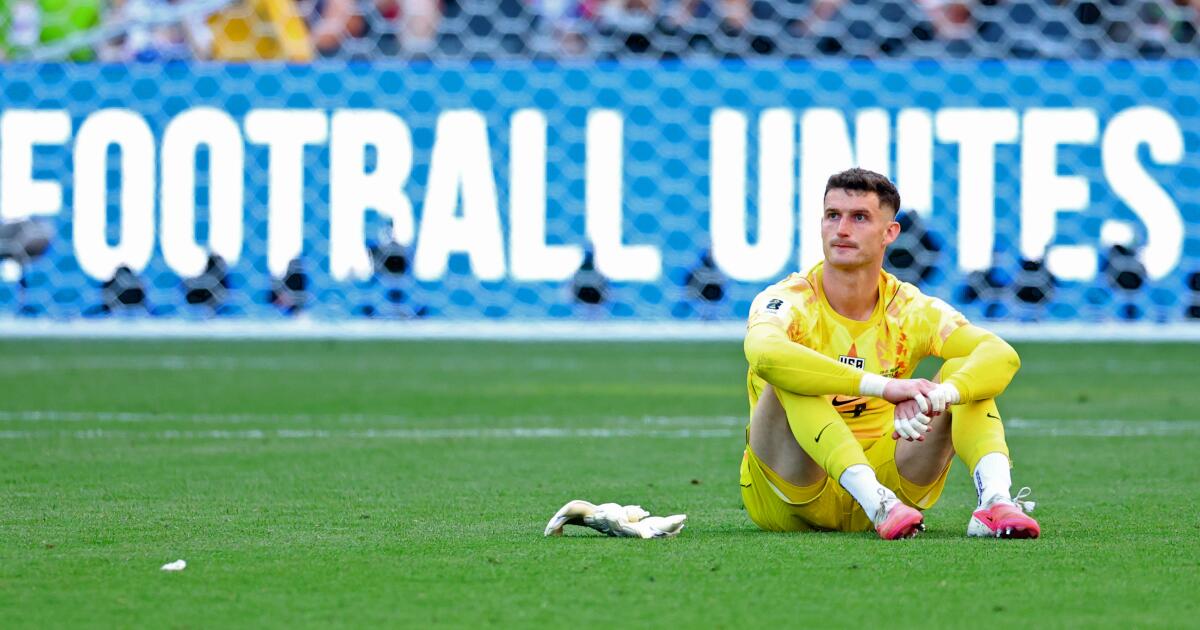
As Seattle’s month-long role as a host city for the Fifa Men’s World Cup draws to a close with a knockout match between the United States and Belgium, local match-day scenes, business boosters and media dispatches have projected an image of a sports-fueled boom town.
On match days, hordes of locals and visitors have packed the city’s waterfront and official watch parties, shattering public-transit records and buoying nearby beer sales. Local soccer-focused mainstays like the George & Dragon Pub have reported “incredible” increases in business. And, pointing to positive reporting by the Guardian and other international newspapers, Seattle’s business lobby says the city has “performed very, very well on the world stage”.
But the effects – and extent – of Seattle’s Fifa-fueled boom are murky. Some preliminary reports claim tourism volumes to the city are down year over year, struggling to outmatch the volume of visitors Seattle typically sees during its summer high season. Travel costs have spiked after the US-Israeli war on Iran, exacerbated by Fifa’s booking large tranches of hotel rooms, which created artificial scarcity for lodgings and raised prices. Many international visitors, including the city’s once-reliable base of Canadian tourists, have steered clear of Seattle since early 2025, after violent, draconian immigration enforcement and threats by Donald Trump against Canada. And, prior to today’s match, Seattle’s schedule featured many countries whose fans couldn’t attend the World Cup because of the Trump administration’s travel bans, including supporters from Iran and Senegal.
Soccer fans protesting against Iran’s current regime wave the country’s Pahlavi dynasty flag outside a bar near Seattle Stadium on 26 June. Photograph: Mathieu Lewis-Rolland/Getty Images
Pointing to these factors and confronting local economic challenges such as an ongoing wave of tech layoffs, some business owners have reported declining sales and question the cheery forecasts shared by tournament organizers prior to the World Cup. They await a final tally of the tourist volumes and benefits Fifa did or did not bring to Seattle, and wonder how the city’s economy might fare once the alleged boom subsides.
Advertisement
‘They had hyped us up so much’
In early 2025, Vince Vu, owner of Anh Ơi Bake Shop, a Vietnamese American bakery, began receiving flyers and messages from consultants associated with the World Cup and city government. Seattle’s soccer stadium directly adjoins the city’s downtown core, as well as the Chinatown-International District, and draws large crowds to the area on match days. The consultants explained to Vu and other businesses in the area how they should prepare for a Fifa-induced flux of customers.
“They had hyped us up so much,” Vu said. “We had weekly meetings telling us, ‘Hey … make sure you’re going to double your staff and … double your inventory and do all this stuff, because [the World Cup is] going to be this great thing for the city.’”
The regional tourism board Visit Seattle initially forecast in 2024 that Seattle’s status as a World Cup host city would generate $929m in local economic activity; citing downturns in international travel to the US following Trump’s return to the presidency, Visit Seattle later revised its estimate to $845.6m, projecting a total count of 750,000 visitors over the course of the World Cup.
In the tournament’s opening days, Bloomberg reported that Seattle may be the only US host city to have seen a year-over-year decline in flight bookings, citing data from travel marketing platform Sojern. More recent data complicates that conclusion; Perry Cooper, a spokesperson for Seattle’s primary airport, said that Seattle has been “up in travelers” since the start of the World Cup by at least 3%, including a 4% year-over-year increase in international visitors.
Fans gather at bars before the Fifa World Cup 2026 Group D match between USA and Australia at Seattle Stadium 19 June. Photograph: Jane Gershovich/ISI Photos/Getty Images
Siddhant Bahadur, who manages more than 40 short-term rentals in Seattle, said business has been fairly flat compared with last year’s summer high season for tourism. He thinks the city’s marginal increases in travel volumes during the World Cup are a “telling sign” that tourism to the city is otherwise down due to economic and geopolitical challenges.
Advertisement
“I think we lost a lot of Canadians, and I think people are worried about the economy and about what’s going on in Washington, and, oh, by the way, we’re at war,” echoed short-term rental owner Marlow Harris, who said she’s seen a 30% hit to business.
In an emailed statement, Visit Seattle’s chief business officer, Kelly Saling, said declines in international tourism since 2024 have been “partially offset” by an increase in domestic tourism, meaning the city has not seen a “drop in forecasted visitors, just a change in the mix”. Local hotels have reported mixed results, with lower occupancy rates than projected, but with large increases in revenue; Fifa booked large blocks of hotel rooms before the World Cup and released them in the weeks leading up to the tournament, generating artificial scarcity and raising prices, according to local business leaders. Saling said hotel booking data has shown “peaks and valleys” around match days, which included a new revenue record on the night preceding the 19 June match between the US and Australia.
To Vu, the World Cup’s peaks have coincided with Anh Ơi Bake Shop’s lowest sales. When the US squared off against the Socceroos, Vu’s business saw just a quarter of its normal sales. Vu said other neighborhood businesses have reported similarly disappointing results: Regular patrons have avoided the neighborhood on match days to avoid traffic, he noted, adding that sports tourists may not be interested in “culturally specific businesses”.
skip past newsletter promotion
after newsletter promotion
Soccer fans crowd in to watch the Iran and Egypt match on a giant screen on 26 June. Photograph: Mathieu Lewis-Rolland/Getty Images
The Seattle aquarium has also reported a downturn, despite its location on Seattle’s currently sports fan-saturated waterfront. Emily Malone, a spokesperson for the aquarium, noted a “decrease in attendance” during the tournament, “particularly on match days”. The aquarium has offered promotions for visitors wearing soccer gear, as well as free programs on the waterfront. Overlook Walk, a public park situated on the roof of Seattle Aquarium’s recently constructed pavilion, has drawn large crowds during World Cup watch parties.
A mixed financial picture, but optimism that visitors will return
Scott Stulen, director and CEO of the Seattle Art Museum, began planning for the World Cup in 2024, and expected an uneven increase in footfall across its three locations. The museum’s free sculpture garden along the waterfront received new signage before the World Cup, and currently features a temporary mini-golf course designed by local artists. The sculpture garden has seen its foot traffic more than double, while visitor numbers to its downtown museum have stayed “basically flat”, as Stulen anticipated.
Some variables could not be planned in advance. Seattle’s group-stage matchups “weren’t ideal”, Stulen said, as the city missed out on fanbases that “stay a little bit longer” in host cities. Some World Cup organizers see a handful of teams – Argentina, England and France, among others – as special catalysts of economic activity, featuring dedicated fanbases with the financial means to stay longer in host cities.
Advertisement
Seattle’s organizers also expected World Cup activity to “spread into the city a little bit more than it has”, though bars and restaurants are “killing it” if they’re located “in the right place”, Stulen said, framing the “positive activity” in downtown Seattle as “a win”.
US fans march together to the Seattle Stadium before the Fifa World Cup 2026 Group D match between USA and Australia on 19 June. Photograph: Jane Gershovich/ISI Photos/Getty Images
Even marginal increases in sales can make a meaningful difference for local businesses preparing to weather future economic volatility, according to Daniel Pagard, who owns the George & Dragon Pub, a local British bar known for screening Premier League games and other international matches. Recent tech layoffs have affected some locals’ finances, and businesses are beginning to note the downstream effects.
“You definitely see a lot of it when people come out,” Pagard said. “Instead of maybe getting two half English breakfasts, they’re splitting one full English, because it saves them a few bucks, and [they’re] turning down that one extra pint before they leave.”
Seattle’s business lobby hopes visitors – and major tournaments – will come back. According to Joe Nguyễn, a former lawmaker who now leads the Seattle Metropolitan Chamber of Commerce, Seattle’s business lobby hosted a trade delegation from Australia during the 19 June match, and expects some foreign direct investment to arise from that initiative. More broadly, he said Seattle has shown it is capable of hosting large-scale sports programming, and can efficiently deploy resources to accommodate large influxes of visitors.
Today’s match against Belgium may be the “craziest sporting event that Seattle’s probably ever seen”, he said. Nguyễn hopes the World Cup will bring the city closer to some of its ambitious goals.
Advertisement
“Because of our remoteness in the north-west corner, people oftentimes will skip over us on their tours. Now they’ll think twice … I think the NFL will look to here to see if they should have some games, [and] I think this is helpful for us bringing back a basketball team,” he said.