Seattle, WA
Adaptive athletes get physical with Seattle Slam wheelchair rugby

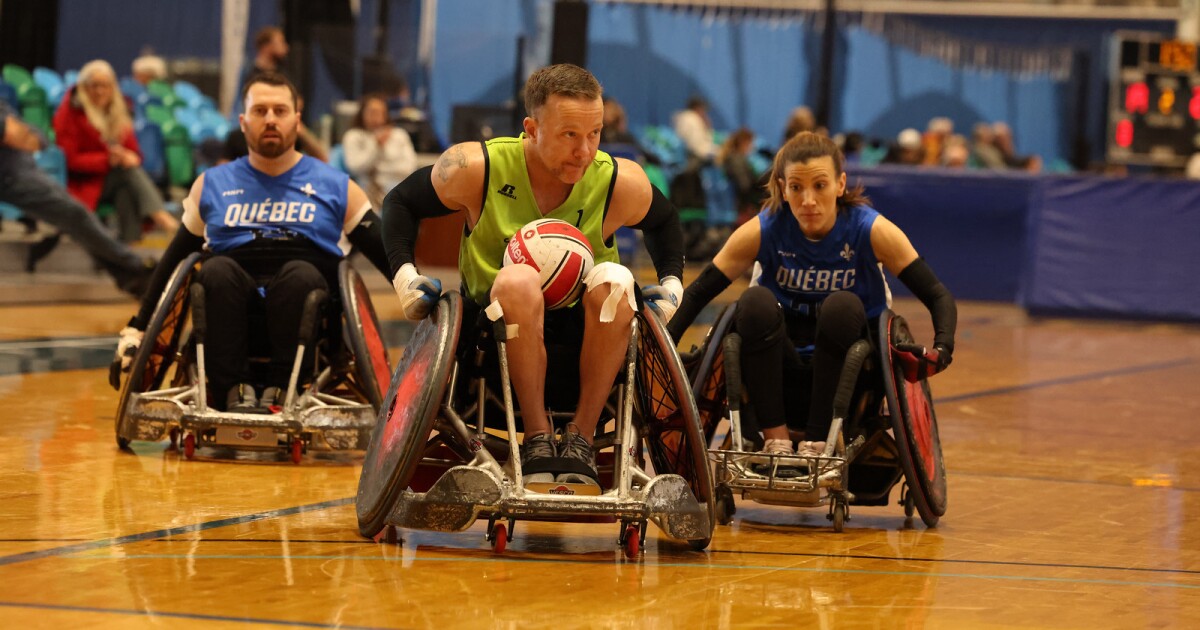
On a recent Wednesday in West Seattle, eight athletes in wheelchairs spun across the Southwest Teen Life Center’s basketball court. A volleyball flew from player to player; chairs collided and disengaged, filling the gym with metallic booming sounds.
For those familiar with wheelchair rugby—a fast-paced, full-contact sport played by athletes with both upper- and lower-limb impairments—the scene was unremarkable.
“It’s an hour and a half of sprinting back and forth, and people trying to kill you the whole time,” said Jeremy Hannaford, a Port Orchard native who has been playing wheelchair rugby for 20 years.
Hannaford is the coach of the Seattle Slam, Washington’s only wheelchair rugby club. Every Wednesday from 5 to 9 p.m., people of all abilities and from all walks of life gather in West Seattle for the Slam’s weekly open practice.
Players joke around as they transfer into rugby chairs and don rubber-coated gloves and athletic tape to protect their hands from injury. Support staff—physical and occupational therapists—are on hand to right chairs, rip tape, and reinflate tire tubes.
Wheelchair rugby, also known as “quad rugby” or “murderball,” was invented in 1977, but has struggled to gain mainstream attention. This past summer, two factors drove increased media coverage: Team USA took home the silver medal at the 2024 Paris Paralympics, while Sarah Adam became the first woman to compete for Team USA.
According to Hannaford, the attention trickled down to the Seattle Slam. As Washingtonians realized there was a local outlet for the game, the Slam saw an influx of sponsorships and fans.
Brian Moore, who used to regularly drive three hours each way to play with the Slam, noted that new, able-bodied viewers are realizing something people with disabilities have known all along.
“For able-bodied people who see the sport for the first time, they’re kind of blown away by it,” Moore said. “For anyone that’s living with a disability of any type, it’s not nearly as impressive, because they’re used to just doing whatever they want to do anyways. They’re just people doing people things.”
“Yeah, we’re disabled, we’re in wheelchairs, whatever, but we’re elite athletes,” Hannaford added. “We bust our ass to be as good as we are, and we have ambitions and goals.”
For Hannaford, one of those goals is to grow the Slam into a competitive force. In 2005, when he first started playing with the Slam, the team didn’t prioritize attending travel tournaments, the way they do now.
“We didn’t make nationals for the first six, seven years I played,” he said. “It was more just, we go and have fun.”
Things have changed gradually: the Slam established a nonprofit, brought in coaches to run clinics, sought out sponsors, and appointed a team manager. Brent Rotter, a seven-year Slam veteran, has witnessed the Slam’s evolution firsthand.
“There is an underlying current on our team now that we want to go out and, if not win a national championship, at least get to nationals,” he said, referencing the United States Wheelchair Rugby Association’s national championship tournament, which takes place in early May.
Although Hannaford, Rotter, and the other members of the “Slam Fam” play to win, they’re also intentional about cultivating community, according to Cecilia Black, the only woman on the Slam’s ten-person roster. “Our team is such a family,” she said.
Chase Tasca, who joined the Slam three years after a devastating motorcycle accident, echoed Black’s assessment. “You learn a lot about how to live with a disability,” he said. “Even more, I’d say, than what you learn in the hospital. I mean, there’s guys here that have been disabled just about as long as I’ve been alive.”
Multiple Slam players expressed regret for not involving themselves in the wheelchair rugby community earlier in their recovery. To that end, Hannaford wants the Slam to continue to connect with potential recruits, as often and as early as possible.
“We’re trying to reach out to hospitals and occupational therapists and physical therapists and people that deal with disabilities and trying to get the word out that we’re here,” he said, adding that he encourages everyone to come to an open practice and “at least try it and see what happens.”
After all, someone might get lucky enough to experience the same thing Hannaford did the first time he transferred to a rugby chair.
“Freedom,” he said.


The Seattle Seahawks are the defending champions, but that doesn’t mean their rookie class isn’t important.
If anything, it means the rookie class is more important because these first-year players will have to play at a very high level right from the jump in their careers. The Seahawks’ rookie class is going to be expected to help the team win a Super Bowl by replacing some key players on the roster.
“The world champion Seahawks, as I saw it, had three clear areas that became needs this offseason: running back, safety and corner, with the departures of Kenneth Walker III, Coby Bryant and Tariq Woolen,” Sports Illustrated reporter Albert Breer wrote.
“Accordingly, running back Jadarian Price, safety Bud Clark and corner Julian Neal were their first three draft picks, and all three will be guys to watch in late July and August. And another storyline, one that’ll tie back to Price, will be Zach Charbonnet’s return from a torn ACL.”
Jadarian Price
With Zach Charbonnet tearing his ACL during the divisional round game against the San Francisco 49ers back in January, first-round pick Jadarian Price will be thrown into the limelight in Week 1, assuming he gets through training camp in full health.
This will be an excellent opportunity for Price to get early reps, especially considering he was a backup in college to Jeremiyah Love, the No. 3 overall pick in the draft. He’ll compete with George Holani in training camp for the starting job against the New England Patriots on Sep. 9.
Bud Clark
Clark shouldn’t be expected to start over Julian Love and Ty Okada, but he should still have a handsome role in the secondary. Last year, the secondary proved how important depth is, and everyone in Seattle’s back line can play at a high level.
Clark is taking over for Coby Bryant, who signed with the Chicago Bears back in March. Those are tough shoes to fill, but Clark will be given an opportunity to show why he was a second-round pick.
Julian Neal
The Seahawks won’t have Riq Woolen this season after he signed with the Philadelphia Eagles. Josh Jobe and Nick Emmanwori will also need to fill in for Woolen’s absence, but third-round pick Julian Neal will have to shoulder some of the responsibility as well.
Woolen played in 78 percent of the team’s defensive snaps last season, which means Neal could hear his number early and often if he has a strong showing in training camp.
— Enjoy free coverage of the Super Bowl champions from Seattle Seahawks On SI —
Sign Up For the Seahawks Daily Digest – OnSI’s Free Seattle Seahawks Newsletter
 Add us as a preferred source on Google
Follow

PHOTOS BY OLIVER HAMLIN FOR WEST SEATTLE BLOG
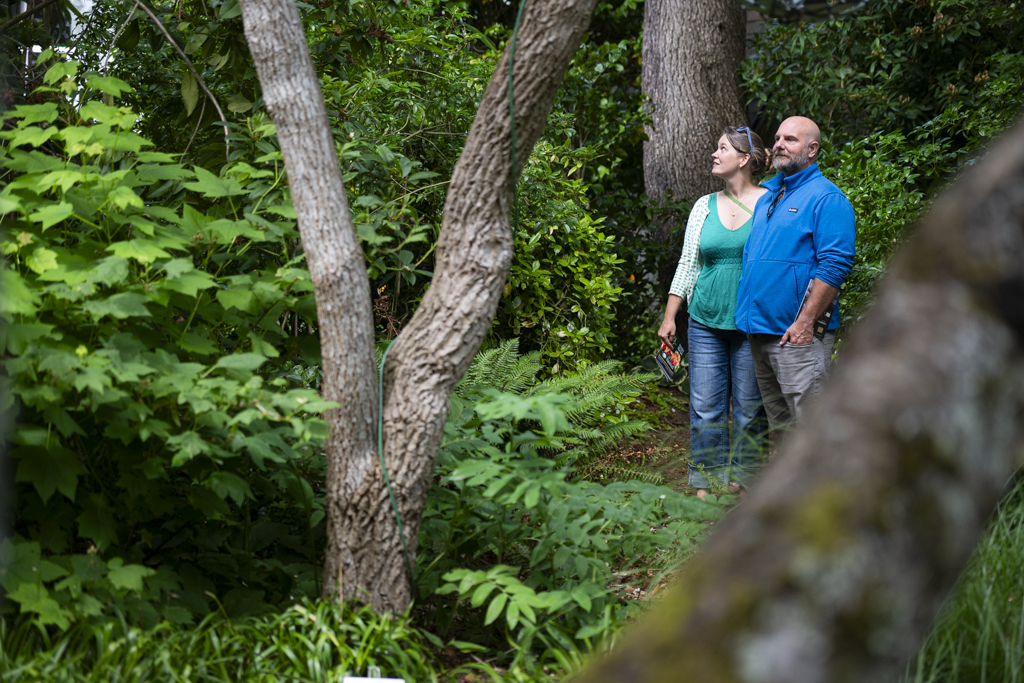
Hundreds of people spent Sunday admiring and photographing the 12 gardens spotlighted on this year’s West Seattle Garden Tour. Among them was WSB contributing photojournalist Oliver Hamlin, who presents a scene from each garden (including some of the gardeners. First, at Garden A, “A Show of Northwest Natives“:
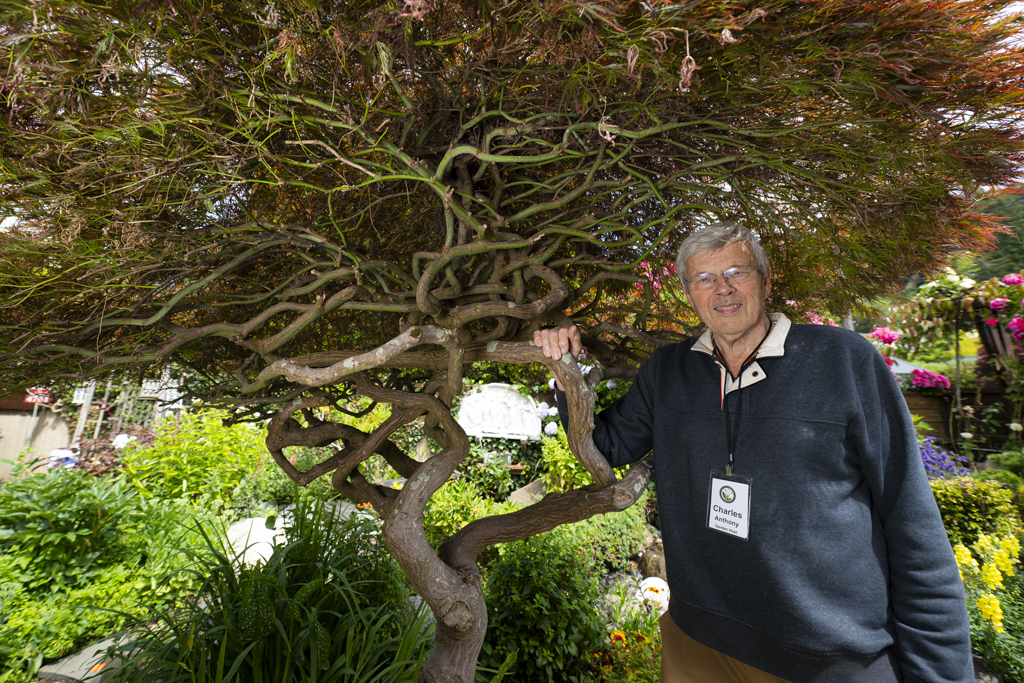
Charles Anthony, who created Garden B, “Salish Sea Sanctuary,” posed with his Japanese Maple:
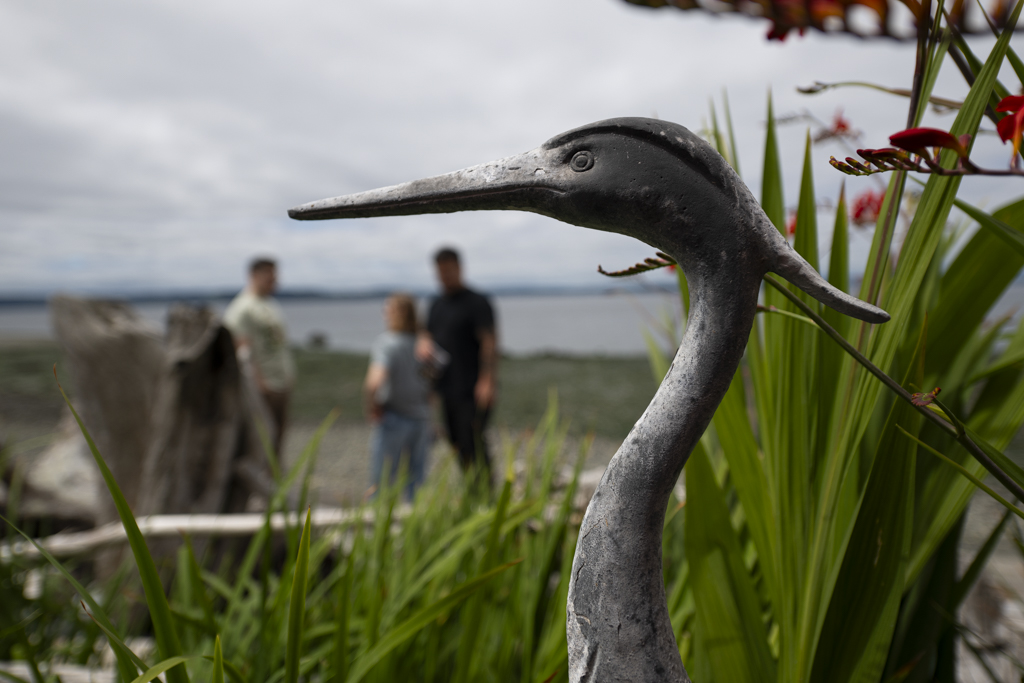
Garden C, “Heron Cove,” has its namesake standing sentinel:
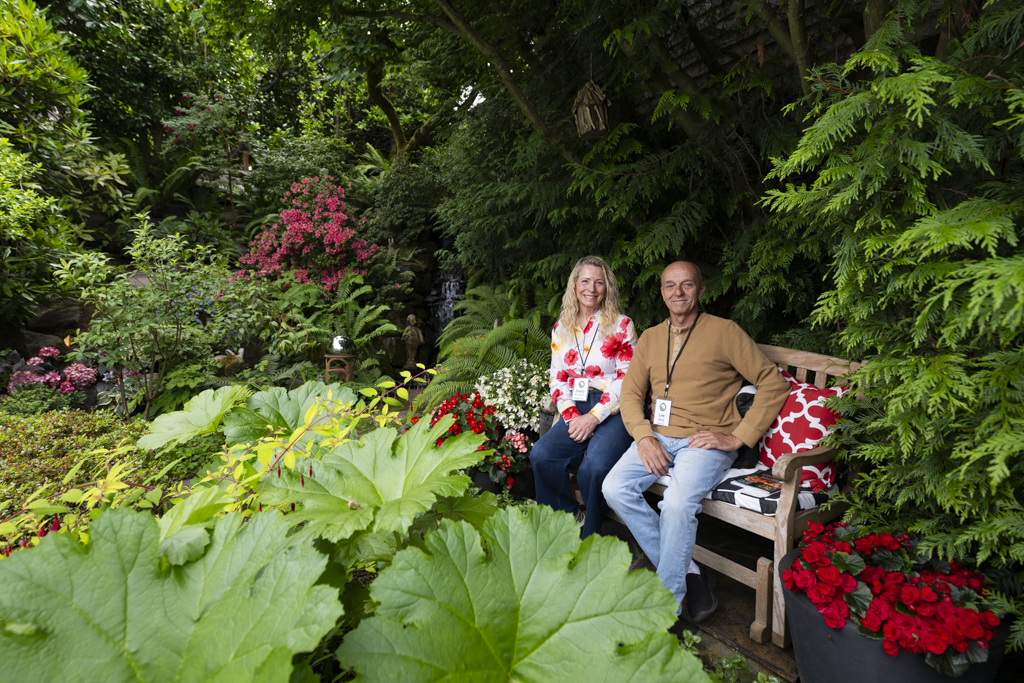
Below are Debra Montgomery and Lee Kelly; she bought the “Heron Cove” house 7 years ago and inherited Lee, who has been the gardener for 40 years. She said the previous homeowners sought out a buyer who wouldn’t tear down the house and would keep caring for the garden, which she and Lee both now do.
Garden D was described as “Small Spaces, Big Moments”:

Below (L-R) are the gardeners behind Garden D, Laird Applegate and Brian Pelzel:
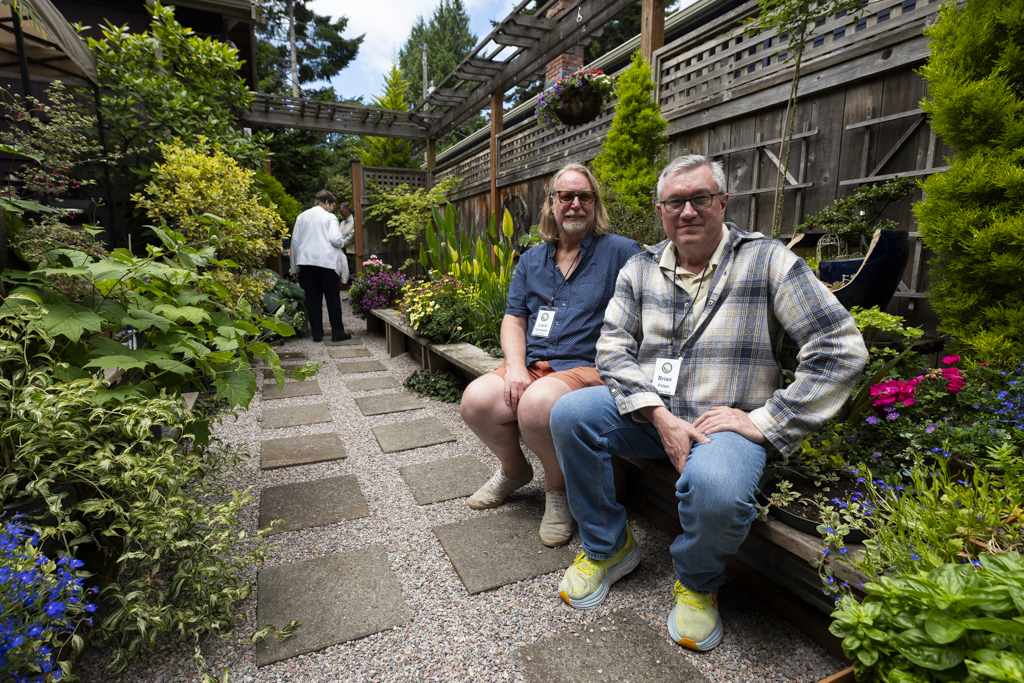
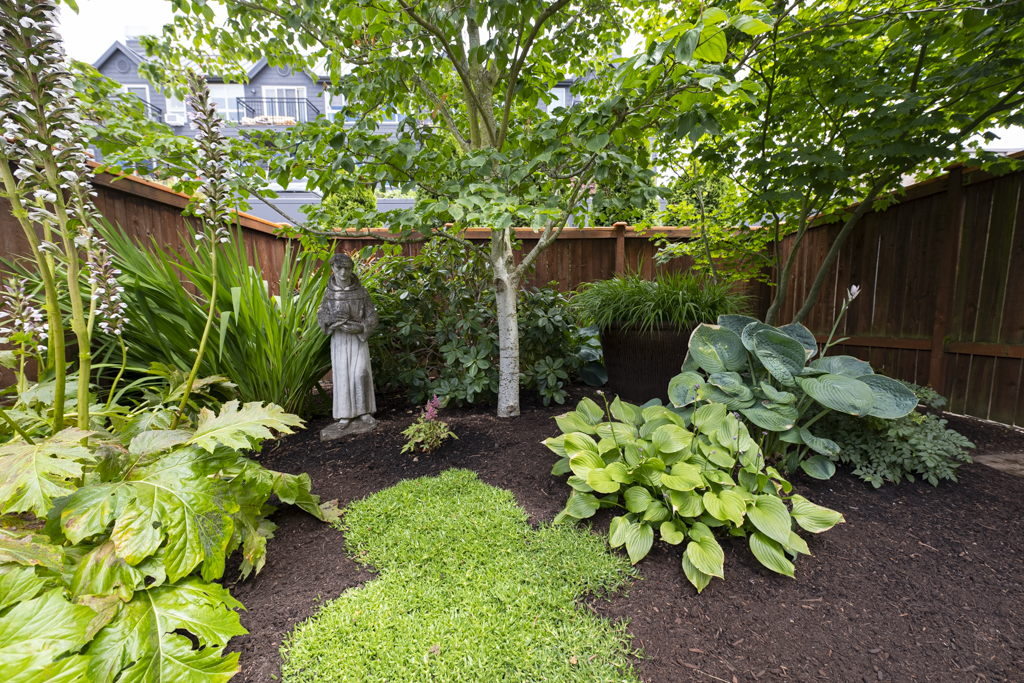
Garden E was “From a Sprawling Lawn and One Tree to …”
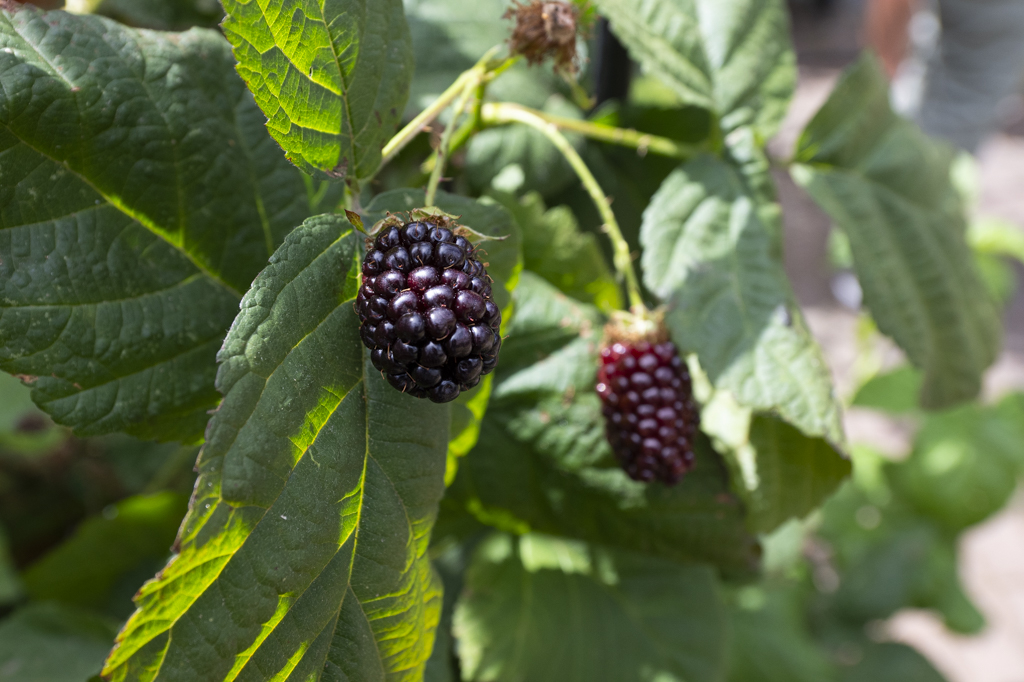
Blackberries are often the bane of a gardener’s existence, but in Garden F, “Transformation,” they were beautiful:
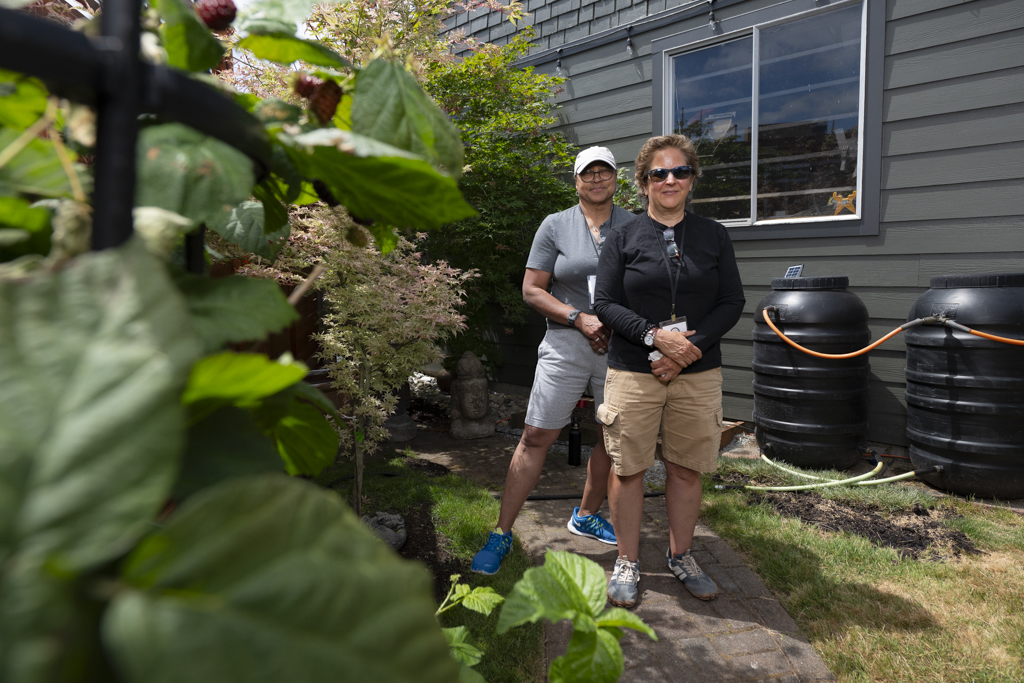
Garden F’s (L-R) Diane Elie and Raquel Gonzalez store water in 60-gallon rainbarrels and told Oliver that it fills most of their irrigation needs:
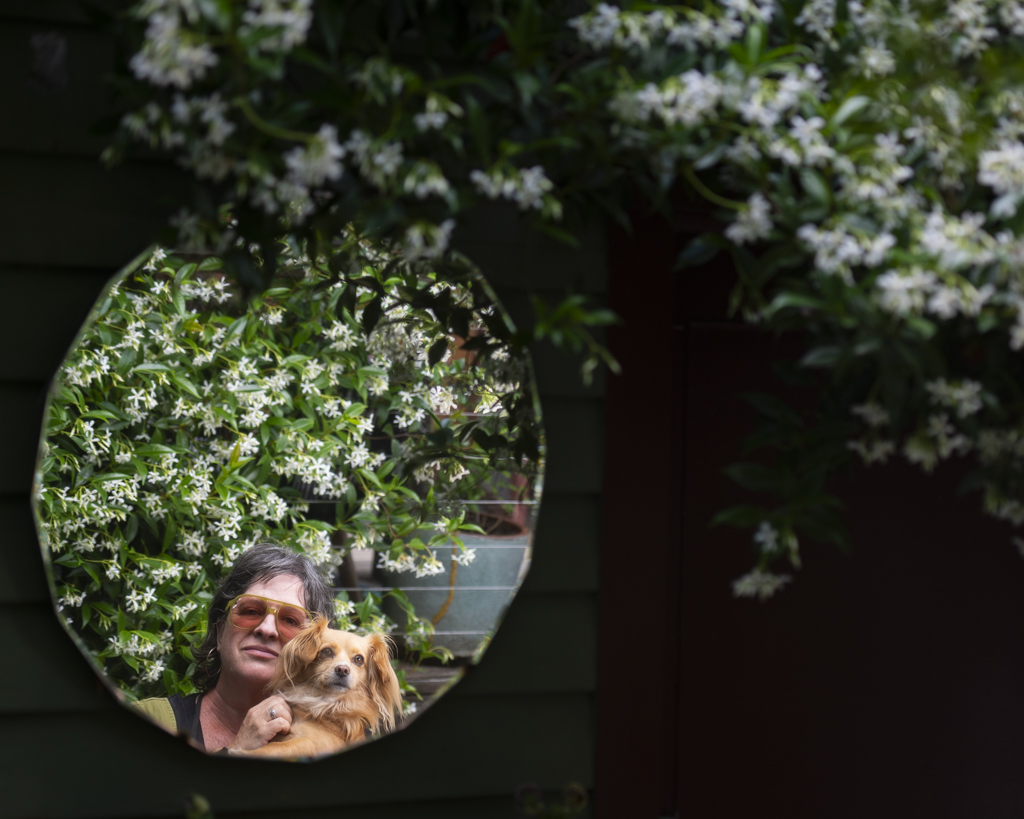
At Garden G, “Hidden Gem,” Julie Robinson-Jasper and Maple the dog are seen through a mirror surrounded by star jasmine at Garden G, “Hidden Gem”:
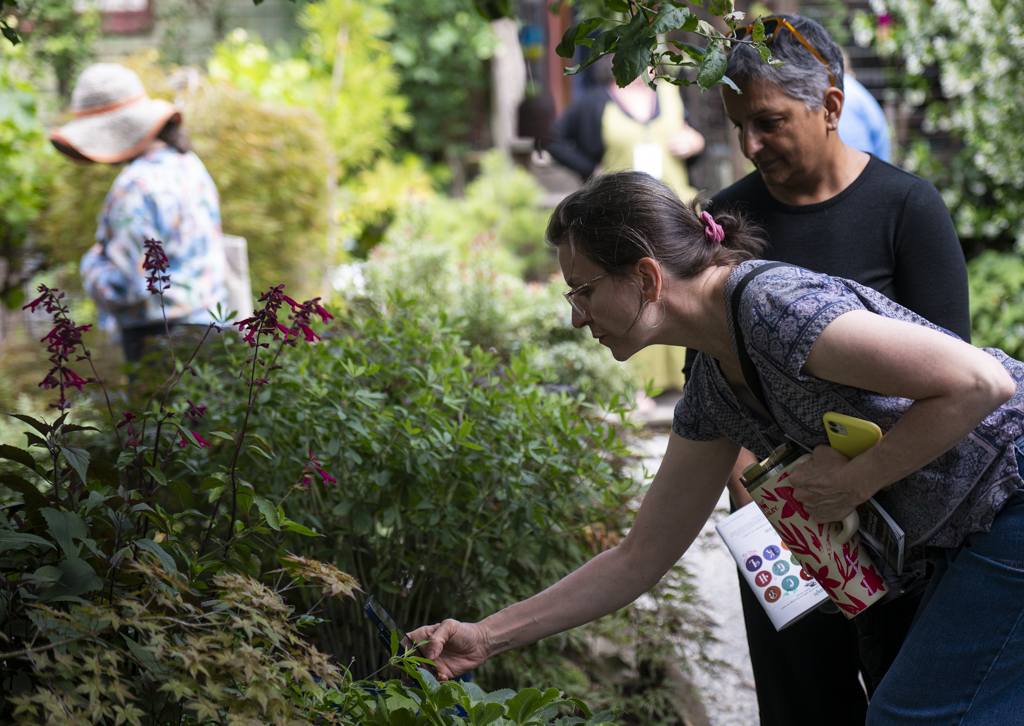
Another scene from Garden G:
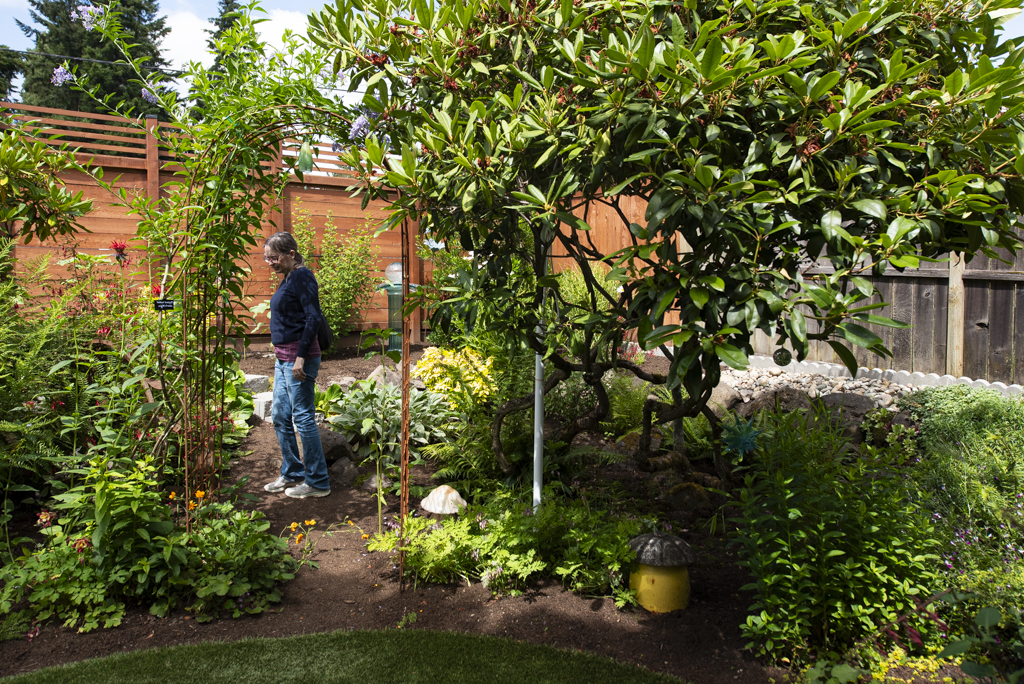
Garden H, “Behind the Fences,” sported an arch of bittersweet nightshade:
A clawfoot bathtub graced Garden I, “A Fresh Look for A Once-Beloved Garden“:

Garden J, “Garden of Many Rooms,” was conducive to wandering:
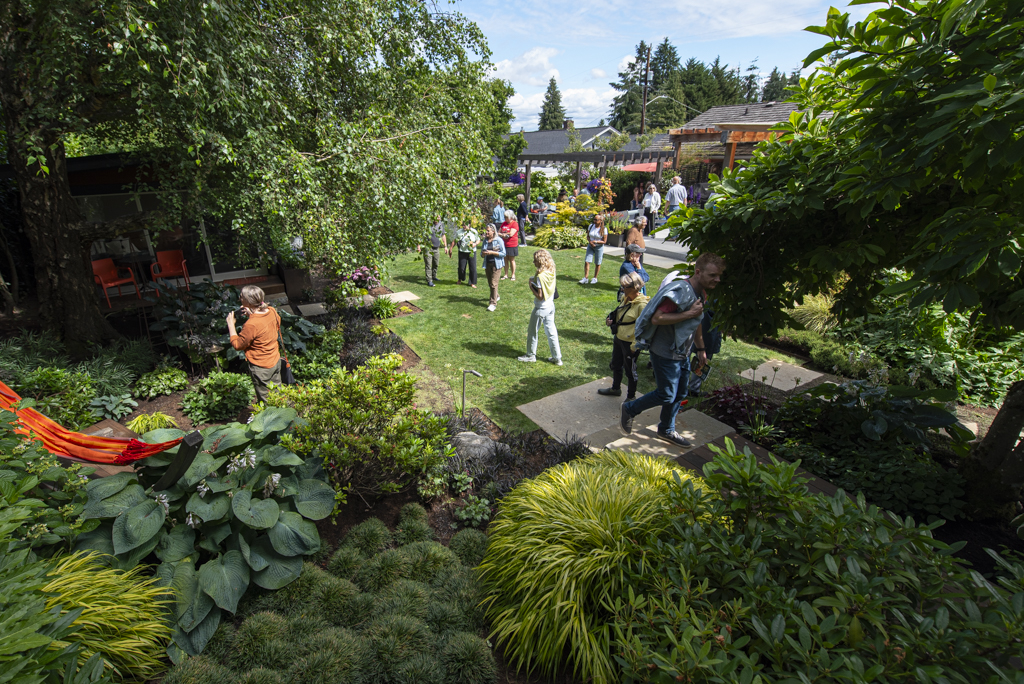
Garden K offered onlookers “Plants from Around the World“:
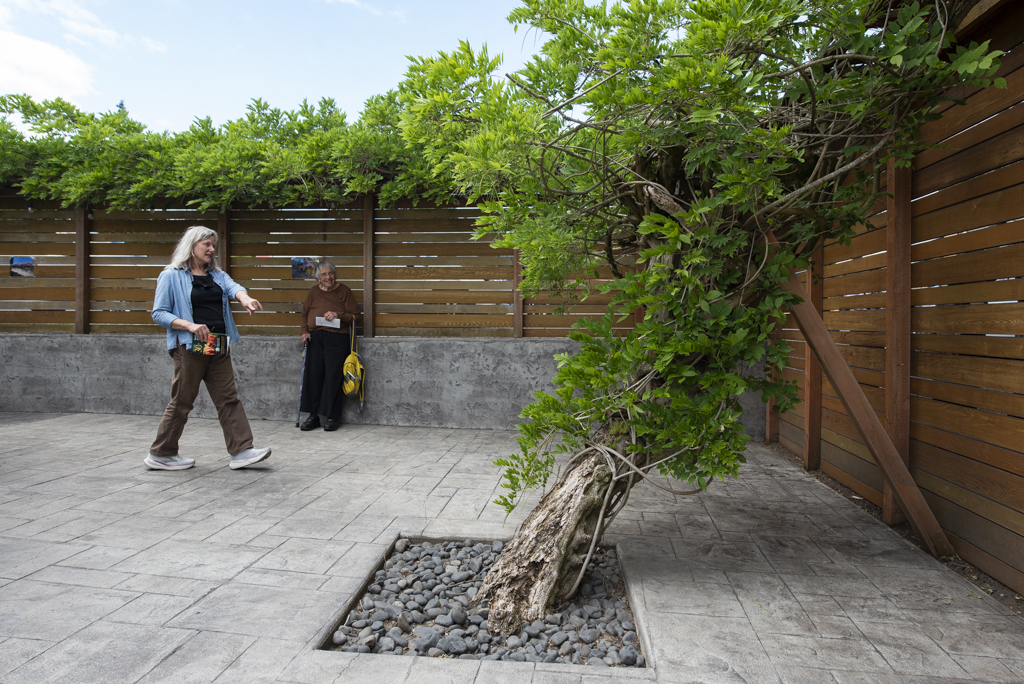
And Garden L, “Conifer Corner,” featured a 75-year-old wisteria:
(Read details of each garden here.) The West Seattle Garden Tour is organized by a nonprofit that uses the proceeds to support other nonprofits – here are this year’s grant recipients; see how to apply for one of next year’s grants by going here (July 15 is the deadline).

Three robberies occurred within 30 minutes of each other on Friday in Seattle, with law enforcement believing they were connected due to the timing, proximity, and similar descriptions of the suspects.
The first of three robberies began at 4:30 a.m. in the 200 block of Highland Drive near Kerry Park, when the Seattle Police Department (SPD) received reports of two men pointing guns at a man, SPD told KIRO Newsradio.
As officers arrived on scene, they located a 32-year-old man. The victim was sitting in his car when two suspects parked their car beside his and approached him with guns. The suspects ordered the victim to exit his vehicle and give them his necklace.
The victim claimed he had nothing of value, and the suspects ultimately fled in a dark sedan, possibly west on W. Highland Drive. The suspects were described as Black males, possibly in their late teens to 20s. Each suspect wore a mask and gloves, but the victim could not accurately recall what the suspects were wearing.
Second Seattle robbery came minutes after the first, this time at a store
Two minutes later, at 4:32 a.m., dispatch received a report of a robbery at a convenience store in the 1600 block of Queen Anne Avenue N. At the scene, officers made contact with a 25-year-old man.
The victims stated that two suspects entered the store, threatened them, and took money from two of the cash register drawers.
Soon after, the suspects fled the scene in a dark colored sedan. One suspect was described as a Black male in his 20s, roughly 6 feet, 2 inches tall with a medium build, wearing a mask, gloves, and dark-colored clothing. The second suspect was described as a Black male, 6 feet tall, with a medium build, wearing a mask, gloves, and dark-colored clothing.
Final robbery targeted a Beacon Hill convenience store with two victims
At 4:51 a.m., dispatch received a third report of a robbery, this time at a convenience store in the 4800 block of Beacon Avenue S.
Officers arrived and made contact with two victims, a 55-year-old man and a 24-year-old man. The SPD investigation revealed that one of the victims was in the cooler and the other was behind the counter when the two suspects first entered the store.
The victim in the cooler exited to see what was happening, then shut the door to the employee area and stayed there until it was safe to come out.
The 24-year-old victim was behind the counter when the suspect pointed a firearm at him. The suspect forced the victim to open the cash register and took the cash while the other suspect stood by the main entry door with a handgun.
Both suspects exited the store and fled the scene in an unknown direction. The first suspect was described as a Hispanic or Black male in his 20s, with a medium build, wearing a mask, gloves, and dark clothing. The second suspect was described as a Hispanic or Black male in his 20s, wearing a mask and gloves, with light colored pants and dark shoes.
No victims reported injuries as a result of each of the three robberies, and no suspects have been apprehended as of this reporting.
SPD’s Robbery Unit has been assigned to each case.
Anyone with information is urged to contact SPD’s Violent Crimes Tip Line at (206) 233-5000.
Follow Jason Sutich on X. Send news tips here.
-
 News9 minutes ago
Rep. Tom Kean returns to Congress, says depression is why he went missing for months
-

 Los Angeles, Ca1 hour ago
LeBron James informs Lakers he will play elsewhere next year
-

 Detroit, MI2 hours ago
5 realistic cornerback trade targets for the Detroit Lions after Terrion Arnold’s release
-

 San Francisco, CA2 hours ago
Headlines, June 30 – Streetsblog San Francisco
-

 Dallas, TX2 hours ago
LIVE | Ivory Coast, Norway meet for World Cup knockout match at Dallas Stadium
-

 Miami, FL2 hours ago
Every Dolphins head coach’s start in Miami from worst to best
-

 Boston, MA2 hours ago
Historian clears up one of the biggest myths about the Boston Tea Party
-
Denver, CO2 hours ago
Nemanja Jokic, the older brother of\u00a0Denver …

