If you look at James Yeun Leong Parry’s resume, one interpretation is that things start to go off the rails around 2018. That’s when, after stints at fine-dining restaurants helmed by celebrity chefs in Hong Kong, London, Tokyo and San Francisco, he left Benu for a position at Palette Tea House.
San Francisco, CA
This eagerly awaited S.F. restaurant won’t ever earn three Michelin stars — and that’s a good thing


No disrespect to Palette, a high-volume restaurant in Ghirardelli Square that traffics in newfangled dim sum, such as taro puff swans, their lacy bodies blackened with charcoal, and har gow skewered with pipettes of lobster butter sauce. But a certain breed of ambitious chef would note that it has three fewer Michelin stars than Benu. (Which is to say, none.) Parry’s pivot is the equivalent of a violinist leaving the symphony to take up the fiddle with a bluegrass band.
Now, with three years as head chef at Palette under his belt and several more running successful tasting menu popups, Parry has struck out on his own. After months of frothy anticipation, the Happy Crane opened in August in Hayes Valley. A modern Chinese restaurant, it sings the greatest hits from Hong Kong (where Parry spent much of his youth), Beijing, Chongqing and beyond with a California accent. It’s the opening salvo of a chef with a point of view, and a welcome addition to the city’s contemporary Asian culinary scene.

Patrons dining at the bar, where half the seating is reserved for walk-ins, at the Happy Crane.
It’s possible to engage with the Happy Crane’s menu on multiple levels, depending on your familiarity with — or desire to be educated about — Chinese cuisine. An appetizer of a split bao, griddled in brown butter and topped with chicken liver mousse and thinly sliced coppa ($11 per piece), could conceivably be at home in a New American restaurant serving deviled eggs and an heirloom tomato salad. But the curious might ask about the name of the dish, “golden coin,” which is a reference to the esoteric Cantonese snack gum tsin gai, or gold coin chicken. Originating as sustenance for the working class, it was a way for roast meat specialists to sell char siu offcuts, pork fat and chicken livers, all stacked on a skewer, glazed with sticky-sweet sauce then served sandwiched in a bun.
Article continues below this ad
The staff at the Happy Crane, while gregarious, are not walking encyclopedias. They might mention that an entrée of fish-fragrant fish featuring local lingcod ($48) is a cheeky nod to fish-fragrant eggplant, a dish that contains no fish whatsoever, but they’re far from pedants. Unless you drive the conversation, you might not learn about the braising technique applied to the beef shin ($18), or jiang niu rou, a process whereby the meat is babied for nine hours in master stock. This flavor-packed liquid, a sweetened mix of soy and shiaoxing wine infused with spices and aromatics, shares common ground with a sourdough mother or sherry aged using the solera method: After each braise, the master stock is saved and topped up, a never-ending continuum of flavor that will, presumably, only get better as the Happy Crane gets older.

The Happy Crane’s “golden coin,” made with chicken liver mousse and thinly sliced coppa, is a reference to the esoteric Cantonese snack gum tsin gai, or gold coin chicken.


The beef shin and celery root, left, and a pair of drinks, right, at the Happy Crane.
Photos by Santiago Mejia/S.F. ChronicleThe beef shin and celery root, above, and a pair of drinks, below, at the Happy Crane.
Photos by Santiago Mejia/S.F. ChronicleWhat results is an impossibly tender and savory cut of beef that, thinly sliced and still rosy in the center, is what roast beef wishes it could be. Parry then gives it a mala xiang guo treatment, dressing it with a Sichuan peppercorn vinaigrette and plating it with some vegetables that are commonly found in dry hot pot (celtuce, fried lotus root) and some that decidedly aren’t (last month, creamy confited artichoke hearts). It’s a masterpiece.
The same consideration for balance — crunch meeting softness, acid tempering richness — is evident in the char siu pork jowl ($43). Glistening with its maltose glaze, the sweet, fatty roast pork begs for something sharp and structured. Parry pairs it with shaved raw fennel — mirroring the licoricey notes in the five-spiced marinade — and intense, translucent crescents of green apple that are infused, under vacuum pressure, with lime juice and ginger. I’d like to keep a jar of those pickled apple slices in my fridge to munch on whenever I need to feel alive.
Article continues below this ad

The char siu pork jowl with raw fennel and thin slices of green apple that are infused, under vacuum pressure, with lime juice and ginger.
Parry’s attention to texture is so dialed in for his most successful dishes that the ones that fall short come as genuine surprises. A saucy crab rice roll ($32) made with steamed rice noodles that are milled in house should have been a triumph, but the cheung fun was frail, lacking chew and integrity. And the main crunch came not from the celery but, unfortunately, bits of crab shell.
Whether fair or not, diners will want to know where to mentally situate the Happy Crane among San Francisco’s other titans of modern Chinese cuisine; I look forward to a time when, like Cal-Italian restaurants, there are so many excellent examples that we no longer have to play them off one another. On the casual-to-swank spectrum, it falls solidly in between Four Kings and Mister Jiu’s — both on our list of the top 100 restaurants in the Bay Area. It’s a date night or pre-theater spot where the service is informal and, although a tasting option exists ($120 per person), the menu does not aspire to fine-dining pageantry.
Parry’s time in exacting, three-star kitchens is evident — the knife work, the plating, the wink-wink cleverness — even in humble stir fries and smacked cucumber salads. Kate Moss without makeup still has cheekbones. But I, for one, am grateful he chose a less buttoned-up road. I don’t dislike a tasting menu, but that $18 beef shin deserves to be eaten by everyone.

A staffer is seen waiting at the pass at the Happy Crane.
The Happy Crane
451 Gough St., San Francisco. thehappycranesf.com
Article continues below this ad
Hours: 5-9 p.m. Tuesday-Saturday
Accessibility: Wheelchair accessible, no outdoor seating
Meal for two, without drinks: $125-$240 (for the “happy as a crane” tasting menu, which is $120 per person)
What to order: Ginger scallion scallop ($18); beef shin ($18); golden coin ($11 per piece); oyster pancake ($28); char siu pork jowl ($43); Peking duck service ($110, by preorder); mango sago sorbet ($14)
Article continues below this ad
Meat-free options: Smacked cucumber and smoked figs ($14); snap pea dumplings ($7 per piece); maitake biang biang noodles ($36)
Drinks: Spend some quality time with the drink menu, which features gorgeous original artwork by Parry’s sister, Yolande Lui Parry. Creative cocktails ($17-$20) with housemade cordials incorporate Asian flavors; try the Serpent’s Kiss, which layers miso and hot mustard atop an agave base, but skip the too salty non-alcoholic Flying Nimbus. A couple Taiwanese beers and a dozen or so wines by the glass, with Advanced Sommelier Justin Chin on-site to assist with bottle selection.
Best practices: The blazing hotness of the Happy Crane currently makes securing a reservation challenging, but eventually this will become an excellent pre-opera/symphony option for the Civic Center crowd. Half the bar is reserved for walk-ins, if you’re striking out on Open Table.



Fresh out of Stanford University, a young AI founder wanted to take the next step in the hallowed San Francisco startup playbook: purchase a so-called hacker house, fill it with his small team, and buckle down to build a company. He set his sights on Potrero Hill, a quiet, suburbanesque neighborhood that has experienced a breathless glow-up after OpenAI established its headquarters in the adjacent Mission Bay three years ago.
For his first-choice home, the founder wanted to come in strong. He bid 30% over asking, all cash. It wasn’t enough. He didn’t want to take any chances on the next home he found, so offered 50% over the list price, all cash, no contingencies.
“I thought we got it for sure,” the founder’s real estate agent, Milan Jezdimirovic, told The Real Deal. Jezdimirovic had attended every open house for the property, and made it clear to the seller his client was willing to be aggressive in purchasing the home. To go 50 percent over asking, all-cash, in the relatively modest Potrero Hill felt like a home run. Yet, they were outbid again.
Welcome to Area AI.
“I was speechless,” he said. “We did everything we could. It’s incredible what the ceiling is, I mean, there is no ceiling.”
As the artificial intelligence industry announces itself as the latest California gold rush, it has resuscitated San Francisco in ways old and new. Long desirable neighborhoods such as Presidio Heights, Cow Hollow and Jackson Square have seen their fortunes return from a pandemic lull. Yet, the city’s southeastern district, a paved bayside paradise known for loading docks, warehouses, and wide streets has seen a surprising surge in demand as major artificial intelligence companies and their battalions of one-percenter employees continue to plant their flags.
The moniker developed around 2023, when OpenAI relocated to 1515 Third St in Mission Bay, the neighborhood just south of McCovey Cove, the channel most famous as a landing spot for the home runs of Giants legend Barry Bonds.
Although divorced from the hubbub of the Financial District, Mission Bay attracted its own share of heavy hitters from the last tech boom. Now, much of that space is occupied by OpenAI, which took over nearly a million square feet previously occupied by names such as DropBox, Uber and Old Navy. Companies such as chipmaker Nvidia and crypto-exchange platform Coinbase have also expanded into the neighborhood. While the rest of the city continues to struggle with office vacancy rates, Mission Bay is nearly out of room, according to JLL.
That energy has had a gravitational pull. The University of California San Francisco recently spent nearly a billion dollars to expand its school of dentistry in Mission Bay, and the San Francisco Unified School District is preparing to open Mission Bay Elementary in August, its first new public school in decades.
“That whole area of the city is up and coming,” said Derek Daniels, San Francisco research lead for Colliers.
Mission Bay’s rise wasn’t random. The San Francisco Giants organization had been eyeing a redevelopment of Mission Rock – a northern carve out of the Mission Bay neighborhood — as far back as the early 2000s. The Giants, with developer Tishman Speyer, completed the first of the four-phase, 28-acre, $2.5 billion megaproject in 2024. It included two new office towers — with tenants such as Visa’s global headquarters, the Golden State Warriors and Blue Bottle — more than 500 housing units, 550,000 square feet of new office space, and 52,000 square feet of retail. Phase 2 doesn’t have a start date, but is slated to begin soon.
The effect has spilled into the residential market. The AI Boom has brought a flood of employees making base salaries around $500,000 who want to live near their offices, and the competition for Mission Bay’s apartments and condos has gotten fierce, with bidding wars pushing rents up sometimes by $1,000 or more, and condos going for well above asking price.
“For apartments, we will email the top five applicants and ask if there is anything else they can provide to help them stand out, and then they just start bidding against each other,” Jezdimirovic said. A recent rental hit the market for $7,890 and eventually leased for $8,700, while a recent three-bedroom rented for $15,000, he said. Over the last 12 months, the median prices for studios in Mission Bay have jumped 37 percent, two-bedrooms jumped 44 percent and one-bedrooms saw a 15 percent rise, according to Zumper.
The median price for a condo rose 13.2 percent over the last year, to $1.2 million, according to Compass. Jezdimirovic expects that number to continue to rise. He recently listed a 970 square-foot, one-bedroom condo for $1.2 million and eventually sold for $150,000 over asking.
“Today is not even comparable to 10 years ago,” Jezdimirovic said of Mission Bay. “Even just within the last two or three years, we’ve finally seen the full establishment of the neighborhood.”
The spillover effect has been dramatic for areas such as Potrero Hill. The neighborhood’s elevated views, easy highway access, and uniquely sunny weather have long made it a desirable landing place for young families. But over the last three years, it’s taken on a new role: as both a hot spot for hacker houses — homes essentially turned into dorms for tech entrepreneurs to live and work alongside one another— as well as the migration point for AI employees looking to settle down into family life or quieter living. In other words: Area AI’s suburb.
The median price for a single-family home rose 16 percent over the last year, reaching more than $2 million, according to compass. On average, homes are selling for 42 percent above asking, one of the highest rates of overpay in the city.
Jerry Rice Jr, (yes, son of that Jerry Rice), has worked as an agent in the area for 10 years and said he really began to see it surge around January. The area already has limited supply and few sellers — only 40 homes sold over the last 12 months — pressure that Rice said the AI wealth has only exacerbated.
“It’s been hot all year,” Rice said. “In Potrero Hill, you have all the benefits of the city without living in the city. The clients are largely family-oriented, with AI jobs and have a lot of liquid wealth. We’re seeing big cash offers.”
Rice said the nearby Dogpatch neighborhood, long characterized by warehouses and dilapidated buildings, is going to be the next beneficiary of the Area AI effect. The residential market has already started to creep up. The median price for a condo rose 7.3 percent over the last year, to $1.1 million, and total condo sales are up 15.2 percent, according to Compass.
The blue-chip startup accelerator Y Combinator, once led by OpenAI founder Sam Altman, relocated to the Dogpatch in 2023. Earlier this week, developer Brookfield, who has proposed a mega redevelopment of Pier 70 that would bring about 2 million square feet of commercial space and more than 2,000 new homes, requested adding 600 more units to the plan, bringing the total to 2,750.
“About 15 years ago, people told me the Dogpatch was nothing,” Rice said. “The Dogpatch is going to look totally different in five to 10 years. If I were an investor, I would start looking in that area, because that’s a hidden gem with a lot of upside.”
Brookfield ups market-rate unit count, building heights at Pier 70 project
OpenAI surges past 1M sf of offices in SF with latest Mission Bay lease
Residential
San Francisco
SF Giants, Tishman Speyer show look of first Mission Rock highrise Forget the glass towers. SF’s AI boom finds a home in a 19th-century neighborhood.
Read more


The San Francisco Giants will start the second half of their season with a three-game road series against the Seattle Mariners.The Giants went into the All-Star break winning three out of four games against the Colorado Rockies to improve their record to 41-55.Giants Make Intriguing Roster MoveBefore Friday’s game against the Mariners, Alex Pavlovic of […] The post San Francisco Giants Announce Intriguing Roster Move Ahead of Mariners Series appeared first on HEAVY.
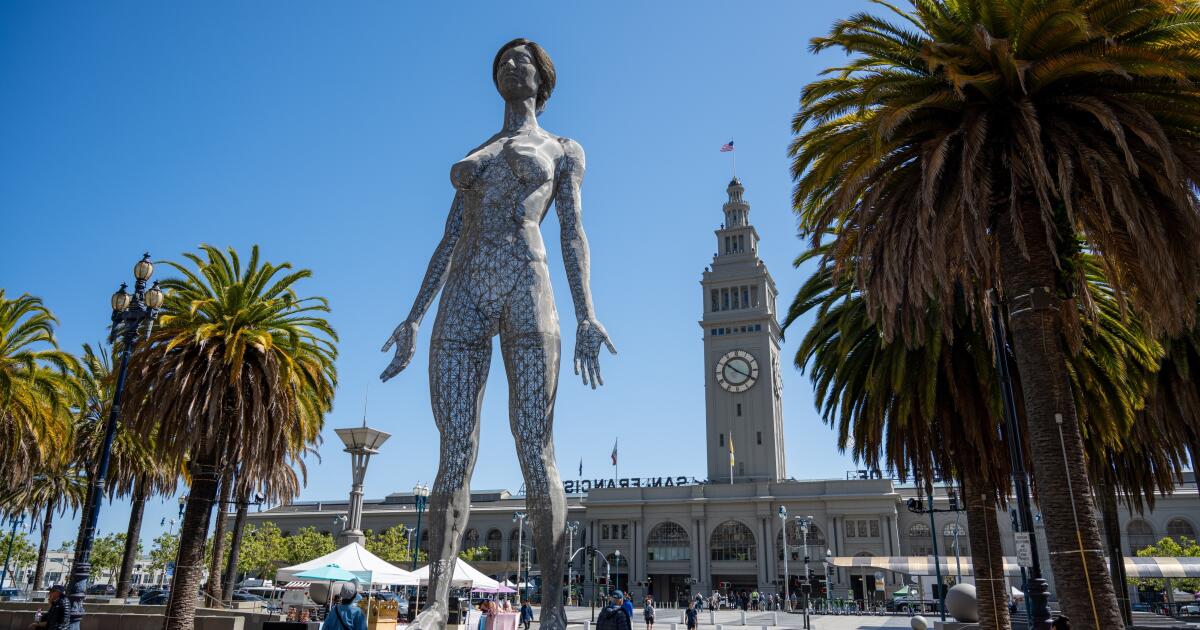
For sale in San Francisco: A 45-foot-tall metal sculpture of a naked woman.
Her name is R-Evolution. Her hair is pulled back and her facial expression is serene. Her mechanized chest expands and contracts, as if she’s breathing. And she tips the scales at 13,000 pounds (not that it’s anyone’s business what a lady weighs).
She will stand in Embarcadero Plaza across from the historic Ferry Building until October. Then she goes on sale. The artist says “she can go anywhere in the world,” but whoever buys or leases her will need a crane and a 60- to 80-foot bucket lift to resurrect her.
Since she was first unveiled as a temporary installation in April 2025, the giant statue, created by artist Marco Cochrane and modeled after California dancer and singer Deja Solis, has spurred debate about whether privately funded works are really public art. It also questions whether R-Evolution is a celebration of femininity in a free-spirited city that has long embraced public nudity or a hypersexualized shock piece from a male artist.
But debate, per the public and private entities who brought her to the plaza, is kind of the point. Art, they say, is supposed to be controversial.
An attempt to revitalize public space
R-Evolution is part of Big Art Loop, a privately funded initiative that aims to bring up to 100 temporarily installed large-scale sculptures — a minimum of 10 feet high or wide preferred — to public spaces along a 34-mile walking and biking trail over the next few years.
R-Evolution in Embarcadero Plaza in April 2025.
(Christopher Reynolds / Los Angeles Times)
Big Art Loop is funded by the Sijbrandij Foundation, a nonprofit established by billionaire Sid Sijbrandij, co-founder of the software company GitLab. It is curated by the art production agency Building 180, in partnership with the city’s Recreation and Parks Department and other public agencies.
“We’re going to continue to lean in to our arts and culture because that is driving our comeback here in San Francisco,” Mayor Daniel Lurie said in a September video promoting the Big Art Loop.
A city news release last year said R-Evolution’s arrival “aligns with San Francisco’s broader efforts to revitalize downtown” by increasing foot traffic to the battered business district, where office vacancy rates soared to record-high rates of more than 30% amid the pandemic-era pivot to remote work.
Controversial lady and Burning Man
Like a few of the Big Art Loop pieces, R-Evolution originally debuted at Burning Man, towering above the sweaty and stoned desert masses in 2015.
Critics of R-Evolution say the statue and other massive pieces along the billionaire-backed Big Art Loop did not get as much community input and were not subject to the same intense scrutiny by the San Francisco Arts Commission as other public artworks.
“I think what a lot of people, myself included, are frustrated by is the fact that these private entities are able to remake the public landscape in their own image,” Max Blue, a San Francisco Examiner art critic, told Gazetteer San Francisco in October, adding: “I don’t like these sculptures. I think a lot of them are just left over from Burning Man.”
Visual artist DJ Meisner told the Gazetteer: “It’s just so clear when you see the art that it’s like, ‘Oh, I’m supposed to be unbelievably wealthy and high looking at this.’ I’m neither of those things, so I’m just annoyed to be looking at it.”
Female representation or inappropriate?
Before R-Evolution was installed, an art vendor with a booth in Embarcadero Plaza wrote in a letter to the Arts Commission, saying she thought the statue, whose bare butt faces the Ferry Building, “might be very inappropriate for children.”
Another vendor wrote: “A naked woman statue designed by a man feels out of step with the times.”
The creator of the piece, Cochrane, said in a statement: “Women’s presence in public art is rare. When they are depicted, it is often through outdated or passive narratives. R-Evolution challenges that. She stands strong, aware, and grounded — calling for a world where all people can walk freely and without fear.”
Love her or hate her, she gets eyeballs
Julie Richter, a spokeswoman for Big Art Loop, told me in an email Thursday that R-Evolution, which had been slated for removal in April, got “very positive” feedback that led to her Arts Commission-approved extended stay through October. That feedback included positive reviews from most tourists, art vendors and nearby local businesses, according to a pitch to extend the statue’s stay by Big Art Loop and Building 180.
Near R-Evolution’s current perch, Vaillancourt Fountain — a colossal, crumbling Brutalist concrete sculpture that was unveiled in Embarcadero Plaza in 1971 and became a skateboarding mecca — was equally reviled and revered. Despite fans’ efforts to save it, the city removed it this spring.
Today’s top stories

The Visalia sign seen from Highway 99.
(Tomas Ovalle / For The Times)
These are California’s most affordable and least affordable cities
What we know about the boat accident near Alcatraz
- A memorial cruise turned tragic when a boat sank near Alcatraz Island, leaving one passenger dead, three missing and 17 rescued.
- The search for the missing was challenged not only by high winds and rough seas, but because the incident took place in a particularly deep channel of the bay dredged for cargo ships.
Scientists fear when the San Andreas fault finally snaps
- Scientists warn the region’s long earthquake drought is building dangerous strain on the San Andreas and San Jacinto faults, raising the odds of a devastating multi-county “Big One” in coming decades.
- With scenarios forecasting violent shaking from downtown L.A. to the Inland Empire, experts say the fault’s growing stress is a stark reminder to strengthen preparedness before nature resets the clock.
What else is going on
Commentary and opinions
This morning’s must-read
Other must-reads
For your downtime

The dining room at Baldi in Beverly Hills.
(Myung J. Chun / Los Angeles Times)
Going out
Staying in
A question for you: As temperatures rise in SoCal, how do you stay cool?
Email us at essentialcalifornia@latimes.com, and your response might appear in the newsletter this week.
And finally … your photo of the day

The trunk of a flooded car is seen in an underground garage along Palm Avenue in West Hollywood after a water main break sent thousands of gallons of water rushing down Sunset Boulevard and the surrounding area on Thursday morning.
(Allen J. Schaben / Los Angeles Times)
Today’s photo is from Times photographer Allen J. Schaben in West Hollywood, after a water main break sent thousands of gallons of water rushing down Sunset Boulevard and the surrounding area on Thursday morning.
Have a great day, from the Essential California team
Hailey Branson-Potts, staff writer
Hugo Martín, assistant editor, fast break desk
Kevinisha Walker, multiplatform editor
Andrew Campa, weekend writer
Karim Doumar, head of newsletters
How can we make this newsletter more useful? Send comments to essentialcalifornia@latimes.com. Check our top stories, topics and the latest articles on latimes.com.
-

 Technology5 minutes ago
HalluSquatting AI attack could hijack your computer
-
 Business11 minutes ago
Amazon delivery companies lay off more than 150 people in the San Francisco Bay Area
-
 Entertainment17 minutes ago
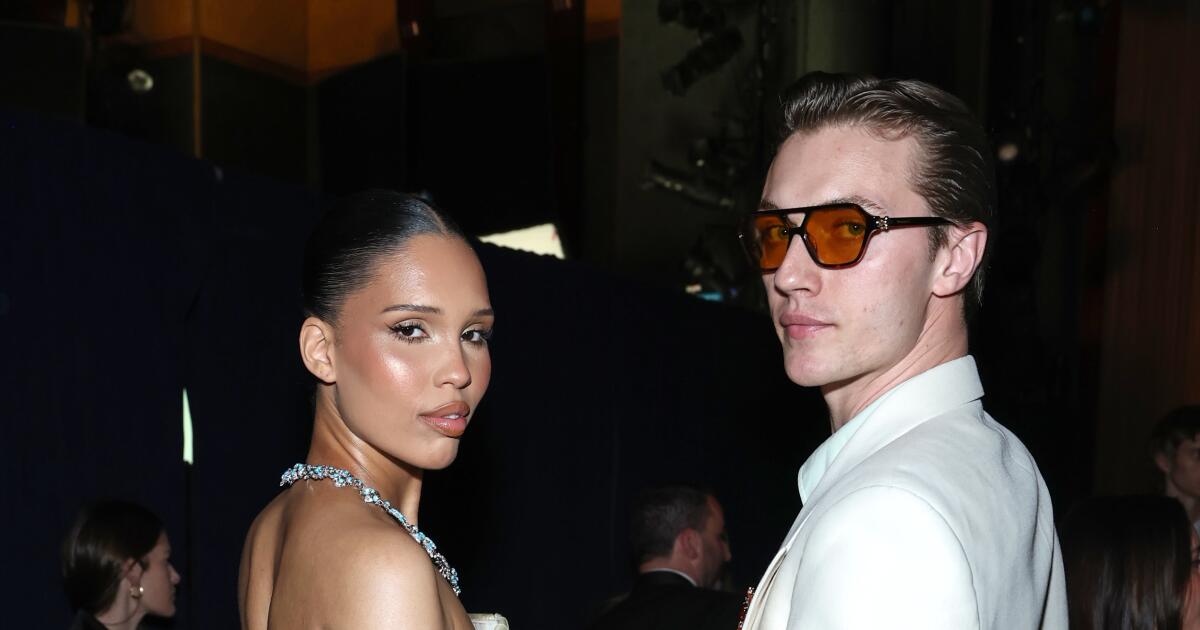
Nara Smith says 2-year-old daughter Whimsy’s cancer is in remission
-
 Lifestyle23 minutes ago
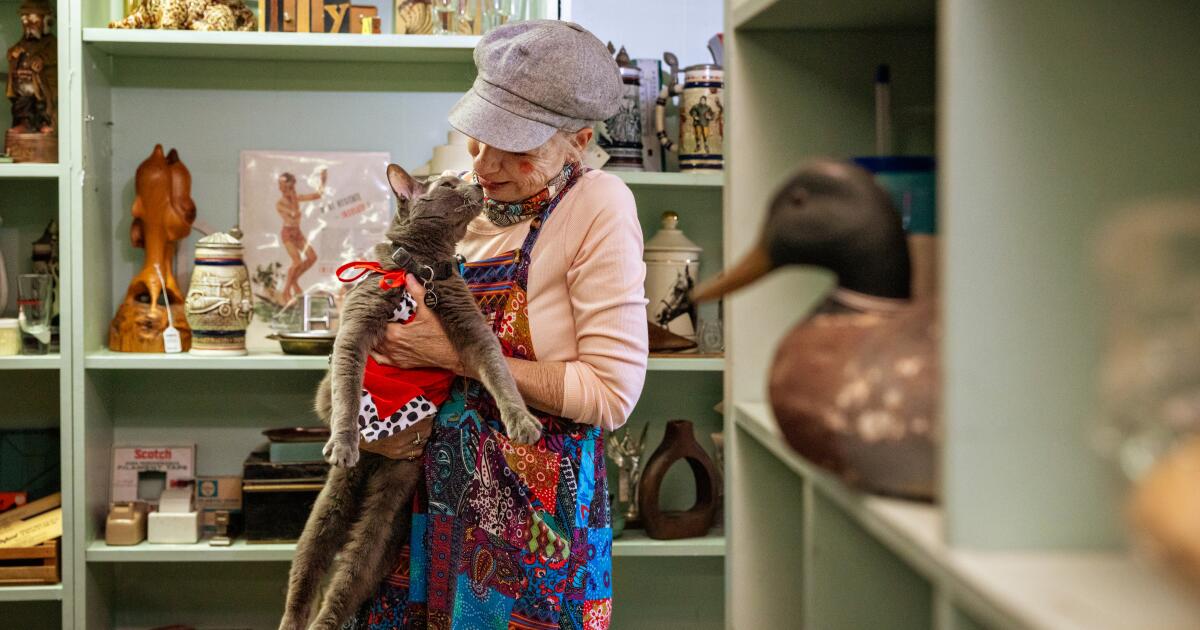
One-eyed rescue cat with Long Beach cult following celebrates 15th birthday in style
-
 Politics29 minutes ago
Commentary: Trump’s voter fraud speech was bait. Stop biting
-
 Science35 minutes ago
Commentary: The doctor who helped save her is in another state, and telemedicine follow-up is prohibited
-
 Sports41 minutes ago
Commentary: LAFC star Son Heung-Min proves life after the World Cup can offer hope and redemption
-

 World53 minutes ago
Death toll from the two earthquakes that hit Venezuela hits 5,069

