San Francisco, CA
Has Sunset Dunes helped local businesses? It depends who you ask


Since the Great Highway was transformed from a roadway into Sunset Dunes, the park’s supporters have heralded it as a paradise for bikers, skaters, and families.
Indeed, the park is immensely popular, having drawn 1.2 million visits since its grand opening April 12, with an average of 3,700 visitors on weekdays and 13,400 on weekends, according to the San Francisco Recreation and Parks Department.
You’d think all that foot traffic would translate into a bump in sales for nearby businesses, as the Dunes’ boosters have claimed. But nearly one year in, it hasn’t been a boon for everyone.
While cafes generally report an uptick in revenue since the two-mile stretch of the Great Highway closed to cars on March 15, 2025, restaurants and retailers have generally seen flat or lower sales, owners say.
Andytown Coffee Roasters CEO Lauren Crabbe said revenue has spiked between 15% and 20% at its three Outer Sunset locations during that period, but at the Outer Richmond cafe north of the park on Great Highway, near Cabrillo Street, they are up 0.03%.
Crabbe said the park has brought more tourists and people from around the city to the Sunset, thanks to the skate park, murals, and other attractions. “I do think the park made [the Sunset] more of a destination,” she said.
Sales at Black Bird Bookstore & Café are up 44%, according to owner Kathryn Grantham.
Tuesdays, historically the slowest day of the week, have seen both book and coffee sales increase 60% since the park opened, Grantham said, adding, “It’s been nuts.”
Other restaurants, retailers, and bars have seen mixed results from the park’s debut.
Tunnel Records on Taraval Street experienced a 17% drop in revenue between March 15, 2025, and Feb. 28, 2026, compared with the same period one year earlier, according to its point-of-sale data.
Owner Ben Wintroub said his store is a destination for record collectors — not a business that attracts passersby. He believes there is less parking near his store because the Great Highway, which used to be an arterial road for locals, is now a destination that people drive to from all over the city.
“It’s made people think twice about coming to the Taraval corridor,” Wintroub said.
Matt Lopez, who owns White Cap on Taraval and Pitt’s Pub on Noriega Street, both a short walk from the park, has seen a negligible impact. Across his two bars, the increase and decrease in sales basically cancel each other out.
Gross sales at Pitt’s in the year the park has been open rose from 3.9% to $721,000, while Whitecap’s fell 3.9% to $618,000, Lopez said.
“The numbers at my bars haven’t changed,” he said.
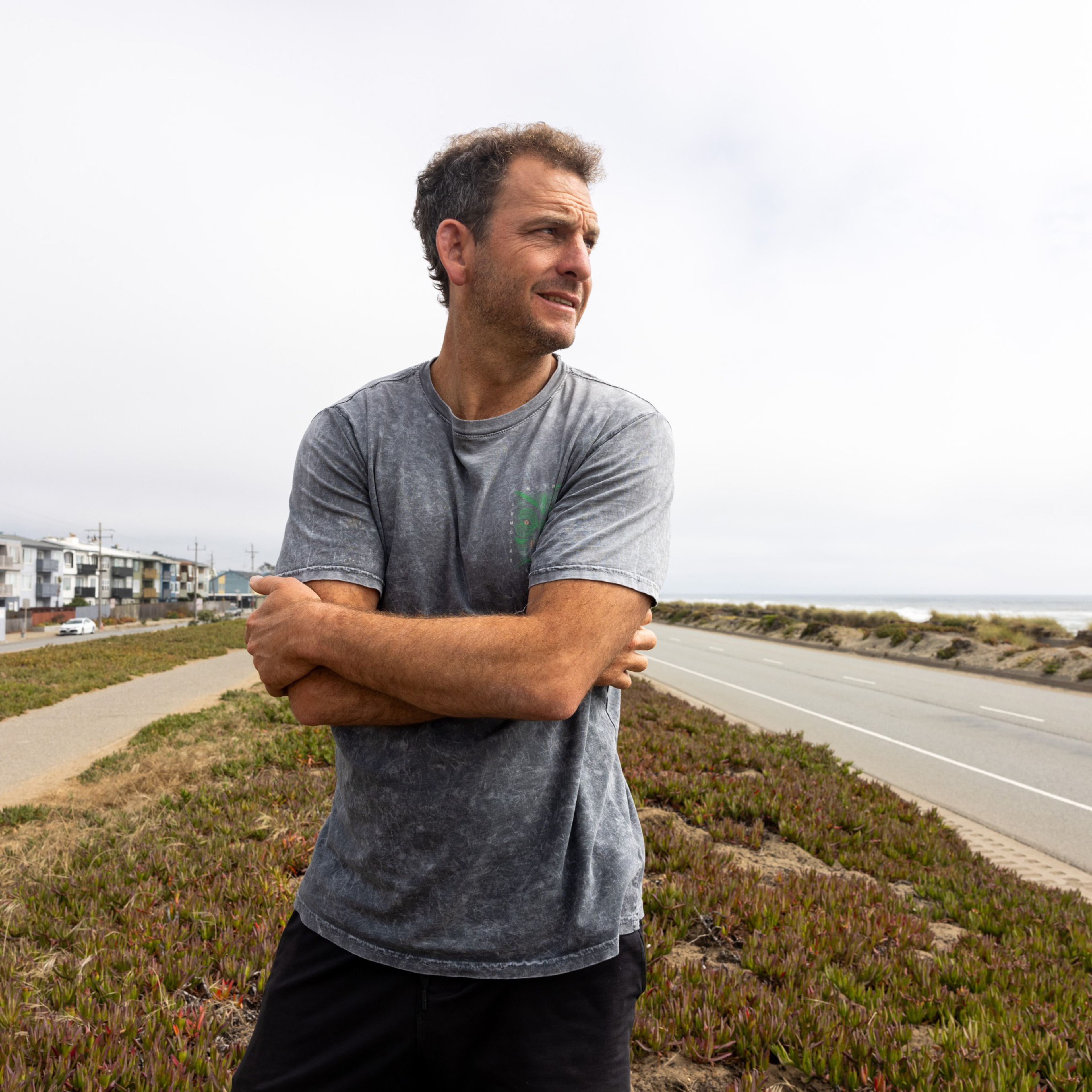
French bistro Galinette, located at 46th and Taraval, has seen a 2% year-over-year increase in sales, owner Julie Fulton said. “A couple thousand [dollars] difference, like, literally nothing,” she said.
Roughly 80% of the bistro’s clientele is regulars and locals, she said, adding that she doesn’t see park visitors stroll in for a bite, not even for “Le Burger. (opens in new tab)”
“It’s the weather that leads to us being busy or not busy,” she said.

Still, some full-service restaurants have seen an uptick since the park opened, but owners didn’t attribute it to the park itself.
Thanh Long co-owner Ken Lew said sales at the restaurant are up 22% year over year, but only because they picked up significantly late last year, surging 30% since November.
Lew attributed the improvement to a decline in the number of unhoused people in the area. During the pandemic, he said, four or five people were often camping at the bus stop across from the restaurant at 46th Avenue and Judah Street. Now, he said, he only occasionally sees one or two homeless people.
“I’m not sure the Great Highway affects us too much, since we’re a destination restaurant,” Lew said.
Though Lew’s restaurant is only three blocks from Sunset Dunes, it’s far from his mind. In fact, he has never been.
“It’s a little out of the way,” he said. “If I go to work, I stay at the restaurant.”



(KRON) — A 32-year-old man has been missing in San Francisco for two days, police said. Gabriel Carreon was last seen at noon on July 7, when he left his home in the Castro neighborhood to go see a movie, the San Francisco Police Department said.
The following morning, a 911 caller told dispatchers that Carreon was missing.
Police described the missing man as Asian, 5’8’’ tall, and weighing 170 pounds. He has black hair dyed pink, and brown eyes.
Anyone who locates Carreon should call 911 and report his current location, police said. Anyone with information on his possible whereabouts should call the SFPD Missing Persons Unit Tip Line at 415-734-3070.

Sick of the TSA lines? Tired of playing musical chairs at the gate? Rather sit as far from your fellow airplane passengers for as long as possible, in the comfort of your own private, luxury airport terminal?
Soon you may get your wish. And San Francisco international airport wants to be your genie – for a fee.
The airport is hoping to build a brand-new terminal exclusively for passengers who pay a premium, gaining access to a luxurious airport experience complete with private security lines and valet service from terminal to tarmac. It will service commercial flights, not business or corporate jets, and the terminal will have its own Transportation Security Administration (TSA) lines as well as Customs and Border Protection (CBP) lines for international travel.
SFO is seeking bidders to take on the development, construction and operation of the private terminal, which is planned for a 75,000-sq-ft site located across the runway from all current public terminals. The airport will accept proposals between late September and early October, and is looking to award a contract by early December with hopes of opening the terminal in late 2028.
SFO’s interest in a luxury development comes from what airport spokesperson Doug Yakel called a “high level of demand” for “premium experiences” in travel, citing the popularity of existing credit card and premium lounges. A private terminal is essentially the next step up in exclusivity from those lounges – and the best chance at avoiding airport crowds entirely.
“Somebody that uses this product really wouldn’t see the other passengers they’re traveling with until they’re taken up the stairs of the jet bridge and onto the aircraft,” Yakel said.
Spending on “pay-to-play” luxury experiences at large is on the rise, according to a new report by Bain & Company and Altagamma. The airline industry has bought in, revamping lounge and onboard experiences with chef-designed menus and expanded premium seating for the highest-paying passengers.
Many see a market in San Francisco, where an AI-driven wealth boom is already agitating the local housing market, with homes sold at the fastest pace in five years and the single-family median home price clocking in at $2.2m.
Yakel said SFO felt now was the right time to enter the market of luxury travel.
“We see the level of interest that’s being invested onboard aircraft, inside terminals, around airports, and clearly this is something that other airports are rolling out,” Yakel said.
The price to pay for a private airport experience will be decided by whoever wins the bid for operations, and will be offered on a membership or per-use basis. The traffic experienced at public terminals likely won’t change, Yakel said.
Private terminals have become popular worldwide. London Heathrow and Paris-Charles de Gaulle airports in Europe have long operated luxury terminals, and São Paulo/Guarulhos international airport recently opened the first private terminal in Latin America.
If SFO is successful, it would become the next major American airport to open a luxury terminal. Los Angeles, Dallas Fort Worth, Miami and Hartsfield-Jackson Atlanta international airports all offer a private terminal through PS (formerly known as the Private Suite), a company owned by security firm Gavin de Becker and Associates. Multiple representatives from PS and Gavin de Becker and Associates attended a June conference hosted by SFO about the private terminal, and PS has said it hopes to open a private terminal at every major US airport by 2030.
Access to existing PS private terminals can cost passengers $1,295 for a one-time experience, or up to $4,850 for a yearly membership. Heathrow’s private terminal costs thousands of pounds per person.


San Francisco Giants pitchers say they don’t feel MLB discriminated
Three San Francisco Giants pitchers say they did not feel discriminated against after the DOJ announced an investigation into Major League Baseball.
The San Francisco Giants have a lot to consider at this juncture of the MLB season.
There were mid-level expectations for the Giants at the start of the season. On paper, it seemed like the Giants could battle for a wild card berth.
The Giants won’t meet those expectations.
A week before the All-Star break, San Francisco has the third-worst record in baseball at 38-54. The Giants lost 10-0 to the Toronto Blue Jays on July 8, held hitless through eight innings.
It’s becoming increasingly obvious that this team won’t be competitive down the stretch, which has many of the Giants faithful singing a NxWorries tune, wondering what to do and where to go from here.
It’s evident that a shake-up is needed. It’s simply a matter of where they start and what they can realistically do to change things in the dugout. But one thing’s for sure: the Giants are sellers heading into the trade deadline.
What should the Giants do now?
The Giants have to accept their fate. Entering the season, they looked like a team that could compete with anybody, but then the baseball games were played and that proved to not be the case. So now San Francisco has to look itself in the mirror and figure out what went wrong and how to make things right – well, better than they have been going, anyways.
Here are a few ideas:
Get aggressive in the trade market, sell high
It’s easier said than done, but the Giants have to get off the expensive contracts eating up their salary. Reason being, you won’t be able to get any talent, let alone invest in your prospects, if there isn’t enough dollars to go around by the time negotiations occur.
It’s also a matter of how aggressive they plan to be and who will be prioritized. Who is untouchable? ESPN’s Jeff Passan has Giants outfielder Jung Hoo Lee as a top-ranked trade candidate. He plays all throughout the outfield. Offensively, Lee ranks top 10 in MLB in batting average and strikeout rate.
Lee, 27, makes $22.83 million this season and next, before going down to $21.33 million in both 2028 and 2029. Although not a star, the Giants can sell teams on Lee being a promising, solid all-around player.
Move on from veteran players
With a record like San Francisco’s, the best thing you can do for the fans is give them something to be hopeful for. That’s not aging veterans.
Examine the market for your guys who are age 30 and up, or are occupying a ton of salary space.
Rafael Devers turns 30 in October. His age isn’t so much a problem, but his contract … combined with the lack of expected production. Devers has had a down year so far, batting .244, registering 86 hits and 18 homers. He’s under contract through 2033 at a hefty price tag.
Others to consider moving on from are Willy Adames and Matt Chapman. They’re fan favorites, but based on age and dollars it all makes sense. Adames is under contract through 2031 at over $31 million per season. Chapman is locked up through 2030 at over $25 million per year.
It’s hard to say goodbye, but in the best interest of the Giants, they have to find new homes for these guys. And honestly, it wouldn’t be surprising if Devers, Chapman and Adames wanted to find a new home if it meant playing for a contender and a chance at a World Series title.
Retain young talent, bring in fresh faces
There’s promise for the future in this squad with guys like Bryce Eldridge, Blade Tidwell and Drew Gilbert. It’s a start.
“The San Francisco Giants, who would love to trade two of their infielders at the trade deadline, need to clear space for power-hitter Bryce Eldridge. They realize it’s stunting his growth as an infielder to keep using him as a DH at the age of 21,” USA TODAY Sports’ Bob Nightengale wrote.
Eldridge has had plenty moments as a designated hitter but none bigger than his walk-off grand slam against the Washington Nationals on June 10.
Another intitiative San Francisco needs to focus on is hanging on to guys like Logan Webb, Heliot Ramos, Casey Schmitt and Landon Roupp. The best bet is to hang on to them to help usher in a new era. Years from now, when the team has a new look, you can decide whether to leverage them for additional assets.
However, in the interim, hold on to those guys for dear life because teams will come knocking as MLB gets closer to the trade deadline.
-

 Oklahoma27 seconds ago
Every Oklahoma State Cowboys’ College Football 27 Preseason Player Rating
-

 Oregon5 minutes ago
Illicit massage businesses shut down in Washington County
-
Pennsylvania12 minutes ago
Man arrested over alleged antisemitic threats to Gov. Josh Shapiro | The Jerusalem Post
-

 Rhode Island15 minutes ago
Aquatic Weed Treatments Planned for 2 RI Ponds, 1 Lake
-

 South-Carolina21 minutes ago
South Carolina Lottery Pick 3, Pick 4 results for July 9, 2026
-

 South Dakota28 minutes ago
Iverson Ford Welcomes the 2027 Ford Expedition to Drivers Across Eastern South Dakota
-

 Tennessee31 minutes ago
Tennessee Highway Patrol holds open house at Jackson district office
-

 Texas43 minutes ago
Longhorns Daily News: Texas coach Steve Sarkisian named among Dodd Trophy watch list


