San Diego, CA
UC San Diego health workers call for higher wages and housing assistance


Service workers and patient care staff picketed at UC San Diego’s Jacobs Medical Center on Wednesday. They’re asking for higher wages and housing assistance amid ongoing contract negotiations.
The University of California and the American Federation of State, County and Municipal Employees or AFSCME, which represents more than 30,000 university workers, have been negotiating a new contract since January.
The union said workers are struggling to afford housing, especially near university campuses.
Radiologic technologist Melissa Macario commutes from Chula Vista to La Jolla. She said the university’s wages are no longer competitive in the local market.
“We’ve been struggling for quite some time since the pandemic,” she said.
The union said the university offers home loan programs for faculty and executive staff, but not its service workers.
“They receive low-interest mortgages and down payment assistance that they only give to the executives,” cardiac surgical technologist Stevie Bellwood said. “That needs to be applied to everybody.”
Last year, unions and other organizations urged the University of California to divest from Blackstone, a private equity firm that owns property throughout San Diego. Advocates say the firm is contributing to a lack of affordable housing.
Blackstone and the University of California announced a $4 billion investment in the firm by UC Investments in January 2023.
“We are highly aligned through this investment to further our relationship,” Blackstone President and Chief Operating Officer Jon Gray said at the time.
In a statement, the University of California wrote that this year’s bargaining sessions have been productive.
“We empathize with the challenges our AFSCME-represented employees face, especially California’s increasing cost of living,” the university wrote. “Our goal is to acknowledge their growing contributions, appreciate their commitment, and offer a financial package that helps alleviate some of their financial strains.”
The university has proposed raising patient care and service workers’ minimum wage to $24 an hour by April 2025.
Meanwhile, state lawmakers are considering delaying a separate health worker minimum wage law – that would also apply to University of California workers – by a month over concerns about the cost. That law phases in a $25 minimum wage for certain workers over the course of a few years.


The U.S. military identified a Minnesota Marine stationed in Southern California who went missing off San Diego last week, and confirmed his death.
Lance Cpl. Armando Ortiz Canseco was declared deceased Saturday. It is believed he was lost at sea after a training exercise.
“On behalf of the Marines and sailors of the 13th Marine Expeditionary Unit, I extend our deepest condolences to the family and loved ones of Lance Cpl. Ortiz Canseco,” Col. Richard Alvarez, the commanding officer of the 13th Marine Expeditionary Unit, said in a statement.
Ortiz Canseco was reported missing from the amphibious transport dock ship USS Anchorage early Thursday morning. His disappearance resulted in an extensive search and rescue operation, with efforts beginning around 1:20 a.m. Thursday.
The search spanned roughly 2,400 square miles and involved officials from the Navy, Marine Corps, Coast Guard and Air Force who used three surface ships and 12 aircraft, according to the military.
The Marine went missing during a training operation involving the 13th Marine Expeditionary Unit and the Makin Island Amphibious Ready Group.
After nearly two full days of searching, the Navy transitioned to recovery operations.
“He earned the title of United States Marine and served his country with honor and commitment,” Alvarez said. “We mourn alongside his family, and we remain committed to bringing him home.”
This incident marks the second time in recent weeks that the U.S. military has searched for missing service members.
The remains of two Army soldiers who went missing while off duty from military exercises in Morocco were recovered in May, according to the Army.
Officials did not initially identify Ortiz Canseco on Thursday or disclose the circumstances surrounding his disappearance, saying his family needed to be notified first.
His death continues to be under investigation.
Ortiz Canseco enlisted in the Marine Corps in April 2023 and reported for training at Marine Corps Recruit Depot San Diego.
His individual awards include the Marine Corps Good Conduct Medal and Sea Service Deployment Ribbon.
Times staff writer Alene Tchekmedyian contributed to this report.

Blink, and you might miss it.
Adobe Falls isn’t Niagara Falls — or anything close — but after winter rains, a seasonal waterfall briefly appears in a narrow Del Cerro canyon, hidden beneath streets, homes, and San Diego State University property.
The waterfall forms along Alvarado Creek, which drains parts of eastern San Diego, including the SDSU area and surrounding neighborhoods. In wet months, runoff moves through a steep canyon and drops over a short rock ledge known locally as Adobe Falls. In dry periods, the flow often fades to a trickle or disappears entirely, leaving exposed sandstone and a shaded canyon bed.
What makes the site stand out is its setting. Above the canyon are Del Cerro residential streets and university property tied to San Diego State. Below it, Alvarado Creek continues west as part of the Mission Valley watershed, eventually feeding into the San Diego River system. Like many urban drainages in San Diego, its flow is shaped by stormwater runoff, paved surfaces, and altered drainage patterns tied to development.

Access is restricted. The canyon sits on a mix of SDSU and city-managed land and has long been closed to the public due to safety concerns, including steep terrain, erosion, and unstable footing after rain. Although widely referenced in maps and online posts, it is not an official trail or recreation site.
The canyon itself pre-dates modern development in Del Cerro. It is part of a broader network of inland waterways and canyon corridors used for thousands of years by the Kumeyaay, whose presence shaped movement and settlement patterns across the region.
In the mid-20th century, as Del Cerro developed, homes and roads were built along canyon rims rather than through them, leaving Alvarado Creek intact as a drainage system. Adobe Falls remained within that corridor even as surrounding hillsides filled with residential and institutional development.
Today, Adobe Falls remains a small but persistent reminder that San Diego’s natural drainage systems still function within a heavily built environment — appearing briefly after storms, then receding back into the canyon until the next rain.
Read more history stories here, and do you have a story to tell? Send an email to DebbieSklar@cox.net.
Sources:
City of San Diego – Stormwater & Watershed Division (Alvarado Creek / Mission Valley watershed)
San Diego State University – planning and environmental impact documentation for adjacent canyon areas
U.S. Geological Survey (USGS) – San Diego County watershed and hydrology mapping (Alvarado Creek / San Diego River system context)
San Diego History Center – Kumeyaay regional land use and inland canyon corridor history
City of San Diego Planning Department – land use records and access restrictions for Adobe Falls area
California State Historic Landmark files – Adobe Falls (Landmark No. 80)

Skip to content
-
 News18 minutes ago
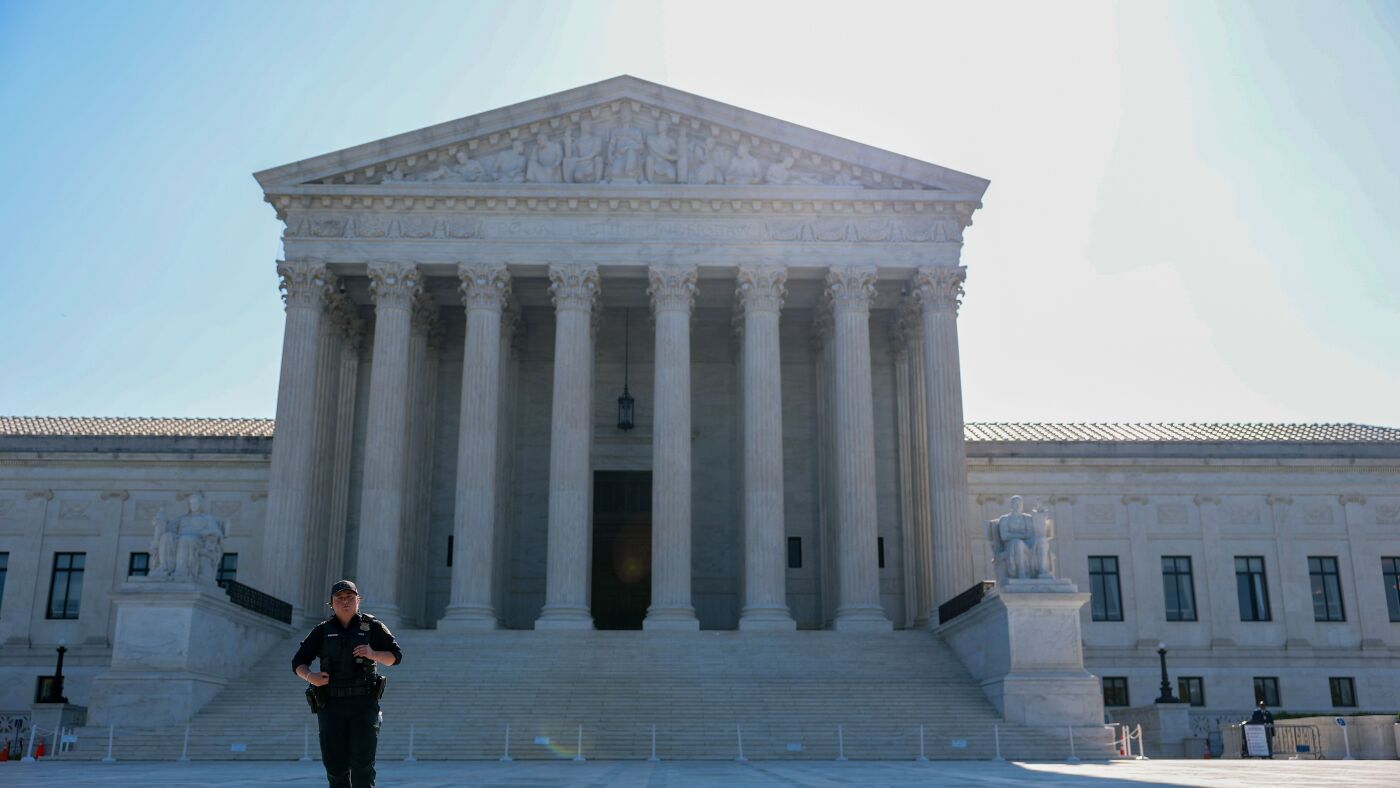
What the Supreme Court did on the final day of its term
-

 Los Angeles, Ca2 hours ago
Los Angeles County man convicted of sex trafficking, abusing woman he was dating
-

 Detroit, MI2 hours ago
Detroit Tigers tee off on New York Yankees with 5 homers in win
-

 San Francisco, CA2 hours ago
Popular brewery shutters San Francisco location amid industry woes
-

 Dallas, TX2 hours ago
Eight arrested after repeated attempts to enter World Cup matches without tickets
-

 Miami, FL2 hours ago
Reports: Heat add potent bench scorer in Tim Hardaway Jr.
-

 Boston, MA2 hours ago
Boston Pops gearing up for major July 4th celebration: ‘You only turn 250 once’ – Boston News, Weather, Sports | WHDH 7News
-

 Denver, CO2 hours ago
Colorado wildfires destroy more than 100 structures, force more evacuations

