San Diego, CA
‘One of the greats’: Camp Pendleton Marine pilot killed in training exercise identified


Military officials have identified the Camp Pendleton-based Marine pilot and California native killed in a helicopter crash last week.
Maj. Tyler R. Braconi, 35, died when an AH-1Z Viper carrying two crew members crashed Thursday evening during routine training for the Weapons and Tactics Instructor Course near an unpopulated area of Imperial Gables.
The flight had departed from Marine Corps Air Station Camp Pendleton and experienced an “aviation mishap” near the California-Arizona border, officials said.
Assigned to Marine Light Attack Helicopter Squadron (HMLA) 369, Marine Aircraft Group 39 and 3rd Marine Aircraft Wing, Braconi commissioned in 2012, was promoted to major in 2022 and previously served with HMLA-267 and as an exchange pilot with the Australian Army.
Braconi’s decorations include the Navy and Marine Corps Commendation Medal, Global War on Terrorism Service Medal, National Defense Service Medal and Sea Service Deployment Ribbon with four bronze stars.
“We join the family of Maj. Tyler Braconi in mourning the unimaginable loss of a loved one. Our most valued asset is our people, the individual Marine, and Tyler was one of the greats,” said Lt. Col. Christopher Hart, commanding officer of HMLA-369. “We mourn the loss of a ‘Gunfighter,’ brave aviator, and leader that served our nation with humility, strength, and purpose. Our focus is supporting Tyler’s family and loved ones during this difficult time.”
The second pilot involved in the crash was injured and has not been publicly identified, officials said.
The incident remains under investigation and no further details have been released.



San Diego’s most beloved neighborhoods, like North Park, Golden Hill and Sherman Heights, were built by people who needed a place to live and found one. But the bungalows, fourplexes and cottages that gave working San Diegans a foothold in those neighborhoods can hardly be built anywhere else in the city.
Rules written decades ago banned them. For 70 years, San Diego has been paying for that mistake in the form of a city its own workforce can no longer afford to live in.
Neighborhood Homes for All of Us is the city’s plan to fix that: family-sized townhomes, rowhouses and small duplexes built in the neighborhoods where San Diegans most want to live.
While San Diego rents are softening as new apartments are built, the cost of buying a home is not moving, and it won’t, because the rental and ownership markets run on entirely separate tracks. Renters benefit when more rentals are built, forcing landlords to compete for them.
However, a family trying to buy a home benefits only if more homes are available for sale. San Diego home prices now exceed nine times the median household income, among the worst ratios in the nation, according to Harvard’s Joint Center for Housing Studies. Building rental housing is important, but it does not change the math for a buyer.
The homes that would change it — family-sized, on the ownership track, in the neighborhoods where people most want to raise children — have been illegal to build for decades. San Diego produced roughly 7,000 condos and townhomes a year in 2005. By 2022, that number had collapsed below 500. Part of that drop is because of litigation rules that drove up insurance costs for builders, caps on pre-sales that finance these projects and high fees. Another major reason is that we simply do not allow starter homes on smaller lots. So, instead, builders default to rentals because that’s what current rules allow them to build profitably.
London Moeder Advisors, a San Diego real estate economics firm, finds that eliminating the city’s large-lot-size mandates could produce new townhomes at 42% less cost than surrounding single-family homes without taxpayer subsidies. While this price point is still high for many, it’s more attainable for young families starting out. And importantly, the price could drop further if the state advances reforms to address litigation rules and pre-sale caps that drive up costs.
The city’s program is also focused on adding homes in San Diego’s neighborhoods with the best-performing schools and most accessible jobs. These are also the neighborhoods with the most restrictive regulations on smaller starter homes. A teacher whose classroom is in La Jolla cannot afford to live there. A firefighter stationed in Mission Hills commutes from Santee. The homes that would let them stay are currently illegal to build in much of these areas. Neighborhood Homes changes that.
While critics may say San Diego already has the tools for adding homes to neighborhoods, why add another program? Because each of those tools was for a different purpose. None were designed to add more for-sale housing.
ADUs, the backyard homes now common across the city, typically top out at 750 square feet (because of fee cliffs) and entail intricacies when selling to own. Other tools, like Senate Bill 9, have been layered with requirements that make it far too complicated and expensive for many homeowners to split their lots to add homes. Laws like Senate Bill 79 are important for adding more housing near transit. But none of these tools focuses on family-sized, ownership-track townhomes in an established neighborhood.
The Neighborhood Homes initiative asks a simple question: Where do the families who can’t afford a million-dollar home but don’t want an apartment go? We can continue to say certain neighborhoods are off-limits to the teachers, trades workers and young families who want to live there, or San Diego can set its own terms for how they grow, with local standards in a form the city controls.
San Diego’s most beloved streets were not preserved into existence. They were built — a duplex here, a rowhouse there — by people who needed a place to live in the city they loved and found one. That is what Neighborhood Homes makes possible again.
Asad is a former board member of the YIMBY Democrats of San Diego County. He resides in Mid-City.

So Justin Verlander is calling it quits, effective at the season’s end.
There’s Padres-related history to explore with Verlander, 43.
With it comes many groans.
San Diego passed on Verlander as part of the infamous, franchise-rocking decision to draft Mission Bay High School’s Matt Bush with the first overall pick in 2004.
Had the Padres chosen Verlander and tweaked the Old Dominion alum’s delivery, as the Tigers did soon after selecting him No. 2 overall, the best innings-eater of his generation could’ve headed San Diego’s rotation for many years.
As a National Leaguer, Verlander would’ve pitched against pitchers, rather than designated hitters. His annual ERA would’ve fallen by about a half run, per DH and no-DH data of that time.
The Padres would’ve boasted a generational monster atop their rotation as soon as 2006, when Verlander won the American League rookie of the year award with Detroit, while the San Diego rotation featured next year’s NL Cy Young winner, Jake Peavy.
Recall also that Petco Park, from its opening in 2004 until its remodel in 2012, played as big as Yellowstone National Park.
Not that the DH rule greatly impeded Verlander, a nine-time All-Star.
Many times over, the ace rewarded Tigers general manager Dave Dombrowski and scouting director Greg Smith for drafting him one spot after Kevin Towers and Bill Gayton — their options reduced by Padres owner John Moores’ stated opposition to drafting Scott Boras-assisted prospects Jered Weaver and Stephen Drew — selected Bush, the easy-to-sign but troubled shortstop turned pitcher.
Verlander helped Detroit reach its first two World Series in decades. He led the league in innings three times as part of chewing up 200-plus innings in eight consecutive seasons.
Dombrowski had displayed an unwavering faith in betting big on hard throwers.
Unfazed by power-righty Kyle Sleeth breaking down soon after he took him third overall in 2003, Dombrowski and Smith, a former Padres scout, became dead set on taking Verlander if the Padres didn’t.
Why didn’t Towers and Gayton choose Verlander?
Foremost, the Padres generally didn’t like him as much as the Tigers did.
In fact, they preferred Weaver and Drew.
But Moores all but blocked his scouts there. He was openly critical of their adviser, Boras, saying he didn’t trust him. The two had clashed in the Kevin Brown talks that ended with Brown joining the Dodgers, months after Brown had led the Padres to the 1998 World Series.
Moores was subjected to other kinds of pressure, too. Legal complaints had delayed Petco’s construction. Those complaints all failed in court. But in the interim, the price of steel rose. Padres ownership bore that cost.
Even though Moores’ baseball staffers whiffed on Verlander and failed miserably in choosing Bush, Moores put them in a tough spot. He in effect removed two players who would both pan out as big leaguers.
Someone with the Tigers correctly foresaw that shortening Verlander’s stride would sharpen his control. Untroubled by his 21-18 college record and bursts of subpar accuracy, the Tigers’ duo touted the 6-foot-5, 240-pounder’s “electric” combination of size, velocity and a powerful curveball.
Signing Verlander wasn’t easy.
David Verlander, the pitcher’s father and a union organizer with experience in sticky negotiations, said a contractual impasse led him to negotiate directly with Smith, leading to a deal, per CWA-Union.org.
The sides agreed on a $3.12 million signing bonus, which was less than the $3.15 million bonus the Padres paid to Bush, who was advised by Jeff Moorad.
The Boras-advised Weaver and Drew, who went 12th and 15th to the Angels and Diamondbacks, respectively, got $4 million apiece — but they and Verlander each got major league contracts, increasing the value of all three deals.
It wasn’t until close to the 2005 draft that Weaver was signed. He nonetheless returned great value to the Angels.
Verlander went on to pitch for the Astros after GM Jeff Luhnow obtained him at age 34 from Detroit.
Verlander became a better pitcher with Houston, benefiting from the tech-and-data-driven edges the Astros provided him. Verlander embraced high-speed camera data, eventually dropping his two-seam fastball and limiting his rising fastball to high in the zone. Prodded by high-speed imagery, he adjusted his slider grip.
He won his second and third Cy Youngs with the Astros, and now stands 266-159 with a 3.33 career ERA in nearly 3,600 innings.
For baseball’s hungriest fanbase, he represents a case of what might have been.
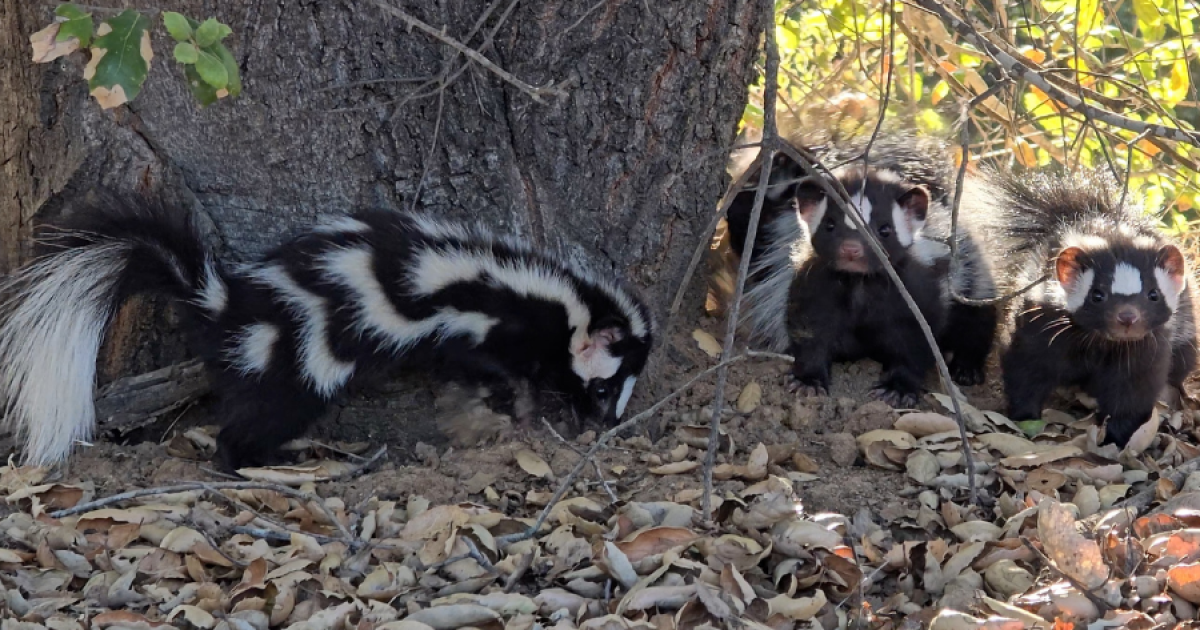
RAMONA (CNS) – Four rare western spotted skunks were released back in the wild after weeks of rehabilitation and socialization at the San Diego Humane Society’s Ramona Wildlife Center, officials announced Wednesday.
The successful release marks a major milestone for a species rarely seen in wildlife rehabilitation. The group included one orphaned skunk that was flown more than 400 miles by Flying Tails Animal Rescue from Sierra Wildlife Rescue in Northern California to join an orphaned group in Ramona, according to the SDHS.
The four skunks were returned to a carefully selected, remote habitat in Valley Center after reaching the necessary weight and developmental milestones to thrive on their own.
Western spotted skunks are a rare sight for the Humane Society’s Project Wildlife team. While the wildlife center typically handles hundreds of striped skunks each year, admitting six spotted skunks from different litters in one season is unusual. Spotted skunks are generally found in remote forested areas and are not as common in urban neighborhoods, officials said.
“We have never seen this many western spotted skunks in a single season before,” said Autumn Welch, wildlife operations manager at the Ramona Wildlife Center. “Because they are more reclusive than striped skunks, they require very specific care and even more secluded release sites to ensure they can stay wild.”
Socialization is critical for orphaned spotted skunks. During their stay at the Ramona Wildlife Center, the group became a bonded unit — exploring, digging and sleeping together, according to SDHS officials. Experts say these social cues prevent habituation to humans and teach the orphans natural skunk behaviors.
While four members of the group have returned to the wild, two spotted skunks remain in care at the facility. The smallest skunk was moved to an outside pre-release habitat and introduced to a slightly older skunk in late June.
Wildlife officials said by keeping the pair together, the wildlife team ensures the younger skunk will have a companion to learn from until they are both ready to be released, likely within the next month or two.
Anyone who finds an injured, sick or orphaned wild animal is encouraged to visit sdhumane.org/wildlifehelp or call 619-299-7012.
Copyright 2026, City News Service, Inc.
-
 Business2 minutes ago
California soccer fans sue StubHub after it fails to deliver expensive World Cup tickets
-
 Entertainment5 minutes ago
Lucas Museum to give free annual passes to South L.A. neighbors, host community preview day
-
 Lifestyle10 minutes ago
Meow Wolf taps famed L.A. animation house for its new Los Angeles venue
-
Politics17 minutes ago
Column: Trump decries ‘communism’ while his government takes ownership of companies
-
 Science20 minutes ago
‘I’d rather my house burn down than get cancer’: Herbicide use upends California’s fight to save forests
-
 Sports25 minutes ago
Dodgers scheduled to visit White House in late July to celebrate 2025 World Series win
-

 World35 minutes ago
Former US Olympian pleads not guilty in DC reflecting pool vandalism case
-
 News1 hour ago
Former Olympian pleads not guilty in reflecting pool vandalism charges


