Ben Affleck Eddie Murphy, Hailee Steinfeld & Rashida Jones
Getty Images

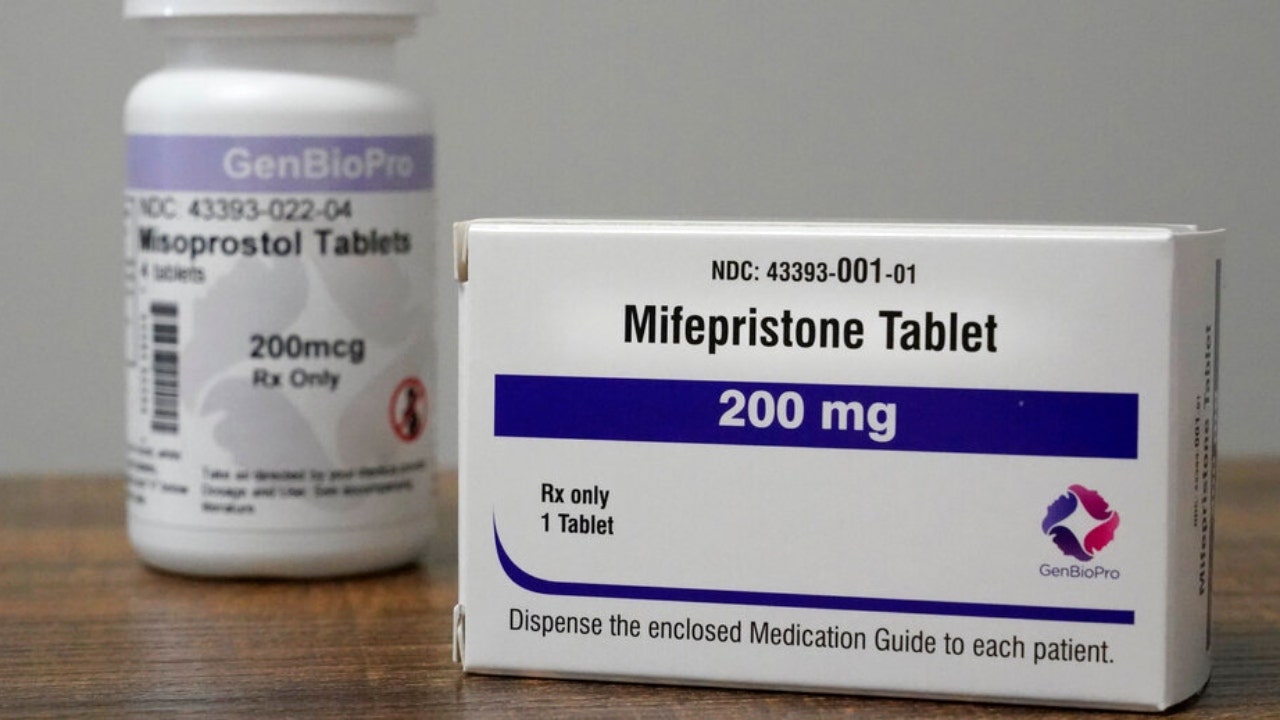
Three Republican attorneys general have asked to join a lawsuit pending before the Supreme Court that could determine whether women have access to the abortion pill, mifepristone.
Missouri, Idaho and Kansas on Monday jointly filed a motion to intervene in U.S. Food and Drug Administration (FDA) vs. Alliance for Hippocratic Medicine, which, if granted, would allow the states to become plaintiffs in the case. The move is an effort to keep the lawsuit alive if the justices find the pro-life doctors who originally challenged the FDA’s approval of mifepristone lack standing to do so.
“This is one of the most important cases before the Supreme Court this term. We’re fighting to protect women and their unborn children from these dangerous abortion pills,” Missouri Attorney General Andrew Bailey told Fox News Digital in a statement.
The Supreme Court last month agreed to consider appeals from the Biden administration and drug manufacturer Danco Laboratories defending deregulation of mifepristone, the abortion pill, as part of an effort to make it easier to access and use the drug since the Supreme Court overturned Roe v. Wade.
MISSOURI ATTORNEY GENERAL SUES BIDEN ADMIN FOR APPROVING THE SHIPMENT OF CHEMICAL ABORTION PILLS IN THE MAIL
Attorney General Andrew Bailey outside the Supreme Court on Feb. 28, 2023. Missouri, Idaho and Kansas have asked to join a lawsuit challenging the FDA’s deregulation of the abortion pill, mifepristone. (Valerie Plesch/Bloomberg via Getty Images)
In its landmark June 2022 decision, the court ruled in Dobbs v. Jackson Women’s Health Organization that the U.S. Constitution does not guarantee the right to an abortion and that the matter should be decided by the states. In the aftermath, 14 states have banned abortion at all stages of pregnancy, with some exceptions, and two others have banned abortion once a fetal heartbeat is detected, which is around six weeks of gestation.
The case now pending before the court concerns pro-life doctors and medical groups that sued the FDA in 2022, alleging that the agency unlawfully approved mifepristone in 2000 and that the drug is unsafe.
Mifepristone, known by the brand name Mifeprex, is a pill taken with misoprostol in a two-drug regimen that first deprives an unborn baby of hormones it needs to stay alive and then causes cramps and contractions to expel the dead fetus from the mother’s womb.
In a highly controversial ruling, the district court in Texas where the case originated halted the FDA’s approval of mifepristone, triggering an appeals process that has now landed before the Supreme Court.
20 STATE AGS WARN CVS, WALGREENS THAT DISTRIBUTING ABORTION PILLS VIOLATES STATE, FEDERAL LAW
Mifepristone is typically used in combination with misoprostol to bring about a chemical abortion during pregnancy and manage early miscarriage. (Soumyabrata Roy/NurPhoto via Getty Images)
The Biden administration and Danco are asking the high court to reverse an appellate ruling that would cut off access to the abortion pill through the mail and impose other restrictions, even in states where abortion remains legal. The restrictions include shortening from the current 10 weeks to seven weeks the time during which mifepristone can be used in pregnancy. The nine justices rejected a separate appeal from abortion opponents who challenged the FDA’s initial approval of mifepristone as safe and effective in 2000.
The case will be argued in the spring, with a decision likely by late June, in the middle of the 2024 presidential and congressional campaigns.
Before the Supreme Court agreed to hear the appeal, Idaho, Kansas and Missouri moved to intervene in the case in the original district court. Texas U.S. District Judge Matthew Kacsmaryk allowed the three states to join the lawsuit on Jan. 12, 2024, but by then the Supreme Court had already agreed to hear the case.
Now, the Republican attorneys general say the Supreme Court should allow them to join the lawsuit as plaintiffs, asserting there are injuries their states have suffered that the pro-life doctors and medical groups are unable to address in court. They claim that abortion rights organizations have shipped abortion pills into their states, with the assistance of the FDA, in violation of state abortion bans.
SUPREME COURT AGREES TO DECIDE ON ABORTION PILL ACCESS, APPROVAL PROCESS
The U.S. Supreme Court will rule on the legal challenges to the FDA’s deregulation of the abortion pill sometime this spring. (AP Photo/Mariam Zuhaib, File)
“FDA’s actions impose substantial monetary and sovereign harm on the States. The private plaintiffs have no capacity to assert the States’ interests. So if this Court denies intervention and holds that the private plaintiffs lack standing, the States may be forced to wait for relief until this Court resolves a future emergency application or certiorari petition by Petitioners,” the states told the court in a legal filing.
Bailey, in the filing, also pointed to data that shows thousands of women have traveled out of state to purchase mifepristone and then return to Missouri. “The Federal Government admits that 5 to 8 percent of these women experience significant complications after returning home,” the filing states.
“Intervention would also promote efficiency,” the attorneys general argued, observing that their separate challenge to the abortion pill is likely to end up before the court “within months” anyway.
Should the Supreme Court decline their motion to intervene, the Republicans said they “are happy simply to submit an amicus brief.”
“I am very pleased the district court in Texas has recognized Idaho’s standing in this case. We intervened over concerns for the safety of Idaho women and the virtually unregulated access to mail-order abortion pills,” Idaho Attorney General Raul Labrador told Fox News Digital in a statement. “The Federal Drug Administration’s recklessness puts the lives of both pregnant women and their unborn children in medical jeopardy.”
“Biden is beholden to the nation’s most radical abortion extremists so the FDA is allowing the shipment of chemical abortion pills,” Kansas Attorney General Kris Kobach said. “The FDA lacks the statutory authority to do so. And that’s why Kansas is suing.”
The FDA has defended its approval of mifepristone and said the drug is safe when used correctly.
“The FDA approved Mifeprex more than 20 years ago based on a thorough and comprehensive review of the scientific evidence presented and determined that it was safe and effective for its indicated use,” the FDA’s website states.
Alliance Defending Freedom senior counsel Erik Baptist, who is representing the private plaintiffs, expressed optimism that the Supreme Court will ultimately come down on their side.
“Women should have the ongoing care of a doctor when taking high-risk drugs,” Baptist said. “The FDA betrayed women and girls when it removed safety standards that it previously deemed necessary for women’s health and well-being. The FDA should do the right thing and protect women and girls. Three courts have already agreed with us, and we are hopeful that the U.S. Supreme Court will also agree.”
Fox News Digital’s Danielle Wallace, Greg Wehner and the Associated Press contributed to this report.
Read the full article from Here


Alaska agreed to settle with the Interior Department on Monday over a Biden-era plan aimed at restricting drilling and leasing, a deal that could expand the state’s oil and gas development.
The state and the Alaska Industrial Development and Export Authority in consolidated cases agreed to drop the suit if Interior offered a written admission that its approval of the Biden-era plan was flawed and violated the 2017 Tax Act.
The 2024 plan included restrictions such as protecting more than 1 million acres of coastal plains. According to the proposed agreement, that move eliminated interest in a Jan. 6, 2025 …

PAGE, ARIZ., – A suspect has been arrested after two people were found shot to death inside a home near the Arizona-Utah border.
What we know:
On July 5 at 11:30 p.m., the Page Police and Fire Communications Center responded to a report that two people had been shot near Elm and El Camino.
Once at the home, officers found a man and a woman with gunshot wounds. They were pronounced dead at the scene.
“The suspect was unknown and not on scene when officers arrived,” police said.
Dig deeper:
Police secured the home and obtained a search warrant. Investigators then began processing the crime scene.
“Evidence collected provided investigators with a person of interest who may have been present when the shootings occurred,” police said. “Investigators located the person of interest and interviewed him but did not initially charge him with any crimes related to the double homicide investigation.”
The next day, the person of interest was arrested and booked into jail. He’s accused of two counts of first-degree murder.
What we don’t know:
No identities were released. Police didn’t release any details on what led up to the shooting.
Local perspective:
Police “do not believe there is any remaining threat to the community, as the alleged suspect and the weapon allegedly used have been seized by law enforcement.”
What you can do:
If anyone has information related to the investigation, they advise contacting Detective Terry TerEick at ttereick@pageaz.gov.
Map of the cross streets where the shooting occurred:
The Source: Information for this article was gathered from the Page Police Department’s Facebook page.

Gavin Newsom is taking a victory lap today on the first anniversary of California’s film and TV tax credits program being jacked up to $750 million, and the potential presidential contender has Disney, a Shrek prequel, and Ben Affleck along for the ride.
Along with an untitled Pixar project, the Argo Oscar winner’s upcoming Gingerbread Men, the Hailee Steinfeld and Rashida Jones-starring animated Hexed from the House of Mouse and DreamWorks’ Eddie Murphy-led Donkey were among 41 films that received $187 million in incentives today.
The Pixar flick was awarded the most in credits with $26.7 million in what has become a very helpful program for animation the past 365 days. Not that ‘toons don’t pay off. The four animated features are estimated to inject $711 million into the Golden State’s economy. That breaks down to about “$145 million in qualified wages, employing over 1,900 cast and crew members” for the home of Hollywood, according to the California Film Commission.
Ben Affleck Eddie Murphy, Hailee Steinfeld & Rashida Jones
Getty Images
“We received the approval letter informing us that Gingerbread Men was accepted into the California Film and Television Tax Credit Program,” Affleck said of the indie from his and pal Matt Damon‘s Artists Equity.“ Gingerbread Men got $7 million from the state.
“Under the program, we have been able to make the films Argo, Unstoppable, and Accountant 2,” Affleck added. “Our upcoming film, Gingerbread Men, will be filmed in Los Angeles, California – close to our company office and the best and most experienced cast and crew, vendors, and service providers. Let’s continue to keep the California film industry alive with the help of the California Film and Television Tax Credit Program!”
Take a look at the full list of conditionally approved awards here:

Overall, the bean counters in Sacramento anticipate the 41 projects will generate $1.1 billon “in direct production spending in California” and “$145 million in qualified wages, employing over 1,900 cast and crew.”
That figure factors nicely into some very big numbers that Governor Newsom heralded Tuesday.
Specifically, $6.6 billion has been created for the state’s economy over the past year out of 170 credited projects. While that sum sounds (and is) impressive, the figure that may get the town truly jazzed is the “nearly 35,000 cast and crew jobs across California” the Governor’s team says have come out of the last year since the program allotment leapt up.
To that, including the awarded big screeners revealed today, Gov. Newsom sure sounded like he was prepping a stump speech for the Heartland on the California miracle, so to speak.
“California has long set the standard for entertainment production, creating good-paying jobs and showcasing the creativity and innovation that define the Golden State,” the governor asserted. “The first year of the expanded tax credit program is already delivering results — generating billions in economic activity, creating opportunities for businesses and the workforce, and bringing more productions home to California.”
Maybe the biggest praise came from Burbank.
“Governor Newsom, and the legislative leaders who have worked to strengthen opportunities for production here as we continue to invest in California’s world-class creative workforce,” said Alan Bergman, Disney Entertainment Studios chairman Tuesday.
Reading the tea leaves-ish, does that mean we’ll see some Marvel movies coming over from the tax incentive rich UK soon?
Just askin’.


Maryland kidnapping suspect taken into custody in Georgia


Man sentenced to federal prison for armed robberies of St. Paul bank, Minneapolis Walgreens


Advocates say new public camping ban criminalizes homelessness


Allegheny County park with 200-year-old trees joins network of


Local service members get more chances to expand their education


Greenberg Traurig Adds Former Commerce Official Joe Bartlett to Washington, D.C., Office


GUARDIANS WILL SEND THREE TO MLB ALL-STAR GAME IN PHILADELPHIA


Tesla leases 683K sf speculative industrial building amid Central Texas expansion spree

