West
Over 50 members of Utah Mormon congregations suffer carbon monoxide poisoning during service

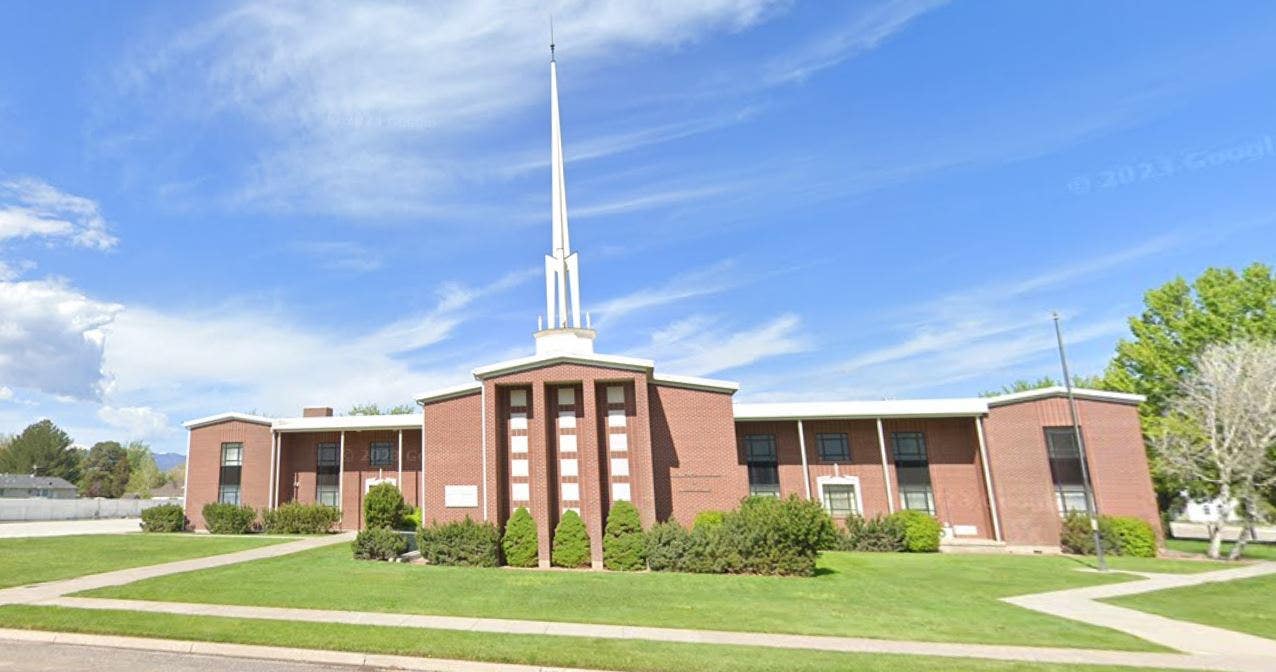
Over 50 members of a Utah Mormon Congregation suffered symptoms of carbon monoxide poisoning during a service this weekend.
At least 54 members of the Church of Jesus Christ of Latter-day Saints meetinghouse in Monroe, Utah reported symptoms, according to NBC News, though only 49 required treatment. The Church says it suspects a malfunction with the building’s heating system was to blame.
Church officials say the building will remain closed until they have confirmed the issue is fixed.
“We are concerned for the well-being of everyone impacted and are praying for their recovery,” the church said in a statement, adding that it is “working to support medical and other expenses” for affected parishioners.
MONTANA GRANPA WHOSE JAW WAS RIPPED OFF BY GRIZZLE BEAR ATTACKS RECOVERY: ‘HE IS GOING TO BE LIKE RAMBO’
Over 50 members of a Utah Mormon Congregation suffered symptoms of carbon monoxide poisoning during a service this weekend. (Google Maps)
Specific details about the symptoms from Sunday’s incident were not forthcoming, but at least 22 people were hospitalized immediately after the service.
MAN WHO SURVIVED GRIZZLY ATTACK BEARS MESSAGE FOR BEAST AFTER SURGERY GIVES HIM NEW FACE
Problems began when a 4-year-old girl reported breathing problems, followed by a man who began to feel sick, and a third person who reported a headache after leaving the building, according to NBC.
The Church of Jesus Christ of Latter-day Saints meetinghouse in Monroe is located in central Utah, nearly 200 miles south of Salt Lake city. Church officials say the building will remain closed until they have confirmed the carbon monoxide issue is fixed. (google maps)
Ultimately, the local fire department was called. They confirmed the carbon monoxide leak and ordered an evacuation.
CHICAGO DOCTORS USE BREAST IMPLANTS TO PERFORM SUCCESSFUL DOUBLE-LUNG TRANSPLANT ON 34-YEAR-OLD MAN
The Sheriff’s office in Monroe stated that local first responders did not have enough ambulances to transport all of the people reporting symptoms, and so units from nearby counties were called in, according to NBC.
CLICK TO GET THE FOX NEWS APP
Church officials have not announced when they expect the building to be usable again.
Read the full article from Here


Key Points:
-
Arizona utilities have begun a siting study to explore building a nuclear facility
-
The project hit a setback when the utilities were denied a Department of Energy grant
-
Dwindling Colorado River water supplies could also challenge new nuclear growth
Arizona leaders are forging ahead with plans for new nuclear energy generation despite ongoing funding woes and water hurdles.
At a June 25 Arizona Corporation Commission workshop, utility companies, universities, local governments and private industry stakeholders demonstrated their preparedness and commitment to turning the state’s dreams for a new nuclear power plant into reality. Arizona’s three largest electric utilities announced ahead of the workshop that they have commenced a siting study to find a potential location for the project.
Arizona Public Service, Salt River Project and Tucson Electric Power are surveying a range of potential sites for a new nuclear plant, including decommissioned coal-fired plants. Commissioners celebrated that announcement at the workshop.
“With the recent announcement that APS, SRP, and TEP have launched a preliminary siting study for potential new nuclear generation in Arizona, we’re seeing real momentum translate into meaningful action,” Commission Chair Nick Myers said in a statement. “The expertise and collaboration shared throughout this workshop will help ensure we’re prepared to seize the opportunities ahead and build a strong foundation for Arizona’s energy future.”
If all goes according to plan, the companies expect to hold community stakeholder meetings later this year near the potential nuclear sites. The companies will then “evaluate technical, financial and other factors” to determine whether to submit an early site permit application to the federal government.
However, the utility companies did hit a snag in their process. They did not receive a U.S. Department of Energy grant they applied for in order to help finance that early site permit application, which would need to be submitted to the U.S. Nuclear Regulatory Commission.
The utilities “will continue to work together to explore future funding opportunities to help mitigate the costs of evaluating potential new nuclear generation,” according to a joint statement. The companies stressed that a new nuclear plant is not a foregone conclusion, and they have not decided whether the potential project would use small modular reactors or large reactors like those at Arizona’s Palo Verde Nuclear Generating Station west of Phoenix.
The June 25 workshop also identified a few other potential obstacles that could slow Arizona’s nuclear energy progress, like supply chain constraints, community backlash and dwindling Colorado River water supplies.
Cuts to Arizona’s Colorado River water allocation could be the most difficult obstacle for the state to overcome in order to pursue a new nuclear plant. Representatives from the Arizona Department of Water Resources and the Arizona Municipal Water Users Association told commissioners that the Colorado River is no longer a reliable water supply and alternatives will likely require significant investments.
Palo Verde uses recycled wastewater to cool its three nuclear reactors and APS has explored using low-quality groundwater for cooling at the plant. But with water likely to become more scarce and more expensive in Arizona, a cooling source for any new nuclear plant could be a significant hurdle.
Proposals attempting to clear the way for new nuclear technologies, like small modular reactors, also did not fare well during this year’s legislative session. Lawmakers introduced six bills that would have preempted local authority or streamlined environmental review processes for small modular reactors, but only one made it to Gov. Katie Hobbs’ desk.
Senate Bill 1418 from Sen. Frank Carroll, R-Sun City West, would have allowed utility companies to bypass the commission’s traditional environmental review process for project siting if the company planned to replace a coal generation unit with a small modular reactor. That bill could have benefited the joint project from APS, SRP and TEP if the companies eventually select small modular reactor technology for the new plant.
However, Hobbs vetoed the bill, arguing it was not in line with the state’s goal to “responsibly reduce barriers to deploying new energy projects quickly.”
“We are not in the business of picking winners and losers in the energy landscape, and while advancements in small modular reactor technologies are promising, they are still emerging,” Hobbs wrote in a veto letter. “Deploying such a catch-all approach for an emerging technology, as laid out in this bill, is irresponsible.”
Nevertheless, a potential new nuclear power plant has broad, bipartisan support in Arizona. And some communities are chomping at the bit to bring the technology to their areas, as Navajo County Supervisor Jason Whiting told commissioners on June 25.
“Northeastern Arizona’s energy communities… want to be part of it,” Whiting said. “They want to be involved with it. They will embrace this discussion and decision with open arms.”


See the best High Desert fireworks through the years
Fireworks have long lit up the California High Desert, from community shows in Victorville and Apple Valley to backyard celebrations that filled the night sky. Revisit Fourth of July moments through the years.
Each year, fireworks light up the sky across the United States for the nation’s Independence Day. With 2026 marking the nation’s 250th birthday, fireworks shows may be a bigger draw.
With California being so fire-prone, the state has strict fireworks laws, but does that mean that people won’t enjoy fireworks without risking jail time on July 4?
Are fireworks illegal in California?
The California Department of Forestry and Fire Protection, or CalFire, is the agency in charge of managing fireworks and classifying which ones are safe to light.
The California Fireworks Law was passed in 1938 and designated the Office of the State Fire Marshal as the only fireworks classification authority in the state, according to CalFire.
The fire marshal’s office classifies fireworks through lab analysis and field testing. It also requires that all parties dealing in fireworks, such as pyrotechnic operators, manufacturers, and retailers, have licensing.
Along with the aforementioned law, the State’s Explosive Law authorizes the fire marshal to “adopt regulations for the safe use, handling, storage and transportation of explosives,” CalFire says.
“Safe and Sane” fireworks are less likely to cause injury and generally mean that the fireworks do not explode or fly, according to the City of Fontana.
There are almost 300 communities in the state that allow “Safe and Sane” fireworks.
It is illegal in the state to sell, transport, or use fireworks that don’t carry the “Safe and Sane” seal or use any in a nonpermitted community. If convicted, you can face a fine up to $50,000, a year in jail or both, according to CalFire.
All other fireworks are considered illegal in the state and are prohibited from being operated by unauthorized parties in most jurisdictions.
Some illegal fireworks include:
- Wire Core Sparklers
- Sky rockets
- Bottle rockets
- Roman candles
- Aerial shells
- Firecrackers
- Other fireworks that explode, go into the air, or move on the ground in an “uncontrollable manner.”
How to safely use fireworks
CalFire has put out a list of safety tips to avoid injury when handling fireworks.
CalFire recommends:
- Use only State Fire Marshal-approved fireworks
- Verify local ordinances before purchasing or using fireworks.
- Always read the directions on labels.
- Children should always have an adult present.
- Only use fireworks outdoors.
- Avoid using fireworks near dry grass or other flammable materials.
- Only light one firework at a time.
- Have a bucket of water and a hose nearby in case of fire.
- During a drought, it is recommended that you use a bucket of reused water to submerge your firework after use to ensure it’s completely extinguished.
- Never place any part of your body directly over a fireworks device when lighting the fuse.
- Back up several feet immediately after lighting a firework.
- Never point or throw fireworks at another person.
- Never attempt to relight or fix fireworks.
- Never experiment with fireworks.
- Do not wear loose-fitting clothing while lighting fireworks.
- Never carry fireworks in your pockets.
Ernesto Centeno Araujo covers breaking news for the Ventura County Star. He can be reached at ecentenoaraujo@vcstar.com, 805-437-0224 or @ecentenoaraujo on Instagram and X.

DENVER – The Colorado Avalanche Hockey Club announced today that the team has signed forward Adam Beckman to a two-year contract through the 2027-28 season.
Beckman, 25, played for the American Hockey League’s Bridgeport Islanders in 2025-26, recording 51 points (30g/21a) in 68 contests. The forward’s 30 tallies paced the Bridgeport club and marked a professional career-high. Beckman also ranked among Bridgeport-leaders in points (2nd) and assists (T-5th), and landed tied for sixth in goals among all AHL skaters. He picked up one point (0g/1a) in two Calder Cup Playoff Contests this season.
Originally drafted by the Minnesota Wild in the third round (75th overall) in the 2019 NHL Draft, Beckman’s professional career has included 23 regular-season NHL appearances with the Wild where he registered three points (0g/3a) between 2020-21 and 2023-24. He made his NHL debut on Oct. 30, 2021 at Colorado and notched his first NHL point less than a week later on Nov. 6 at Pittsburgh with an assist (0g/1a).
A native of Saskatoon, Saskatchewan, Beckman has collected 199 points (104g/95a) through 304 regular-season AHL games with Bridgeport (2024-26), Utica Comets (2024-25) and Iowa Wild (2020-2024). Additionally, he has picked up two points (1g/1a) in four Calder Cup Playoff contests.
Prior to turning pro, the 6-foot-2, 192-pound left wing played parts of four seasons with the Western Hockey League’s Spokane Chiefs, amassing 196 points (97g/99a) across 153 regular-season games. He collected 12 points (8g/4a) in 15 games in the Chiefs’ 2018-19 playoff run. In the 2019-20 campaign, Beckman received the Bob Clarke Trophy as the WHL’s top scorer with 107 points (48g/59a) over 63 regular-season contests, and also earned the Four Broncos Trophy as WHL player of the year. Additionally, he paced the circuit in goals and was named to the 2019-20 Western Conference First All-Star Team for his performance.
-

 Arizona2 minutes ago
Arizona still pursuing nuclear energy despite hurdles | Arizona Capitol Times
-

 Arkansas7 minutes ago
Arkansas Postcard Past: Wynne in 1909 | Arkansas Democrat Gazette
-

 California14 minutes ago
As fireworks pop off for July 4, which are legal to use in California?
-

 Colorado17 minutes ago
Avalanche Signs Beckman | Colorado Avalanche
-
 Connecticut22 minutes ago
Immigrant advocates urge Connecticut to prepare after Supreme Court TPS ruling
-

 Delaware29 minutes ago
Delaware’s dangerous heat wave impacts pets. How to keep them safe
-

 Florida30 minutes ago
Cocaine, guns reported found after gas station surveillance in Florida
-

 Georgia37 minutes ago
LIVE BLOG: Severe storms threaten North Georgia

