Oregon
Oregon Nurses Association rejects contract offer, extends strike against Legacy Health


PORTLAND, Ore. (KATU) — Advanced practice providers (APPs) represented by the Oregon Nurses Association (ONA) are staying out on the picket line after members overwhelmingly rejected the tentative contract agreement reached with Legacy Health reached Dec. 23.
According to a representative with the ONA, APPs voted to continue the strike, claiming Legacy has failed to make significant movement at the bargaining table, has shown disrespect to APPs, and has operated on a management of hypocrisy.
PAST COVERAGE | Striking health care workers reach tentative agreement with Legacy Health
ONA issued a press release, writing, “Since issuing a strike notice, advanced practice providers (APPs) repeatedly offered to meet at any time and in any location to move negotiations forward. Legacy Health instead chose to delay bargaining and engage in bad-faith tactics.”
“[Legacy]They have never taken our time very seriously. They have routinely been late to bargaining, they’ve no-showed to bargaining, they’ve changed bargaining from in-person to virtual at the last minute when all of us showed up on our free time to do this, they have said incredible disrespectful things to us during bargaining,” said Leigh Warsing, a physician associate at Legacy Emanuel and member of the bargaining team. “The fact that they haven’t moved at all on their contract, their proposal to us really devalues us and dismisses what we’re worth.”
APPs also believed the proposed deal would still leave Legacy APPs far behind their peers at other health systems.
“The proposed agreement would have left Legacy APPs 10% behind their counterparts at OHSU, and behind what Kaiser APPs have been offered—perpetuating a widening wage and standards gap that threatens the long-term stability of Legacy’s workforce,” ONA said.
The statement continued, “This disparity would inevitably drive experienced APPs out of the system, worsening patient care, increasing burnout among remaining staff, and inflating costs as Legacy is forced into a constant recruitment and retention cycle of its own making. When frontline providers are undervalued, patient care inevitably suffers.”
Warsing echoed that sentiment.
“There’s a lot of experience in some of these departments, and the fear is that we will lose those providers,” Warsing said. “If the hospital is not willing to competitively keep providers, then they’re going to leave, and we don’t want them to leave. We want our teams to stay together, and we know that we provide amazing patient care as an excellent team, and that’s going to be torn apart of we’re not treated fairly, respectfully, and paid competitively.”
The proposed deal included pay raises, new pay scales, and protections for discipline and termination, as well as the creation of a labor-management committee.
However, the tentative agreement came just days after Legacy executives issued a notice to striking APPs that they could be stripped of health insurance starting January 1.
April Callister, a physician associate at Legacy Emanuel and Legacy Good Samaritan, as well as a member of the bargaining team, said this move could be devastating.
“It would be huge a hit to a lot of striking APPs,” Callister said. “These are people with families, with children, with chronic health conditions who need medications every month. These are people with doctors’ visits. I mean, APPs not only care for people, they’re also people that require care, so it would be really devastating if Legacy were to follow through on that.”
According to Callister, it was important for a tentative agreement to be brought forward to union members due to the uncertainty as the strike continues.
“We’ve been on the strike line for 25 days now,” she said. “People have sacrificed so much to be out here during the holidays away from their family without a paycheck, and now Legacy is threatening to take away the insurance of these providers, and we felt it was really important to give members opportunity to say whether or not this sacrifice was worth it for them, and if they were willing and able to continue fighting for what we’re worth.”
APPs have been on strike since Dec. 2 to reach a contract that they say pays them fairly.
Since the strike began, Callister tells KATU since the strike began, a lot of the physicians have been picking up the pieces.
“Unfortunately, Legacy seems to have put a lot of burden on our physician colleagues, which is incredible sad to see,” Callister said. “We work in a very collaborative environment with all of our team members.”
“Advanced practice providers—including nurse practitioners, physician associates, and clinical nurse specialists—are highly trained clinicians who save lives, perform surgeries, and care for families every day,” ONA said. “They deliver essential, lifesaving care across a wide range of settings and are critical to the health and safety of communities throughout Oregon.”
Warsing said if they can’t come to an agreement, the impact on patients will be losing quality health care providers.
“Patients deserve quality providers, and if all of your quality providers are only in one institution, then it makes it kind of hard for the patients because we can’t just send all of the patients to the one quality institution in the city,” Warsing said.
ONA representatives told KATU they will return to the bargaining table immediately.
“We’re available to bargain,” Warsing said. “The members have resoundingly voted it [the tentative agreement] down, and we’ve informed Legacy lead
KATU News has reached out to Legacy Health, awaiting comment.


When asked if he’d like to join the music program Keys, Beats, Bars, Mikey, who’s currently incarcerated at MacLaren Youth Correctional Facility in Woodburn, figured it would be a good chance to spend some time outside of his unit.
Through a series of workshops, the program brought local musicians and educators into the facilities. They made beats and taught the group about rhyme schemes and rap bars. It was a way for Mikey and his peers to make music, but also to discuss common interests and their shared experiences at MacLaren as they brainstormed lyrics.
Eventually, they recorded a song, “No Ceilings,” about the barriers of incarceration, the music video for which is premiering at a July 11 benefit concert at the Tomorrow Theater dubbed the Restorative Justice Showcase.
Several formerly incarcerated artists feature on the night’s bill, including Keys, Beats, Bars co-founder Talilo Marfil and influential rapper and activist Mic Crenshaw, who led the workshops that produced “No Ceilings.” Hip-hop artist Swiggy Mandela will lead a live cypher, or freestyle rap session, with music by duo Alley Oop to end the show.
Mikey, not his real name, called the songwriting process “therapeutic.”
“Being able to listen to the beats or just channel that, in a positive way,” Mikey says, “I’m glad that I got the opportunity to utilize that while I’m here.”
Music has always been a part of Mikey’s life. His mom played Mariah Carey and DeBarge, and his grandma always had something on when they spent time together on weekends. When he’s feeling irritated or doesn’t want to be bothered, he turns to music.
“You find little achievements and little accolades along the way that, while you’re doing your time, make it easier to get through the day,” Mikey says. “Some people like reading books. Some people like playing basketball. Some people like listening to music.”
Marfil, who is also executive director of the peer advocacy program Ascending Flow, says he wishes he’d had programs like this when he was incarcerated. He found support through church, “but not everybody relates to church,” he says.
After his release, Marfil enrolled in Outside the Frame, an organization that provides homeless youth access to filmmaking resources. “It made me feel like my story mattered and that it was worth telling,” he says. “They gave me opportunities to show my films, my music, to the greater public in front of sold-out shows. Going from dreaming about it in a cell to actually doing it is a game changer for an individual.”
Keys, Beats, Bars runs several music programs for disadvantaged youth. But Marfil, alongside musician and community organizer Adam Carpinelli, launched the workshops at MacLaren.
“I’ve seen it give them hope,” Marfil says. “I think that’s the most important thing: hope, motivation, inspiration and, for a moment, a sense of relief through expression.”

To protect their anonymity, the music video couldn’t feature Mikey, who raps on the song, and his bandmates directly. Instead, Marfil contracted an artist to animate the song’s narrative, which follows a boy from childhood to incarceration.
“Usually, you don’t get to do stuff like that up in jail,” Mikey says, adding that he appreciated the project’s follow-through. “It was kind of cool being able to get the opportunity to record.”
MacLaren is Oregon’s largest juvenile correctional facility. It houses up to 187 youth, ranging ages 12 to 25. While similar to a jail or prison, this style of youth correctional facility places a stronger focus on education and rehabilitation. In contrast to juvenile transitional facilities and residential programs, MacLaren is closed-custody, meaning it’s secure and fenced. In 2025, a Marion County grand jury tasked with assessing MacLaren’s conditions titled its report “Cascading Failures,” citing gang activity, extensive contraband, sexual abuse and staff shortages.
Marfil stresses the role programs like Keys, Beats, Bars play in larger efforts toward restorative justice, and towards ameliorating systemic inequities in the U.S. prison system.
Projecting incarcerated youths’ voices outside of detention facilities is a powerful means for effecting change.
“The song is really just a reflection of being in the facilities and dreaming of what could be possible without the barriers that got them there in the first place, and what they want the community to see about themselves when they get out,” Marfil says. “‘No Ceilings’ is a good example of seeing that youth who are incarcerated have hopes and dreams, and they can contribute something to society.”
SEE IT: Restorative Justice Showcase & Voices From the Inside: A Youth Music Video Premiere at Tomorrow Theater, 3530 SE Division St., tomorrowtheater.org. 3 pm Saturday, July 11. $15. All ages.
HEAR: “No Ceilings” by Keys, Beats, Bars streams on YouTube and Apple Music.
Oregon
National report: Oregon great for giving kids health insurance, bad for teaching them how to read
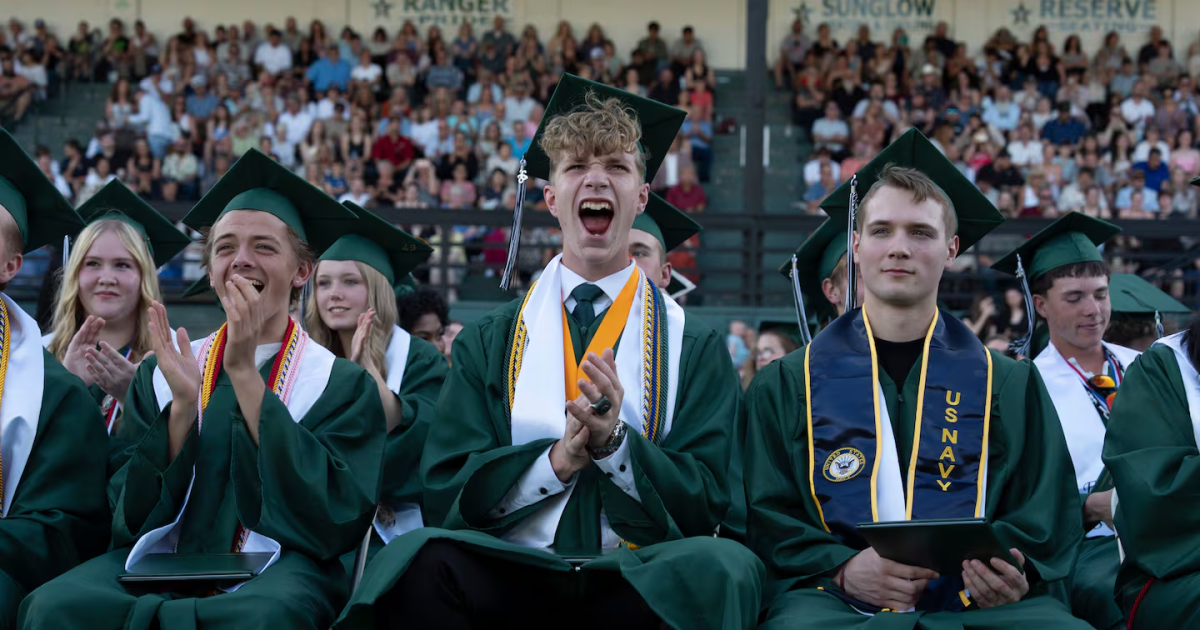
The Annie E. Casey Foundation releases the Kids Count Data Book annually, with its new 2026 edition mainly drawing on data from 2024. State-based organizations work with the Annie E. Casey Foundation on the report, including Our Children Oregon and the Children’s Alliance in Washington.
The report is a snapshot in time of how well the country is supporting its youngest residents in 16 different indicators, including percentage of children living in poverty, kids who lack health insurance and reading proficiency among fourth graders.
David Wieland, policy and advocacy director for Our Children Oregon, said all of the indicators are related and play a role in a child’s well-being.
“We can’t just say that we’ll address reading outcomes through the educational system,” Wieland said. “We actually need to look holistically at child well-being if we want to really improve any one of these single indicators.”
Oregon lags behind the vast majority of states when it comes to educational indicators, ranked at 44 of 50 states. At 31, Washington ranks a bit higher.
But outside of the classroom, the two states fare better. Both Oregon and Washington are in the top 10 of states in health and community indicators.
“These are often the result of policy choices that we make,” Wieland said. “Oregon has prioritized ensuring that children — we should celebrate that.”
But federal changes may hurt states’ progress.
As Children’s Alliance in Washington state mentions in their press release sharing the Kids Count Data, “The numbers do not reflect the current reality for kids and families impacted by federal cuts to vital programs that have already come into effect.”
One policy choice Oregon made allows students to opt out of standardized testing. As a result, Oregon’s testing participation rates are below 95%, the federal requirement.
Wieland said this policy makes Oregon’s outcomes “less reliable.”
“We simply know with less certainty how we compare,” Wieland said.
In addition to rankings, the report calculates index scores for each state, allowing year-over-year comparisons. Both Oregon and Washington’s scores declined compared to their pre-pandemic scores from 2019, and so have the index scores in 45 other states. Only Mississippi and Louisiana saw improvements. South Carolina stayed stable.
Looking Ahead
Through Oregon’s Early Literacy Success Initiative, the state has sent grants to school districts to help improve reading and provide more support for students in elementary school. But it may be a while before those investments show improvement in reports like the Kids Count Data Book, said Our Children Oregon executive director Bridget Dazey.
“We do have to be patient as the state and school districts try new things,” Dazey said. “At the same time, we can confidently say we’re underinvesting in students and so it shouldn’t be so delayed that we wait five to seven years to see how things start to shape up.”
Going forward, Dazey said her organization is working with a coalition of organizations on the next edition of the group’s Children’s Agenda, a list of legislative priorities for lawmakers. Dazey said the state also needs a vision that looks out beyond the legislature’s two-year budget cycle that school districts use to plan spending.
“We need to be thinking long term,” Dazey said. “Our state has gotten really comfortable with thinking about things in the biennium.”
This story comes to you from the Northwest News Network, a collaboration between public media organizations in Oregon and Washington.
The Oregon Lottery offers several draw games for those aiming to win big.
Here’s a look at July 6, 2026, results for each game:
Winning Powerball numbers from July 6 drawing
17-44-63-66-67, Powerball: 04, Power Play: 2
Check Powerball payouts and previous drawings here.
Winning Pick 4 numbers from July 6 drawing
1PM: 8-8-0-7
4PM: 4-2-9-2
7PM: 8-2-5-5
10PM: 7-7-2-2
Check Pick 4 payouts and previous drawings here.
Winning Win for Life numbers from July 6 drawing
18-28-41-70
Check Win for Life payouts and previous drawings here.
Winning Megabucks numbers from July 6 drawing
14-19-20-21-25-38
Check Megabucks payouts and previous drawings here.
Feeling lucky? Explore the latest lottery news & results
When are the Oregon Lottery drawings held?
- Powerball: 7:59 p.m. on Monday, Wednesday and Saturday.
- Mega Millions: 7:59 p.m. on Tuesday and Friday.
- Pick 4: 1 p.m., 4 p.m., 7 p.m. and 10 p.m. daily.
- Win for Life: 7:30 p.m. on Monday, Wednesday, and Saturday.
- Megabucks: 7:29 p.m. on Monday, Wednesday, and Saturday.
This results page was generated automatically using information from TinBu and a template written and reviewed by an Oregon editor. You can send feedback using this form.
-

 San Francisco, CA9 minutes ago
Bay Area restaurant has strict policy on acceptable children behavior
-

 Dallas, TX12 minutes ago
Detroit Pistons trade Marcus Sasser to Dusty May’s Dallas Mavericks
-

 Miami, FL17 minutes ago
The offseason has been a massive success for the Miami Heat
-

 Boston, MA24 minutes ago
Can’t afford Boston’s priciest restaurants? Try these instead. – The Boston Globe
-

 Denver, CO27 minutes ago
City of Denver says images of piling waste a case of illegal dumping
-

 Seattle, WA32 minutes ago
14-year-old dies in electric motorcycle crash at Seattle bike park
-

 San Diego, CA39 minutes ago
Serial sex abuser sentenced to over 300 years for crimes against young relatives
-

 Milwaukee, WI42 minutes ago
13 Things to Do in Milwaukee This Weekend: July 9-12

