Oregon
Oregon Football Recruiting: Ducks the Nation’s Newest Recruiting Powerhouse?


EUGENE- Since arriving at Oregon, Dan Lanning has put his foot on the gas and appears not to be taking it off anytime soon.
During the off-season, Lanning and his staff compiled some of the nation’s top recruiting classes. The University of Oregon’s football program ranks third overall in class of 2024 commits (No. 1 in Big Ten) and fifth overall in 2025 recruits (No. 2 in Big Ten).
Most of Oregon’s 2024 class are already in Eugene, preparing for their first collegiate football season in arguably the nation’s most competitive conference: The Big Ten. Out of Oregon’s 27 incoming freshmen, 22 are four-stars. Many of these highly touted commits arrived in the spring and competed in Oregon’s Spring Game, where they got the opportunity to showcase their skills.
Freshman Aaron Flowers, a defensive back from Forney, Texas, had four tackles during the spring game and a diving interception. Another freshman, Dakoda Fields, returned an interception 54 yards.
“It’s really hard to be able to come in and compete, especially as a freshman in this defense and what we ask these guys to do,” Lanning said. “There’s a lot they have to absorb, and sometimes days like today are awesome days to see those guys go out there and play fast. Dakoda (Fields) had a big play. Aaron (Flowers) had some big tackles. We’ve signed good football players and it’s our job to continue to develop them; but, excited about their growth.”
Other notable freshmen from the class of 2024 include Elijah Rushing (five-star edge), Aydin Breland (four-star defensive lineman), and Jeremiah McClellan (four-star wide receiver).

Oregon’s talented future roster continues with the class of 2025, a commitment class that has grown throughout the offseason. On Wednesday, Dakorien Moore, a five-star wide receiver from Duncanville, Texas, committed to Oregon. Moore is the nation’s No. 1 wide receiver.
“I’ve always wanted to be different. I’ve always wanted to take my own path,” Moore said following his commitment. “I choose the path to be different and build a legacy.”
BREAKING: Five-Star Plus+ WR Dakorien Moore has Committed to Oregon, he tells me for @on3recruits
The No. 1 WR in ‘25 chose the Ducks over Texas, LSU, & Ohio State “I choose the path to be different and build a legacy, let’s sco🦆”https://t.co/N7cnoc8et2 pic.twitter.com/WsveByBIyM
— Hayes Fawcett (@Hayesfawcett3) July 5, 2024
Like Moore, Lanning also chose the path to build a legacy, and that is exactly what he is doing at the University of Oregon. Unlike other football powerhouses such as Alabama and Ohio State, Oregon has yet to win a national championship. Lanning is on a mission to change that. The Ducks are a top contender to win the national championship this coming season.
With Moore’s recent commitment, Oregon has tied its record for the most five-star recruits in one class: Dakorien Moore, Dallas Wilson, and Dorien Brew. The Ducks are also a top contender for several other five-star prospects, giving Lanning the opportunity to break the program’s record.
As the off-season continues and recruiting battles between the nation’s top football programs continue, one thing is certain: Oregon is a legitimate football recruiting giant.
Stay up to date on all things Oregon Ducks by visiting Oregon Ducks on SI daily and following Oregon Ducks on SI on Facebook and X.


When asked if he’d like to join the music program Keys, Beats, Bars, Mikey, who’s currently incarcerated at MacLaren Youth Correctional Facility in Woodburn, figured it would be a good chance to spend some time outside of his unit.
Through a series of workshops, the program brought local musicians and educators into the facilities. They made beats and taught the group about rhyme schemes and rap bars. It was a way for Mikey and his peers to make music, but also to discuss common interests and their shared experiences at MacLaren as they brainstormed lyrics.
Eventually, they recorded a song, “No Ceilings,” about the barriers of incarceration, the music video for which is premiering at a July 11 benefit concert at the Tomorrow Theater dubbed the Restorative Justice Showcase.
Several formerly incarcerated artists feature on the night’s bill, including Keys, Beats, Bars co-founder Talilo Marfil and influential rapper and activist Mic Crenshaw, who led the workshops that produced “No Ceilings.” Hip-hop artist Swiggy Mandela will lead a live cypher, or freestyle rap session, with music by duo Alley Oop to end the show.
Mikey, not his real name, called the songwriting process “therapeutic.”
“Being able to listen to the beats or just channel that, in a positive way,” Mikey says, “I’m glad that I got the opportunity to utilize that while I’m here.”
Music has always been a part of Mikey’s life. His mom played Mariah Carey and DeBarge, and his grandma always had something on when they spent time together on weekends. When he’s feeling irritated or doesn’t want to be bothered, he turns to music.
“You find little achievements and little accolades along the way that, while you’re doing your time, make it easier to get through the day,” Mikey says. “Some people like reading books. Some people like playing basketball. Some people like listening to music.”
Marfil, who is also executive director of the peer advocacy program Ascending Flow, says he wishes he’d had programs like this when he was incarcerated. He found support through church, “but not everybody relates to church,” he says.
After his release, Marfil enrolled in Outside the Frame, an organization that provides homeless youth access to filmmaking resources. “It made me feel like my story mattered and that it was worth telling,” he says. “They gave me opportunities to show my films, my music, to the greater public in front of sold-out shows. Going from dreaming about it in a cell to actually doing it is a game changer for an individual.”
Keys, Beats, Bars runs several music programs for disadvantaged youth. But Marfil, alongside musician and community organizer Adam Carpinelli, launched the workshops at MacLaren.
“I’ve seen it give them hope,” Marfil says. “I think that’s the most important thing: hope, motivation, inspiration and, for a moment, a sense of relief through expression.”

To protect their anonymity, the music video couldn’t feature Mikey, who raps on the song, and his bandmates directly. Instead, Marfil contracted an artist to animate the song’s narrative, which follows a boy from childhood to incarceration.
“Usually, you don’t get to do stuff like that up in jail,” Mikey says, adding that he appreciated the project’s follow-through. “It was kind of cool being able to get the opportunity to record.”
MacLaren is Oregon’s largest juvenile correctional facility. It houses up to 187 youth, ranging ages 12 to 25. While similar to a jail or prison, this style of youth correctional facility places a stronger focus on education and rehabilitation. In contrast to juvenile transitional facilities and residential programs, MacLaren is closed-custody, meaning it’s secure and fenced. In 2025, a Marion County grand jury tasked with assessing MacLaren’s conditions titled its report “Cascading Failures,” citing gang activity, extensive contraband, sexual abuse and staff shortages.
Marfil stresses the role programs like Keys, Beats, Bars play in larger efforts toward restorative justice, and towards ameliorating systemic inequities in the U.S. prison system.
Projecting incarcerated youths’ voices outside of detention facilities is a powerful means for effecting change.
“The song is really just a reflection of being in the facilities and dreaming of what could be possible without the barriers that got them there in the first place, and what they want the community to see about themselves when they get out,” Marfil says. “‘No Ceilings’ is a good example of seeing that youth who are incarcerated have hopes and dreams, and they can contribute something to society.”
SEE IT: Restorative Justice Showcase & Voices From the Inside: A Youth Music Video Premiere at Tomorrow Theater, 3530 SE Division St., tomorrowtheater.org. 3 pm Saturday, July 11. $15. All ages.
HEAR: “No Ceilings” by Keys, Beats, Bars streams on YouTube and Apple Music.
Oregon
National report: Oregon great for giving kids health insurance, bad for teaching them how to read
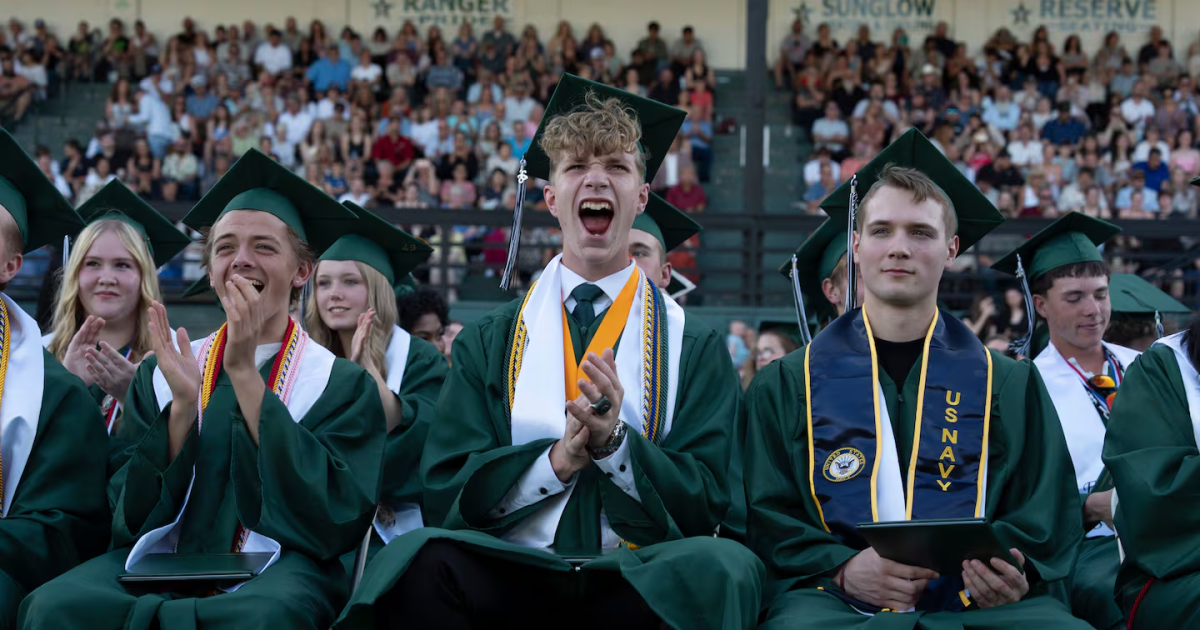
The Annie E. Casey Foundation releases the Kids Count Data Book annually, with its new 2026 edition mainly drawing on data from 2024. State-based organizations work with the Annie E. Casey Foundation on the report, including Our Children Oregon and the Children’s Alliance in Washington.
The report is a snapshot in time of how well the country is supporting its youngest residents in 16 different indicators, including percentage of children living in poverty, kids who lack health insurance and reading proficiency among fourth graders.
David Wieland, policy and advocacy director for Our Children Oregon, said all of the indicators are related and play a role in a child’s well-being.
“We can’t just say that we’ll address reading outcomes through the educational system,” Wieland said. “We actually need to look holistically at child well-being if we want to really improve any one of these single indicators.”
Oregon lags behind the vast majority of states when it comes to educational indicators, ranked at 44 of 50 states. At 31, Washington ranks a bit higher.
But outside of the classroom, the two states fare better. Both Oregon and Washington are in the top 10 of states in health and community indicators.
“These are often the result of policy choices that we make,” Wieland said. “Oregon has prioritized ensuring that children — we should celebrate that.”
But federal changes may hurt states’ progress.
As Children’s Alliance in Washington state mentions in their press release sharing the Kids Count Data, “The numbers do not reflect the current reality for kids and families impacted by federal cuts to vital programs that have already come into effect.”
One policy choice Oregon made allows students to opt out of standardized testing. As a result, Oregon’s testing participation rates are below 95%, the federal requirement.
Wieland said this policy makes Oregon’s outcomes “less reliable.”
“We simply know with less certainty how we compare,” Wieland said.
In addition to rankings, the report calculates index scores for each state, allowing year-over-year comparisons. Both Oregon and Washington’s scores declined compared to their pre-pandemic scores from 2019, and so have the index scores in 45 other states. Only Mississippi and Louisiana saw improvements. South Carolina stayed stable.
Looking Ahead
Through Oregon’s Early Literacy Success Initiative, the state has sent grants to school districts to help improve reading and provide more support for students in elementary school. But it may be a while before those investments show improvement in reports like the Kids Count Data Book, said Our Children Oregon executive director Bridget Dazey.
“We do have to be patient as the state and school districts try new things,” Dazey said. “At the same time, we can confidently say we’re underinvesting in students and so it shouldn’t be so delayed that we wait five to seven years to see how things start to shape up.”
Going forward, Dazey said her organization is working with a coalition of organizations on the next edition of the group’s Children’s Agenda, a list of legislative priorities for lawmakers. Dazey said the state also needs a vision that looks out beyond the legislature’s two-year budget cycle that school districts use to plan spending.
“We need to be thinking long term,” Dazey said. “Our state has gotten really comfortable with thinking about things in the biennium.”
This story comes to you from the Northwest News Network, a collaboration between public media organizations in Oregon and Washington.
The Oregon Lottery offers several draw games for those aiming to win big.
Here’s a look at July 6, 2026, results for each game:
Winning Powerball numbers from July 6 drawing
17-44-63-66-67, Powerball: 04, Power Play: 2
Check Powerball payouts and previous drawings here.
Winning Pick 4 numbers from July 6 drawing
1PM: 8-8-0-7
4PM: 4-2-9-2
7PM: 8-2-5-5
10PM: 7-7-2-2
Check Pick 4 payouts and previous drawings here.
Winning Win for Life numbers from July 6 drawing
18-28-41-70
Check Win for Life payouts and previous drawings here.
Winning Megabucks numbers from July 6 drawing
14-19-20-21-25-38
Check Megabucks payouts and previous drawings here.
Feeling lucky? Explore the latest lottery news & results
When are the Oregon Lottery drawings held?
- Powerball: 7:59 p.m. on Monday, Wednesday and Saturday.
- Mega Millions: 7:59 p.m. on Tuesday and Friday.
- Pick 4: 1 p.m., 4 p.m., 7 p.m. and 10 p.m. daily.
- Win for Life: 7:30 p.m. on Monday, Wednesday, and Saturday.
- Megabucks: 7:29 p.m. on Monday, Wednesday, and Saturday.
This results page was generated automatically using information from TinBu and a template written and reviewed by an Oregon editor. You can send feedback using this form.
-

 World11 minutes ago
Spain pitches €850bn per year in common EU borrowing
-

 News34 minutes ago
DOJ warns of criminal charges for state election officials if noncitizens vote
-

 Los Angeles, Ca2 hours ago
Bicyclist killed by hit-and-run driver in Long Beach
-

 Detroit, MI2 hours ago
Child shot while riding bike outside home on Detroit’s west side, police say
-

 San Francisco, CA2 hours ago
Bay Area restaurant has strict policy on acceptable children behavior
-

 Dallas, TX2 hours ago
Detroit Pistons trade Marcus Sasser to Dusty May’s Dallas Mavericks
-

 Miami, FL3 hours ago
The offseason has been a massive success for the Miami Heat
-

 Boston, MA3 hours ago
Can’t afford Boston’s priciest restaurants? Try these instead. – The Boston Globe

