West
On this day in history, January 13, 1968, Johnny Cash performs live at Folsom Prison with all-star band

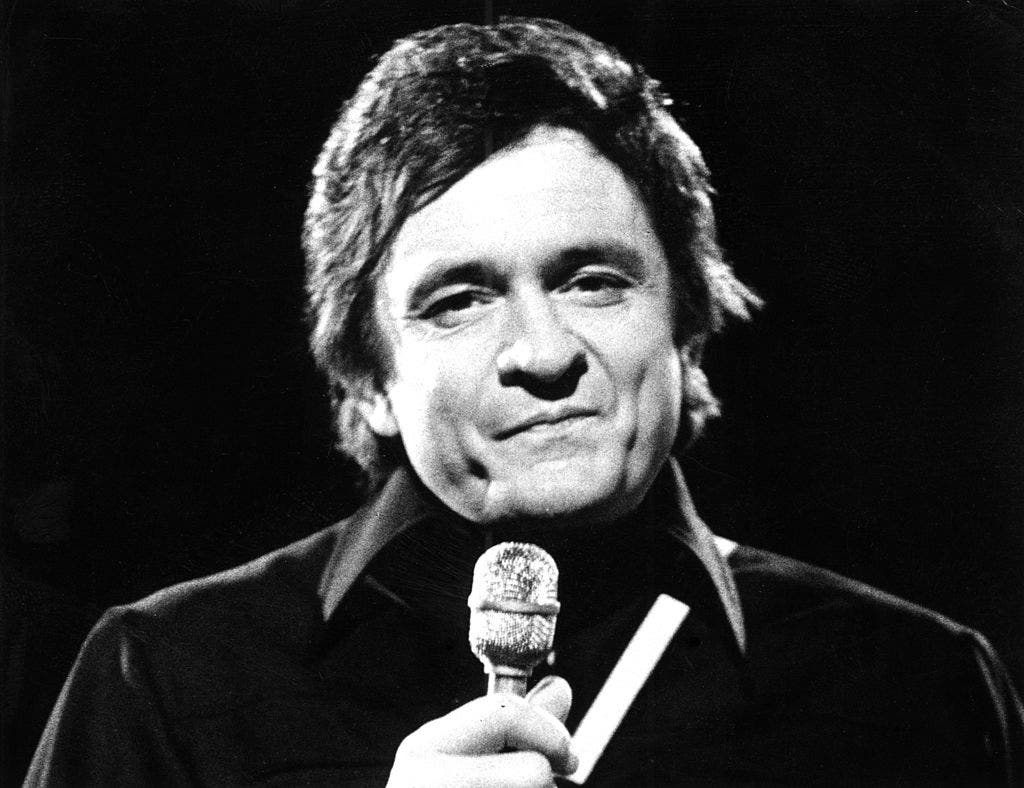
Johnny Cash, backed by an all-star ensemble of talent, stepped on stage at California State Prison in Folsom on this day in history, Jan. 13, 1968.
It proved one of the most legendary concerts in American music lore — ending with a song that made a star out of an inmate seated in the front row.
The Folsom Prison performance turned into one of the top-selling albums of the 1960s, reinvigorated Cash’s career and left a lingering imprint on American pop culture.
ON THIS DAY IN HISTORY, JANUARY 12, 1951, RADIO LEGEND RUSH LIMBAUGH ‘BORN TO BE A BROADCASTER’ IN MISSOURI
“The concert and its star bore into the international imagination and for various reasons never left it,” Rolling Stone said in May 2018, celebrating the 50th anniversary of the live album, “Johnny Cash At Folsom Prison,” released four months after the show.
“Dressed in his trademark black … he paradoxically celebrated prison and outlaw life while creating a damning portrait of the prison experience that pricked the era’s concern for society’s outcasts.”
Johnny Cash performs live in Amsterdam, Holland in 1972. The celebrated performer brought the sounds of rural America to an international audience. (Gijsbert Hanekroot/Redferns)
Cash performed two shows at Folsom Prison that day.
He was joined on stage by wife and fellow country star singer June Carter Cash, rockabilly legend Carl Perkins on guitar, the Statler Brothers on vocals, plus his longtime touring band, the Tennessee Three.
“Hello, I’m Johnny Cash,” the singer boomed in his gravelly baritone as the audience of inmates erupted in hoots and applause.
JOHNNY CASH IS KING IN NASHVILLE: HIS TUNES, LEGACY AND LEGEND RULE THE MUSIC CITY
He immediately kicked into “Folsom Prison Blues,” a signature Cash tune he had recorded more than a decade earlier.
“I ain’t seen the sunshine/since I don’t know when/I’m stuck in Folsom Prison/and time keeps dragging on,” Cash croons.
Cash was joined on stage by June Carter Cash, Carl Perkins, the Statler Brothers and his touring band the Tennessee Three.
He performed 18 more songs, according to a chronicle of the show at Setlist.fm.
The concert included many of his darkest dirges: “Cocaine Blues,” “Long Black Veil” and a cover of “Green, Green Grass of Home,” a prison anthem popularized by Porter Wagoner just three years earlier.
UNITED STATES – June Carter Cash and Johnny Cash perform on stage. (GAB Archive/Redferns)
It tells the tale of a man on death row envisioning his final ride, to be buried beneath an oak tree on a plot of family land.
Cash closed the show with “Greystone Chapel,” written by Folsom Prison inmate Glen Sherley.
The performer discovered the song the night before the concert.
“I got to the motel and a preacher friend of mine brought me a tape of a song called ‘Greystone Chapel,’” Cash told Life magazine in 1994.
JOHNNY CASH’S SISTER SAYS THE ‘MAN IN BLACK’ GAVE ‘HIS HEART BACK’ TO GOD BEFORE HIS DEATH: ‘THERE IS HOPE’
“He said a convict had written it about the chapel at Folsom. I listened to it one time and I said, ‘I’ve got to do this in the show tomorrow.’ So I stayed up and learned it, and the next day the preacher had him in the front row.”
“Folsom Prison Blues” is the signature tune from the performance and became Cash’s first no. 1 country hit in five years.
“I announced, ‘This song was written by Glen Sherley’ … Everybody just had a fit, screaming and carrying on.”
“Greystone Chapel” is one of 17 tracks from the two shows on the live album “Johnny Cash at Folsom Prison” released in May 1968.
DEC. 9, 2019: A copy of the record album, “Johnny Cash at Folsom Prison,” for sale at an antique shop in Santa Fe, New Mexico. The vinyl record was released by Columbia Records in 1968. (Robert Alexander/Getty Images)
Sherley enjoyed a brief taste of stardom as a performer and songwriter on the strength of “Greystone Chapel” after being released from prison in 1971.
But he descended back into crime and committed suicide in 1978.
Merle Haggard was not an inmate at the Folsom Prison performance, despite common legend.
Haggard was, however, incarcerated at San Quentin State Prison in California when he saw Cash perform in 1958.
“The electrifying quality of this album is that Cash sings of men with 99-year sentences to men with 99-year sentences.”
It was the first of at least 30 Cash prison performances, according to the Library of Congress.
“Johnny Cash at Folsom Prison” proved a huge hit.
It was the No. 3-selling album of the year, behind “In-A-Gadda-Da-Vida” by Iron Butterfly and The Beatles “White Album.” Cash’s recording boasts more than 3 million in certified sales.
“The electrifying quality of this album is that Cash sings of men with 99-year sentences to men with 99-year sentences,” the Guardian of London wrote in a contemporary review of the album.
A small portion of a wall of album covers at the Johnny Cash Museum in Nashville. Across from the album covers is a display of vinyl records representing Cash’s incredible 134 Billboard hit singles. (Kerry J. Byrne/Fox News Digital)
“Folsom Prison Blues” is the signature tune from the performance and became Cash’s first No. 1 country hit in five years.
The live 1968 version has supplanted in popular memory the original studio track, a minor hit that appeared on the artist’s debut 1957 album, “Johnny Cash with His Hot and Blue Guitar!”
The lament of life behind bars resonated with the residents of notorious Folsom Prison.
“I shot a man in Reno, just to watch him die.” — Johnny Cash, “Folsom Prison Blues”
It is “one of the nation’s first maximum-security prisons built in the decades following the California Gold Rush,” according to the California Department of Corrections and Rehabilitation.
“Throughout Folsom’s violent and bloody history, numerous riots and escape attempts have resulted in both inmate and staff deaths.”
Signage outside of Folsom State Prison. California State Prison, Sacramento, is a male-only maximum security state prison in the city of Folsom. The facility is also called New Folsom, which used to be its official name. The facility is located adjacent to Folsom State Prison with a staff of about 1,600 and annual operating budget of about $190 million. Opened in 1880, Folsom is the second-oldest prison in the state after San Quentin. (Axel Koester/Corbis via Getty Images)
“I shot a man in Reno, just to watch him die,” Cash sings in the heinous lyrical hook of “Folsom Prison Blues.”
Cash later explained the moment he wrote the violent verse.
He said, “I sat with my pen in my hand, trying to think up the worst reason a person could have for killing another person, and that’s what came to mind.”
The Folsom Prison audience cheered and hollered when he delivered the line on stage.
For more Lifestyle articles, visit www.foxnews.com/lifestyle.
Read the full article from Here

West
Supreme Court ruling on secretive California gender policy could reshape parent rights fights nationwide
NEWYou can now listen to Fox News articles!
Parental rights advocates celebrated Monday after the Supreme Court temporarily stopped California from blocking school policies requiring parents to be told when their child identifies as transgender.
Corey DeAngelis, a research fellow at the conservative Heritage Foundation, told Fox News Digital the high court’s order, in which the three liberal justices dissented, was a “huge win.” The decision marks the latest in a string of victories for conservatives seeking to tighten policies surrounding transgender people, though DeAngelis noted it only applies to California at this stage.
“Parents in California should be very excited that the law that they have on the books to keep secrets from parents will no longer be in effect,” DeAngelis said, adding, “This precedent is surely a sign of good things to come. If there’s a lawsuit that arises in another state, you can be pretty sure that the Supreme Court is going to rule on the side of families.”
The case, Mirabelli v. Bonta, arose from a lawsuit brought by California parents and teachers who argued that the state’s policy violated their rights under the Fourteenth Amendment and religious freedom rights under the First Amendment. The parents said the policy prevented school administrators from telling them about their child’s potential efforts to engage in gender transitioning unless the child consented to it. The policy also required school staff to use a student’s preferred name and pronouns regardless of the parents’ wishes.
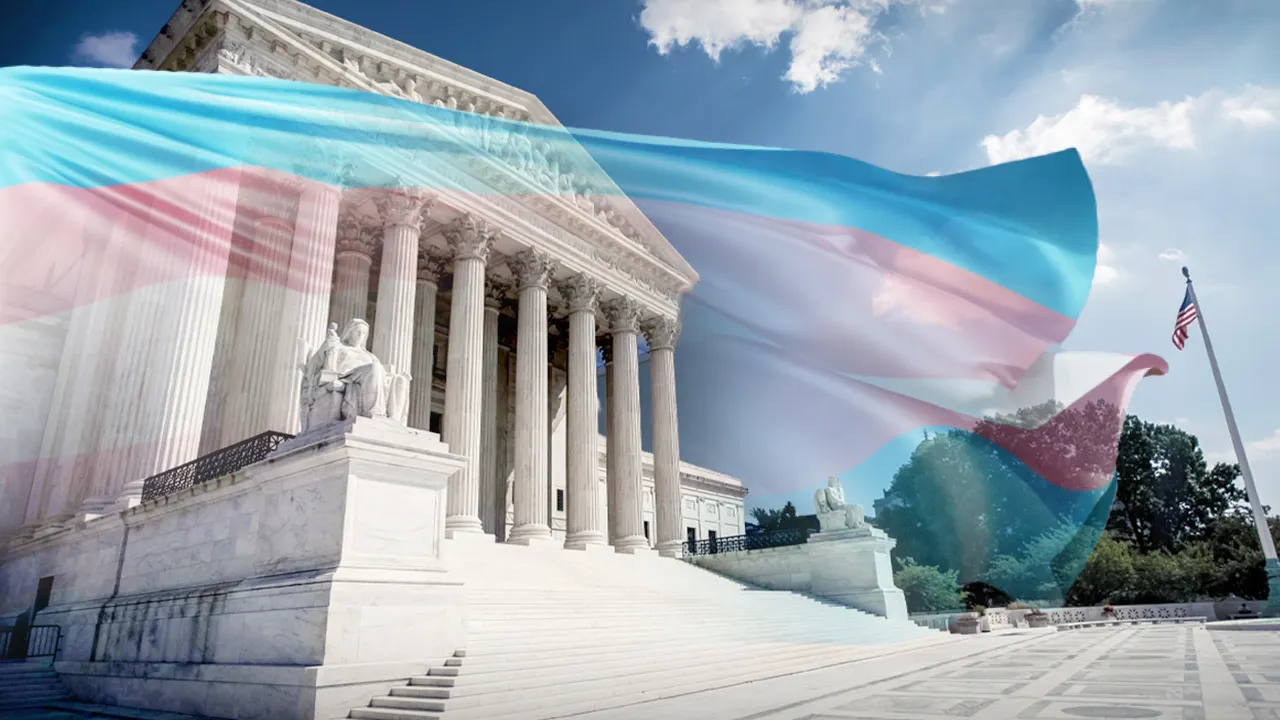
A protester holds a transgender pride flag outside the Supreme Court as it hears arguments in 2026. (Julia Demaree Nikhinson/AP)
After the U.S. Court of Appeals for the 9th Circuit sided with California Attorney General Rob Bonta, an elected Democrat, the parents and teachers appealed to the Supreme Court, and on an expedited and temporary basis, the high court vacated that order while the case proceeds through the lower courts.
“The State argues that its policies advance a compelling interest in student safety and privacy,” the high court wrote in the unsigned order. “But those policies cut out the primary protectors of children’s best interests: their parents.”
California Attorney General Rob Bonta speaks during a news conference. (Justin Sullivan/Getty Images)
Justice Elena Kagan, an Obama appointee, wrote in a dissent that the temporary order was a sign that the Supreme Court’s emergency docket, sometimes known as a shadow docket, continued to “malfunction.”
Attorneys for California argued that balancing the interests of parents and the “needs of transgender students” presented complex questions.
“In this case, the district court entered a sweeping permanent injunction that would require instant, dramatic changes from the status quo,” California attorneys wrote. “Currently, under California’s laws and constitutional provisions on privacy and antidiscrimination, schools may balance parental interests with students’ particular needs and circumstances, such as the risk of harm upon disclosure of the student’s gender identity without student consent.”
DeAngelis said the Supreme Court’s ruling also bolstered the case for school choice, which allows the government to funnel public education funds to schools parents want to send their children to that are not necessarily the designated public school in their neighborhood.
CALIFORNIA SCHOOL DISTRICT LETS STUDENTS CHANGE NAMES AND GENDER IDENTITY IN SECRET FROM PARENTS
Facade of the Supreme Court on Oct. 3, 2024. (Valerie Plesch/picture alliance via Getty Images)
“It would be great if more areas, like California, that are controlled by Democrats had policies like school choice. … You should be able to take your child’s education dollars somewhere else, to a private school that’s more aligned with your values, maybe a charter school,” DeAngelis said.
He added that Monday’s decision was a “wake-up call for school choice policy as well, because parents may be upset about a lot of things in the public schools. Transparency is just the very bare minimum that the public schools in too many places aren’t getting right.”
Carrie Severino, president of the conservative JCN Network, said the 9th Circuit appeared to disregard the Supreme Court’s key ruling last year in Mahmoud v. Taylor, which allowed parents to opt their children out of lessons that involved gender ideology or other sensitive topics based on religious beliefs.
CLICK HERE TO DOWNLOAD THE FOX NEWS APP
“The liberal Ninth Circuit disregarded the Court’s ruling in Mahmoud,” Severino wrote. “Today, the justices reaffirmed the principles of its landmark ruling and said that California’s law substantially interferes with the ‘right of parents to guide the religious development of their children.’”
New York Times columnist David French also agreed with the high court’s decision.
“The idea that a school could withhold such key information about a child from the child’s parents (in the absence of evidence of abuse) was ludicrously unconstitutional from the beginning,” French wrote on X.
Related Article

Read the full article from Here
San Francisco, CA
Celebrated San Francisco historic landmark, the Huntington Hotel officially reopens

SAN FRANCISCO (KGO) — First opened as apartments in 1922 and converted into a hotel two years later, the Huntington was once a playground for socialites and Hollywood stars.
It shut its doors in 2020 due to the COVID-19 pandemic and remained shuttered until this week, following new owners and a million-dollar, top-to-bottom renovation.
A ribbon-cutting ceremony was held for The Huntington Hotel in San Francisco’s Nob Hill neighborhood Monday.
The hotel officially reopened on Sunday.
Mayor Daniel Lurie attended the celebration for the hotel on California Street.
“This is another sign that San Francisco is on the rise, when you have major institutions and major hotels reopening,” Lurie said. “We’re seeing it in Union Square. We’re seeing it now up here on Nob Hill. This is an exciting moment for San Francisco.”
What doom loop? Downtown San Francisco showing signs of economic rebound, experts say
The hotel, known for its iconic sign, will be restoring the landmark sign to its former glory.
Many say it’s a symbol of what’s going on in San Francisco.
MORE: Nordstrom making return to San Francisco with new concept, mixed reactions
“It came to symbolize San Francisco’s decline during COVID when it shut and it now, I think, symbolizes San Francisco’s rebirth,” said Greg Flynn, Flynn Group Founder, Chairman, and CEO. “It’s sort of the perfect symbol of it because it’s coming back better than it ever was.”
Alex Bastian, President and CEO of the Hotel Council of San Francisco, said hotel occupancy rates are up in 2024.
“Our data team crunched the numbers, and the four-week rolling hotel occupancy rate for San Francisco Bay Area hotels is 55.1 percent as of January 17 of this year. Compare that to January 17 of 2021, during the pandemi,c when it was 13.1 percent.”
Of course, the Super Bowl helped.
Here’s what Super Bowl LX visitors are saying about San Francisco
“There’s no marketing campaign better than what we achieved as San Franciscans,” Bastian said. “The mayor and his team really elevated the game. They did an incredible job. We are so fortunate, as a city, because so many came here and they left their hearts here in San Francisco.”
Eyewitness News wasn’t allowed to gather video of the hotel’s features, but the hotel provided renderings of a sample room.
Matthew de Quillien, The Huntington Hotel General Manager, said the hotel has 143 rooms, many of them suites. Also, the Nob Hill Spa, Arabella’s Cocktail Salo,n and a reopening of The Big Four Restaurant, featuring its famous chicken pot pie.
“Our owner was able to find the original recipe from the 70’s and we remastered it and we’re … serving it to our guests,” de Quillien said.
He said rates range from $600 a night to $7,000 a night for its Presidential suite.
The restaurant opens to the public on March 17.
If you’re on the ABC7 News app, click here to watch live
Copyright © 2026 KGO-TV. All Rights Reserved.

While most people know beers as “cold ones,” Tyson Barrie opts for a different name.
“We’ve always just called beers chilly ones,” the former Colorado Avalanche defenseman said.
Now, Barrie hopes his moniker goes mainstream with his beer brand Chilly Ones, which made its U.S. debut weeks ago in Colorado. He plans to move to the Centennial State from his home country of Canada come fall to build it out.
So far, the beer is in about 200 businesses across the state, mostly liquor stores like Bonnie Brae and Argonaut, but also eateries such as Oskar Blues.
The light lager is available in cans at 3% alcohol by volume. The less-than-light ABV is popular in Australia and some parts of Europe, he said, but nothing serves that segment in the U.S.
Barrie also said the brand has a nonalcoholic version “in the tanks and ready to go” at Sleeping Giant Brewing Co., the Denver facility where Chilly Ones is made. He said it’s one of the only booze-free options that could “trick” him, and he expects the version to be available by April.
“If you look at all the data that we’re seeing, these two categories – the nonalc and the low – seem to be two of the only ones in the alcohol space that are growing,” Barrie said.
Chilly Ones has been available in Canada since late 2025, and he said a 4.5% to 5% edition is also in the works, though that one won’t hit the shelves for months.
“From what we can see in Canada, people question the 3%. They say it’s not enough,” he said through a grin. “Then in the U.S., people aren’t questioning it at all. They really liked a little bit less and the moderation factor to it.”
That’s why he thinks the low-carb, zero sugar, under 100 calorie drink is a perfect fit for Denver. With the city’s storied history in craft beer combined with a more conscious, active lifestyle, it’s the perfect stateside launching point for his brand, Barrie believes.
Drafted by the Avs and playing in the city from 2011 through 2019, his preexisting connections also were a selling point.
“Every occasion is a little bit different, whether you’re parenting or you’re at a concert or you’ve got to get up early or you’re having two after work and you want to drive,” he said, explaining why there will be multiple versions of the drink available.
“It’s pick your own adventure. We’re not going to judge you,” he continued. “If you want to celebrate and get absolutely hammered, we’ll give you that option too. It’s just you can do it a little bit healthier.”
The idea came to Barrie when he had “a dozen” or so chilly ones during a night with friends years ago. In his phone’s notes app, he wrote that he would one day start a beverage brand with his NHL buddies and call it his colloquial name for beer.
He was still playing in the league at the point, but in 2024, two years after, somebody from the beverage world “very serendipitously” reached out to see if Barrie would be interested in starting a wine or whiskey company.
“And I was like, ‘Yeah, I’d do a beer,’” he recalled.
He was still in the NHL playing with the Nashville Predators but nearing the end of his career. The now-34-year-old gathered several of his fellow skaters, including Avs star Nathan MacKinnon, and other career connections like Lumineers frontman Wesley Schultz, and Chilly Ones was born.
Having that post-playing career journey already laid out has been challenging but worth it, he said.
“I have a lot of friends who have retired, and you struggle with a bit of purpose and you wake up and you’re just kind of looking around, not sure what to do with yourself,” he said. “So I feel grateful. I didn’t even have any time to reset. I was just kind of thrown in the fire.”
Barrie and Chilly Ones raised an undisclosed amount from friends and family to start the brand and are in the midst of a more institutional round.
He and Chilly Ones have no plans to venture outside the state in the short-term. He said he, Chief Operating Officer Kimberley Kainth and CEO Matthew Clayton want to test the market for all three options and get feedback before expanding elsewhere.
Longmont-based Oskar Blues founder Dale Katechis is an adviser, along with White Claw and Mike’s Hard Lemonade alum Todd Anderson.
“We have a team that we really, really trust who has scaled and built products in Colorado and moved out,” Barrie said. “We want to get our feet under us in Colorado and then we’ll start to really look at who’s next.”
Read more from our partner, BusinessDen.
Get more business news by signing up for our Economy Now newsletter.

Todd Meadows, ‘Deadliest Catch’ deckhand, dies at 25

Sen. Thom Tillis Rips Kristi Noem, Compares ICE Killings To Dog She Killed

Israel believes Iran war could last months, testing U.S. resolve
There were 13 full-service public health clinics in L.A. County. Now there are 6

Arnold, Jamie Lee Curtis, Janet Evans, Carl Lewis new members of California’s Hall of Fame

Florida High School Football Rankings: Top 25 teams – Oct. 21

Cleary's 21 help Le Moyne down Central Connecticut State 69-64 in OT

How old is Bo Nix? What to know about Oregon quarterback ahead of 2024 NFL Draft

99th annual Pony Swim held in Virginia

Indiana Members Credit Union announced as new anchor tenant at Bottleworks District

Hungarian veto proves EU needs less unanimity, says new Dutch PM

Pregnant migrant girls are being sent to a Texas shelter flagged as medically risky

Fraud-plagued Minnesota sues Trump admin for withholding $243M in Medicaid payments

Is Iran expanding attacks to target energy and civilian sites in the Gulf?

Trump claims US stockpiles mean wars can be fought ‘forever’; Kristi Noem testifies before Congress – US politics live
-

 World6 days ago
Exclusive: DeepSeek withholds latest AI model from US chipmakers including Nvidia, sources say
-

 Massachusetts6 days ago
Mother and daughter injured in Taunton house explosion
-

 Denver, CO6 days ago
10 acres charred, 5 injured in Thornton grass fire, evacuation orders lifted
-

 Louisiana1 week ago
Wildfire near Gum Swamp Road in Livingston Parish now under control; more than 200 acres burned
-

 Oregon4 days ago
2026 OSAA Oregon Wrestling State Championship Results And Brackets – FloWrestling
-

 Florida3 days ago
Florida man rescued after being stuck in shoulder-deep mud for days
-

 Maryland3 days ago
AM showers Sunday in Maryland
-

 Culture1 week ago
Try This Quiz on Thrilling Books That Became Popular Movies