New Mexico
A former boomtown’s second life as storyteller in New Mexico | Bureau of Land Management


LAKE VALLEY, N.M.
More than 125 years later, Lake Valley, located in the volcanic foothills of the Black Range in southwest New Mexico, is as quiet as a bricked smartphone. The ghost town snaps into view along Highway 27 on the Lake Valley Back Country Byway. The 48-mile drive through ranching and mining country reveals views of several mountain ranges, including the Black Range, the Caballo Mountains, Cooke’s Range, and the Uvas Mountains.
“This area is way off the beaten path,” said Martin Goetz, a Bureau of Land Management archaeologist based in Las Cruces, N.M., during a walk-through of Lake Valley’s restored schoolhouse. “When you come out here, you’re away from the highway. You could be out here for two hours and not a single car will drive by. And you can see for miles out here.”
BLM manages Lake Valley, formally known as the Lake Valley Historic Townsite, about an hour northwest of Las Cruces. On-site hosts maintain the ghost town, which is free and open to the public. You can tour the restored schoolhouse and enter a chapel. Remaining buildings on the townsite have been stabilized to slow further deterioration, which gives visitors a chance to see life as it was before the town’s decline. For those craving a closer look at history, a self-guided tour offers visitors a 45-minute walk to see the structures and encounter the familiar silt of everyday life: scatters of glass, metal, ceramic and wood.
Two peaks—Apache Hill to the north and Monument Peak in the east—overlook the townsite. Volcanic features punctuate hills of grassland and scrub that protect the soil against Chihuahuan Desert winds. Below, more volcanic rock, gravel, shale, dolomites, limestone, granite, and gneiss support the surface on which Lake Valley was built. From high above, clouds print shadows on the rolling hills and then slip away like the silver rush of the 1870s.
Lake Valley is one of several other BLM-managed ghost towns around the country, many of which were established for mining in the late 19th and early 20th centuries. In many of these places, prosperity didn’t last forever, turning boomtowns into ghost towns.
In Montana, people can tour the Garnet Ghost Town, which at one point had a population of 1,000 people in the 1890s looking for gold. And in Arizona, a rough trek leads visitors to BLM’s Swansea Historic Ghost Town, where mining for copper began around 1862 and ended in 1912, with a brief revival two years later, closing due to the Great Depression. Miner’s Delight, located in Wyoming, is a silent witness to the heyday of that state’s gold mining era. Gold was discovered in the Miner’s Delight area in 1868, and, like other ghost towns, the site offers important clues about the history of the West and mining culture.
“When you look around, you’re constantly seeing stuff. You get the sense of discovery. You’re not looking through a case like in a museum. It’s on the ground.”
Martin Goetz, BLM archaeologist
In New Mexico, there are many stories of when and how silver was found in the Lake Valley area, but one of the first broad public accounts of the Lake Valley discovery appeared in the Engineering and Mining Journal in July 1879. Back then, Lake Valley was a mining camp near a ranch owned by a man named McEvers. Mr. McEvers’s ranch was near Hillsboro, a mining town to the north that was a regular stop along the road through the Black Range.
“Great enthusiasm prevails here regarding the silver deposits at McEver’s [sic] ranch, 10 miles from town,” reported a Mining Journal correspondent based in Hillsboro. “New arrivals from Texas and the north are numerous; a steady stream of teams and men, attracted by our rich mines, is entering our camp daily.”
Those new arrivals encroached on territory already claimed by the Apache, who, as they had with the Spanish, resisted a surge of people. Fresh ambitions for buried wealth persisted as Apache leaders like Victorio and Nana led warriors against the newcomers spreading across the land. It would be a follow-up to previous conflict, when 16th Century Spanish explorers searched for the Seven Cities of Gold.
“The Apaches claimed this region as their own, the heritage of their ancestors, but the white men coveted it, like most of their frontier forerunners … and moved in upon the Indian country with the bark of their rifles rather than as much as an ‘I thank you,’” wrote the historian Conrad Keeler Naegle in The History of Silver City, New Mexico 1870-1886 in 1943.
Then miners hit it big in 1881, revving Lake Valley’s economic engine. The discovery of a vein of silver, nicknamed the Bridal Chamber, began an intense growth of Lake Valley from a mining camp to a town of about 4,000 people.
“The silver apparently was so pure you could just break it off the walls. It was ultra-pure and there was just tons if it,” said Goetz. “Because of that, all of these people came here, and they set up claims all over the place. From that came in the stores and the mining supplies and the clothing stores and everything else that comes in with a town.”
The Bridal Chamber yielded 2.5 million ounces of silver, half of the entire 5 million ounces mined from Lake Valley’s various mines between 1878 and 1893, according to production records from 1895. Profits rolled in with silver at $1.10 per ounce, about $34 today. More people and investment followed, along with demand for housing and places to build.
A 640-pound slab of silver displayed at the Denver Exposition in 1882 drew even more attention and press reports lavishing praise on Lake Valley’s mines, including the legend that candle flames could melt pure silver off the walls.
“When we were brought before a large silver mass, I hit it with my pick; it was soft, and involuntarily my knife came out and I cut it and mashed it, the metallic luster following each test,” a reporter from the Santa Fe New Mexican wrote in June 1882. “The lighted candle being applied, the native silver globules would fall.”
That same year, Lake Valley, which was open around the clock, hired gunfighter Jim Courtright—a.k.a. “Longhair Jim”—as Town Marshal. He brought some order to the town, which in addition to numerous shootings and robberies, grew to have a smelter to process ore, a stamp mill, three churches, a school, two weekly newspapers, saloons, brothels, hotels, general stores and various shops. In 1884, a railroad line extended to Lake Valley, replacing wagons to ship ore.
But beneath the excitement and all the bubbly newspaper accounts, Lake Valley’s demise had been taking form.
Between late 1883 and throughout 1884, expectations of finding another Bridal Chamber overshadowed the work of the Sierra Companies, which ran various mines in Lake Valley. While operators continued to find enough ore, they also struggled to find another pocket like the Bridal Chamber. There were also accusations of stock fraud, which devalued the company. Bad weather, meanwhile, hampered regular ore and supply shipments.
“Shipments have been almost at a standstill during this month on account of the wretched weather and bad roads,” wrote mine manager Fredrick Endlich in February 1884, about efforts to get ore to the nearby town of Nutt, located about 13 miles southeast. The railroad was still under construction at the time. “We are pushing all we can, but the road is strewn with broken wagons and even when we do get the ore away from here, we are not sure when it may reach Nutt.”
Newspapers began reporting less jubilant news. By August 1883, the Mining Journal and other publications described the mines as being “cleaned out” with no new discoveries to rival the Bridal Chamber. Still, operations remained profitable. Until 10 years later, when a change in U.S. monetary policy brought hard times on Lake Valley.
In 1893, the U.S. abandoned silver in favor of gold to back the U.S. dollar. The price of silver fell about 24% over a three-month period that year. Mines began to close all over the territory. With nothing else to drive the local economy, people began to leave.
Then in the pre-dawn hours of June 1, 1895, a combination of wooden buildings and high desert winds set in motion the crowning end of Lake Valley.
Blamed on a man named Mr. Abernathy, a fire started at William Cotton’s saloon and billiards hall near the intersection of Main Street and Railroad Avenue. Fortified by the strong winds, the fire emerged from the saloon, reaching 80 feet across Main Street. Flames entered doorways, bedrooms, halls and offices. The fire made short work of a general store, restaurants, drug stores, a hotel, a barber shop, and the post office.
As if drawn to a magnet, sparks and smoke rushed through the darkness. Firelight made flickering shadow art on the ground. Now two blocks wide, the fire continued southeast, jumping across Clark Street and beyond, until no more buildings were left to burn in that direction. Residents saved what they could, which was very little. Many pets—dogs, cats, and canaries—perished. From afar, the blaze must have looked like an ancient signal beacon.
Inside thirty minutes, the fire, like many Old West boomtowns, came and went in a blaze of glory.
“The rapidity with which the fire spread gave no opportunity to save anything,” reported The Black Range on June 7, 1895, a week after the fire. “C. M. Beals, book keeper for Keller, Miller & Co., on awakening got on pants and slippers and rushed to the office and grabbed an armful of books and after depositing them on the street started back for his trunk, but the fire was ahead of him.”
In July 1896, about a year after the fire, William Jennings Bryan gave his famous Cross of Gold speech, advocating for both silver and gold to back the U.S. dollar. Gold was at $20.67 per ounce. Silver had rebounded slightly to 69 cents per ounce.
But the damage was done at Lake Valley: No rebuilding after the fire. No more mining. More people leaving.
In 1901, a short revival came with mining for manganese shortly before World War I, continuing intermittently until the late 1950s.
“But it wasn’t a boom like it was in the 1800s by any stretch of the imagination,” said Goetz. Instead, the population continued to dwindle. An insurance map drafted by the Sanborn Map Company in August 1902 showed Lake Valley’s business district with zero buildings and the town’s population at 150. The last residents departed in 1994.
The ghost town is in a second act as an observatory to the past.
“When you look around, you’re constantly seeing stuff. You get the sense of discovery,” said Goetz. “You’re not looking through a case like in a museum. It’s on the ground.”
In the 1990s, BLM launched a program to stabilize existing buildings to slow their deterioration. Later, the agency worked with partners to restore the schoolhouse and chapel.
The schoolhouse contains photographs and other evidence of what life was like in Lake Valley, including after New Mexico became the 47th state admitted to the Union in 1912. Along the trails, visitors often encounter milk bottles, mining components, old cars, and toys. And while much of the site is public land, some buildings are marked private property and there is no artifact collection or metal detecting.
The site gets about 10,000 visitors per year, which is about a third of the visitors most BLM sites get in New Mexico. Far from crowded, you can experience Lake Valley at your own pace, as one group experienced during a recent visit.
The visitors, in a white van with Wisconsin license plates, drove up to the restored schoolhouse. After the on-site host gave an overview of the ghost town, they started the self-guided interpretive tour, walking along Keil Avenue, passing the former home of Dr. W. G Beals, a physician. Nearby, an abandoned 1935 Plymouth, missing its straight-six engine, pointed its empty headlights eastward. Advertisements in the 1930s would have promoted the model as capable of going 80 miles-per-hour. The group continued walking to a water tower and coal sorter near a notch in the hillside where a train once came through to the mines.
The group must have learned about Monument Peak, where one of Lake Valley’s last residents, Mrs. Blanche Nowlin, used to walk each morning from her home near the intersection of Keil and Railroad. She died in 1982. And that her next-door neighbors were Pedro and Savina Martinez, Lake Valley’s last residents, who lived in the Bella Hotel building until August 1994.
The group finished their walk and left. Their van passed an abandoned gas station and then turned right on Highway 27 toward Hillsboro, 16 miles north, which with the isolation and quiet at Lake Valley, seemed as far away as the moon.


NEW MEXICO (KRQE) – Emergency crews are responding to a tank battery fire in the area of Frying Pan Road and Anthony Road in southern Lea County.
Officials are asking people to avoid the area and follow directions from emergency personnel and law enforcement. Multiple agencies are responding to the fire. No other information has been release, this is a developing story.

Enter your email and we’ll send a secure one-click link to sign in.
KRQE NEWS 13 is provided by Nexstar Media, Inc., and uses the My Nexstar sign-in, which works across our media network.
Learn more at nexstar.tv/privacy-policy.
KRQE NEWS 13 is provided by Nexstar Media, Inc., and uses the My Nexstar sign-in, which works across our media network.
Nexstar Media, Inc. is a leading, diversified media company that produces and distributes engaging local and national news, sports, and entertainment content across its television and digital platforms. The My Nexstar sign-in works across the Nexstar network—including The CW, NewsNation, The Hill, and more. Learn more at nexstar.tv/privacy-policy.
New Mexico
Think New Mexico Hosts Four 2026 Summer Leadership Interns To Assist In Researching And Developing Policy Proposals – Los Alamos Daily Post

Gathered for a luncheon Tuesday at La Plazuela at La Fonda Tuesday in Santa Fe, front row from left, Think New Mexico 2026 Summer Leadership Intern Viviana Ornelas, Board President Roberta Ramo and Intern Marly Fisher. Back row from left, Think New Mexico Field Director Noah Apodaca, Intern Ian Hernandez, Think New Mexico Board Secretary Liddie Martinez, Intern Awlen Salazar and Healthcare Reform Director Lauren Leland. Courtesy/TNM
 Gathered Tuesday at La Plazuela at La Fonda in Santa Fe, front row from left, Think New Mexico 2026 Summer Leadership Intern Viviana Ornelas, Board President Roberta Ramo and Intern Marly Fisher. Back row from left, Think New Mexico Intern Ian Hernandez, Think New Mexico Board Secretary Liddie Martinez and Intern Awlen Salazar. Courtesy/TNM
Think New Mexico News:
Each summer Think New Mexico offers four paid Leadership Internship positions to college or graduate students. Interns have the opportunity to meet with Think New Mexico board members and leaders in state government, as well as to assist Think New Mexico’s staff in researching and developing policy proposals.
The 2026 Summer Leadership Interns include:
Marly Fisher grew up in Albuquerque and graduated from Albuquerque Academy in 2023. As a senior in high school, she and three peers spearheaded a successful effort to pass a bill implementing period products in New Mexico’s public schools. She has since interned for Representatives Melanie Stansbury and Gabe Vasquez. Fisher is a senior in the dual degree program between Sciences Po Paris and Columbia, majoring in Political Philosophy and History, and serving as Senior Editor of the Columbia Political Review. She is passionate about improving education in New Mexico.
Ian Hernandez was born and raised in Santa Fe and graduated in the top 1% of his class from the MASTERS Program Early College Charter School. He was a 2023 recipient of the Davis New Mexico Scholarship, which allowed him to attend and graduate from the University of Denver this past June. Hernandez earned his B.A. in Socio-Legal Studies and History and hopes to begin law school in the fall of 2027. As an undergraduate, He interned with U.S. Sen. Michael Bennet (D-CO). He also worked as a teen journalist for the Santa Fe New Mexican, and as a teacher and tutor for Breakthrough Santa Fe. Hernandez hopes to use his education and life experiences to improve the lives of as many people living in New Mexico and the American Southwest as possible.
Viviana Ornelas is a Santa Fe native who graduated as Valedictorian of her Capital High School class. She received Davis and LANL scholarships to study at the University of Chicago, where she is earning a B.A. in Psychology and Public Policy with a minor in Education and Society. In high school, Viviana led a chapter of the New Mexico Dream Team. As an undergraduate student, she has worked as a research assistant in Dr. Levine’s Cognitive Development Lab where she helped conduct studies to understand the relationship between solving math word problems and spatial skills. Ornelas has also worked as a tutor for the Neighborhood Schools Program in Chicago and a teacher for Breakthrough Santa Fe. She hopes to return to New Mexico to pursue a career in education policy.
Awlen Salazar is a graduate of New Mexico State University (NMSU), where he earned a B.A. in Political Science with minors in Public Administration & Policy and Public Law. He is pursuing a Master of Public Policy at the University of New Mexico. Throughout his time at NMSU, Salazar was a part of the Associated Students of NMSU, where he held roles in the legislative and executive branches as public relations officer and as one of three standing committee chairs for the Senate. At the start of his senior year, Salazar re-chartered the NMSU College Democrats after the club’s two-year hiatus, and he served as President of the club until his graduation in May 2026. Since then, he continues to be involved in the Young Democrats of New Mexico, where he now serves as National Committee Representative. Off campus, Salazar worked closely with nonprofit sector leaders throughout Doña Ana County. In the summer of 2025, he interned for the Doña Ana County Resilience Leaders, where he helped advocate for policies to mitigate adverse childhood experiences (ACE’s) and expand access to affordable housing. Salazar also worked with NM Comunidades en Accion y De Fé (NM CAFé) as Social Media Associate.
Think New Mexico is New Mexico’s think tank – a results-oriented think tank whose mission is to improve the lives of all New Mexicans, especially those who lack a strong voice in the political process. It fulfills this mission by educating the public, the media, and policymakers about some of the most serious challenges facing New Mexico and by developing and advocating for enduring, effective, evidence-based solutions.
Its approach is to perform and publish sound, nonpartisan, independent research. Unlike many think tanks, Think New Mexico does not subscribe to any particular ideology. Instead, because New Mexico is at or near the bottom of so many national rankings, its focus is on promoting workable solutions that will lift all New Mexicans up.
Consistent with its nonpartisan approach, Think New Mexico’s board is composed of Democrats, Independents, and Republicans. They are statesmen and stateswomen, who have no agenda other than to see New Mexico succeed. They are also the brain trust of this think tank.
Think New Mexico began its operations Jan. 1, 1999. It is a tax-exempt organization under section 501(c)(3) of the Internal Revenue Code. In order to maintain its independence, Think New Mexico does not accept state government funding. However, contributions from individuals, businesses, and foundations are encouraged, appreciated, and tax-deductible.
As an independent, statewide, results-oriented think tank, Think New Mexico measures its success based on changes in law or policy that it helps to achieve.
Think New Mexico’s results include:
- Making full-day kindergarten accessible to every child in New Mexico;
- Repealing the state’s regressive tax on food and successfully defeating efforts to reimpose it;
- Creating a Strategic Water Reserve to protect and restore New Mexico’s rivers;
- Establishing New Mexico’s first state-supported Individual Development Accounts to alleviate the state’s persistent poverty;
- Redirecting millions of dollars a year out of the state lottery’s excessive operating costs and into college scholarships
- Reforming title insurance to reduce closing costs for homebuyers and homeowners who refinance their mortgages
- Winning passage of three constitutional amendments to professionalize and streamline New Mexico’s Public Regulation Commission
- Modernizing the state’s regulation of taxis, limos, shuttles, and moving companies
- Creating a one-stop online portal to facilitate business fees and filings
- Establishing a user-friendly health care transparency website where New Mexicans can find the cost and quality of common medical procedures at any hospital in the state
- Enacting the New Mexico Work and Save Act to make voluntary state-sponsored Individual Retirement Accounts accessible to New Mexicans who lack access to retirement savings through their jobs;
- Making the state’s infrastructure spending transparent by revealing the legislative sponsors of every capital project;
- Ending predatory lending by reducing the maximum annual interest rate on small loans from 175% to 36%;
- Repealing the tax on Social Security for middle and lower-income New Mexicans with incomes under $100,000 as individuals or $150,000 as married couples;
- Enhancing the training and transparency of local school boards;
- Leading a campaign to make financial literacy a high school graduation requirement, now in place in 46 districts reaching nearly 48% of New Mexico students; and
- Establishing a $2 billion permanent trust fund for Medicaid.
Think New Mexico is headquarters in the historic Greer House at 505 Don Gaspar in Santa Fe, at the corner of Paseo de Peralta and Don Gaspar, directly across the street from the state Capitol. To learn more, visit thinknewmexico.org.
-
 Politics6 minutes ago
Trump escalates election attacks, threatens California over voter data
-
 Science12 minutes ago
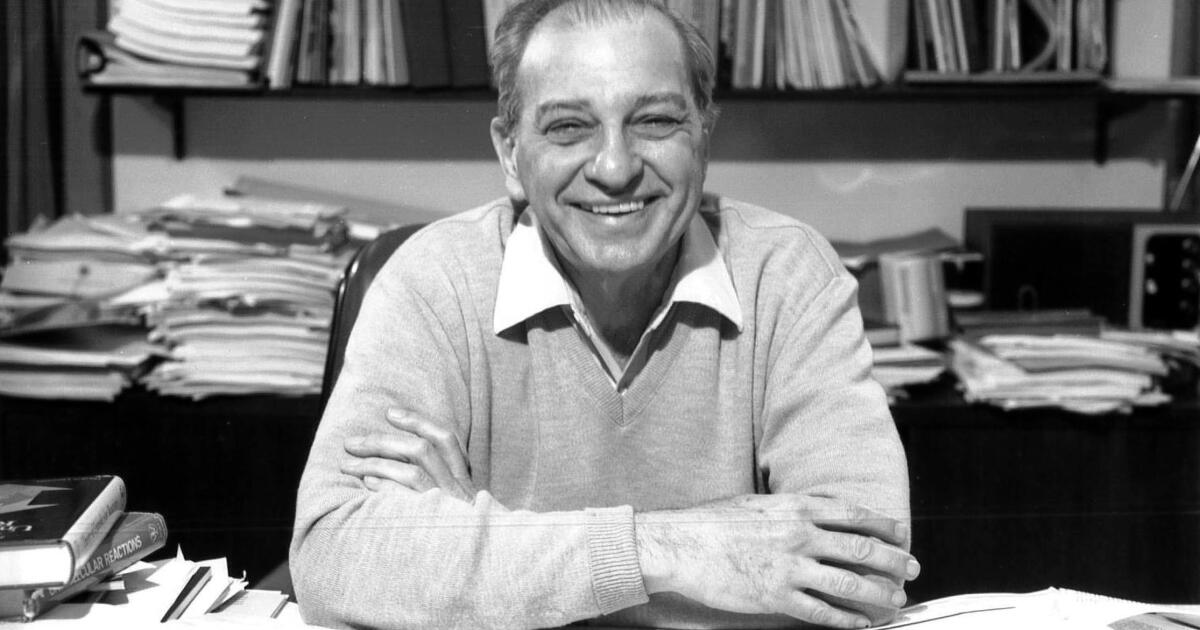
Rudolph Marcus, Caltech chemist who won Nobel Prize, dies at 102
-
 Sports18 minutes ago
Commentary: With Will Smith out indefinitely, Dodgers need to trade for a catcher
-

 World30 minutes ago
Mandela Day: What his legacy means in today’s South Africa
-
 News1 hour ago
ICE shared Medicaid data it wasn’t supposed to have with Palantir
-

 Los Angeles, Ca3 hours ago
‘Moana’ is a triumph for Pacific Islander representation on the big screen
-

 Detroit, MI3 hours ago
Five shot during funeral at Detroit church
-

 San Francisco, CA3 hours ago
San Francisco Giants Announce Intriguing Roster Move Ahead of Mariners Series

