Montana
Tiny extinct crocodyliform with unusual teeth discovered in Montana


About 95 million years ago, a juvenile crocodyliform nicknamed Elton lived in what is now southwest Montana at the edge of the Western Interior Seaway.
Measuring no more than 2 feet long from nose to tip of tail, young Elton was about the size of a big lizard, according to Montana State University professor of paleontology David Varricchio. Had it lived to be full grown, Elton would have measured no longer than 3 feet, far smaller than most members of the Neosuchia clade to which it and its distant relatives belong.
The clade includes modern crocodilians and their closest extinct relatives, almost all of them semiaquatic or marine carnivores with simple, conical teeth.
Elton, by contrast, lived on the land, probably feasting on both plants and insects or small animals with its assortment of differently shaped and specialized teeth. Its unique anatomy reveals that it was part of a new, previously unrecognized family of crocodyliforms endemic to the Cretaceous of North America.
If not for the sharp eye of Harrison Allen, a 2023 graduate of MSU’s Department of Earth Sciences in the College of Letters and Science, Elton’s ancient remains may never have been discovered. But during a dig in the summer of 2021 in the Blackleaf geological formation on U.S. Forest Service land near Dillon, Allen—then a student in Varricchio’s field paleontology course—noticed a fossil the size of the tip of his pinkie with a “weird texture on it.”
“I brought it to Dr. Varricchio and knew it must be something good, because he said, ‘Take me to where you found this,’” said Allen, who is now studying croc paleontology as a doctoral student at Stony Brook University in New York.
It was an exciting moment for Allen, originally from Kentucky, who chose MSU because it offers a paleontology track for undergraduates majoring in earth sciences.
Four years and hundreds of hours of study later, he is the lead author of a paper published in the Journal of Vertebrate Paleontology that describes the morphology and scientific significance of the creature whose remains he found in the Blackleaf Formation.
“After the dig, Dr. Varricchio told me why he was so excited the day I found the initial specimen. It had so much visible anatomy to explore, and he could see it was a tiny, tiny croc skull, fully articulated and preserved—it was a special thing,” Allen said.
“We have found dinosaurs (in the Blackleaf) before, but this was the second known vertebrate animal we’d ever found in this formation.”
The extinct animal, which Allen and the paper’s co-authors later named Thikarisuchus xenodentes for its strange, sheathed teeth, has provided new information about the paleoecology of the Blackleaf ecosystem and about patterns of evolution in the croc family tree.
It also provided the ultimate undergraduate research project for Allen, who delved into the painstaking process of excavating, sifting and reconstructing the Thikarisuchus remains with the help of some fellow students.
“As an undergraduate student new to research, I nervously went up to Dr. Varricchio and asked if I could study this specimen,” Allen said. “It led me down the rabbit hole into this amazing world of prehistoric, extinct crocs and their evolutionary niches.”
The day after Allen recovered the first piece of skeleton, he and his classmates scooped up several bags of sediment from the mound where it was found.
Back in Bozeman, Allen and his friend Dane Johnson, who graduated in 2022 and is now a paleontology lab and field specialist at MSU’s Museum of the Rockies, spent between 10 and 20 hours sifting out fine particulate matter and dirt, eventually recovering dozens of tiny pieces of the Thikarisuchus skeleton that collectively fit into the palm of Allen’s hand.
As they worked, they listened to music, including Elton John’s 1970s hit “Crocodile Rock.” The nickname “Elton” stuck, long before the specimen was assigned the scientific name that reflects its physical traits.
Allen and Johnson recovered bits of bone from almost all areas of the animal’s body, including its limbs, vertebrae, jaw and 50-millimeter-long skull. Because the fragments were tiny and exceptionally fragile, the students didn’t attempt to physically reassemble them.
Instead, they took them for a series of CT scans, including some at MSU’s Subzero Research Laboratory. Allen estimates that he spent well over 100 hours coloring the digital, 2D segment slices that the scans produced, a process necessary to visually distinguish the bones from the rocks they were embedded in.
“Harrison worked super hard to digitally reconstruct the animal, and it came out beautifully,” said Varricchio.
During the process, Allen discovered that the bones of Thikarisuchus were densely concentrated and organized in a manner consistent with fossils of organisms found in burrows in the Blackleaf Formation and the nearby Wayan Formation in Idaho.
He said this suggests that Thikarisuchus was likewise preserved within a burrow, further supporting the notion that fossils recovered from these formations are biased toward those that were preserved in burrows.
The specimen also presented clues about Thikarisuchus’ newly named family group Wannchampsidae and a similar group found in Eurasia known as Atopasauridae.
Both groups were tiny and terrestrially adapted, and they shared certain cranial and dental features found in another more distantly related group from the Cretaceous of Africa and South America.
“It suggests that during the same time period, we’re seeing convergent evolution between two distantly related groups due to similar environmental conditions, prey availability and who-knows-what that prompted crocs on opposite sides of the planet to develop similar features,” Allen said.
As he works toward his Ph.D. and a career as a paleontology professor, Allen said his experiences with Elton cemented his research interest, which has since broadened to include extinct crocs from all over the world.
“The majority of diversity of crocodyliforms is in the past. There were fully marine crocs, fully terrestrial crocs, herbivorous crocs, omnivores and some that cracked shells,” he said. “That amazed me and made me want to get into this more specific realm of paleontology.”
Varricchio said he feels fortunate that students like Allen choose to study at MSU.
“It was a true pleasure to have Harrison as a student here—so much positive enthusiasm, followed up with great research,” he said.
More information:
Harrison J. Allen et al, A new, diminutive, heterodont neosuchian from the Vaughn Member of the Blackleaf Formation (Cenomanian), southwest Montana, and implications for the paleoecology of heterodont neosuchians, Journal of Vertebrate Paleontology (2025). DOI: 10.1080/02724634.2025.2542185
Provided by
Montana State University
Citation:
Tiny extinct crocodyliform with unusual teeth discovered in Montana (2025, September 23)
retrieved 23 September 2025
from https://phys.org/news/2025-09-tiny-extinct-crocodyliform-unusual-teeth.html
This document is subject to copyright. Apart from any fair dealing for the purpose of private study or research, no
part may be reproduced without the written permission. The content is provided for information purposes only.



HELENA, Mont — Gov. Greg Gianforte is backing a new effort to keep data centers from driving up Montanans’ power bills.
This week, Gianforte announced Montana is signing on to the Ratepayer Protection Pledge — an initiative endorsed by President Trump.
Several major technology companies like Amazon, Google, Meta, Microsoft, OpenAI, Oracle, and XAI first signed the pledge back in March.
The pledge comes as data center development continues to grow — raising questions about how much new energy will be needed and who will pay for it.
NBC Montana spoke with Julia Haggerty, professor of geography and department head of earth sciences at Montana State University, about whether Montana’s power grid is ready for that growth.
“Not without resolution of significant transmission bottlenecks and massive amounts of new generation. So, while our grid is adequately, relatively adequately equipped to serve the needs of our current load base, it’s definitely not equipped to accommodate the new demands without a lot of expansion,” she said.
According to the pledge, data center developers will pay for new power generation, and infrastructure needed to support their operations.
“It does align with ongoing regulatory efforts to ensure that the cost of new generation associated with data centers is borne by the developers of those data centers and not customers,” Haggerty said.
The governor’s office says Gianforte’s support of the pledge is designed to encourage responsible data center investments while protecting Montana ratepayers from long-term costs.

The Montana Lottery offers multiple draw games for those aiming to win big.
Here’s a look at July 7, 2026, results for each game:
Winning Mega Millions numbers from July 7 drawing
02-31-35-36-63, Mega Ball: 12
Check Mega Millions payouts and previous drawings here.
Winning Big Sky Bonus numbers from July 7 drawing
09-21-24-29, Bonus: 15
Check Big Sky Bonus payouts and previous drawings here.
Winning Millionaire for Life numbers from July 7 drawing
27-43-48-49-50, Bonus: 02
Check Millionaire for Life payouts and previous drawings here.
Feeling lucky? Explore the latest lottery news & results
When are the Montana Lottery drawings held?
- Powerball: 8:59 p.m. MT on Monday, Wednesday, and Saturday.
- Mega Millions: 9 p.m. MT on Tuesday and Friday.
- Lucky For Life: 8:38 p.m. MT daily.
- Lotto America: 9 p.m. MT on Monday, Wednesday and Saturday.
- Big Sky Bonus: 7:30 p.m. MT daily.
- Powerball Double Play: 8:59 p.m. MT on Monday, Wednesday, and Saturday.
- Montana Cash: 8 p.m. MT on Wednesday and Saturday.
- Millionaire for Life: 9:15 p.m. MT daily.
Missed a draw? Peek at the past week’s winning numbers.
This results page was generated automatically using information from TinBu and a template written and reviewed by a Great Falls Tribune editor. You can send feedback using this form.
-

 Alaska4 minutes ago
Outmigration, inflation, choice schools: Alaska school closures likely to continue without changes
-
 Arizona7 minutes ago
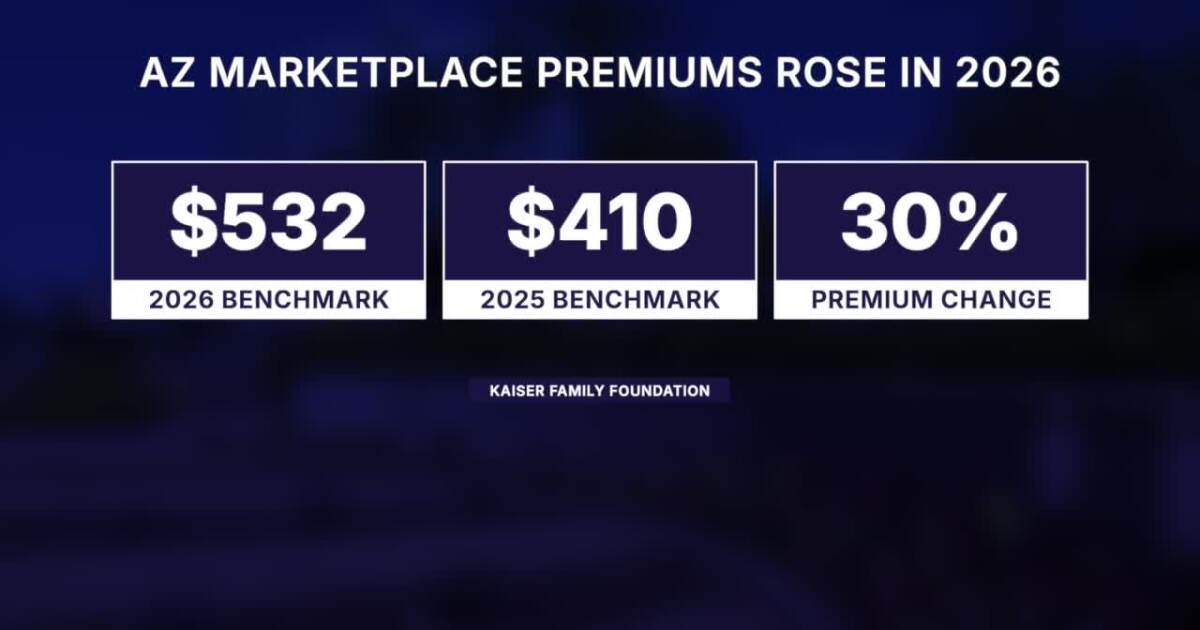
WATCH: Arizona’s health insurance marketplace is seeing dropping enrollment
-

 Arkansas12 minutes ago
ARKANSAS SIGHTSEEING: Randolph County can claim many firsts in Arkansas | Northwest Arkansas Democrat-Gazette
-

 California19 minutes ago
Toddler sustains brain injury in fall after California childcare worker threw him into the air, lawsuit says
-

 Colorado22 minutes ago
‘Saleabration’ comes back to Colorado Springs for third year
-

 Connecticut27 minutes ago
‘It’s a neighborhood effort’: Improvements made to Quinnipiac River Park
-

 Delaware34 minutes ago
Kids get hands-on learning during summer camp at Delaware County Technical School
-

 Florida37 minutes ago
Iranian drones in Cuba could threaten South Florida, officials warn

