Montana
Montana Man Used Animal Tissue and Testicles to Breed 'Giant' Sheep for Sale to Hunting Preserves – Flathead Beacon


BILLINGS – A Montana rancher illegally used tissue and testicles from wild sheep killed by hunters in central Asia and the U.S. to breed “giant” hybrids for sale to private hunting preserves in Texas, according to court documents and federal prosecutors.
Arthur “Jack” Schubarth, 80, of Vaughn, Montana pleaded guilty to felony charges of wildlife trafficking and conspiracy to traffic wildlife during an appearance Tuesday before a federal judge in Missoula. Each count carries a maximum penalty of five years in prison and a $250,000 fine.
Beginning in 2013 Schubarth conspired with at least five other people in “a decade-long effort to create giant sheep hybrids” that would get higher prices from hunting preserves that allow people to kill captive trophy game animals for a fee, prosecutors said.
Schubarth used flesh obtained from a hunter who had killed a sheep in Krgyszstan belonging to the world’s largest species of the animals — Marco Polo argali sheep — and used the genetics to procure cloned embryos from a lab, according to court documents.
The embryos were later implanted in a ewe, resulting in a pure Marco Polo argali sheep that Schubert named “Montana Mountain King,” the documents show. Semen from Montana Mountain King was then used to artificially impregnate other ewes to create a larger and more valuable species of sheep, including one offspring that he reached an agreement to sell for $10,000, according to the documents.
Male argali sheep can top 300 pounds with horns up to 5 feet long, making them prized among some hunters.
In 2019, Schubarth paid $400 to a hunting guide for testicles from a trophy-sized Rocky Mountain bighorn sheep that had been killed in Montana. Schubarth extracted the semen from the testicles and used it to breed large bighorn sheep and sheep crossbred with the argali species, the documents show.
Assistant U.S. Attorney General Todd Kim described Schubarth’s actions as “an audacious scheme to create massive hybrid sheep species to be sold and hunted as trophies.” Kim said the defendant violated the Lacey Act that restricts wildlife trafficking and prohibits the sale of falsely labeled wildlife.
Schubarth said when reached by telephone on Wednesday that his attorney had advised him not to talk about the case.
“I would love to talk about it but can’t do it now,” he said. His attorney, Jason Holden, did not immediately respond to telephone messages seeking comment.
Authorities agreed under the terms of a plea deal not to pursue further charges against the defendant pending his cooperation in the government’s ongoing investigation in the wildlife trafficking case.
Montana Mountain King is in the custody of the U.S. Fish and Wildlife Service, according to Department of Justice spokesperson Matthew Nies. As part of the plea deal, Schubert agreed to quarantine any other sheep containing Marco Polo argali genetics and any bighorn sheep that were harvested from the wild.
The deal also allows federal wildlife officials to inspect and, if needed, neuter the animals.
Captive animal facilities where game species can be raised and hunted were banned in Montana under a 2000 ballot initiative. But they remain legal in some other states.
Schubarth’s 215-acre ranch is state licensed as an alternative livestock facility, said Montana Fish, Wildlife and Parks spokesperson Greg Lemon. It was grandfathered in when the 2000 ballot initiative passed and has continued to operate, although hunting is prohibited, Lemon said.



It’s the talk of the town this week — powerful winds ripped the roof off Lincoln Elementary School on Sunday, leaving students, teachers, and residents in shock.
The incident has sparked concern among homeowners who are now worried about how such weather damage could impact their own homes—and what their insurance would cover.
According to Tauna Locatelli, owner of Advantage Insurance, most insurance policies have a set deductible for things like fire or theft, but wind and hail damage deductibles are often much higher, or even based on a percentage of a property’s value.
Quentin Shores reports – watch the video here:
Wind damage highlights insurance challenges for Montana homeowners
“Right now our industry is going through a really challenging time, especially when it comes to wind and hail in Montana. Several carriers are going to a standard ‘all peril’ deductible for everything other than wind and hail. So, it could be $1,000 for all but wind and hail, $2,500 wind and hail,” Locatelli explained.
A deductible is the amount homeowners must pay before insurance covers the rest. For wind and hail, that deductible can be steep.
“Some companies are going 1 or 2% of a coverage value, so that’s the building value. If it’s insured for $500,000 and you have a 1% deductible, you’re looking at a $5,000 deductible for wind and hail, which is what we get in Montana,” Locatelli said.
It’s important for homeowners to know their deductible—if repairs cost less than the deductible, insurance won’t pay anything.
Filing small claims can also impact your rates; Locatelli said, “Because if you have a $3,000 patch job claim and you have a $5,000 deductible, you really don’t want to file that because you’re not going to get anything in. That claim is going to follow your insurance record for five years.”
Age of property factors in as well. If you have an older roof, insurance may not fully cover its replacement.
“You’ve now lived half the roof life. Well, insurance is about indemnity and putting you back in the same condition you were in before the loss. You can’t put a 16-year-old roof on a home, so at 16 years, they’ll now pay 50% of that roof instead of 100% because it’s already lived half of its life. And then it drops each year as it goes by,” Locatelli added.
The bottom line: Keep your property maintained, review your insurance policy, and think carefully before filing a claim—especially as Montana faces more intense weather.


HELENA — On Monday, Montana Attorney General Austin Knudsen sent a letter to the City of Helena claiming the municipality is not in compliance with the state’s law banning “sanctuary cities.” The letter comes just under a month after the State of Montana launched an investigation into a city resolution on Helena Police policy and Helena’s involvement in federal immigration enforcement.
In the letter, Knudsen laid out the ways he believes the city’s resolution violated state law. The attorney general gave Helena 15 days to respond or reverse the policy. If the city does not comply, his office will pursue legal action.
“Helena’s resolution appears to contain blatant violations of this law,” wrote Knudsen.
MTN News
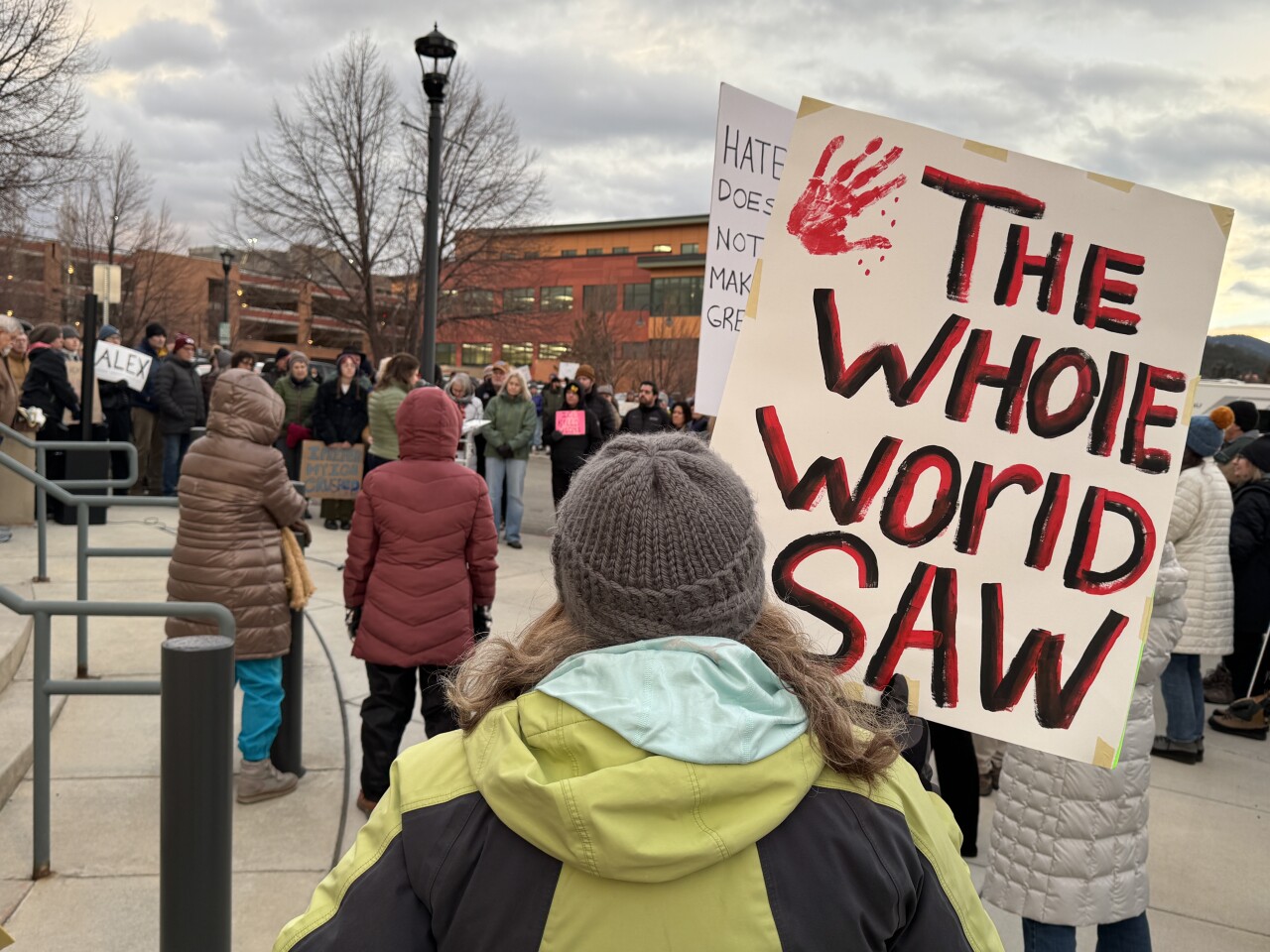
On January 26, 2026, the City of Helena adopted a resolution clarifying when and how the Helena Police Department will cooperate with federal immigration officials. The vote was 4 to 1. The Helena commission seats and the mayor are elected in non-partisan races.
In the letter, Knudsen alleges the resolution established “a broad sanctuary city policy” that seeks to protect every illegal immigrant, regardless of whether the individual had committed a serious crime or not. The state further claims the resolution gives illegal immigrants “special privileges” in plea deals and establishes a “free-for-all policy” where a police officer can request the unmasking of Department of Homeland Security and ICE officers.
Knudsen has requested that the City of Helena, in their response, specifically describe in detail how the resolution complies with Montana law, provide emails and correspondence from city staff and the commission regarding the resolution.
Helena City manager Alana Lake told MTN in a statement: “The City of Helena is aware of the issues being raised by the Attorney General’s Office and is reviewing the matter. While we cannot discuss the details of a potential legal issue, the City is committed to transparency and compliance with the law. The City takes these matters seriously and will continue to cooperate with the appropriate authorities while remaining focused on serving our community.”
MTN News 
Passed in 2021, Montana House Bill 200 prohibits a state agency or local government from implementing any policy that prevents employees or departments from communicating with federal agencies regarding immigration or citizenship status for lawful purposes. It also states governments must comply with immigration detainer requests if they are lawfully made.
HB 200 was backed by Republicans and passed with only Republican votes. Gov. Greg Gianforte signed the legislation into law on March 31, 2021.
Passage of the resolution by the Helena City Commission has drawn ire from conservative voices in Montana politics and on the national level.
MTN News
The resolution said the commission supported the Helena Police Department avoiding “committing its resources to federal action for which it has no authority,” such as entering into an agreement with the federal government to directly enforce immigration laws. Under federal law, immigration enforcement is conducted by federal agencies under the Department of Homeland Security. However, under the Immigration and Nationality Act, state and local governments can voluntarily enter into 287 (g) agreements with the federal government that allow them to enforce immigration laws.
The commission further supported HPD’s policy not to stop, detain, or arrest a person solely on suspected violations of immigration law, including assisting other agencies in an arrest based solely on immigration law.
DEEPER LOOK: Helena has seen a growing debate over ICE and local police involvement
In the resolution, the commission also supported an HPD officer, using their own discretion, requesting the identification and unmasking of a Department of Homeland Security Officer if the HPD officer “feels it will not be interfering with the actions of federal officers exercising their jurisdiction.”
“This adversarial relationship by local law enforcement toward federal officers itself undermines public safety and forces immigration officers to fear for their safety when they are simply carrying out their lawful duties,” wrote Knudsen.
The resolution further supports the City of Helena’s policy not to consider immigration consequences in a plea agreement with a defendant.

Mack Carmack, MTN News
The commission also supports the City of Helena not disclosing any sensitive information about any person – including immigration status, sexual orientation, or social security number – except as required by law.
“This is a restriction that directly conflicts with Montana’s prohibition on sanctuary jurisdictions, specifically ‘sending to, receiving from, exchanging with, or maintaining for a federal, state, or local government entity information regarding a person’s citizenship or immigration status for a lawful purpose,’” the attorney general wrote.
If a government is found to be violating Montana’s law banning “sanctuary cities”, the state could fine them $10,000 every five days, prevent them from receiving new grants from the state, and have their projects with the state re-prioritized. A government in violation can avoid penalties by becoming compliant with the law within 14 days of being notified of the violation.
Read the full letter from the Montana Attorney General to the City of Helena:

8 best exercises for people over 40 to keep joints healthy

Film Review: Project Hail Mary – SLUG Magazine

A red fox stows away on a cargo ship, traveling from England to US
ICE Lawyer Who Told Judge She Was Overwhelmed Is Running for Congress

Rebecca Gayheart Dane on caring for her late husband, Eric Dane, and synthetic voices

Florida High School Football Rankings: Top 25 teams – Oct. 21

Cleary's 21 help Le Moyne down Central Connecticut State 69-64 in OT

How old is Bo Nix? What to know about Oregon quarterback ahead of 2024 NFL Draft

99th annual Pony Swim held in Virginia

Indiana Members Credit Union announced as new anchor tenant at Bottleworks District
ICE Lawyer Who Told Judge She Was Overwhelmed Is Running for Congress

Dr Oz helps older woman who collapsed during Trump’s speech at Kentucky event

The Ring: Is the EU a spectator or player as war grips Middle East?

The government is investigating new claims that DOGE misused Social Security data

Reporter’s Notebook: Trump’s SAVE Act ultimatum runs into Senate reality
-

 Massachusetts1 week ago
Massachusetts man awaits word from family in Iran after attacks
-

 Detroit, MI6 days ago
U.S. Postal Service could run out of money within a year
-

 Miami, FL1 week ago
City of Miami celebrates reopening of Flagler Street as part of beautification project
-

 Pennsylvania7 days ago
Pa. man found guilty of raping teen girl who he took to Mexico
-

 Sports1 week ago
Keith Olbermann under fire for calling Lou Holtz a ‘scumbag’ after legendary coach’s death
-

 Michigan2 days ago
Operation BBQ Relief helping with Southwest Michigan tornado recovery
-

 Culture1 week ago
Try This Quiz on the Real Locations in These Magical and Mysterious Novels
-

 Virginia1 week ago
Giants will hold 2026 training camp in West Virginia