Idaho
‘They’re Idaho horns’


Carrey shot only one bighorn sheep, but had accrued somewhere between 75 and 110 skulls by the time he was in his 70s. He found many on hunts that he guided, and others were gifted to him.
Carrey would carve some horns into belt buckles or spurs for friends and family. Boggan’s late wife, Sharon, received the last buckle he fashioned before his 2002 death. Boggan keeps the small, horseshoe-decorated treasure safe wrapped in a handkerchief, now.
On the horns he kept whole, Carrey wrote the date, location and name of the person who brought it to him.
In the O’Connor center, one skull bears the name of Buckskin Bill, who was often called “one of the last mountain men” of the American West. He was born Sylvan Ambrose Hart and moved to the Five Mile Bar of the Salmon River in 1932 where he lived in central Idaho isolation until his death in 1980.
Keeping collection information tied to specimens has unique implications for research today, allowing scientists to take a glimpse into a past population’s genetics and distribution. Though it is unclear if Carrey recorded such details for science, personal recollection or another reason, Boggan touts the action as evidence for Carrey being “ahead of his time.”
After Boggan’s initial meeting with Carrey in 1988, Boggan’s boss, New Hampshire businessman Robert “Bob” Senter approached Carrey about buying his ranch. Senter would later want the horns too, which Carrey had kept in his attic.
The two struck a deal. Carrey agreed to sell him about 40 of the bighorn skulls from the collection for $10,000. There had been thieves breaking into Carrey’s ranch and making off with some of the skulls, Boggan said. A plaque in the O’Connor center also attributes the sale to Carrey lacking the space to keep them.
Senter, who owned and operated a ranch in Riggins, promptly had the horns hauled, illegally, to Las Vegas, where they were boxed and shipped, also illegally, to his home in Plaistow, N.H. Senter was an avid, worldwide hunter and had a trophy room on the East Coast, but the collection stayed sealed in those shipping boxes over the decades.
“I used to be a guide,” Boggan said. “So I’d have long horseback rides, and they’d never left my mind — getting them back.
“Horns do not belong on the East Coast. They’re Idaho horns.”
In 2014, Boggan approached an aging Senter about the collection that had weighed heavy on his heart for decades. He knew that once Senter died, the heads would never return to Idaho.
“They’d get split up, you know,” he said. “Nobody else would ever take care of these things.”
Senter had already given away a couple from the collection he had, but after a bit of haggling, he agreed to sell Boggan the remaining 38 for around $2,000. Senter died in 2017.

Idaho
An Idaho mother who said her toddler twins died after vaccinations has been charged with murder

An Idaho woman who said her toddler twins died last year after being vaccinated faces murder charges connected to their deaths, authorities said.
A grand jury indicted Andrea Shaw, who is accused of suffocating her 18-month-old twins in May 2025, on two counts of first-degree murder on June 29, according to court records and a news release from the Payette Police Department.
While appearing last year on an internet show produced by Children’s Health Defense — an anti-vaccine group founded by Health and Human Services Secretary Robert F. Kennedy Jr. — Shaw said her twins died after getting vaccinated. Kennedy has not been affiliated with the group since December 2024, when he formally resigned as chairman to join President Donald Trump’s administration.
Shaw, 23, was arrested by Boise police officers Tuesday and arraigned Thursday. She is being held on a $2 million bond and could face life in prison or the death penalty if convicted or if she pleads guilty to first-degree murder. Her next court appearance is July 14.
An attorney representing Shaw did not immediately respond to a request for comment. The Payette Police Department and the Payette County prosecutor declined to comment Monday.
During her May 2025 appearance on the Children’s Health Defense show, Shaw said she found her twins dead in their room days after they got vaccinated for the flu and other diseases.
“They had got their shots at the same time by two nurses at the same time,” Shaw said. “And they got sick.”
Medical experts point out that the childhood vaccines at issue — hepatitis A, influenza and DTaP — are safe and effective for kids and recommended by various medical groups.
Shaw is also a plaintiff in a federal lawsuit brought by Children’s Health Defense and others against the American Academy of Pediatrics. The lawsuit, which was filed in January in federal court in Washington, accuses the American Academy of Pediatrics of racketeering for its “central role in an enterprise that has defrauded American families about the safety of the childhood vaccine schedule for several decades.” In the lawsuit, Shaw is described as a mother “whose children died following routine vaccinations administered according to AAP guidelines.”
The American Academy of Pediatrics has asked the court to dismiss the suit, asserting in an April court filing that it is the “latest missive in a campaign targeting” the academy and its “use of science-backed evidence in vaccine policy.”
In January, pediatricians and other experts became alarmed when U.S. health officials made broad changes to childhood vaccine guidance, dropping several universal recommendations. Kennedy, who helped lead the anti-vaccine movement for years, said the changes better align the U.S. with peer nations “while strengthening transparency and informed consent.”
In March, a federal judge blocked the changes and said Kennedy likely violated federal procedures in revamping a key vaccine advisory committee. But the judge’s order is not the final word; the blocks are temporary, pending either a trial or a decision for summary judgment.

A Gooding man is dead after an ATV crash in Elmore County. Idaho State Police say it happened near Pine on Friday night and not long after 10:00. There were three people riding the vehicle, and all were wearing their straps. Somehow, the ATV went off the road at the intersection of Bombs Away Lane and Lester Creek Road. The vehicle left the shoulder and smacked into a tree. The 47-year-old driver died on the spot. The two passengers were airlifted to hospitals. Troopers say the crash remains under investigation.
The intersection was closed for four hours as evidence was collected and the area was cleared of debris. Pine is a popular spot for Independence Day celebrations and camping.
State Police had an all-hands-on-deck response. Elmore County Deputies, Mountain Home EMS, Mountain Home Rescue, Pine EMS, and Pine Rescue assisted troopers.
Idaho State Police Save Horned Owl
Idaho State Police saved an adorable owl on I-84 in Nampa just a few weeks ago!
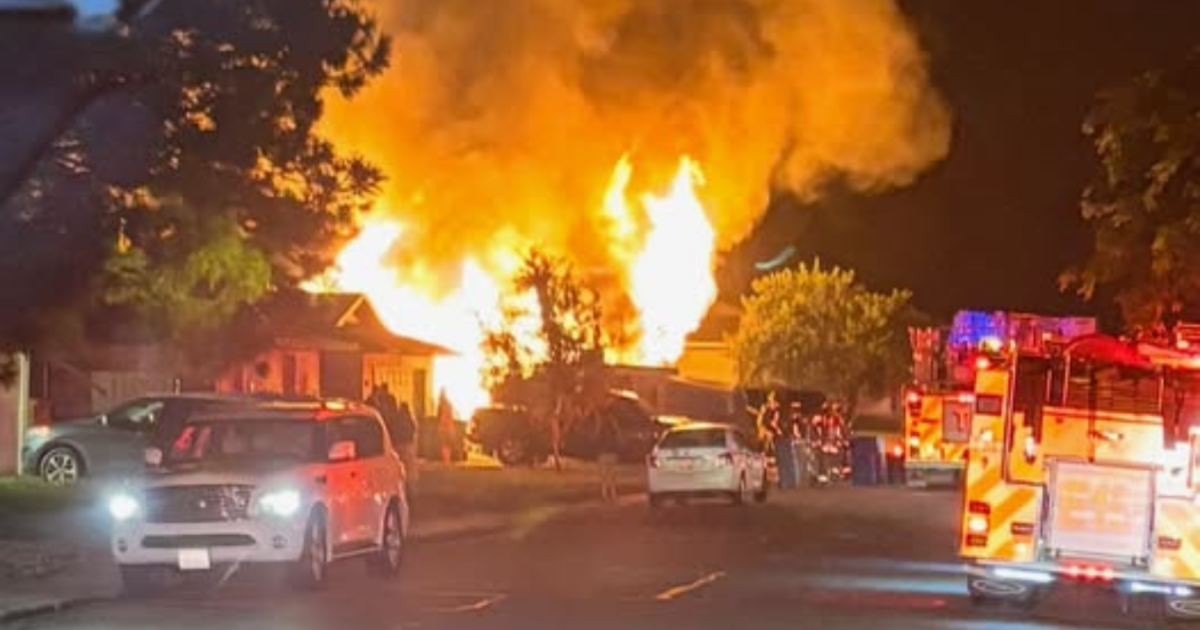
SOUTHEAST BOISE, Idaho — Boise Fire Department officials say that residents have been displaced after crews responded to reports of a structure fire in the 4000 block of S. Northbridge Way in Boise on Sunday morning.
Crews arrived at the scene shortly after 1 a.m. on July 5 and found the home fully engulfed in flames, BFD said.
Engine 15, Engine 3, Engine 7, Engine 8, Truck 7, Ladder 5, Battalion 1, Battalion 3 and Ada County Paramedics responded to the scene.
Fortunately, everyone in the home had safely evacuated, BFD said.
Firefighters then worked to quickly attack the fire and control the blaze. Crews remained on scene for several hours, ensuring the fire had not extended into the walls of the residence and that all remaining hot spots were fully extinguished.
BFD said that the Burnout Fund was called to assist the residents displaced.
The cause of the fire remains under investigation.
Send tips to neighborhood reporter Brady Caskey
Have a story idea from South Boise, West Boise or Kuna? Share it with Brady below —
-

 Los Angeles, Ca42 minutes ago
L.A. man who violently crashed into Border Patrol agents sentenced to 5 years in prison
-

 Detroit, MI1 hour ago
Fans pack Detroit’s Campus Martius for USA-Belgium World Cup match
-

 San Francisco, CA1 hour ago
Terrified passengers film Waymo autonomous vehicle driving into live fireworks in San Francisco
-

 Dallas, TX1 hour ago
WATCH: USA vs. Belgium watch party at FIFA Fan Festival Dallas
-

 Miami, FL1 hour ago
Tim Hardaway Jr. returns home as Miami Heat sign veteran guard:
-

 Boston, MA1 hour ago
‘Enough is enough’: Weekend violence in Boston sparks calls for change, from more police to community investment – The Boston Globe
-

 Denver, CO1 hour ago
Kalshi Promo Code DENVER: Trade $10, Get $10 World Cup Bonus for USA-Belgium – Denver Stiffs
-

 Seattle, WA2 hours ago
Fans take over Seattle for USA-Belgium World Cup match

