Idaho
Empathy in eviction court: The path to understanding can show more than non-payment of rent. • Idaho Capital Sun


“Day in and out I work to make ends meet. Luckily, I can come home at the end of the day to my wife and two daughters. As a father, I do everything to make sure my family is living a happy life. Because I am the sole provider for my family, some days are exhausting, but I am so grateful my wife can stay at home with our 4- and 2-year-old daughters. Everything was good until my family got sick with strep throat. My job is physically demanding and I was out of work for two weeks.
I’m finally well enough to go back, but we’re short two weeks of income and can’t pay our rent along with other living expenses. After trying to make small payments, we received an eviction notice on the 5th of the month. We have no family here and none of our friends are financially stable enough to help. This was the first time we had ever experienced something like this, so we didn’t know where to turn. Jesse Tree contacted us before our court date asking if we wanted to take part in pre-court mediation. With their support, we made a pay-to-stay agreement with our landlord. Jesse Tree paid our remaining balance and connected us to resources that helped us get back on our feet. Thanks to Jesse Tree, we avoided an eviction, the stress of a sudden move-out, and homelessness.”
Treasure Valley evictions are on the rise, but rent aid is working to keep Idahoans in their homes
This is not my story, but this is a common experience among Treasure Valley residents like the Taylors. The Taylor family had never experienced housing instability so the eviction process was foreign to them. Pre-court mediation helped them tell their story, work out a plan with their landlord, and ultimately get their case dismissed.
Stories like this are not uncommon. In 2023, eviction filings more than doubled from 818 cases to 2,307 in Ada and Canyon County. However, 1,571 of those cases were dismissed. We have seen a direct connection in the number of eviction case dismissals because of Jesse Tree’s mediation work in the courts.
Why does mediation make such an impact? In an article by Eric Leake from Texas State University, he explains that leaving room for empathy allows us to see ourselves in the lives of others and acknowledge shared vulnerabilities. Leake emphasizes that we all have shared humanity. In this case, a need for stable housing is a shared similarity that transcends individual differences, circumstances and life stories.
Mediation allows tenants to share their stories with landlords, property managers and attorneys who otherwise might not have the opportunity to see the humanity on the other side of the table. As humans, it is easy to attribute one’s circumstances to something they did, rather than something out of their control. This is why Jesse Tree’s pre-court mediation in Canyon County and court-ordered mediation in Ada County are as impactful as they are.
According to the Idaho Policy Institute, Ada and Canyon County are the only major counties in Idaho that have stayed below the state average in evictions. These are the only Idaho counties where Jesse Tree is involved in the mediation process. Even with the discontinuation of Canyon County’s mediation program in June 2023, Jesse Tree pivoted and offered pre-court mediation services, keeping Canyon County below the state average and families out of homelessness.
You can help people like the Taylor family stay in their homes by donating, volunteering and spreading the word about Jesse Tree. In our 2023 Eviction Report, Jesse Tree highlighted the importance of homelessness prevention. It costs Ada County taxpayers $53,000 per year for one person living on the streets and up to $15,000 to rehouse a family after they fall into homelessness. With the help that Jesse Tree provides, it costs $2,000 to keep a family safely housed.
Eviction prevention is vital work that you can be part of. Help us help people open the door to a sustainable future and keep the Treasure Valley a stable place for people to live.
GET THE MORNING HEADLINES DELIVERED TO YOUR INBOX



Idaho
An Idaho mother who said her toddler twins died after vaccinations has been charged with murder

An Idaho woman who said her toddler twins died last year after being vaccinated faces murder charges connected to their deaths, authorities said.
A grand jury indicted Andrea Shaw, who is accused of suffocating her 18-month-old twins in May 2025, on two counts of first-degree murder on June 29, according to court records and a news release from the Payette Police Department.
While appearing last year on an internet show produced by Children’s Health Defense — an anti-vaccine group founded by Health and Human Services Secretary Robert F. Kennedy Jr. — Shaw said her twins died after getting vaccinated. Kennedy has not been affiliated with the group since December 2024, when he formally resigned as chairman to join President Donald Trump’s administration.
Shaw, 23, was arrested by Boise police officers Tuesday and arraigned Thursday. She is being held on a $2 million bond and could face life in prison or the death penalty if convicted or if she pleads guilty to first-degree murder. Her next court appearance is July 14.
An attorney representing Shaw did not immediately respond to a request for comment. The Payette Police Department and the Payette County prosecutor declined to comment Monday.
During her May 2025 appearance on the Children’s Health Defense show, Shaw said she found her twins dead in their room days after they got vaccinated for the flu and other diseases.
“They had got their shots at the same time by two nurses at the same time,” Shaw said. “And they got sick.”
Medical experts point out that the childhood vaccines at issue — hepatitis A, influenza and DTaP — are safe and effective for kids and recommended by various medical groups.
Shaw is also a plaintiff in a federal lawsuit brought by Children’s Health Defense and others against the American Academy of Pediatrics. The lawsuit, which was filed in January in federal court in Washington, accuses the American Academy of Pediatrics of racketeering for its “central role in an enterprise that has defrauded American families about the safety of the childhood vaccine schedule for several decades.” In the lawsuit, Shaw is described as a mother “whose children died following routine vaccinations administered according to AAP guidelines.”
The American Academy of Pediatrics has asked the court to dismiss the suit, asserting in an April court filing that it is the “latest missive in a campaign targeting” the academy and its “use of science-backed evidence in vaccine policy.”
In January, pediatricians and other experts became alarmed when U.S. health officials made broad changes to childhood vaccine guidance, dropping several universal recommendations. Kennedy, who helped lead the anti-vaccine movement for years, said the changes better align the U.S. with peer nations “while strengthening transparency and informed consent.”
In March, a federal judge blocked the changes and said Kennedy likely violated federal procedures in revamping a key vaccine advisory committee. But the judge’s order is not the final word; the blocks are temporary, pending either a trial or a decision for summary judgment.

A Gooding man is dead after an ATV crash in Elmore County. Idaho State Police say it happened near Pine on Friday night and not long after 10:00. There were three people riding the vehicle, and all were wearing their straps. Somehow, the ATV went off the road at the intersection of Bombs Away Lane and Lester Creek Road. The vehicle left the shoulder and smacked into a tree. The 47-year-old driver died on the spot. The two passengers were airlifted to hospitals. Troopers say the crash remains under investigation.
The intersection was closed for four hours as evidence was collected and the area was cleared of debris. Pine is a popular spot for Independence Day celebrations and camping.
State Police had an all-hands-on-deck response. Elmore County Deputies, Mountain Home EMS, Mountain Home Rescue, Pine EMS, and Pine Rescue assisted troopers.
Idaho State Police Save Horned Owl
Idaho State Police saved an adorable owl on I-84 in Nampa just a few weeks ago!
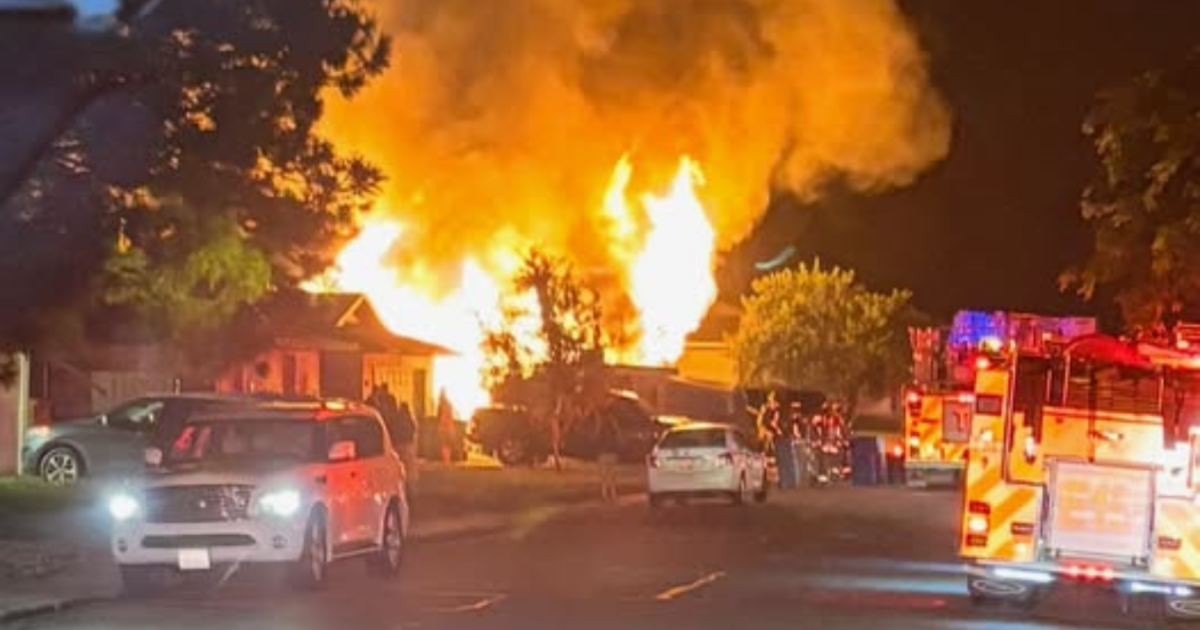
SOUTHEAST BOISE, Idaho — Boise Fire Department officials say that residents have been displaced after crews responded to reports of a structure fire in the 4000 block of S. Northbridge Way in Boise on Sunday morning.
Crews arrived at the scene shortly after 1 a.m. on July 5 and found the home fully engulfed in flames, BFD said.
Engine 15, Engine 3, Engine 7, Engine 8, Truck 7, Ladder 5, Battalion 1, Battalion 3 and Ada County Paramedics responded to the scene.
Fortunately, everyone in the home had safely evacuated, BFD said.
Firefighters then worked to quickly attack the fire and control the blaze. Crews remained on scene for several hours, ensuring the fire had not extended into the walls of the residence and that all remaining hot spots were fully extinguished.
BFD said that the Burnout Fund was called to assist the residents displaced.
The cause of the fire remains under investigation.
Send tips to neighborhood reporter Brady Caskey
Have a story idea from South Boise, West Boise or Kuna? Share it with Brady below —
-

 Indiana2 minutes ago
What made the early days of Indiana high school basketball standout?
-

 Iowa9 minutes ago
Julien Dubuque Bridge fully closed until August, free shuttle offered
-

 Kansas12 minutes ago
Police searching for missing Kansas teen in Dauphin County
-

 Kentucky17 minutes ago
Secretary of State launches statewide Kentucky Time Capsule Project commemorating America's 250th
-
Louisiana24 minutes ago
Louisiana Lottery Powerball, Pick 3 results for July 6, 2026
-

 Maine27 minutes ago
PACs should ease up on the political propaganda in Maine | Letter
-

 Maryland32 minutes ago
Maryland Lottery Powerball, Pick 3 results for July 6, 2026
-

 Michigan39 minutes ago
Michigan primary puts Democrats’ socialist strategy to the test | Opinion

