Hawaii
The paradise islands that don't want to be Hawaii


 Getty Images
The Cook Islands is proving that sustainable tourism isn’t just possible – it’s essential. Here’s how this South Pacific nation is preserving their paradise for generations for come.
Landing on Rarotonga, the largest of the Cook Islands chain felt like stepping back in time. Gazing out of the taxi from Rarotonga airport to our resort, we were immediately struck by the absence of high-rise hotels, fast-food restaurants and corporate chains. There were no traffic lights, only coconut palms lining the road, the scent of salt and frangipani drifting through the air and the jungle meeting the ocean in a seamless panorama. It felt like Hawaii in the 1960s: uncrowded, laid-back and refreshingly authentic.
Our taxi driver pointed to a low-slung resort along the shoreline. “No building can be higher than a coconut tree,” she said. This isn’t just a local tradition but a law set in 1965 by the Cook Islands’ first premier, Albert Henry, to prevent overdevelopment. She explained that only Cook Islanders can own land, ensuring that large corporations don’t dominate the landscape. We looked out onto hotels blending naturally into their surroundings and white-sand beaches ringed with long green parks, all free from litter and crowds.
We soon learned that this preservation of paradise is deeply intentional. Cook Islanders have made a conscious effort to ensure that Rarotonga never follows the path of overdevelopment seen in places like Honolulu. Instead, locals have committed to conservation, low-impact tourism and sustainable practices that benefit both locals and visitors. “People come here because it is a paradise uncluttered by overdevelopment,” explained Jeremy Goodwin, regenerative tourism manager for the Cook Islands Tourism Corporation (CITC). “Our sacred duty as custodians of the land is to look after our paradise.”

 Getty Images
The Cook Islands, an archipelago of 15 islands between New Zealand and Hawaii, has been self-governing in free association with New Zealand since 1965. With a total population of 21,000, the islands are divided into two groups: the Southern Cook Islands, which includes the more accessible Rarotonga and Aitutaki, and the remote Northern Cook Islands, made up of low-lying coral atolls. Cook Islanders have their own Māori language, with different dialects across the islands. And while tourism is a key industry, the islanders have ensured that sustainability remains at the nation’s core.
“For hundreds of years, the protection of the Cook Islands relied on the traditional Ra’ui System where access to a particular resource or area is forbidden for a given period,” explained Karla Eggelton, CEO of CITC. “The system aims to conserve food resources and protect ecological conditions in lagoons, reefs and other marine resources.”
Thoughtul Travel
Green Getaways is a BBC Travel series that helps travellers experience a greener, cleaner approach to getting out and seeing the world.
This philosophy persists today – and extends beyond the sea. On the northern island of Pukapuka, for example, locals have practiced sustainable living for centuries, packing up their belongings and sailing by boat to another atoll within the lagoon for seasonal periods to prevent resource depletion. They fish and farm only what they need, maintaining a delicate balance with nature.
On arrival at The Rarotongan Beach Resort and Lagoonarium, staff welcomed us with a warm “Kia Orana”, a greeting that translates to “may you live long”. It’s a unique gesture of friendship from islanders renowned for their hospitality and warmth. The resort overlooks the Aroa Lagoonarium, a snorkelling haven and a sanctuary for butterflyfish, parrotfish and angelfish. Part natural lagoon and part enclosed habitat, it is designed to support marine conservation, serving both as a coral nursery and a protected area for marine life to flourish.
 Pamela and Gary Baker
As the days passed, we saw how sustainability is woven into everyday life across the islands. At the Muri Night Market, a popular outdoor dinner option, we watched vendors prepare island dishes like ika mata (raw fish marinated in lime and coconut milk) and rukau rukau (taro leaves in coconut cream), all using local ingredients. We were struck by the market’s Rent-a-Plate project, where visitors can borrow reusable plates and cutlery instead of using disposable plastic. Cook Islanders also promote clean water initiatives. We purchased reusable bottles from the visitor’s centre and refilled them at free UV-treated water stations around the island, a project led by the Te Ipukarea Society to minimise plastic waste.
How to play your part
1. Support the Cook Islands economy by buying local crafts, clothing and food. Attend a cultural tour or show and embrace the traditions, customs and lifestyle.
2. Take shorter showers to save the islands’ limited water supply and minimise electricity use.
3. Volunteer with Muri Environment Care Group. Every Wednesday and Thursday, visitors can join efforts to protect Muri Lagoon by participating in soil restoration projects and planting native trees near streams to control sediment flow into the lagoon.
4. Choose eco-friendly experiences and products, use reef-safe sunscreen and avoid single-use plastics.
Beyond sustainable dining, Cook Islanders have taken marine conservation to a global scale. In 2017, the country established the Marae Moana Marine Park, making the 15 islands the world’s largest multi-use marine protected area, covering 1.9 million square kilometres. The legislation also bans large-scale commercial fishing and seabed mining within 50 nautical miles of each island.
“Marae Moana is the idea of shared space, a new concept of creating a sanctuary and the conservation effort that allows for shared, sustainable activity,” said Eggelton.
Also offering opportunities for sustainable tourism is Aitutaki, a bucolic island neighbouring Rarotonga that’s known for its snow-white sand beaches, volcanic rock, coconut palms and crystal-clear lagoons. Here the Pacific Resort Aitutaki has launched a coral restoration project where guests can take part by affixing coral fragments to underwater mesh tables, helping regenerate the reef.
“The project is an example of Mana Tiaki or island conservation,” explains Goodwin. “Mana Tiaki means guardianship with a sacred purpose.” He explained that culturally, for most Polynesians, the ocean is sacrosanct. “The beaches bring tourists to this holiday destination, but they also connect Cook Islanders to the ocean.”
 Getty Images
As the days passed, we explored the endless powdery white-sand beaches that ring Rarotonga, from Aroa Beach where fiery, colourful sunsets painted the sky with hues of vivid orange and crimson to serene and scenic Titikaveka Beach. They were all pristine and uncrowded, lined by palm trees, parkways and picnic tables. Most were unobstructed, with no commercial buildings to obstruct the view.
At Muri Beach, we opted for a sea turtle snorkelling tour. Our guide, Eric, explained the importance of turtles to the Cook Islands economically, environmentally and culturally. Daily tour operators earn an income by taking paying passengers to see these graceful, curious creatures. Plus, sea turtles are a key indicator of coastal ecosystem health, so monitoring and preservation are vital. Eric told us about a rescuer who found a turtle caught in a fishing net. Once freed, the Te Ara O Te Onu (Cook Island Sea Turtle Society) rehabilitated the turtle, as they have done dozens of times in the past. In addition to the society’s efforts, visitors are encouraged to help track turtle movement through the Citizen Science Project by taking photos and sending them into the programme.
By the time our trip had come to an end, we better understood how Cook Islanders have created a blueprint for preserving paradise by blending ancient conservation methods with modern environmental initiatives. “It’s about leaving both the people and the place better off than you found it,” said Eggelton.
Goodwin echoed the sentiment: This is our little paradise; if we all look after it, she will look after us.”

Hawaii
Chinese communist party member arrested in Hawaii on visa fraud charge | Honolulu Star-Advertiser


HONOLULU (HawaiiNewsNow) – Newly redesigned Hawaii driver’s licenses and state IDs are beginning to arrive in mailboxes statewide.
The Department of Customer Services said more than 50,000 residents who renewed or obtained a license or state ID starting in mid-May began receiving the new cards last Friday.
Officials said the updated cards are made of 100% polycarbonate, with laser-engraved photos and added security features intended to deter tampering, fraud and identity theft.
The department said existing driver’s licenses and state IDs remain valid until their expiration dates and do not need to be replaced.
“There’s no reason for them to request a duplicate unless they would like the new card design,” said Kim Hashiro, director of the Department of Customer Services.
Residents were also reminded that temporary paper licenses are not accepted by the Transportation Security Administration for air travel. Travelers using a temporary credential should bring another acceptable form of identification, such as a passport.
Permanent plastic cards are typically mailed within six to eight weeks after an application is submitted, officials said.
Copyright 2026 Hawaii News Now. All rights reserved.

HONOLULU (HawaiiNewsNow) – A Maui dive shop will welcome customers back this weekend after its Lahaina storefront was destroyed in the 2023 wildfires.
Maui Diving & Sporting Goods will hold a grand opening on Ulupono Street on Saturday, beginning at 9:30 a.m.
“Losing the shop in the fire broke my heart, but reopening in Lahaina was never in question,” said store owner Jessica Pickering. “This town gave me everything I have right now. Rebuilding right here in Lahaina is my way of saying we’re still standing, we’re still here for our community, and we’re ready to enjoy this life with you.”
The business will offer the same services it’s known for at the new locations, including scuba instruction, guided dives, snorkel tours, freediving, as well as gear rentals and sales.
The grand opening will include a blessing followed by giveaways, games, and other activities.
Copyright 2026 Hawaii News Now. All rights reserved.
-

 Alaska4 minutes ago
Climate Change Is Helping an Invasive Predator Wreak Havoc on Iconic Alaskan Fish
-

 Arizona6 minutes ago
Arizona man pleads guilty after illegally living in forest for years among ‘1,000lbs of trash’
-

 Arkansas12 minutes ago
Army names intelligence facility for Arkansas Tech graduate
-

 California19 minutes ago
How California Effectively Legalized an Open-Air Sex Market
-

 Colorado21 minutes ago
Julian Lewis Says Deion Sanders’ Colorado ‘Wasn’t Really Looking at Defenses Much’ Last Season
-
 Idaho26 minutes ago
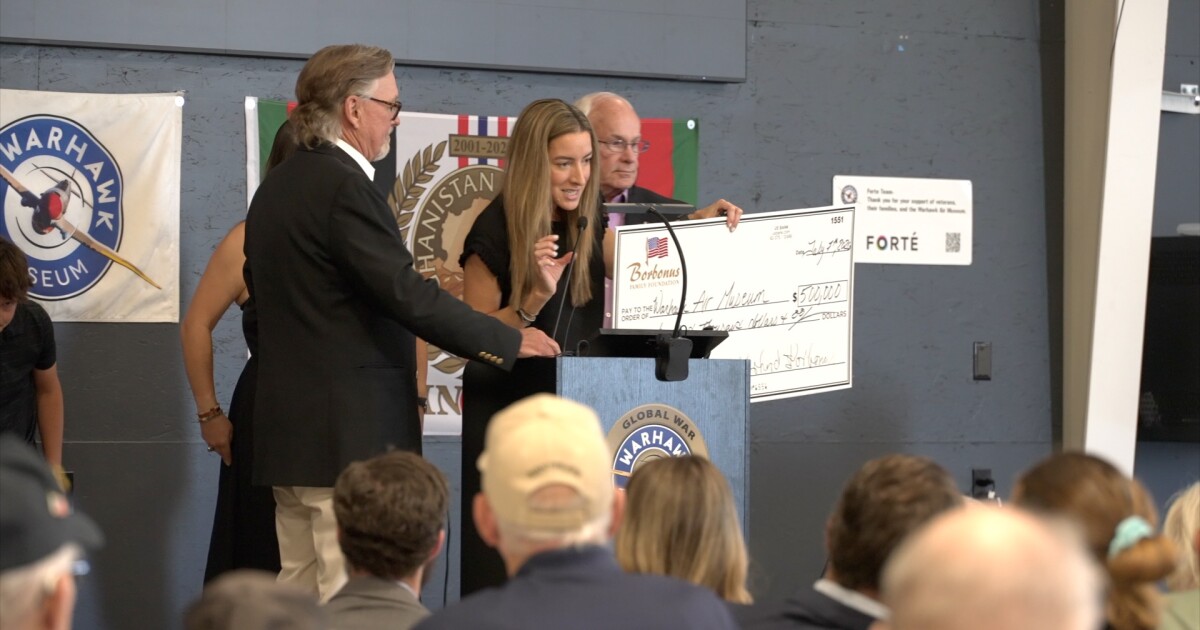
Warhawk Air Museum receives $500K grant honoring fallen Idaho soldier
-

 Connecticut27 minutes ago
Several beaches closed to swimming due to potential bacteria in the water
-

 Delaware34 minutes ago
Delaware Libraries Introduce Digital Literacy Specialists Program – State of Delaware News

