


Most Americans grow up learning about European royal families, from the British monarchy to the kings and queens who shaped the history of countries like France and Spain. But what many don’t realize is that Hawaii was once its own sovereign kingdom before it become a U.S. state, and there’s still a royal palace right in O‘ahu.
During a recent visit to Honolulu’s ʻIolani Palace, I found myself standing in rooms that challenge the assumptions travelers make about Hawaii. Beyond the beaches, luaus and pineapple drinks lies the story of a nation that once had its own monarchs, government and global relationships. Walking through the palace’s grand halls—and later, the room where Queen Liliʻuokalani was imprisoned—gave me a powerful reminder that Hawaii’s royal history is far more recent and more complex than many Americans realize.
ʻIolani Palace historian Zita Cup Choy tells Marie Claire that understanding Hawaii was once an independent nation fundamentally changes the visitor experience. That being said, Iolani Palace, built in 1882, serves as “both a royal residence and a place where a nation’s history, dignity and loss are held,” Cup Choy says.


The palace is located in the heart of Honolulu.
(Image credit: Getty Images)
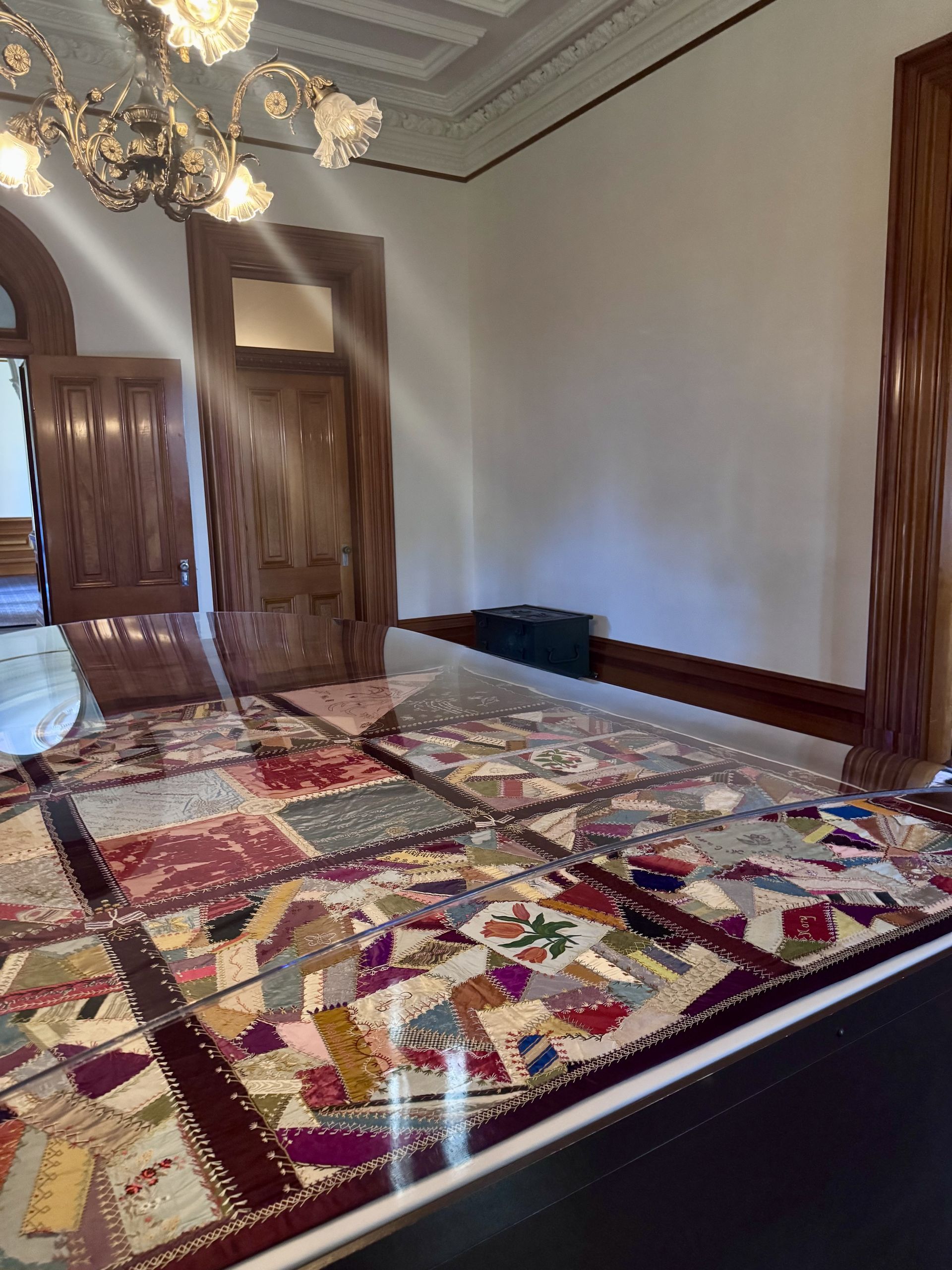
The room where Queen Liliʻuokalani was imprisoned showcases a quilt she made while being held in the room, with the center reading, “Imprisoned at Iolani Palace, Honolulu, Oʻahu, we began this quilt there.”
(Image credit: Kristin Contino)
Queen Liliʻuokalani was the Hawaiian kingdom’s last monarch, and she was imprisoned for nearly eight months in the palace after being illegally overthrown by a coup of American businessmen in 1893. “The overthrow was carried out by a small group with significant economic and political power, despite broad opposition among Hawaiian Kingdom subjects,” says Cup Choy.
The queen was forced to abdicate and lived the rest of her life as a private citizen until she died in 1917, dedicating her time to preserving Hawaiian culture and causes related to women and children such as the Lili‘uokalani Trust.
For many guests, myself included, the most emotional stop on the tour is the room where the queen was held. In the center of the Imprisonment Room sits a glass case displaying the quilt that Queen Liliʻuokalani worked on with her companions during her house arrest, and it reads more like a diary, with the piece stitched with significant dates and names of her supporters.
Queen Liliʻuokalani was the last reigning monarch of the Hawaiian kingdom.
(Image credit: Getty Images)
Portraits of Hawaii’s royal family line the rooms in the palace. (Image credit: Kristin Contino)


As a royal editor, one of the things that struck me the most was the similarity of ʻIolani Palace’s throne room to what you’d see at Buckingham Palace. The elaborate gowns on display reflect a Victorian style, and photos on display show the Hawaiian royals visiting the British royals.
Cup Choy says that “visitors are often surprised to learn that, despite Hawaii’s geographic isolation, the kingdom was modern, globally aware and intentional in how it presented itself to the world.” This includes innovations like electric lighting and telephones, showing how Hawaii was “an educated, literate and technologically advanced kingdom.”
Queen Liliʻuokalani remains one of the most revered figures in Hawaiian history, and Cup Choy says visitors are particularly moved by the monarch’s response to adversity.
Instead of encouraging violence, the queen “believed the wrong done to Hawaii should be addressed through diplomacy, international law, constitutional law, the courts and the Hawaiian Kingdom’s own governing institutions,” Cup Choy says. “She sought restoration without further bloodshed.”
The Friends of ʻIolani Palace commissioned historic dress designer Iris Viacrusis to recreate four of the gowns worn by Her Majesties Kapiʻolani and Liliʻuokalani, like this peacock-themed design on display in the palace.
(Image credit: Kristin Contino)
Marie Claire’s senior royal and celebrity editor, Kristin Contino, visits ʻIolani Palace in April 2026. Protective shoe coverings help preserve the building’s floors and carpets.
(Image credit: Kristin Contino) With its rich red decor, the palace’s throne room feels similar to Buckingham Palace.
(Image credit: Kristin Contino)


Walking through the palace, it’s hard not to feel moved by the story of Hawaii’s royal family, and Cup Choy says there’s a careful balance between being a tourist attraction and “a sacred place in Hawaii’s history.”
As I learned during my recent trip, O‘ahu is full of rich cultural offerings, and Cup Choy says ʻIolani Palace works with travel partners to encourage visitors to the island to explore outside its beaches. Select properties like the Halekulani Hotel, one of the Leading Hotels of the World properties where I stayed on the island, offer free admission to the palace as part of a broader mission to introduce travelers to Hawaii’s story.
“Hawaii is often seen first for its natural beauty,” Cup Choy says. “The palace invites visitors to see the depth of its history and the responsibility to care for its people, culture and environment.”


