West
GOP lawmaker warns that likely move in blue state will make gas prices skyrocket: 'Affordability issue'

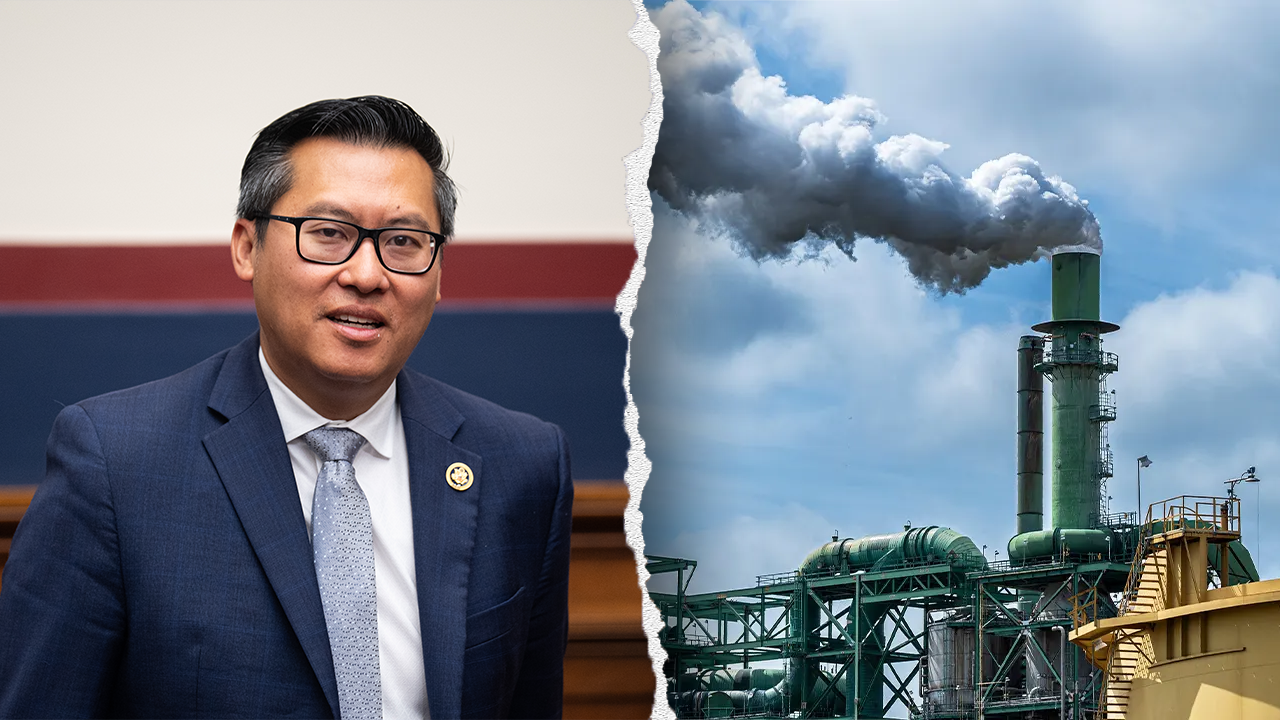
Rep. Vince Fong, R-Calif., is one of the many voices sounding the alarm about a recent oil refinery closure announcement having a greater impact on American wallets.
Valero Energy Corp. announced that it will likely close its Benicia refinery near San Francisco in April 2026, putting more than 400 jobs in jeopardy.
“We understand the impact that this may have on our employees, business partners, and community, and will continue to work with them through this period,” Lane Riggs, board chair, CEO and president of Valero, said in a news release on April 16.
Fong said the state’s energy policies are making it tough for the industry to survive.
CALIFORNIA CAREER POLITICIAN BARBARA LEE WINS MAYOR RACE IN EMBATTLED OAKLAND
(Celal Gunes/Anadolu Agency via Getty Images/File)
“This is in addition to other refinery closures that have been announced. So, in totality, what we’re looking at is 20% of California’s refining capacity disappearing. And that’s significant,” Fong told Fox News Digital in an interview.
Valero also operates a refinery in Los Angeles, but the move regarding the Benicia location is seen as a major hit.
“It’s a warning that California’s fuel supply is in jeopardy, and it’s all caused because of [Democrat Gov.] Gavin Newsom’s poor energy policies. That’s the root cause, and the rigid regulatory environment, all the mandates, all the new regulations that have been put on these refineries, and now it’s putting our fuel supply in jeopardy. And this isn’t just an energy issue. This is an affordability issue. This is a jobs issue. This is a reliability issue,” he continued.
ALASKA SENATOR LITERALLY SHREDS BIDEN’S ENERGY ORDERS, BOOSTS WH EFFORTS TO LEVERAGE ARCTIC GAS PIPELINE
California Gov. Gavin Newsom (AP Photo/José Luis Villegas/File)
The Golden State’s policies are major contributors to higher gas prices in the state, according to a recent study by University of Southern California professor Michael Mische.
“California’s energy policy is at a breaking point,” Fong said. “This is not a market failure. This is because of regulations and mandates that are pushing refineries to close. They can’t survive in this and make it economically feasible to function in California. And those who are going to suffer are everyday Californians.“
As the state is a major energy supplier, the congressman said its regulations have occasionally gained bipartisan scrutiny from neighboring Arizona and Nevada.
“This is going to impact California drivers significantly,” Fong said. “When there’s gasoline shortages, what you’re going to see is the price of gasoline go up. And in California, you know, we pay the highest price of gas compared to the other states.”
US, SAUDI ARABIA COULD CEMENT ‘LONG-TERM PARTNERSHIP’ ON NUCLEAR ENERGY
Excess natural gas is burned off at an oil refinery in Sinclair, Wyo. (Marli Miller/UCG/Universal Images Group via Getty Images/File)
As of Sunday, Californians are paying an average of $4.83 per gallon, which is significantly higher than the $3.15 national average, according to AAA.
Fox News Digital reached out to Newsom’s office for comment, but it referred the inquiry to the California Energy Commission, which said Valero’s legally required advance notice will help the state better prepare for its next steps.
“The California Energy Commission (CEC) is committed to its efforts to collaborate with the industry and stakeholders so that the state continues to have a safe, reliable and affordable supply while transitioning away from fossil fuels,” CEC Vice Chair Siva Gunda stated. “As required under Senate Bill X1-2, Valero Refining Company notified the CEC of its intent to idle, restructure or cease operations at its Benicia Refinery by the end of April 2026. This advance notification helps the state to continue to closely monitor the evolving conditions in the fuel supply market and proactively plan and take steps to support the transition in the state’s fuel supply.”
“The CEC will continue to work in partnership with the industry and stakeholders to protect consumers during this transition,” he continued.
Valero faces $82 million in fines from different governmental bodies in California over environmental regulations, according to KXJZ.
Read the full article from Here


Oregon Army National Guard soldiers tested a new method of clearing battlefield obstacles during annual training this week by using a heavy-lift drone to remotely deliver and detonate a live explosive charge.
The proof-of-concept demonstration took place June 22 and was led by soldiers with Bravo Company, 741st Brigade Engineer Battalion, 41st Infantry Brigade Combat Team.
The exercise focused on using an unmanned aircraft to carry a live Bangalore torpedo — an explosive device designed to clear wire obstacles — allowing engineers to breach barriers while remaining farther from potential enemy threats.
Army engineers are responsible for creating safe routes for friendly forces by clearing obstacles such as concertina wire and minefields. Traditionally, placing explosive charges requires soldiers to move close to enemy positions, increasing their exposure to danger.
During the demonstration, a heavy-lift drone carried the explosive charge to a wire obstacle before remotely detonating it, successfully creating a lane through the barrier.
The project was the result of several months of planning by the battalion’s drone working group under the direction of battalion commander Lt. Col. Eric Zimmerman. The unit partnered with Ashland-based Lorica Technologies, which provided the heavy-lift drone used during the demonstration.
Lt. Col. Zimmerman said recent conflicts have highlighted the importance of adapting new technologies for the battlefield.
“Watching what’s happening in Ukraine and seeing how innovative they’ve been inspires you to get better and think bigger,” Lt. Col. Zimmerman said.
The team conducted multiple tests before the live demonstration, beginning with inert training devices before progressing to live explosives. Officials said the final test successfully delivered and detonated a two-section Bangalore torpedo.
Lt. Col. Zimmerman credited the project’s success to collaboration between battalion leadership and the soldiers responsible for carrying out the mission.
“I’m really proud,” Lt. Col. Zimmerman said. “The Soldiers of Bravo Company took an idea from the battalion staff and applied their expertise to make that idea functional and effective.”
Military officials said the demonstration highlights how the Oregon Army National Guard is incorporating emerging unmanned aircraft technology into engineer operations. Lessons learned from the project are expected to help shape future training and the Army’s continued integration of drones into combat engineering missions.
The Oregon Army National Guard is made up of citizen-soldiers who serve part time while maintaining civilian careers, attending school or raising families. In addition to federal deployments, Guard members respond to state emergencies such as wildfires, floods and winter storms when activated by the governor.

The National Weather Service in Salt Lake City issued red flag warning Friday morning as emergency workers continued to battle one of the state’s largest wildfires in its history.
The red flag warning, issued when critical fire warnings are occurring or imminent, was to be in place through midnight Saturday.
“This is the FIRST Particularly Dangerous Situation Red Flag Warning issued in NWS Salt Lake City history. This is an exceptionally rare event,” the federal agency said in its warning.
A map of the area under the warning covered much of central and southwest Utah, with an area of the southwest, central and southern mountains also outlined as “particularly dangerous red flag.”

The particularly dangerous area includes the Cottonwood Fire, near the town of Beaver, which started Monday and had grown to covering almost nearly 71,000 acres by Thursday, 15 News reported. The fire forced evacuations.
The NWS warned that gusty winds and dry conditions would lead to rapid fire growth.
Utah also was dealing with the Iron Fire, which started June 19, and nearly destroyed the town of Eureka. The fire was about 27% contained Friday morning.
The fire danger led Utah Gov. Spencer Cox to issue executive order restricting fireworks statewide during the July 4 holiday, which marks the nation’s 250th birthday this year. The ban is in effect through July 5.
“Nothing about this decision was easy,” Cox said in a statement issued by his office Thursday.
“This is unlike anything we’ve seen in recent memory. We’re seeing fires spread farther and faster under conditions that defy historical expectations” Jamie Barnes, Utah state forester and director of the Utah Division of Forestry, Fire and State Lands, added in the statement.
Cox allowed cities and local communities to set aside areas where fireworks could be safely used. The city of Provo announced it would enforce a citywide prohibition on fireworks and would not designate a safe area for fireworks.
“This year is different,” Provo Mayor Marsha Judkins said in a statement. “The wildfire danger facing our community is real, and protecting lives, homes, and our natural spaces must come first.”
Washington
Touring Trump’s Washington: How the president is putting his imprint on the nation’s capital

The United States is celebrating its 250th year. And what better way to mark that anniversary than with an American summer staple — a trip to the nation’s capital.
But visitors to Washington will find that the city is undergoing tremendous change, courtesy of President Donald Trump’s takeover makeover.
Since returning to office 17 months ago, Trump has demonstrated a continuing fixation with the District of Columbia. The Republican president has slapped his image and name on buildings, torn down storied structures, altered others, started massive construction projects and deployed armed military personnel.
The traditional tourist sights remain. But with slight detours, an open mind and a critical eye, the ambitious walker can see all the ways the president has pushed to remake the capital.
On the eve of the United States’ birthday, take a trip with The Associated Press across a changing Washington.
A new study found that the National Guard in D.C. has had no effect on violent crime. News4’s Jackie Bensen unpacks it.
First stop: An indefinite National Guard deployment
We start our tour at Union Station and Metro Center, the city’s main transit hubs. Notice the Greco-Roman architecture of the former, the Brutalist design of the latter. Now see the ongoing, indefinite deployment of armed National Guard troops there and in many other parts of the city.
National Guard members from the district and several states have been in the city since August 2025, deployed under an emergency order issued by Trump in what he called a bid to fight crime. Trump has portrayed the deployment as a lifeline for the city. They will be here for most, if not all, of 2026 and are expected to number 5,000 this summer.
FILE – Members of the National Guard walking in the lobby of Union Station in Washington, May 27, 2026. (AP Photo/Matt Rourke, file)
It’s not the first time the military has deployed to the capital. Troops were in Washington throughout the Civil War, to quell riots after Martin Luther King Jr.’s 1968 assassination and, famously, hours into the Jan. 6, 2021, Capitol riot.
But in Trump’s Washington, Guardsmen at street corners and metro stations have become an increasingly normal part of the city’s scenery.
And no one knows when they will leave.
Second stop: Scars left by DOGE
Exit Union Station, take in the view of the Capitol and turn right down Pennsylvania Avenue. There sits a building now synonymous with the Department of Government Efficiency, the Trump administration’s effort to shrink the federal government.
The U.S. Agency for International Development was the first major federal agency targeted by then-DOGE leader Elon Musk in the remake of the federal government, when cost-cutting measures prompted the terminations of tens of thousands of workers. USAID spent billions on humanitarian aid worldwide and was credited with saving millions of lives over time.
By eliminating 90% of foreign aid contracts, the Trump administration effectively cut some $60 billion in funding.
After workers cleared their desks in February 2025, the USAID offices on Pennsylvania Avenue were repurposed for other government uses.
The shuttering of the agency also contributed to a massive increase in unemployment in the region where about one-fifth of the workforce lives.
Many workers still ask: When their lives were upended, what was saved?
FILE – A banner featuring an image of President Donald Trump hangs on the Department of Justice in Washington, Wednesday, May 27, 2026. (AP Photo/Matt Rourke)

Third stop: Trump’s image staring down
Walking south along any of the numbered streets leads to Constitution Avenue and the National Mall. Banners bearing Trump’s image have adorned the facades of several government buildings over the past 17 months — an uncommon practice for a sitting American president and a highly literal sign of his imprint upon the city.
At the Department of the Interior, his image has equal billing with George Washington on similar banners proclaiming “America’s First” and “America First.”
A mile away, Trump’s face glowers from the storied Department of Justice building, a physical display of Trump’s efforts to exert power over the law enforcement agency that once investigated him. It’s also a striking symbol of the erosion of the department’s tradition of independence from White House control, as the president pushes to prosecute his political adversaries.
Next up: The Reflecting Pool painted ‘American flag blue’
Westward toward the Lincoln Memorial sits the recently repainted Reflecting Pool.
The site has always been a must-see on any tourist’s checklist. But the Reflecting Pool, the scene of historic marches and protests, today also symbolizes Trump’s drive to change Washington.
Trump called the area “filthy” and had workers paint it in a color he has called “American flag blue.” A Washington-based nonprofit that tried to block the move said it undermined the somber tone of the area, which sits near the memorials to Lincoln and to the Vietnam and Korean wars.
Since the makeover, the pool has been fraught with problems, from runaway algae growth to dead ducks and a torn lining. Authorities say vandals have been responsible for some of the problems and arrests have been made. The National Park Service said the liner was intentionally cut with a sharp razor or knife.
Getty Images Getty Images Chipped paint and algae in the Lincoln Memorial Reflecting Pool after it was painted blue in Washington, DC, US, on Monday, June 22, 2026. Photographer: Aaron Schwartz/Bloomberg via Getty Images

A walk over the Memorial Bridge across the Potomac River leads directly to the proposed future site of Trump’s 20-story, gold-adorned triumphal arch. Although embroiled in a court battle, like a number of his projects, the arch has been approved by a key federal agency and survey work has begun at the site.
In a city meticulously planned and rich with the symbolism that defines the nation, new construction can unsettle the carefully crafted balance.
The arch, when built, will break up the intentionally designed symbolic sightline between Arlington House, once the home of Confederate Gen. Robert E. Lee, and the Lincoln Memorial, which symbolized the reunification of a divided nation following the Civil War.
Just ahead: The Trump-Kennedy Center
Visible from the site is the John F. Kennedy Memorial Center for the Performing Arts — known for much of this year as the Donald J. Trump and John F. Kennedy Memorial Center.
Congress named the performing arts venue as a living memorial to Kennedy in 1964, the year after he was assassinated. A law explicitly prohibits its board of trustees from making the center into a memorial to anyone else, and from putting another person’s name on the building’s exterior.
A court decision eventually stripped the center of Trump’s name, but a tarp remains there, obscuring the change.
Getty Images Getty Images A tarp covers the facade of the John F. Kennedy Memorial Center for the Performing Arts in Washington, DC, on June 14, 2026. (Photo by Alex WROBLEWSKI / AFP via Getty Images)

Trump also added his name to the U.S. Institute of Peace, part of a broader series of tributes that has been largely unprecedented for a sitting, living president.
In the middle of it all: A significantly changed White House
No tour would be complete without 1600 Pennsylvania Ave. — the White House. There, gazers can look at the construction site formerly known as the East Wing. It’s now the president’s ballroom-in-waiting as the courts and Congress battle over whether to build it.
The White House has said the $400 million cost would be paid by private donors, but public money — around $1 billion for the entire White House complex, including the ballroom — would be used for security measures. The proposed building has also expanded to a size larger than the rest of the White House. Trump argues the ballroom is necessary for security reasons, and amplified that assertion after the attack on the White House Correspondents’ Association dinner in April.

Guests attend a Rose Garden Club dinner hosted by US President Donald Trump (off frame) for American farmers at the White House in Washington, DC, on June 25, 2026. (Photo by Mandel NGAN / AFP via Getty Images)
Not viewable on the tour: the area formerly known as the Rose Garden. Planted by then-first lady Jackie Kennedy, it has been paved over into a patio.
Last stop: Black Lives Matter Plaza no more
Directly north, across Pennsylvania Avenue, is the area of town formerly known as Black Lives Matter Plaza. During Trump’s first term, a more defiant Democratic Mayor Muriel Bowser ordered the painting and naming of the area as a remembrance of the death of George Floyd at the hands of the Minneapolis police.
This combination of images shows Black Lives Matter plaza on 16th Street, NW, near the White House on March 10, 2025, top, as work was beginning to remove signage and markings, and on April 1, 2025, after the work was completed. (AP Photo)

BLM Plaza became a magnet point for years of political activism. Hundreds of protests started, ended or rallied there.
The plaza came down in March 2025 at Bowser’s direction, spurred by threats from Congress to hold the city’s funding. The decision served as an acknowledgment of a major shift in tone under Trump.
That’s the tour, folks. Please enjoy your stay.
-

 Oklahoma3 minutes ago
Texas A&M makes massive splash in transfer portal landing Oklahoma LHP
-

 Oregon6 minutes ago
Oregon National Guard tests drone to remotely deliver explosive during training
-

 Pennsylvania10 minutes ago
House Republicans stall activity, Pennsylvania Rep. Meuser calls tactics ‘foolish’ | Fox Business Video
-

 Rhode Island18 minutes ago
32 photos capturing Rhode Island Pride’s nighttime magic
-

 South-Carolina21 minutes ago
South Carolina adds to America250 time capsule set to be buried July 4
-

 South Dakota26 minutes ago
17 Republican attorneys general, including South Dakota’s, sue California over plastics law
-

 Tennessee33 minutes ago
‘Oppressive’ heat is on the way. How long will heat dome last in Tennessee
-

 Texas36 minutes ago
Giraffe that escaped Texas ranch spotted by helicopter, manager says

