West
Do Menendez brothers stand a chance at freedom? Former investigator predicts odds for greedy rich kids

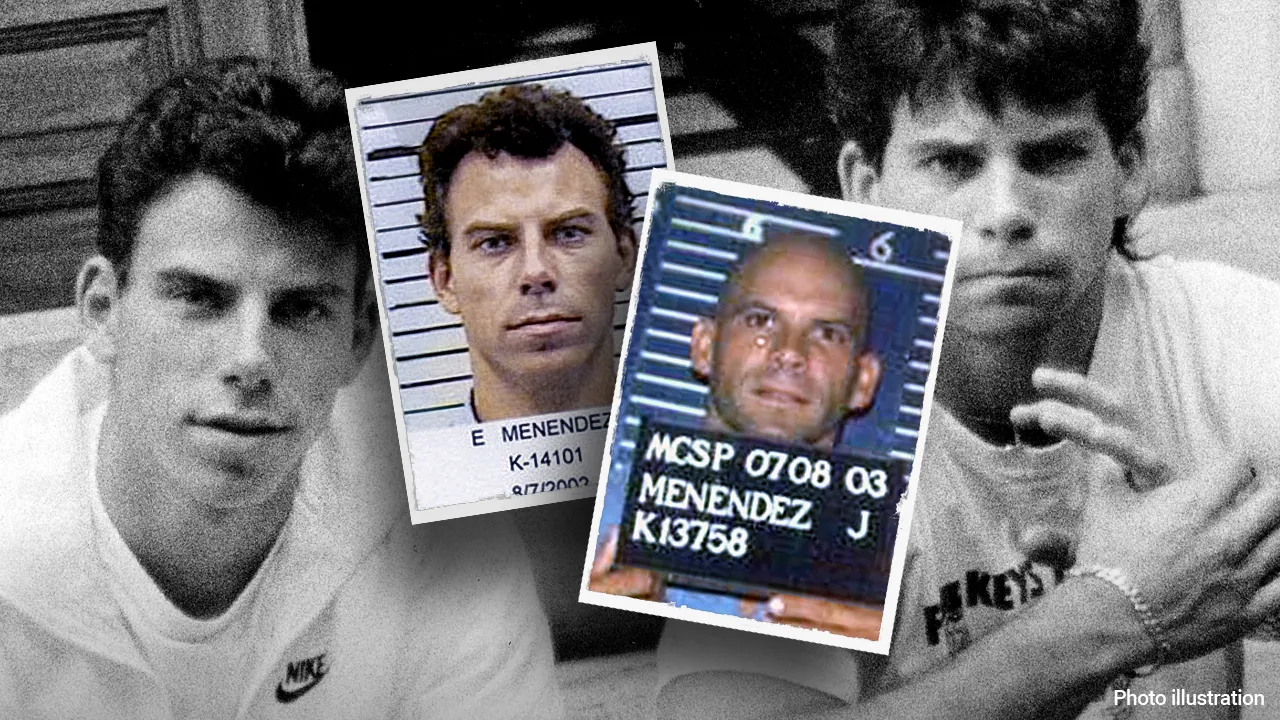
While brothers Erik and Lyle Menendez are pushing for their freedom, one man who investigated their double murder case believes their life sentences should be upheld.
“If they were brought to trial again today, they would be found guilty,” Clark Fogg, a retired senior forensic specialist with the Beverly Hills Police Department, told Fox News Digital.
Joseph Menendez, who goes by his middle name Lyle, and Erik were convicted of shooting their parents, Jose and Mary “Kitty” Menendez, to death in their Beverly Hills, Los Angeles, mansion in 1989.
They were ordered to serve life in prison in 1996, but they have recently been seeking reduced sentences.
LYLE MENENDEZ, WHO SHOTGUNNED PARENTS TO DEATH WITH BROTHER, PLANS FOR LIFE AFTER PRISON AMID NEW APPEAL
Erik and Lyle Menendez listen during their trial in the 1990s. (Ted Soqui/Sygma)
“The jury’s, you know, the judgment came down that they are to remain in prison for the rest of their life. … We have the best judicial system, you know, anywhere in the world,” Fogg said. “And we have to abide by that and abide by what a jury feels and what the judge feels is appropriate based upon not only this case, but other cases.”
A new Netflix true crime drama, “Monsters: The Lyle and Erik Menendez Story,” has sparked a range of opinions on its accuracy and portrayal of the real story from decades ago.
Fogg believes the show is “totally inaccurate” and “based on facts that did not happen.”
MENENDEZ BROTHER, WHO GUNNED DOWN PARENTS, SLAMS NEW SHOW FOR ‘DISHONEST PORTRAYAL’
Erik Menendez, left, and Lyle Menendez on the steps of their Beverly Hills home in November 1989. (Ronald L. Soble/Los Angeles Times)
Erik Menendez published his own statement through his wife Tammi Menendez on X, saying the show creates “a caricature of Lyle rooted in horrible and blatant lies rampant in the show.”
“It is sad for me to know that Netflix’s dishonest portrayal of the tragedies surrounding our crime have taken the painful truths several steps backward — back through time to an era when the prosecution built a narrative on a belief system that males were not sexually abused and that males experienced rape trauma differently than women,” Erik said in his statement shared by Tammi.
Fogg believes the brothers’ motive for the murders had to do with “greed and money.”
“Why did they even have to kill their mom in the first place?” Fogg said. “If you killed Mr. Menendez separately from her, she would end up getting the inheritance, right? So they had to eliminate both of them in order to have the inheritance.”
FOLLOW THE FOX TRUE CRIME TEAM ON X
Fogg investigated the Menendez brothers’ case in 1989. He took photos and preserved evidence at the crime scene, attended the autopsies and took the stand during both trials. When speaking with Fox News Digital, he painted a horrific picture of the crime scene.
“One of the detectives had to actually hold a golf umbrella over my head as I was taking photos because, every so often, things would be falling from the ceiling,” Fogg said. “It comes down to one thing. The reason why they’re in jail is that they killed their mother and father brutally, not poison them, but shotgun them to death to a point that they were all over the ceiling. … That’s how brutally they were murdered.”
Fogg, who has spent 40 years working in law enforcement and has conducted over 30,000 crime scene investigations, said he had 44 rolls of film from the Menendez crime scene.
“It looked like Mrs. Menendez was trying to get away because there was blood on the bottom of the soles of her shoe. … Even at that point, they kept on killing her with, you know, gunshot blasts, one after another.”
SIGN UP TO GET THE TRUE CRIME NEWSLETTER
This 1992 file photo shows double murder defendants Erik, right, and Lyle Menendez, left, during a court appearance in Los Angeles. (Mike Nelson/AFP via Getty Images)
In 2023, lawyers for the Menendez brothers announced the discovery of a letter written by Erik Menendez to a cousin, Andy Cano, eight months before the murders, in which he goes into detail about the ongoing abuse by their father.
“I’ve been trying to avoid dad,” Erik writes in the letter. The brothers claim this letter supports their original testimony during the first trial, alleging the abuse.
Fogg questioned the authenticity of the letter.
“We’re talking about his cousin dying, you know, two decades ago and then this letter mysteriously popping up,” Fogg said. “So, my questions are, is this letter valid? Have they done a paper analysis on it? Have they done an ink analysis to determine whether or not the ink is actually dating from the 1980s?”
GET REAL TIME UPDATES DIRECTLY ON THE TRUE CRIME HUB
Lyle, left, and Erik, right, are pictured in recent mugshots from 2023. After years apart, they were moved into the same housing unit at Richard J. Donovan Correctional Facility in San Diego in 2018, according to the New York Daily News. (California Department of Corrections)
Relatives of the brothers have recently spoken out in support of their freedom.
“We are virtually the entire extended family of Erik and Lyle Menendez. We are 24 strong and today we want the world to know we support Erik and Lyle,” family members wrote in a statement that Tammi Menendez posted to X in response to the new Netflix series. “We individually and collectively pray for their release after being imprisoned for 35 years. We know them, love them, and want them home with us.”
Ryan Murphy, co-creator of the Netflix series, told the Los Angeles Times, “I think it’s faux outrage. I think that this story, this Netflix series, is the best thing that has happened to the Menendez brothers in 30 years because it’s getting people to talk about it, and it’s getting people to ask the questions that are important.”
A separate documentary about the brothers, “The Menendez Brothers,” is scheduled to premiere on Netflix Oct. 7. The film will “offer another perspective — that of the brothers themselves, provided in all-new audio interviews,” according to a press release.
Fogg believes the brothers remain behind bars for good reason.
“They’re in jail, and they’re in jail for life without possibility of parole for one thing and one thing only,” Fogg said. “You don’t murder your parents. You don’t murder anybody, period.”
Read the full article from Here


SALT LAKE CITY — Rep. Mike Kennedy, R-Utah, views liberty as a driving force in American history, which is why he’s thrilled about a 60-foot-long and 36-foot-tall arch planned for a space near the Utah Capitol.
The Grand Liberty Arch, designed by renowned artist Sabin Howard, is expected to become one of the largest bronze sculptures in the West by the time it’s completed over the next seven years. Kennedy believes it will highlight the effort to gain liberty over the past 250 years.
“For two and a half centuries, liberty has been an active ingredient in the background of American history, and the driving engine of our national progress,” he said on Monday, as a 6-foot model of Howard’s piece rotated within the Utah Capitol rotunda next to him. “It is the vital spark that transformed a collection of colonies into a beacon of global innovation and human potential.”
However, those who live near its planned location are less excited by the state’s plan, not by the sculpture as much as the spot the state has in mind and the process by which it was selected. They believe it will drastically alter a longstanding open space, and question why the project was voted on quickly without much public feedback.
The Grand Liberty Arch
The Capitol Preservation Board signed off on the project in May, with the expectation that the estimated $55 million cost will be raised privately. Former Zions Bank CEO Scott Anderson was working with JLL Salt Lake City Real Estate to raise the funds, meeting with family foundations and large corporations, officials said during the meeting.
Utah Gov. Spencer Cox penned a letter in support of the project in February, saying that he believes in the “significance of this legacy piece.” Howard, who recently completed a World War I memorial in Washington, D.C., had his latest vision on display at the Utah Capitol over Fourth of July weekend, so people could better view his vision.
The sculpture depicts many elements of the past 250 years in the U.S., from the Revolutionary War and the signing of the Declaration of Independence to the building of the country and its westward expansion. An unveiling ceremony was held Monday, where Howard and others were able to describe it and its importance for now and the next 250 years.
“America is dynamic. … Americans do not stand still,” he said. “The Grand Liberty Arch is a celebration of liberty that has transformed our nation.”
It’s expected to be built in phases over the next seven years, completed in time for the 2034 Winter Olympics and Paralympics. Over 100 people showed up for the ceremony, making sure to snag a photo of the model by the end of it.
A neighborhood’s concern
The sculpture is to be located at 17 W. 500 North, on a parcel across the street from the Utah Capitol, informally known by some as the Capitol triangle. Utah owns the land, but it’s also not considered part of the primary Capitol Complex, meaning it’s not subject to some of the same Capitol grounds rules, Cox said.
Utah House Speaker Mike Schultz, R-Hooper, called it the “perfect location” during the board’s May meeting. Renderings show a plan to remove some of the park’s longstanding trees, replacing them with cherry trees around the arch that essentially adds to the Capitol’s walkway.
The location has also created a stir within its neighborhood. The Capitol Hill Neighborhood Council ended a June 17 meeting by debating several options to respond to the state’s decision.
There were some concerns raised about some of the depictions, but most are concerned about potential impacts to the current open space, which is used for an annual gathering, but also smaller park space since it’s located right next to homes, said Jonathan Bruns, chairman of the Capitol Hill Neighborhood Council.
“It’s off the main (path), so it’s a little … removed from the main grounds. It’s usually a quieter spot,” he explained.
With thousands of people projected to cross the street to view the piece, they said it could snarl traffic along Capitol and Columbus streets. Others were concerned by the size and scale of the project and the quick process to select a design, which appeared to include little to no public feedback.
Salt Lake City Councilman Chris Wharton, whose district includes the area, pointed out that the state is exempt from local processes, meaning there’s nothing the city or county could do to intervene. As a resident and lawyer, he suggested a formal complaint to the Capitol Preservation Board over the monument process around the Capitol complex, which the neighborhood council plans to do.
The council agreed to submit a formal complaint to the board and Utah Attorney General’s Office to make sure that the board followed Utah’s Open and Public Meetings Act and normal processes for a monument. It also agreed to submit a public records request on the project for a “comprehensive report of community feedback.”
Part of the complaint centers around a discussion of a 100-year monument project for which there were two options discussed in May, separate from the arch. One celebrated the golden spike, while the other highlighted women’s suffrage in Utah, but the project was placed on hold over logistics.
Board members didn’t abandon the project, but said the arch could ultimately serve as the selection. That made the neighborhood question if it followed the correct process for monuments, Bruns explained.
“It kind of seems like this went around the rules in an odd way. … We are obviously doing work to make sure it was done by the right processes,” he said.
The attorney general’s complaint has since been filed, while the rest are in the works, he told KSL. He’s unsure if the council would file a lawsuit over the time and money that would strain a volunteer group of residents.
Bruns credited Howard for being responsive, adding that he’s hopeful the state can also be understanding of the neighborhood’s concerns, whether that’s project adjustments or a new location.
The Key Takeaways for this article were generated with the assistance of large language models and reviewed by our editorial team. The article, itself, is solely human-written.
Washington
Washington law says to alert the public when doctors are accused of misconduct. It can take months

This story describes detailed allegations of sexual violence and other sexual misconduct.
This article was produced for ProPublica’s Local Reporting Network in partnership with KUOW. Sign up for Dispatches to get ProPublica’s stories in your inbox every week.
Experts on laws protecting patient safety give Washington state high marks for the types of information it is willing to disclose about doctors accused of wrongdoing.
Like other states, Washington lets patients look up doctors by name online to read any state allegations against them. But decades ago, Washington lawmakers created a separate pathway that doesn’t leave the homework to patients, mandating that regulators issue a press release whenever an investigation results in formal allegations being filed against a doctor. Washington is alone in legally requiring such proactive outreach to the news media, the Federation of State Medical Boards says.
Yet an examination of Washington discipline records by KUOW and ProPublica found that regardless of what the law calls for, Washington fails to reliably call the public’s attention to serious misconduct allegations against doctors who have been allowed to keep practicing while their cases proceed.
Announcements can take months to go out — and may not go out at all until after the case is resolved.
Take the case of Brooks Watson, a Richland, Washington, doctor who the state medical board accused of making nonconsensual sexual contact, unwanted sexual advances or inappropriate sexual remarks to five of his coworkers over the course of five years.
During one encounter in 2023, Washington Medical Commission records allege, Watson isolated a subordinate in his office and, without her consent, kissed her, touched her breasts, put his hands down her pants, groped her vagina and exposed his penis.
The commission sent Watson a “statement of charges” alleging sexual misconduct and unprofessional conduct on Aug. 19, 2025, and it amended the charges in June to include an allegation that Watson had assaulted someone at his home.
Yet the commission issued no public announcement about Watson’s case for more than nine months after first filing allegations.
Watson remains licensed to practice, and an online provider database run by the state shows no final decision on his case has been made as of July 6.
The attorney defending him in the criminal case stemming from the incident at his home said that Watson disputes the allegations and that he pleaded not guilty to the misdemeanor assault charge against him. The attorney referred further questions to another lawyer who he said represented Watson in workplace matters; that person acknowledged a request for comment sent by email but did not answer emailed questions or respond to voicemails.
Watson did not answer emails or phone messages seeking his response to the medical commission’s claims. Meeting materials on the commission’s website say Watson had a hearing scheduled in April.
KUOW and ProPublica began examining how and when Washington tells the public about doctors facing discipline following the case of Mark Mulholland, an eastern Washington OB-GYN accused last year of conducting irregular pelvic exams and making inappropriate remarks.
A Washington OB-GYN was repeatedly accused of sexual misconduct. The state medical board let him keep practicing
He initially kept seeing patients, and at least one has accused Mulholland in court of abuse and negligence that she says occurred during the time between when the commission filed formal charges and when it announced them. The woman alleges Mulholland “shoved his fingers into her rectum” and “said to her with confidence that she had a nice-looking and tight vagina.”
More than 80 lawsuits related to Mulholland’s alleged misconduct have been filed against the doctor himself, his former employer Kadlec or its affiliate, the Providence hospital chain.
(Mulholland has not responded to requests for comment, but the doctor or his attorney told the commission previously that he strives to be gentle and respectful with cervical exams and denied conducting them in ways that patients described. In the civil litigation, which remains ongoing, the doctor, Providence and Kadlec all deny wrongdoing. In the state disciplinary case, which remains open, Mulholland signed an interim order agreeing to restrictions on his license.)
As with many announcements of charges against doctors whose licenses remained unrestricted, the commission did not first publish a notice about Mulholland on the press release section of its website, but rather in a subscribers-only email that said nothing about what he was accused of. It came six weeks after charges were filed.
The list is supposed to go out quarterly, a schedule that guarantees many charges stay off the radar for months — or even longer when the board fails to keep to its publication schedule. At least 269 days passed recently without subscribers receiving an email announcing charges being filed against a doctor and without the commission announcing charges in an online press release.
Some cases still have not been publicized.
Presented by KUOW and ProPublica with questions about how it notifies the public, the commission issued a written statement saying it plans to alter its practices to make allegations against doctors more visible.
Although the commission believes its current practices meet the law’s notification requirement, the statement said, the agency “is always looking for ways to grow.”
“Technology and public accessibility standards continue to evolve since the statute was written,” the statement said. The medical commission “recognizes the value in refining our processes and establishing new best practices to enhance transparency.”
A Seattle doctor was investigated for fertility fraud. The case highlights tension between patient, physician rights
On May 29, the same day the commission sent its statement, it sent four email notices announcing initial or updated allegations against licensees who were not immediately suspended — the first such emails subscribers received since June 2025.
Washington state Rep. Gerry Pollet, a Seattle Democrat and outspoken advocate for disclosure and accountability, said the medical commission was “absolutely not complying with the law.”
“The Legislature clearly said, ‘You have to inform the public quickly, and you should do that through a news release,’” Pollet said. “That’s one of the mechanisms. And the implication of a news release is you have to put it out while it’s still news. And waiting months to put something on a limited listserv doesn’t meet the spirit, much less the letter, of the law.”
Pollet said he plans to ask other legislators to join him in contacting the medical commission and asking for more prompt and public notifications.
And if that doesn’t work, he said, “ What we might need is direction in the budget to demand that they follow the law.”
The letter of the law
The Washington Medical Commission has a well established process for looking into the roughly 2,000 allegations of provider misconduct it receives each year.
If an investigation finds evidence that a doctor violated the law, the medical commission issues a statement of charges. The doctor has a right to contest these before a health law judge or the commission issues a final order spelling out any disciplinary action or dropping the case. Months can go by in the interim.
Washington law directs the medical commission to report both statements of charges and final orders to interested parties: the person whose complaint triggered an investigation, certain professional organizations and the public.
Specifically, the law says public notification “shall include press releases to appropriate local news media and the major news wire services.”
Two legal experts said the availability of the state’s email list notifying subscribers of “legal actions,” which requires journalists and others to opt in, conceivably meets the law’s requirements. But Seth Rosenberg, an administrative and employment law attorney, said by email that the fact that it gives only names, dates and locations — not a description of the charges doctors face — arguably means “it is bereft of meaningful detail.”
Whether or not the emails convey enough information, KUOW and ProPublica’s review found that they often are not issued for a long time.
The review focused on charges against doctors whose licenses remained untouched while they awaited a disciplinary decision. It turned up 13 emails or press releases from May 2024 through July 6 that announced charges while the case was still open, five of which were not sent for more than two months after charges were brought.
In another 12 cases, the commission did not send out public notifications until after it resolved charges against the doctor, often months after the physician was put on notice. Three of these cases were shared by way of the agency’s quarterly newsletter, which doesn’t necessarily go to subscribers on the legal actions list.
Four doctors accused last year or in January still have yet to appear in an email, press release or newsletter noting their charges as of July 6.
All told, the commission has gone 100, 200 or even 300 days — in the case of Watson, the Richland doctor accused of sexual misconduct with coworkers — without either publicizing charges or taking away a doctor’s license.
It’s unclear how many of the physicians identified in KUOW and ProPublica’s review continued practicing while waiting for their cases to be resolved, but they had the legal ability to do so.
The commission did not respond when asked to verify that it had failed to publicize cases against doctors for whom no email bulletins could be found from early in the disciplinary process. Executive Director Kyle Karinen said the commission has consistently attached charges to doctors’ entries in an online database and listed charged doctors in commission meeting materials online.
The Washington Department of Health, a related agency that handles sexual misconduct allegations against doctors when the investigations do not require medical expertise, acknowledged that it failed to publish any bulletins on 30 enforcement actions since 2016 but said it has recently fixed the problem.
The medical commission’s delayed or or nonexistent notifications encompass a range of alleged doctor misconduct.
Kareematulai Arogundade was accused in August of failing to undergo a mental examination that the commission required. The physician, who did not respond when contacted by KUOW and ProPublica by email and phone, first appeared more than 120 days later in the commission’s winter newsletter after his license was indefinitely suspended.
Sophie Gomez was accused in October of failing to respond to a request for information about a complaint filed with the board, and her license was indefinitely suspended in February, after which the commission issued a press release. (Gomez declined to comment when contacted by KUOW and ProPublica.)
The commission did announce charges prior to resolving the case against Jonathan Wynn Hemmert, who oversaw clinical operations at three Washington clinics that used a device called Cryoskin, a temperature-controlled wand that manufacturers say can remove unwanted fat cells when it’s rubbed against a patient’s skin.
The state agency said clinic staffers had clients sign a personal injury waiver, which the commission said was unenforceable, against public policy and deceptive and dishonest. The commission said he also failed to ensure the device was approved by the Food and Drug Administration and failed to supervise staff using the device on patients.
Hemmert signed a settlement agreeing to address the concerns, but the commission in November filed formal allegations that he had breached it. (Hemmert did not respond when asked to comment on the allegations, which have not yet been adjudicated.)
A press release was posted to the commission’s website in March, 112 days after he was charged with breaching the settlement. Two months after that, a listserv notice went out.
‘A right to know’
The 1984 Washington state law that requires public notification was passed as part of the Uniform Disciplinary Act, a set of guidelines for state medical boards and commissions that license providers and investigate complaints.
Among the sponsors was then-state legislator Mike Kreidler, a Democrat and optometrist who served 16 years in the Legislature and 24 as insurance commissioner.
Kreidler said he doesn’t recall the details of how the 1984 law came together. But looking back at it, Kreidler, now 82, said he believes the public notification requirement fulfilled an important function. He said to get to the point where the commission completes an investigation and files charges means a complaint has enough evidence behind it to proceed toward disciplinary action.
“They’re not going to be frivolous in any fashion, and therefore the public certainly does have a right to know,” he said.
‘Such a violation’: Patients of former UW doctor accused of fertility fraud grapple with uncertainty, tough choices
Presented with KUOW and ProPublica’s findings, people who support policies favoring disclosure to patients said the commission’s interpretation of the 1984 notification law falls short.
Patricia Kelmar, senior director of healthcare campaigns at PIRG, a nonprofit advocacy organization for consumers, said the commission should be expansive in discharging its duty to notify the public as the law requires, contacting not only reporters but also a doctor’s current and former patients.
“ We should not be hoping that we stumble across the information that’s going to protect us from a doctor who’s dangerous,” Kelmar said.
Lisa McGiffert, patient safety activist with the Patient Safety Action Network, said the commission’s frequent delay in notifying the public does not fulfill the spirit of Washington’s law, which in her interpretation necessitates a quick release of information.
“ There’s nothing preventing Washington state from saying these have to be sent out to the news media within four or five working days,” McGiffert said.
Local media outlets have paid attention in the occasional cases where the medical commission has announced an action via the press release section of its website. A review of news releases about in-state doctors accused of conduct unrelated to their mental health shows that, more often than not, relevant media outlets have published stories afterward.
A news tip to a local journalist, not the commission’s email list, prompted the first media coverage of the case against Mulholland last June — nearly two months after the commission formally charged the gynecologist with misconduct involving three patients.
The woman who later accused Mulholland of performing an uncomfortable rectal exam and saying her vagina looked nice said the actions occurred at an appointment on May 1, 2025, or just days after the commission filed formal allegations.
The woman told KUOW and ProPublica that she was angry that she heard no news about the commission’s existing allegations before she saw Mulholland.
“I’d never heard anything bad about him,” she said in an interview with KUOW and ProPublica.
Had she known, she wouldn’t have gone, she said.
Wyoming
Wyoming coal company wins federal money to extract critical minerals from Powder River Basin – WyoFile

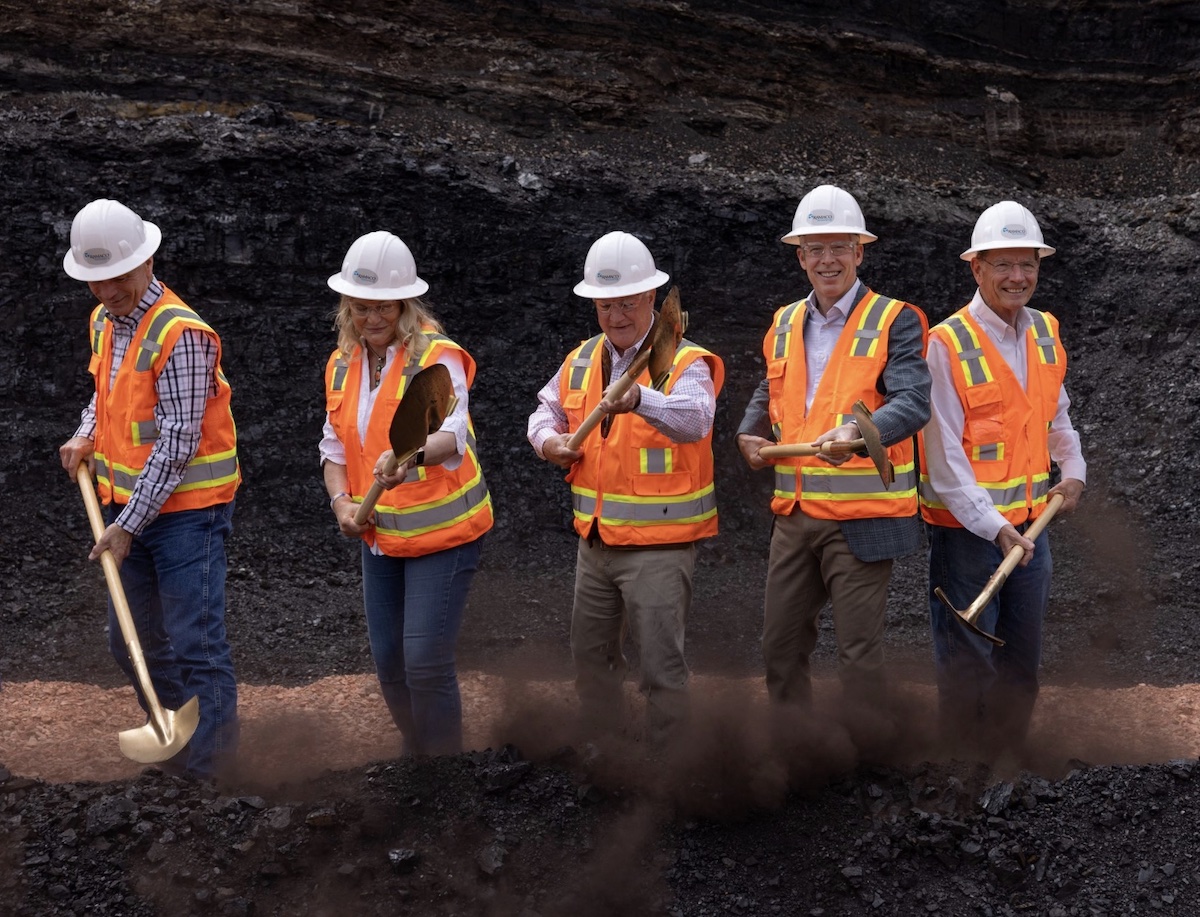
Coal mining giant Peabody Energy, with massive operations in Wyoming’s Powder River Basin, is among five entities that will share a total of $75 million from the U.S. Department of Energy to advance production of rare-earth elements and critical minerals.
As of press time, it wasn’t clear exactly how much Peabody might receive from the department’s Office of Critical Minerals and Energy Innovation, but it will be added to the $6.25 million in taxpayer money granted to the company earlier this year via Wyoming’s Energy Matching Funds program for the same project.
Peabody plans to build a pilot processing facility at its Rawhide mine just north of Gillette to extract rare earth and critical minerals from coal, according to a Peabody document submitted to the state. It would produce “market-ready mixed rare-earth concentrate,” which can be further refined to produce oxides and metals used in modern technology. Once complete, the facility would support 55 new jobs, Peabody says.
“Coupled with the Wyoming Energy Authority grant awarded earlier this year, this [DOE grant] selection reflects the meaningful progress Peabody has made in advancing promising unconventional rare earth and critical mineral opportunities,” Peabody President and Chief Executive Officer Jim Grech said in a prepared statement this week.
The DOE’s support of Peabody’s effort in Wyoming demonstrates the value of Wyoming coal beyond burning it to generate electricity, Wyoming Mining Association Executive Director Travis Deti said.
“Whether it be energy or the domestic supply chain for needed critical minerals and rare earths, Wyoming coal will be needed for the foreseeable future,” Deti told WyoFile. “Of course this all translates into jobs and revenue.”
St. Louis-based Peabody Energy, with a market value of $2.8 billion, is the largest coal producer in Wyoming and the nation. It owns and operates the Rawhide, North Antelope Rochelle and Caballo coal mines in northeastern Wyoming. Rawhide shipped 7.8 million tons of coal in 2025, according to federal data, while Caballo produced nearly 11.7 million tons and North Antelope scooped nearly 65 million tons.
Peabody reorganized after filing for bankruptcy and laying off 235 Wyoming miners in 2016. Today, the company employs about 1,480 coal miners in Wyoming.
Push for rare earth, critical minerals
Rare-earth elements and critical minerals occur all over the world, typically in minute quantities. The metals are increasingly in demand as building blocks for everything from magnets to batteries in devices like cell phones and MRI machines. They’re also frequently used in military equipment.
The U.S. has lagged behind China in producing and refining the metals, giving China an economic advantage in the rocky relationship between the two nations. The U.S., and the Trump administration in particular, has pushed a rare-earth and critical minerals supply chain buildout toward the top of its mining and manufacturing priorities.
Last year, President Donald Trump issued the Immediate Measures to Increase American Mineral Production executive order while invoking the Defense Production Act to fast-track permitting and help finance mining and processing efforts.
With increasing government and private-sector interest, Rare Element Resources recently built a rare-earth demonstration processing plant near Upton. Others are pursuing new mining operations in the Laramie Range and southern Bighorn Mountains. Those are all traditional, hardrock resources. As for Wyoming coal, researchers have known for years that it contains rare-earth and critical minerals, but it’s only a relatively new focus.
Although Ramaco Resources, for years, has said it is reactivating its Brook coal mine near Sheridan to extract critical minerals, Peabody Energy’s entrance into the market brings another level of corporate prowess to the prospect of putting Wyoming on the world map. And the Trump administration’s focus on coal for the metals dovetails with other priorities.
“Today’s announcement advances the Trump administration’s efforts to strengthen the U.S. coal sector,” the Department of Energy said. It “reflects a broader commitment to unlock the value of coal and coal-based feedstocks as domestic sources of critical minerals and materials.”
Gov. Mark Gordon agrees.

“I was happy to support a $6.25 million grant from the Wyoming Energy Authority’s Energy Matching Fund earlier this year to build a pilot processing facility at the Rawhide mine near Gillette,” he told WyoFile this week. “If we are going to get back in the game of supplying our nation’s need for rare-earth elements and critical minerals, we need to look at all sources, including those in and around coal seams. The federal contribution is a great addition to this effort.”
Meantime, Wyoming is investing significant taxpayer money beyond the $6.25 million already granted to Peabody.
Visionary Metals Corp recently received a $250,000 Energy Matching Funds grant for a nickel-and-copper project in the Granite Mountains. Also this year, the Legislature created the Wyoming Rare Earths Fund with $16 million “for commercial deployment projects focused on the processing and separation of rare-earth resources located in Wyoming.”
-

 Utah57 seconds ago
Planned 60-foot long Liberty Arch in Utah sparks patriotism, but also concerns
-

 Vermont8 minutes ago
Vermont offers money to replace diesel vehicles with electric
-

 Virginia11 minutes ago
Virginia reports 10 cases of cyclosporiasis
-

 Washington16 minutes ago
Washington law says to alert the public when doctors are accused of misconduct. It can take months
-

 Wisconsin23 minutes ago
Former Wisconsin judge to be sentenced after conviction in obstructing arrest of Mexican immigrant
-

 West Virginia26 minutes ago
West Virginia town’s entire police force fired after ex-sergeant claims evidence room was broken into
-

 Wyoming31 minutes ago
Wyoming coal company wins federal money to extract critical minerals from Powder River Basin – WyoFile
-

 Crypto38 minutes ago
Residents question proposed crypto mining center

