Denver, CO
Should the Denver Broncos be aggressive or measured in free agency?


The Denver Broncos enter this year’s free agency period with ample cap space for the 2025 season. Additionally, they have plenty of space down the road. But will they make big splashes in free agency like they did in Head Coach Sean Payton’s first year with the team or will they be more measured like last offseason?
General Manager George Paton spoke about the importance of being measured in their free agency decisions at this year’s NFL Combine. Additionally, he reflected on some of the whiffs the team has endured in free agency. However, after a wildcard playoff berth and having quarterback Bo Nix on his rookie deal for the next few seasons, there are some who may believe the Broncos’ window to be aggressive begins now.
With that in mind, I asked the staff at Mile High Report if the Broncos should be aggressive or measured in free agency.
Most of us at Mile High Report advocate for a measured approach
Ross Allen
I’ll stick to a more measured approach. They have a decent amount of cap space but I’d rather that money be spent on a couple of extensions for players already here. But there is enough for one big signing and maybe a couple smaller ones. I’m talking about a Zack Baun or a Nick Bolton and then a vet receiver or a vet center.
Taylor Kothe
My thoughts are similar to what Ross said. At this point, of the arguable top 10 wide receivers available in free agency only 2 aren’t in their 30s. Both of those guys will be 29 before the season begins. The tight end and wide receiver free agent classes aren’t much better, especially considering the rich draft class in the pipeline.
So, if we make one big FA signing, I’d prefer to see it be for a defender and then see it followed up with several good value signings similar to last offseason. Use free agency primarily to reinforce our defense and then go offense-heavy in the draft to build for the long term around Nix.
Tim Lynch
We are not quite ready for the aggressive approach. I feel like you save that for a season you expect to be one of the best teams in the league. I think the Broncos are on the ascent, but still a young and inexperienced team. They are going to get better.
Mike DeCicco
Measured. Find scheme fits like Brandon Jones that can be had for a reasonable contract. We’re not one player away where a splashy move gets us over the top. Depth is the priority.
John Holmes
Extremely measured. I’d rather see money spent on extensions for Nik Bonitto and Zach Allen than big starter salary on free agents. The Broncos have, especially last year, needed to push a lot of salary into future cap years. Taking a year without aggression and trusting the young core to develop sets the team up for success both in 2025 and beyond.
Joe Mahoney
Fill the holes that you don’t think you can fill in the draft with mid-level FAs. Look for value more than the names.
Some advocated for being aggressive, but in varying degrees
Ian St. Clair
How about measured aggressiveness? What everyone else said I’m in agreement but be aggressive in the players the Broncos have identified as targets. Namely the in-house guys and then middle linebacker and safety, maybe receiver or tight end after that. On defense, guys like Nick Bolton and Jevon Holland. Extend your current players and get the guys you want, so measured aggressiveness.
Christopher Hart
I’d prioritize in-house extensions before being aggressive in this year’s market. It’s not a great core of talent. In an ideal world, they’re aggressive retaining top-end players like Zach Allen and Nik Bonitto on the defensive side of the ball. As far as the market goes, do what you can to add a starter at linebacker which they desperately need, a stop-gap defensive lineman, and a safety to compete alongside P.J. Locke. I kind of like Ian’s idea of measured aggressiveness. That’s a good line of thought!
Scotty Payne
Aggressive. Life is short and I could die tomorrow so go big or go home. You have a short window with Nix on a rookie contract, wealthy owners and a raising cap each and every year. Go big and fill some weaknesses
Adam Malnati
Aggressive—with a plan. No point in just spending money for spending’s sake. But if there is a player that fits what the team is doing, go for it. There are positions of need that can be filled in free agency. George Paton has done a very good job working with Sean Payton finding players that can get the Broncos another step closer to the ultimate goal of winning a Super Bowl.
As always, feel free to give your thoughts in the comments section. Also, don’t forget to vote in the poll! I’m interested to hear what Broncos Country has to say about this.
Poll
Should the Denver Broncos be aggressive or measured in free agency?
-
54%
A combination of both. “Measured aggressiveness.”
(20 votes)
37 votes total
Vote Now



The Utah Jazz and Denver Nuggets are tipping off their second-to-last meeting of the 2025-26 season on Friday in the Mile High, where for the Jazz in particular, they’ll be dealing with several injuries headed into the matchup that’ll make them shorthanded once again.
Here’s what to expect on the injury front for both the Jazz and Nuggets on Friday night:
Utah Jazz Injury Report
OUT – Isaiah Collier (hamstring)
OUT – Keyonte George (hamstring)
OUT – Jaren Jackson Jr. (knee)
OUT – Walker Kessler (shoulder)
OUT – Lauri Markkanen (hip)
OUT – Jusuf Nurkic (nose)
PROBABLE – Kyle Filipowski (illness)
OUT – Blake Hinson (two-way)
It’s a lot of the same for the Jazz when looking back at some of their recent injury reports, but there’s also some good news to note as well.
Second-year big man Kyle Filipowski, specifically, is trending up to play in Denver after dealing with an illness against the Washington Wizards; an issue that kept him sidelined for one game and left the Jazz’s frontcourt notably shorthanded for what would be a double-digit loss.
During his post-All-Star stretch, Filipowski has been averaging 13.2 points, 8.8 rebounds, 4.2 assists, along with 1.2 steals and 0.9 blocks through 11 games.
He’s slotted in primarily as the Jazz’s starting center since both Walker Kessler and Jusuf Nurkic have been out with season-ending injuries, and has shown some nice flashes throughout.
However, outside of getting Filipowski back in the mix, the Jazz will still be without second-year guard Isaiah Collier, who continues to deal with hamstring soreness, and will also continue to be down Keyonte George and Lauri Markkanen with their extended absences.
It remains to be seen if any of the latter two will be able to return at some point this season, but now with less than 10 games to go on the calendar before the offseason officially hits, the chances of either Markkanen or George coming back keep getting slimmer and slimmer.
For the extent either remains out, expect to see a good chunk of Ace Bailey being the primary scoring option as he has through his recent slate of games, along with an expanded role for their two-way and 10-day players down the bench who have gotten more minutes in recent weeks.
Denver Nuggets Injury Report
OUT – David Roddy (two-way)
OUT – KJ Simpson (two-way)
As for the Nuggets, their injury slate remains clean. The only names out will be a pair of their two way signings in David Roddy and KJ Simpsons, while the rest of their roster is slated to be active.
It’s a major change from what the Nuggets have been used to all season when factoring in their several injuries to key players lasting multiple weeks.
Nikola Jokic, Cameron Johnson, Christian Braun, Aaron Gordon, and Peyton Watson have all missed significant time at one point or another this season, but against Utah, they’ll have all systems go as they roll into the game on a three-game win streak.
Tip-off between the Jazz and Nuggets lands at 7 p.m. MT in Ball Arena.

Little India will close its West Highland location in the coming months, owner Simeran Baidwan told BusinessDen.
It marks the end of a five-year run at the corner of 32nd Avenue and Lowell Street for the local Indian chain.
“We opened to preserve jobs because we didn’t have enough revenue,” he said of the pandemic days when restaurants were struggling.
The 3496 W. 32nd Ave. store helped keep dozens of chefs and servers in Baidwan’s “Little India family,” he said. Those workers will now have the opportunity to work at his other restaurants.
“Five years later, the question isn’t whether people love the food,” he continued. “It’s whether independent restaurants can survive the compounding pressures and expenses, especially in Denver.”
Baidwan, who opened the first and still-running Little India at Sixth and Grant alongside his parents in 1998, singled out rising minimum wage, insurance, delivery fees and credit card processing fees as factors contributing to the closure.
“I think what it is, is a Denver restaurant industry story, it’s not just our one restaurant story,” he said. “I think what’s happened, in this day and time, is that life has become really expensive. There’s no margins. The math just doesn’t work.”
Being in the Highlands was also a factor, Baidwan said. The desirable location comes with high rent as well as skyrocketing property taxes he’s been responsible for. Add in dwindling consumer spending and Baidwan said his hand was forced.
“Busy doesn’t always mean profitable,” he said. “A lot of people look through the window and assume the restaurant is good, and we have the several locations too. But it just isn’t like that anymore.”
Baidwan said there’s no plan to close his three other locations, in Cap Hill, Central Park and off Downing Street near the University of Denver. But that doesn’t mean he hasn’t been making tweaks.
At the original store off Sixth, he started operating 24/7 about eight months ago, something he’s thinking about for his other neighborhood restaurants. He’s also added entertainment, like jazz music and dancing, to help get more customers through the door.
Baidwan himself has also returned to the floor as a server — the first job he had at his parent’s store. But having the owner-operator model is difficult for his sprawling Little India empire since he can only be in so many places at once.
“The closure is about sustainability, to sustain what we have. It’s not surrender,” he said “It’s not that we’ve lost the passion of what we do so well. I mean, who does a vindaloo better than Little India?
“We’re really proud of what we built there, and this isn’t about failure,” he continued. “It’s about the reality that the economics of independent restaurants has changed dramatically.”
Read more from our partner, BusinessDen.
Get more business news by signing up for our Economy Now newsletter.

DENVER — A new Rockies season is on deck, with the team’s first game of the 2026 campaign set for Friday night in Miami. The home opener is next Friday at Coors Field.
It’s also a new season for the Ballpark neighborhood’s General Improvement District (GID) and its street ambassadors.
PREVIOUS COVERAGE:
Those ambassadors, dressed in maroon shirts and jackets, patrol the streets around Coors Field and the Ballpark neighborhood. They are tasked with helping with cleaning, maintenance, security, outreach to those experiencing homelessness, and general hospitality for neighbors and visitors.
How Denver’s Ballpark District now has ties to Chicago’s Wrigleyville
This week, Denver7 spoke with Kate McKenna, who stepped in as the GID’s executive director last summer. McKenna said while she works in the office, the district has six full-time ambassador employees through programming partner block by block. She said the team patrols the area year-round, but adds staffing for big events like St. Patrick’s Day and Rockies home games.
McKenna comes to Denver from a similar role in Wrigleyville, the iconic neighborhood outside Wrigley Field in Chicago. She said that serves as a source of inspiration for the future, but adds that Denver’s ballpark neighborhood has its own unique advantages.
“All of our businesses are independently-owned and operated,” McKenna told Denver7. “There is no chain, there is no commercial sort of large entity here in Ballpark that you’re going to see… To have a true small, hyper-local-owned economy is what really sets this district apart, both in Denver and then nationwide.”
Even after the Rockies set a franchise record with 119 losses in 2025, McKenna said the on-field product does not make the District’s job harder.
“I like to think win or lose, they’re the best neighbor you could possibly have, regardless of their season,” McKenna said. “They continually have one of the highest attendance rates for home games, as well as walk-up ticket sales.
McKenna said there continues to be good conversations between the district and local businesses. Property owners pay a fee based on property value that goes into the GID’s annual budget.
“Folks are coming out. Folks are patronizing local businesses. They’re bringing their families down here, and they’re enjoying their time, which is all you can really ask for in terms of community… Bringing people together is at the core of what we’re doing here.”
Denver7 | Your Voice: Get in touch with Ryan Fish
Denver7’s Ryan Fish covers stories that have an impact in all of Colorado’s communities, but specializes in covering artificial intelligence, technology, aviation and space. If you’d like to get in touch with Ryan, fill out the form below to send him an email.

Tiger Woods involved in rollover crash in Florida less than 2 weeks before Masters: reports

Fox News AI Newsletter: Family turns down $26M from AI giant to keep farmland

Commentary: How a custody fight over an old dog showed why lawyers should never trust AI to tell the truth
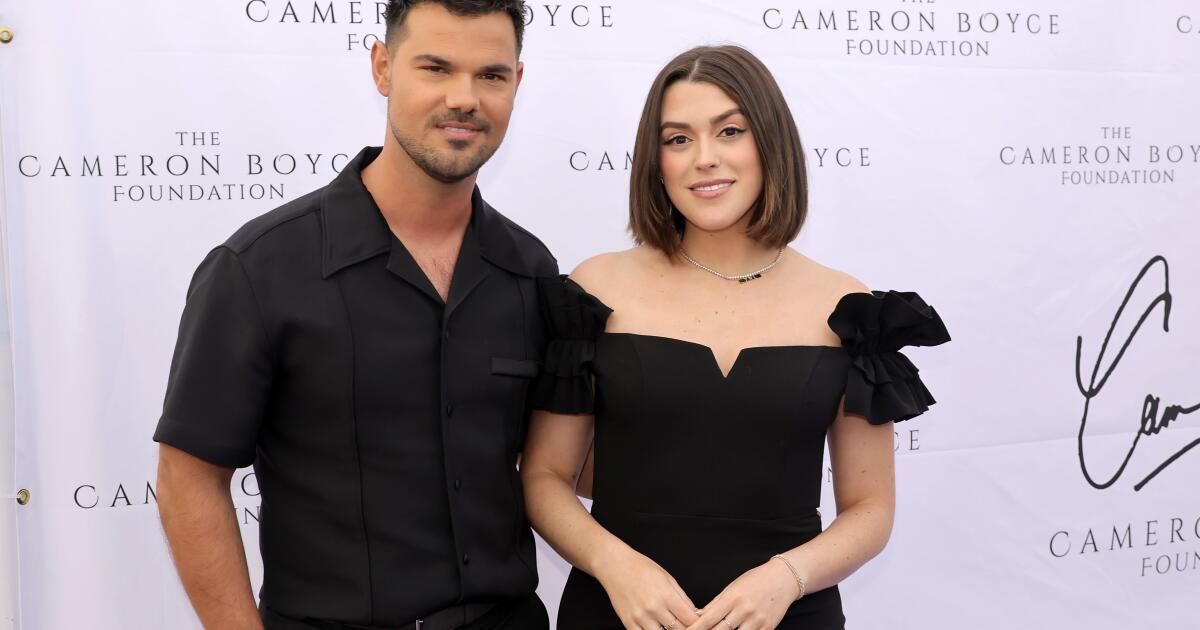
The two Taylor Lautners announce a baby Lautner is on the way

L.A. Affairs: Our night together reminded me of what I’d been missing this entire time

Florida High School Football Rankings: Top 25 teams – Oct. 21

How old is Bo Nix? What to know about Oregon quarterback ahead of 2024 NFL Draft

Cleary's 21 help Le Moyne down Central Connecticut State 69-64 in OT

99th annual Pony Swim held in Virginia

Indiana Members Credit Union announced as new anchor tenant at Bottleworks District

US diplomat Marco Rubio denounces settler violence, tolls in Hormuz strait

Iran-linked hackers have breached FBI Director Kash Patel’s personal emails | CNN Politics

Live: CPAC 2026 Day 2

Video: Will ICE Change Under Its New Leader?

DHS shutdown breakthrough comes at cost for Republicans as funding fights nears end
-

 Detroit, MI1 week ago
Drummer Brian Pastoria, longtime Detroit music advocate, dies at 68
-

 Movie Reviews1 week ago
‘Youth’ Twitter review: Ken Karunaas impresses audiences; Suraj Venjaramoodu adds charm; music wins praise | – The Times of India
-

 Sports6 days ago
IOC addresses execution of 19-year-old Iranian wrestler Saleh Mohammadi
-

 New Mexico5 days ago
Clovis shooting leaves one dead, four injured
-
 Business1 week ago
Disney’s new CEO says his focus is on storytelling and creativity
-

 Technology5 days ago
YouTube job scam text: How to spot it fast
-

 Tennessee4 days ago
Tennessee Police Investigating Alleged Assault Involving ‘Reacher’ Star Alan Ritchson
-

 Texas1 week ago
How to buy Houston vs. Texas A&M 2026 March Madness tickets