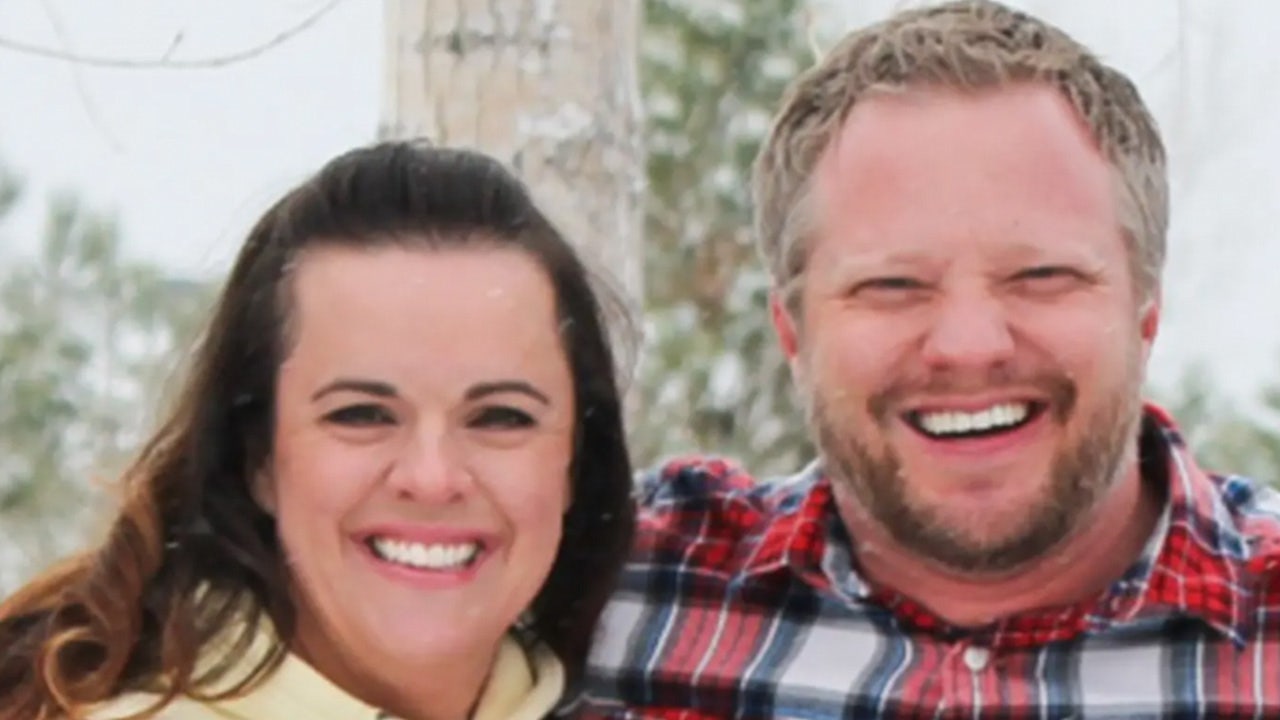
Days after his defense team “suddenly quit” during jury selection, a Colorado dentist accused of poisoning his wife’s protein shakes to start “a new life” with another woman is facing new charges.
The 18th Judicial District Attorney’s office announced in a Friday post on X that James Toliver Craig faces two additional charges of solicitation to commit murder in the first degree and solicitation to commit perjury in the first degree. Last year, he was charged with and pleaded not guilty to first-degree murder in connection with the death of his wife, Angela Craig.
In a separate post, the office wrote that 45-year-old Craig “declined to represent himself,” and that a judge “continued the trial over the People’s objection.” Prosecutors did not elaborate on why Craig faces new charges.
Angela Craig, a 43-year-old mother of six who was married to her husband for 23 years, died in March 2023 of poisoning from cyanide and tetrahydrozoline, the latter a substance found in over-the-counter eye drops, according to the coroner.
COLORADO DENTIST’S MURDER TRIAL PUT ON HOLD AFTER DEFENSE ‘SUDDENLY QUIT’ PRIOR TO JURY SELECTION
Advertisement
Colorado dentist James Craig, right, is accused of fatally poisoning his wife and the mother of his six kids, Angela Craig.(Facebook)
On Thursday morning, Craig’s defense counsel moved to withdraw from the case due to a “professional conflict,” according to the 18th Judicial District Attorney’s Office. The trial had been delayed before and was set to begin last Thursday with jury selection, KDVR reported.
Craig allegedly flew his orthodontist lover from Austin to Denver while his wife was dying, according to a detailed arrest affidavit. The two also reportedly exchanged “sexually explicit emails.”
The charging document described the couple’s troubled marriage, financial difficulties and Craig’s alleged plot to murder her.
Advertisement
“In totality, this investigation has proven that James has gone to great lengths to try and end his wife’s life,” Aurora police Det. Bobbi Olson wrote in the affidavit.
COLORADO DENTIST ACCUSED OF POISONING WIFE TRIED TO GET FELLOW INMATE TO PLANT FAKE SUICIDE NOTES: POLICE
James Toliver Craig is pictured in a mugshot provided by the Aurora Police Department.(Aurora Police Department)
On Feb. 27, Craig created a secret email account, jimandwaffles.com, which he only used on a computer in his now-shuttered Summerbrook Dental Group, investigators said.
Police say Craig searched online for things like “How to make murder look like a heart attack” and “How to make poison” days before his wife searched for symptoms she was having like vertigo, shaking and cold lips.
Advertisement
SIGN UP TO GET THE TRUE CRIME NEWSLETTER
Craig also allegedly researched “undetectable poisons” and purchased some, and he ordered a rush shipment of potassium cyanide even though it was not needed.
COLORADO DENTIST ACCUSED OF POISONING WIFE’S PROTEIN SHAKES TO START NEW LIFE WITH LOVER
Angela and Colorado dentist James Craig in a family portrait. James has been charged with first-degree murder for allegedly poisoning his wife.(Faceboook)
Investigators allege that Craig bought poisons online just before his wife began to experience symptoms that doctors could not find a cause for, but his lawyers have argued there is no direct evidence that he put poison in his wife’s shakes and have accused Olson of being biased against him.
Advertisement
Her sister, Toni Kofoed, told police that Craig had drugged his wife about five years earlier because he had planned to commit suicide and didn’t want her to stop him.
Kofoed also told investigators that the couple’s marriage had always been “tumultuous” and that Craig had “multiple affairs with several women” and had been “addicted to pornography since he was a teenager.”
COLORADO DENTIST ACCUSED OF FATALLY POISONING WIFE ON VERGE OF FINANCIAL RUIN: COURT PAPERS
Two photos of dentist James Oliver, who is accused of murdering his wife, Angela Craig. (Facebook)
Angela Craig told her sister several times over the past 16 years that she planned to leave him, but he always convinced her to stay. The couple was also broke and on the verge of declaring bankruptcy for a second time, the documents allege.
Advertisement
GET REAL-TIME UPDATES DIRECTLY ON THE TRUE CRIME HUB
Angela Craig had complained to her sister that her husband had recently gambled away more than $2,000 on a trip to Las Vegas.
Craig was accused in May of asking a fellow jail inmate to plant letters in his garage and his truck to make it look like his wife was suicidal. Olson said the inmate believed the letters were written by Craig but were meant to appear as if his wife had written them.
According to Olson, Craig offered money to pay the inmate’s bond in order to be released from jail or perform free dental work in exchange for planting the letters, but the inmate decided not to take him up on the offer and reported the incident to authorities, the detective previously testified.
Advertisement
Craig was already charged with first-degree murder and another count of solicitation to commit tampering with physical evidence. He pleaded not guilty to those two charges in November 2023.
His next court appearance is scheduled for Dec. 16.
Fox News’ Stepheny Price and the Associated Press contributed to this report.
The Montana Lottery offers multiple draw games for those aiming to win big.
Here’s a look at July 4, 2026, results for each game:
Winning Powerball numbers from July 4 drawing
17-38-46-50-69, Powerball: 20, Power Play: 2
Check Powerball payouts and previous drawings here.
Advertisement
Winning Lotto America numbers from July 4 drawing
09-17-22-35-37, Star Ball: 05, ASB: 02
Check Lotto America payouts and previous drawings here.
Winning Big Sky Bonus numbers from July 4 drawing
04-13-19-26, Bonus: 07
Check Big Sky Bonus payouts and previous drawings here.
Winning Montana Cash numbers from July 4 drawing
09-13-17-27-33
Advertisement
Check Montana Cash payouts and previous drawings here.
Feeling lucky? Explore the latest lottery news & results
When are the Montana Lottery drawings held?
Powerball: 8:59 p.m. MT on Monday, Wednesday, and Saturday.
Mega Millions: 9 p.m. MT on Tuesday and Friday.
Lucky For Life: 8:38 p.m. MT daily.
Lotto America: 9 p.m. MT on Monday, Wednesday and Saturday.
Big Sky Bonus: 7:30 p.m. MT daily.
Powerball Double Play: 8:59 p.m. MT on Monday, Wednesday, and Saturday.
Montana Cash: 8 p.m. MT on Wednesday and Saturday.
Millionaire for Life: 9:15 p.m. MT daily.
Missed a draw? Peek at the past week’s winning numbers.
This results page was generated automatically using information from TinBu and a template written and reviewed by a Great Falls Tribune editor. You can send feedback using this form.
Genoa was a Mormon trading post in 1851, a decade before Nevada was a state, and it has never been in a hurry since. Up and down the eastern slope of the Sierra Nevada and out across the Great Basin, the towns that grew up around silver strikes, railroad water stops, and dam construction camps mostly emptied out when the work ran dry, and what stayed behind is a string of places where the clock loosened its grip. Opera houses still host the occasional show. Saloons still pour for whoever walks in. The eleven towns below trade Nevada’s neon for porch time, dark skies, and roads with almost nothing on them.
Genoa
Mormon Station State Historic Park in Genoa, Nevada. Image credit Ritu Manoj Jethani via Shutterstock
The Genoa Bar and Saloon has been pouring drinks since 1853, which makes it the oldest bar in the state, and most of its counter and fixtures date to the 1860s. That is the pace of the place in one building. Genoa itself is Nevada’s oldest permanent settlement, and Mormon Station State Historic Park preserves a reconstructed log trading post on the site of the original 1851 station, with a small museum and grounds that fill up for community events through the summer. Genoa Town Park carries the warm-month concert schedule. When the afternoon calls for it, David Walley’s Resort sits a short walk off, with mineral hot springs that have drawn soakers to this corner of the Carson Valley for well over a century.
Ely
Main Street in Ely, Nevada.
At the Nevada Northern Railway Museum, the locomotives are not models behind glass; the collection is one of the most complete original short-line operations left in the country, and the steam excursions run on the same track the copper trains used. That is Ely’s main event, and it sets the tempo. The Ward Charcoal Ovens State Historic Park, just outside town, preserves six beehive-shaped stone kilns that fed the smelters during the mining boom, close enough to reach for an afternoon. The White Pine Public Museum fills in the rest, with mining, ranching, and Native history. Back on Aultman Street, the Hotel Nevada and Gambling Hall has anchored downtown since it opened in 1929, when it was briefly the tallest building in the state, and it still pours a cold one for anyone coming in off Highway 50.
Tonopah
The Mizpah Hotel in Tonopah, Nevada. Image credit Travelview via Shutterstock
On a clear, moonless night at the Clair Blackburn Memorial Stargazing Park, you can pick out more than 7,000 stars with your eyes alone. Most cities show you 25 or 50. The park, off Highway 95 with concrete pads laid out for telescopes, is reason enough to time a visit around the new moon. By day, the Tonopah Historic Mining Park spreads across 100 acres of the original silver works, with tunnels and headframes from the boom that built the town. The Mizpah Hotel, restored and operating since its 1907 opening, holds the Pittman Café for breakfast and the Jack Dempsey Room for a sit-down dinner, named for the heavyweight champion who once worked the hotel as a bouncer.
Virginia City
The historic Main Street in downtown Virginia City, Nevada.
The Comstock Lode silver strike of 1859 turned Virginia City into one of the richest mining centers in the West almost overnight, and the wooden boardwalks and stacked 19th-century storefronts climbing the hillside are what the money left behind. The Virginia and Truckee Railroad runs short excursions along the old mining route, and the Chollar Mine tour takes you underground into the works themselves. The Bucket of Blood Saloon has been serving since 1876, built on the footprint of an earlier saloon right after the Great Fire of 1875 cleared the block. It is an easy place to lose a slow afternoon over a beer.
Boulder City
Downtown streets of Boulder City, Nevada. Image credit gg-foto via Shutterstock
Gambling is illegal here by city ordinance, one of only two Nevada towns where that is true, a rule that traces straight back to why the town exists. The federal government built Boulder City in the early 1930s to house the workers raising Hoover Dam, laying out organized streets and civic buildings, and the planned layout still shapes a walkable downtown. The dam itself draws most visitors, best taken in without rushing. The Boulder City-Hoover Dam Museum, inside the historic Boulder Dam Hotel, tells the Depression-era construction story, and the Coffee Cup Café is the institution where locals linger over breakfast. At Hemenway Park, desert bighorn sheep come down to graze against the backdrop of Lake Mead country.
Caliente
Downtown street in Caliente, Nevada.
The Caliente Railroad Depot, a restored Mission Revival building from the Union Pacific era, now does double duty as the town’s visitor center and the anchor of its main street. The name comes from the hot springs that first drew settlers, and cottonwoods shade a town that sits well off the southern Nevada rush. Two miles south, Kershaw-Ryan State Park tucks shaded picnic areas, spring-fed wading pools, and trails beneath steep canyon walls. The Barnes Canyon trail network gives mountain bikers and hikers desert terrain to work through at their own speed, and Meadow Valley Wash supports cottonwood stands and wildlife unusual for country this dry.
Eureka
Overlooking Eureka, Nevada, on Highway 50.
Sixteen smelters once belched enough smoke over Eureka to earn it the nickname “Pittsburgh of the West,” back when 9,000 people and a hundred-odd saloons crowded the canyon. About 600 people live here now, and the boom-era buildings have the streets mostly to themselves. The Eureka Opera House, built in 1880 on a block cleared by the previous year’s fire, still stages performances under its restored interior. The Eureka Sentinel Museum occupies the original 1879 newspaper building, presses and type cases left where they sat. The Jackson House Hotel has put up guests since the 19th century, and the Owl Club Bar and Steakhouse feeds travelers and locals along Highway 50, the stretch a magazine once branded the Loneliest Road in America.
Gardnerville
Overlooking Gardnerville, Nevada. Image credit G Chapel via Shutterstock
Basque sheepherders settled the Carson Valley, and their cooking is still the reason to plan dinner in Gardnerville, served family-style at long tables in the valley’s old boarding-house tradition. The town grew as a ranching center under the Sierra Nevada, and the Carson Valley Museum and Cultural Center, housed in a former high school, lays out that agricultural and pioneer history. Lampe Park gives the community its gathering ground, with a quiet stream and walking paths and a calendar of seasonal events. Jobs Peak rises over the whole valley, a granite wall that turns gold at the end of the day.
Wells
Landscape surrounding Wells, Nevada. Image credit Famartin – Own work, CC BY-SA 3.0, Wikimedia Commons
The Angel Lake Scenic Byway climbs out of the desert flats into the East Humboldt Range, ending at a glacial lake cupped high against the peaks, good for a morning of fishing or a slow walk along the alpine shore. Wells grew up as a railroad town, and the Front Street Historic District still shows the bones of that era, when this was a working junction on the transcontinental line. The Trail of the 49ers Interpretive Center on 6th Street covers the emigrant routes that funneled through here on the way west, the California Trail travelers who passed through long before the rails did.
Winnemucca
Downtown street in Winnemucca, Nevada.
The Humboldt River made Winnemucca a crossing long before the railroad came through, and the Humboldt Museum tells that regional story through Native, ranching, and transportation exhibits. The town’s other inheritance is Basque: sheepherders settled here in numbers, and the dining room at the Martin Hotel still serves the lamb and the family-style spread that the town celebrates each summer at its Basque Festival. The Winnemucca Sand Dunes draw the off-road and open-desert crowd just outside town. For something quieter, Water Canyon climbs along a running stream into terrain more rugged than the valley floor lets on.
Lovelock
Downtown Lovelock, Nevada. Image credit Ken Lund via Flickr
The Pershing County Courthouse is round, one of the few circular courthouses still in use anywhere in the country, and it sits at the center of town with its early-20th-century architecture intact. Behind it, Lovers Lock Plaza invites visitors to clip a padlock to a chain as a token of commitment, a small local tradition that has become the town’s signature stop. The deeper history is just outside town at Lovelock Cave, where excavations turned up evidence of human use going back thousands of years. Rye Patch State Recreation Area, along the reservoir on the Humboldt River, handles the boating, fishing, and lakeside afternoons.
Wide Open Spaces And Unhurried Places
What these towns share is not scenery so much as arithmetic: the work that built them mostly left, and the people who stayed kept the opera houses, the saloons, and the depots running at a fraction of the old traffic. That is why a steam train in Ely or a 7,000-star sky over Tonopah feels unhurried in a way a manufactured attraction never quite manages. The pace was not designed. It is what is left when the boom moves on and the place decides to stay anyway.
The City Different’s Fourth of July celebration began a little differently this year.
Instead of gathering near Santa Fe Place mall as residents have for years, thousands spread across Franklin E. Miles Park for the city’s first Independence Day celebration at the new venue. They came to watch a drone show debut, celebrating the 250th anniversary of the nation’s founding by blending American symbols with ones signifying New Mexican identity, followed by the traditional fireworks.
The move to Franklin E. Miles Park followed months of debate after the former venue became unavailable due to construction tied to a new hotel. And for some nearby residents, the change exceeded expectations.
Advertisement
Ericka Richards, 44, had shared neighbors’ concerns about bringing one of the city’s largest events to the largely residential neighborhood off of Siringo Road.
“I was worried about the traffic, right? But the city took care of it. … They should do it here more often,” she said, praising the ease of obtaining a residential parking pass through Kiwanis Club organizers and the city’s communication.
“I don’t know about my neighbors,” she added with a laugh. “I have some grumpy neighbors.”
Advertisement
Lewis and his son Aidan Herrera make their way in matching patriotic garb towards live music by Lumpy on Saturday, July 4, 2026, at Franklin E. Miles Park.
Nathan Burton/The New Mexican
Neighbor Jorge Iturralde was even more enthusiastic, hosting friends and family for a backyard party with an unobstructed view of the night’s festivities and grilling elote for passersby.
Advertisement
“I wish it went until midnight,” he said, smiling.
‘A learning curve’
After evaluating a dozen potential sites, city officials settled on the park, arguing its amenities and access to emergency services made it the best fit. The larger space also allowed for a more ambitious production, event organizer Ray Sandoval told The New Mexican on Wednesday.
Not everyone was pleased. One man who declined to give his name watched the celebration from his patio overlooking the park, saying he did not receive enough notification from the city about the event.
Transportation also drew mixed reviews.
Advertisement
The city operated shuttle buses from three locations. As of 7:15 p.m., about 250 people had used the service, city spokesperson Peter Olson said.
“So far, so good,” he said, noting no incidents had occurred but the city had “a lot of apparatus pre-staged” if needed.
For Cory Blount, 46, and his cohort of fellow passengers, the shuttle ride itself went smoothly.
Finding the festival afterward did not.
Advertisement
Nathan Montoya, 3, catches a ride with Carlos Montoya while skateboarding at Franklin E. Miles Park during the Fourth of July celebration on Saturday.
Nathan Burton/The New Mexican
Advertisement
After getting off the bus, Blount and his group walked aimlessly, finding no signs directing attendees where to go. They eventually wandered through Nava Elementary School, inadvertently entering behind-the-scenes areas near the fireworks launch site and drone-staging area and attracting questions from event personnel.
“I don’t know what’s going on,” Blount said as the group searched for a way back into the festival.
An event official eventually guided them to the proper entrance.
“It wasn’t a very good, like, ‘OK, this is where you go,’ type thing,” he said. “Even now, like, we got this far and they’re like, ‘OK, you guys shouldn’t be here.’ “
Still, he was understanding.
Advertisement
“It’s the first year they did this here,” Blount said. “There’s going to be a learning curve there.”
‘Santa Fe should be proud’
Backstage, Sandoval hurried between staff members, finishing an energy drink in barely over a minute, fielding questions and assigning last-minute tasks to the mass of staff he managed for the event.
“It’s always like this,” he said.
“But it looks good and it’s working out well,” he added, glancing toward the growing crowd. “And knock on wood, the neighbors are still in a good place.”
Advertisement
Santa Fe police said the event went smoothly on their end, with one drunken-driving arrest and no major incidents.
Carmella Velarde, who works for Phoenix Security, said many nearby residents went out of their way to support staff throughout the day.
“I’ve had neighbors come out, give me waters. They bring me paper towels. … They brought me a chair,” she said. “These neighbors, I would love to live in a neighborhood like this.”
Advertisement
Pop-its fireworks entertain children as they are thrown against the ground during July 4 celebrations Saturday at Franklin E. Miles Park.
Nathan Burton/The New Mexican
“There are some that are upset because they can’t get into their place or they can’t get out,” she added. “But everybody was given a pass.”
Advertisement
When the show started Velarde, of Chimayó, stood still and looked up along with the thousands of others gathered, focused on the overhead pops, flashes and beacons of light from seemingly every direction.
The park became packed. Kids crowded jungle gym equipment, weaved on scooters through pickup games on the basketball court and dodged sparklers tossed in the bowl of the skate park.
“I have never seen such a wonderful show,” she said as flashes illuminated her in the darkness of her security post.
Velarde said Santa Fe was fortunate to still have fireworks after communities such as Española canceled displays this year amid drought concerns and a request from Gov. Michelle Lujan Grisham.
“Santa Fe should be proud to have fireworks,” she said.
Advertisement
‘We’re the City Different’
Headlining the night was a 400-drone aerial display by Sky Elements, the Guinness World Record-holding company that operates the nation’s largest drone fleet, followed by a professional fireworks show.
Each drone lifted from the basketball courts of Nava Elementary, lights dimming and changing colors in unison to create animated scenes across the night sky.
The show blended distinctly New Mexican and American imagery.
The Liberty Bell rang as the bells of the Cathedral Basilica of St. Francis of Assisi sounded. Norteño guitar music gave way to country. Rascal Flatts’ Life Is a Highway played as drones bounced to form a hopping lowrider.
Advertisement
Don Diego de Vargas knelt before Our Lady of Guadalupe to the sound of hymns. The white outline of an avian Chaco Canyon petroglyph transformed into a bald eagle, pyrotechnics shooting from its wings.
One of Sandoval’s favorite moments came when a transforming eagle emerged overhead.
“One of my coup d’etats,” he said. “It took forever to do.”
The goal, he said, was to celebrate both the country’s approaching 250th anniversary and Santa Fe’s distinct identity.
Advertisement
Lana Bolin of Lumpy serenades the crowd during Fourth of July celebrations Saturday at Franklin E. Miles Park.
Nathan Burton/The New Mexican
Advertisement
“I know folks have mixed feelings right now about the United States and what’s going on, so I think we need to remind them of those ideals that the United States was founded on,” Sandoval said. “But I also think we need to harken back to the other things that make us proud.”
“We’re the City Different,” he continued. “We are very, very proud to be Americans, but at the same time, we’re very, very proud of our city, and we’re very, very proud of our state.”
Jade Caya, a project coordinator who served as a liaison between Kiwanis and Sky Elements, said the greatest challenge wasn’t technical but ensuring the creative team could “[encapsulate] everything that Ray wanted to convey.”
“It definitely takes a village,” she said.
One of the highlights of the show was a short scene painting the sky with 17-year-old Josiah Montoya of Ohkay Owingeh, a senior at St. Michael’s High School and a deer dancer since childhood.
Advertisement
The drones depicted him on stilts reprising his role as deer dancer — an image he said represents prayer for rain and honoring his ancestors.
Asked what it meant to see Indigenous representation in a Fourth of July celebration, he paused for a few moments.