Colorado
NFL scouting is broken. Colorado’s Shedeur Sanders is all the proof you need | Andrew Lawrence


NFL scouting is broken, and Shedeur Sanders is the proof. Everything about him screams future star quarterback, and yet teams would sooner assume the worst.
Make no mistake: there is no prospect in this year’s draft who is better equipped to turn around a struggling franchise than the 23-year-old Texan, a savior to not one but two college fanbases. The last four years saw him restore the proud football tradition at Jackson State and put Colorado back on the college football map. Sanders did this despite skeptics casting doubt on his ability to make the jump up from competing against small historically Black schools to playing against major college powers in the Pac 12 and Big 12 conferences. Last year he led a 9-4 turnaround at Colorado, the school’s first winning season in seven years, while snapping a four-year drought of postseason bowl appearances.
Although a touch slight at 6ft1in and 212lb, Sanders has nonetheless proven to be durable, missing a grand total of two games in his four years as a starter. All the while Sanders rated among the nation’s most prolific throwers while at Jackson State (which competes in college football’s secondary Football Bowl Subdivision) and at Colorado (which competes in college football’s biggest stage, the Bowl Championship Subdivision). In his senior season Sanders paced the Big 12 in completion percentage (74%), yards (4,134) and touchdowns (37) on the way to being named the conference’s offensive player of the year. What’s more, Sanders has pedigree. He’s a coach’s kid – scouts love coaches’ kids! – and the pros will mark the first time Sanders plays for a head coach who isn’t also his father. That father? None other than NFL hall of famer Deion Sanders: Colorado’s Coach Prime, the feared shutdown cornerback who caught passes and played Major League Baseball on the side.
Shedeur figures to be among the first three quarterbacks picked at next week’s NFL draft behind the University of Miami’s Cam Ward and perhaps even Ole Miss’ Jaxson Dart as well. But where Dart (who excelled at two schools) is being hyped as a sleeper pick and Ward (who excelled at three) appears to be the consensus top pick, Sanders keeps sliding down the draft board. Most projections have him down as a bottom-10 pick; many NFL scouts haven’t even given him a first-round grade. An anonymous NFC team executive who spoke to ESPN dismissed Sanders as “a fringe starter” in the mold of Teddy Bridgewater – the former Louisville star who has spent the majority of his decade-long pro career as a backup. Scouts further say that Sanders can be slow to make up his mind under pressure and even slower to react when overwhelmed. (At Jackson State, Sanders was among college football’s most sacked starters.)
But more than Sanders holding on to the ball too long, teams really don’t like that Sanders isn’t desperate for a job. He comes from money already; in fact, Coach Prime – who has remained a sought-after pitchman in the decades since his dual playing prime – just signed a $54m extension that puts him in league with college football’s highest-paid coaches. At one point only USC basketball prodigy Bronny James was making more money in name, image and likeness endorsement deals than Shedeur. Famously, Shedeur tootled around campus in exotic cars and celebrated big plays by flashing a diamond-encrusted watch. Teams look at Shedeur and see more than just a chip off the old block; they see something they’re not used to seeing in Black quarterback prospects: a nepo baby on a Rocky Mountain confidence high.
If those teams could set Shedeur’s luxury accessories to the side for a moment, they might appreciate him for what he truly is – maybe the best-nurtured NFL quarterback prospect ever. Consider: top draft picks Peyton and Eli Manning had their father, Archie, for a role model – but he was no better than a solid NFL starter with the New Orleans Saints through the 1970s. John Elway’s father, Jack, was a respected college football coach – but he got hired at Stanford the year after John left school for the 1983 draft. Andrew Luck’s dad, Oliver – a former quarterback for the Houston Oilers – moved to Europe to launch his post-playing career as a football executive. He wasn’t an especially hands-on coach for Andrew, a youth soccer player before he was the top pick in 2012.
Meanwhile, the youngest Sanders son has been at his father’s knee from the beginning, barnstorming the country with Deion’s Texas-based youth football teams. In between working as an NFL Network analyst, Deion took a job as the offensive coordinator at Shedeur’s Dallas-area high school expressly to continue guiding his football career. When Deion left that post to take the head coaching job at Jackson State, Shedeur and his older brother Shilo were his first recruits. (“I couldn’t pass up an opportunity to help level the playing field & pursue equality for HBCU’s!” Shedeur wrote after his commitment was announced. “Dad I got your back!”) The gravitational force of Coach Prime’s personality has given Shedeur access to some of the brightest minds in the game. Tom Brady has been mentoring Shedeur his entire college career, and former NFL coach Pat Shurmur was his offensive coordinator at Colorado.
Shedeur wasn’t just productive on the field. Colorado was in the midst of a 20-year doldrums before Shedeur turned up on the Boulder campus with his whole family. Shedeur turned Travis Hunter, a dual-threat cornerback, into his top receiver; now the Heisman-winner projects as a top three pick in the draft. Teammates praise Shedeur’s leadership and toughness. At Colorado’s pro day showcase for league scouts earlier this month Shedeur took snaps from a young equipment manager named Samantha Burrows – the conspicuous woman among the crowd of football men on the field. (Sanders wanted to make a point of showcasing his rapport with Burrows.) A month earlier Shedeur made headlines at the NFL combine for his 3.9 GPA. Shedeur never caused trouble off campus, never ran into trouble farther afield. In that respect he’s a lot like his father, who never put a foot wrong off the field even as his Dallas Cowboys teammates were setting the NFL standard for bad behavior.
But the main hang-up scouts seem to have with Shedeur is that he veers from the Black quarterback archetype. Unlike Ward, he doesn’t wow with arm strength and foot speed. He stands in the pocket and delivers a catchable ball time and again. If scouts were honest in their appraisals of Shedeur, they’d be comparing him favorably with Peyton Manning. In two-minute drill situations alone, Shedeur has a career 92.3 passer rating against top-level opponents – the highest-ever mark recorded by Pro Football Focus. He was even more efficient in third-down situations last year, his 64% overall completion percentage jumping to 85% in short-yardage situations.
If NFL scouting was an actual science, Sanders would be the no-brainer, eminently justifiable top pick. Instead, teams trip over one another to find reasons to talk themselves out of taking him off the board early. Last month the excuse was: most of the teams picking in the top-10 had more urgent needs to address. This month, it’s: he’s a terrible interview. To hear Shadeur tell it, teams really don’t like when he channels his father and turns the tables on them either. “When I go visit these coaches and when I go to all these different franchises, I ask them truly what I think and how I feel,” Shedeur recently told NFL Network. “Some get offended, some like it, some don’t. Make some people uncomfortable, some people invite that. They know what type of person and what type of player they’re gonna get out of me, so I just have to make sure, you know, what type of culture or what type of dynamic I’m going to have with them also.”
The Pittsburgh Steelers, rumored to be interested in trading up from the 21st pick, are among a handful of teams who are genuinely bullish on Shedeur – not least because he’d be a better long-term option than 41-year-old Aaron Rodgers or a second tour of Mason Rudolph. The Saints, who pick ninth, have only really started seriously considering Shedeur since incumbent starter Derek Carr was recently reported to have suffered a serious shoulder injury that could stall his availability for the 2025 season. This week the New York Giants, also mired in the Rodgers sweepstakes, worked out Shedeur again in Colorado – but the team is holding its cards close. The farther Shedeur drops, the more you wonder if he isn’t purposefully turning scouts off so he can wind up playing for his mentor Brady in Las Vegas. Or you wonder if the Giants aren’t in for another round of Saquon Barkley-level regret.
Really, any team would be lucky to land Shedeur. He has the skills, the swagger and a family name that he absolutely can’t let down. It’s a shame the scouts are too blinkered by their own hangups to spot a sure thing.



DENVER – The Colorado Avalanche Hockey Club announced today the team has signed defenseman Brett Kulak to a five-year contract extension through the 2030-31 season.
Kulak, 32, was originally acquired by the Avalanche in a trade with Pittsburgh on Feb. 24, 2026 and tallied three points (0g/3a) in 27 regular-season showings for Colorado over 19:08 of average time on ice per game. His 2025-26 regular season consisted of playing for the Edmonton Oilers and Penguins in addition to the Avalanche where he totaled 12 points (1g/11a) in 83 contests. Kulak was the only NHLer to skate in 83 games last season. Additionally, he dressed in his 600th career NHL contest on Nov. 15 at Carolina and notched his 100th career assist on Dec. 30 vs. Carolina.
The 6-foot-1, 192-pound defenseman was in the lineup for all 13 Stanley Cup Playoff games for the Avalanche in 2026 and chipped in five points (1g/4a) and logged 20:38 of time on ice per game. The goal was his first with the Burgundy and Blue, regular season or postseason, and it came as the overtime-winner in Game 5 of the Second Round (May 13) to send the Avalanche to the Western Conference Final. It was the third time a defenseman scored a series clinching overtime goal in Avalanche/Nordiques history and the first since Sandis Ozolinsh (Game 6 of the 1996 Conference Semifinal) did it 30 years to the date prior to Kulak’s. Additionally, Kulak’s marker was the 10th time an Avalanche/Nordiques skater sent the team to the next round with an overtime tally and the first instance since Artturi Lehkonen in Game 4 of the 2022 Western Conference Final (June 6, 2022).
A native of Edmonton, Alberta, Kulak has registered 137 points (29g/108a) in 663 career regular-season games with Colorado, Pittsburgh, Edmonton, the Montreal Canadiens and Calgary Flames from 2014-26. The last 370 of those games have come consecutively and he enters 2026-27 with the ninth-longest active “Iron Man” streak in the NHL. The left-shot defenseman has also added 29 points (4g/25a) over 111 career Stanley Cup Playoff contests and has been a member of three teams that have made it to the Stanley Cup Final (2023-24 and 2024-25 Oilers, 2020-21 Canadiens). Kulak’s 111 playoff games lead all NHL defensemen since making his postseason debut in 2020 and are second among all skaters in that span behind only Corey Perry (126).
Originally drafted by the Flames in the fourth round (105th overall) in the 2012 NHL Draft, Kulak appeared in 136 AHL games over parts of the 2012-19 campaigns (13g/41a). He was also a member of the then-ECHL Colorado Eagles for part of 2014-15. Prior to turning pro, Kulak played for the Western Hockey League’s Vancouver Giants from 2010-14 and amassed 128 points (35g/93a) in 216 regular-season contests.

COLORADO SPRINGS, Colo. (KKTV) – The Colorado Springs Police Department (CSPD) is searching for a missing child.
CSPD said 11-year-old Emilio Gerardo was last seen Thursday around 8:06 p.m. near North Carefree Circle and Peterson Road.
Gerardo is described as a 4-foot-8 and 65-pound Hispanic male with brown hair and brown eyes.
Police said he was last seen in a black shirt, black pants and black Converse shoes. They said he may have a VR headset with him.
Police said he could be in the area of Sand Creek High School or Remington Park.
If you see Gerardo or know where he may be, contact the Colorado Springs Police Department at 719-444-7000.
Copyright 2026 KKTV. All rights reserved.
Colorado
Kids escape unscathed after van slips off Colorado mountain road and down Blue River embankment

A van carrying campers from a hike near Blue River rolled down an embankment Thursday afternoon, but everyone inside escaped without major injuries. According to the Keystone Science School, the 15-passenger van was transporting 13 campers and two adults back from Mohawk Lakes when it slid off a wet road and rolled over.
Emergency crews responded to Spruce Creek Road after receiving reports of a single-vehicle rollover.

“We’re fortunate that it was low speed, and there was no intrusion into the passenger cabin,” Matt Benedict, division chief of wildfire and community preparedness for Red, White and Blue Fire said.
Investigators believe muddy conditions created by recent rainfall contributed to the crash. The van rolled down a steep embankment before coming to rest against a tree. Two people suffered minor injuries, but neither required transportation to a hospital, according to fire officials.
Keystone Science School confirmed emergency responders arrived quickly and that no major injuries were reported.
“The safety and well-being of our campers and staff is our highest priority,” Executive Director Eric Rightor said in a statement. “We are grateful that there were no major injuries, and we are committed to fully supporting all those involved and their families.”
Fire officials also credited seatbelt use for helping protect those inside the vehicle. “We always encourage everyone to wear their seatbelts… and they did. And everybody left,” Benedict said.
The Keystone Science School is located in Summit County.
-

 Health6 minutes ago
Common food preservatives may raise blood pressure and heart risks, study suggests
-

 Sports9 minutes ago
Who is Alyssa Thomas? WNBA star suspended for punching Caitlin Clark in the throat
-

 Technology14 minutes ago
Fox News AI Newsletter: Waymo’s robotaxi recall
-
Business21 minutes ago
Cisco to lay off more than 400 workers in California
-
 Entertainment24 minutes ago
Tom Sandoval’s girlfriend Victoria Robinson arrested after patio fire pit altercation
-

 Lifestyle29 minutes ago
Swatch Seeks Damages From Samsung Over Trademark Infringement, Ft Reports
-
 Politics36 minutes ago
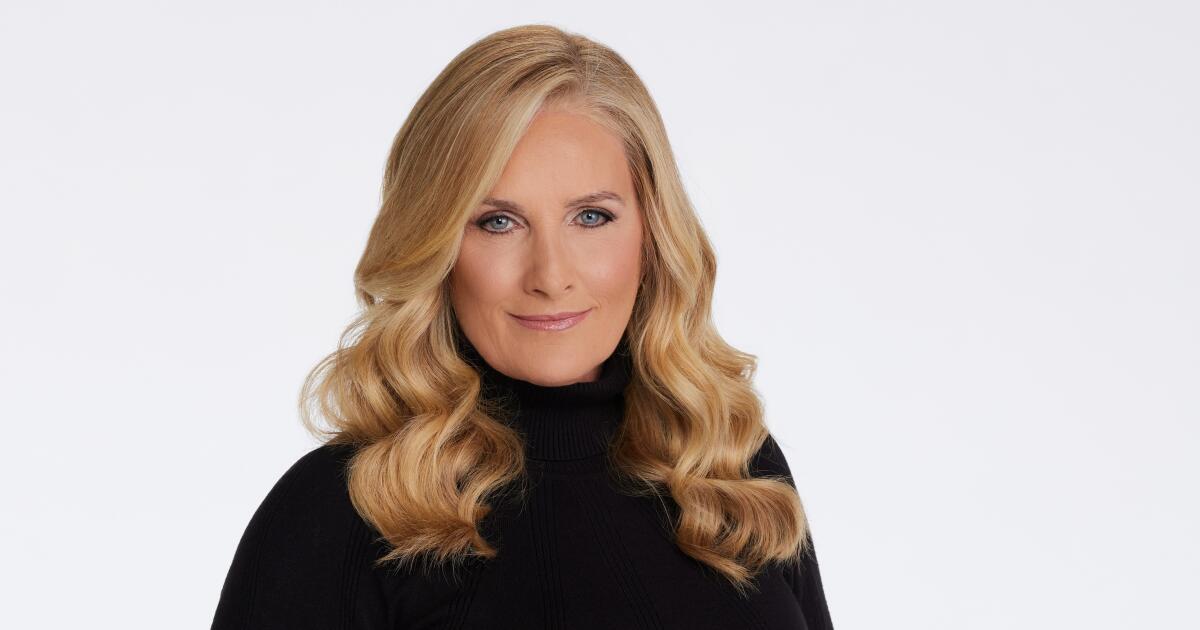
MS NOW anchor Alex Witt to exit as network reduces live weekend programming
-
 Sports44 minutes ago
Parents of ex-NFL player Doug Martin allege excessive force by Oakland police in wrongful death suit

