Colorado
GUEST COLUMN: Principles for Guiding River Water Negotiations – Calexico Chronicle


Next week is the annual gathering of “water buffaloes” in Las Vegas. It’s the Colorado River Water Users Association convention. About 1700 people will attend, but probably around 100 of them are the key people—the government regulators, tribal leaders, and the directors and managers of the contracting agencies that receive Colorado River water.
Anyone who is paying attention knows that we are in critical times on the river. Temporary agreements on how to distribute water during times of shortage are expiring. Negotiators have been talking for several years but haven’t been able to agree on anything concrete.
I’m just an observer, but I’ve been observing fairly closely. Within the limits on how much information I can get as an outsider, I’d like to propose some principles or guidelines that I think are important for the negotiation process.
See also

- When Hoover Dam was proposed, the main debate was over whether the federal government or private concerns would operate it. Because the federal option prevailed, water is delivered free to contractors. Colorado River water contractors do not pay the actual cost of water being delivered to them. It is subsidized by the U.S. government. As a public resource, Colorado River water should not be seen as a commodity.
- The Lower Basin states of Arizona, California, and Nevada should accept that the Upper Basin states of Colorado, New Mexico, Utah, and Wyoming are at the mercy of Mother Nature for much of their annual water supply. While the 1922 Colorado River Compact allocates them 7.5 million acre-feet annually, in wet years, they have been able to use a maximum of 4.7 maf. During the long, ongoing drought, their annual use has been 3.5 maf. They shouldn’t have to make more cuts.
- However, neither should the Upper Basin states be able to develop their full allocation. It should be capped at a feasible number, perhaps 4.2 maf. As compensation, Upper Basin agencies and farmers can invest available federal funds in projects to use water more efficiently and to reuse it so that they can develop more water.
- Despite the drought, we know there will be some wet years. To compensate the Lower Basin states for taking all the cuts in dry years, the Upper Basin should release more water beyond the Compact commitments during wet years. This means that Lake Mead and Lower Basin reservoirs would benefit from wet years and Lake Powell would not. In short, the Lower Basin takes cuts in dry years; the Upper Basin takes cuts in wet years.
- Evaporation losses (water for the angels) can be better managed by keeping more of the Lower Basin’s water in Upper Basin reservoirs instead of in Lake Mead, where the warmer weather means higher evaporation losses. New agreements should include provisions to move that water in the Lower Basin account down to Lake Mead quickly. Timing is of the essence.
- In the Lower Basin states, shortages should be shared along the same lines as specified in the 2007 Interim Guidelines, with California being last to take cuts as Lake Mead water level drops.
- On the home front, IID policy makers should make a long-term plan to re-set water rates in accord with original water district policy. Because IID is a public, non-profit utility, water rates were set so that farmers paid only the cost to deliver water. Farmers currently pay $20 per acre foot, but the actual cost of delivering water is $60 per acre foot. That subsidy of $60 million comes from the water transfer revenues.
- The SDCWA transfer revenues now pay farmers $430 per acre-foot of conserved water, mostly for drip or sprinkler systems. Akin to a grant program, this very successful program generated almost 200,000 acre-feet of conserved water last year. Like any grant program, it should be regularly audited for effectiveness.
- Some of those transfer revenues should be invested in innovative cropping patterns, advanced technologies, and marketing to help the farming community adapt to a changing world. The IID should use its resources to help all farmers be more successful, not just a select group.
- Currently, federal subsidies pay farmers not to use water via the Deficit Irrigation Program. We can lobby for those subsidies to continue, but we should plan for when they dry up. Any arrangement that rewards farmers but penalizes farm services such as seed, fertilizer, pesticide, land leveling, equipment, and other work should be avoided.
- Though the IID has considerable funding from the QSA water transfers, it may need to consider issuing general obligation bonds as it did in its foundational days for larger water efficiency projects such as more local storage or a water treatment plant to re-use ag drain water.
Much progress has been made in using water more efficiently, especially in the Lower Basin states, but there’s a lot more water to be saved, and I believe collectively that we can do it.



Damage assessments are still ongoing for homes and businesses affected by the Aspen Acres Fire in southern Colorado, but over 200 homes have been confirmed destroyed so far. The United Way of Southern Colorado is working to raise relief funds for those affected and says it’s making progress towards its fundraising goal.
In an update on Wednesday afternoon, Pueblo County Sheriff David Lucero said they’ve assessed approximately 67% of the properties affected in the county. Authorities have confirmed the loss of 192 homes and four commercial structures so far and are working to contact property owners as quickly as possible.
Lucero urged everyone affected by the fire to use the survivor portal for more information on assistance.
Custer County Sheriff Rich Smith says they’ve lost approximately 83 homes so far, almost 2% of the county’s homes. The worst hit area is along the Highway 165 corridor, Smith added. He said that authorities don’t expect any new evacuation areas, but are not yet ready to release the existing evacuation orders.
Smith said a hotline is available during business hours for affected Custer County Residents to ask questions. He urged residents to contact them at (719) 467-0271 and advised they may need to leave a voicemail if the line is busy due to the high number of calls.
A flash flood watch is in effect for areas near the burn scar, which could affect nearby homes.
The President of the United Way of Southern Colorado, Shanna Farmer, said the organization is working to raise wildfire relief funds for those affected. Over the last few days, they have reached just over $417,000 of their $10 million goal.
“It has been incredible, the number of individuals and companies who have come out to support, to provide matches, and to provide innovative ways to raise those funds,” said Farmer. “And so, I encourage anyone who is willing to work with us on a corporate, business, or individual level to please reach out because it is going to take all of us to help rebuild.”
Farmer said that the community not only needs help with their immediate needs but also long-term support. She urged anyone interested in donating to visit their website.

The Pueblo County Sheriff’s Office says anyone who has evacuated needs to contact the Disaster Assistance Center located at 29 Lehigh Ave. in Pueblo. The center is open between 9 a.m and 6 p.m. and provides multiple resources for those forced to evacuate.
Residents must also visit the center to obtain a re-entry pass, which will allow them to return home once evacuation orders have been lifted. A photo ID and proof of residency are required. Visitors can sign up online to reserve a place in line for faster service.

A powerful search engine that organizes and provides access to vast information on the internet.
Colorado
Julian Lewis Says Deion Sanders’ Colorado ‘Wasn’t Really Looking at Defenses Much’ Last Season

Colorado quarterback Julian Lewis made a stunning admission that could explain the team’s 3-9 finish to the 2025 season.
While speaking to ESPNU at Big 12 media days, Lewis was asked what the biggest difference was between last year and this year, and he revealed that the Deion Sanders-coached Buffaloes typically didn’t watch film during his first season with the team.
“My play, I’m actually looking at the defenses now,” Lewis said. “Last year, we wasn’t really looking at defenses much, just kind of high school free-balling, just out there playing football. But it’s a lot bigger than that now, so it should be fun.”
Before taking a redshirt year, Lewis played in four games as a true freshman with two starts and threw for 589 yards, four touchdowns and no interceptions while completing 55.3 percent of his passes. He should fare even better this season with the benefit of film study.
Lewis will enter the 2026 campaign as Colorado’s starting quarterback, so he will have the opportunity to show his improvements when the Buffaloes open the year against Georgia Tech on Sept. 3.
-
Culture40 minutes ago
Which Version of the ‘Odyssey’ Should You Read?
-
 Lifestyle43 minutes ago
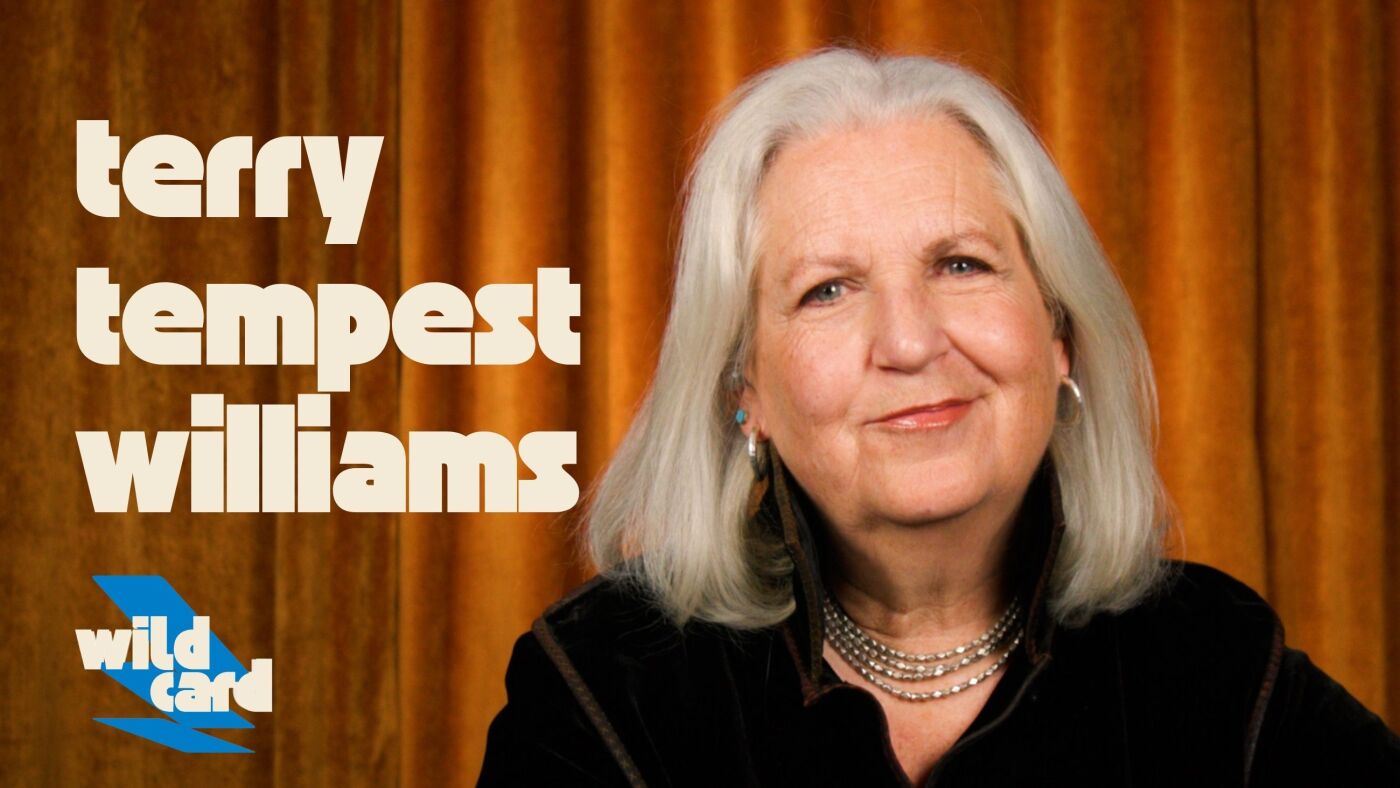
Terry Tempest Williams on why women with big ideas get labeled ‘crazy’ : Wild Card with Rachel Martin
-

 Technology55 minutes ago
Google’s Nest Thermostat has hit its best price of the year
-

 World58 minutes ago
Argentinian flight instructor jumps to death from plane, 22-year-old student forced to land alone
-

 Politics1 hour ago
Omar’s disclosures erased millions, leaving her with potential negative net worth. She won’t explain why.
-

 Health1 hour ago
Dr Oz links obesity to chronic disease surge, says GLP-1s can ‘jumpstart’ better health
-

 Sports1 hour ago
Pirates star pitcher makes unfortunate history after being taken out in middle of perfect game bid
-

 Technology1 hour ago
Medical identity theft follows you into the doctor’s office

