Colorado
Gameday guide: How to watch, what to know about Utah basketball vs. Colorado


Every game matters for Colorado men’s basketball the rest of the way.
As one of the final four teams projected to make the NCAA Tournament by ESPN’s Joe Lunardi, the Buffaloes don’t have much margin for error at this point in the season. Colorado went 4-4 in the month of January which included painful losses (Arizona State, Cal) and impressive victories (Oregon, Washington).
February begins with a road test at Utah against a Utes team that, like the Buffs, hasn’t lost at home this season (11-0). It’s a matchup that could give Colorado a signature win away from the CU Events Center.
Here’s a look at everything to know about Saturday’s game:
What time does Colorado vs. Utah basketball start?
- Date: Saturday, Feb. 3
- Start time: 3 p.m. MT
What channel is the Colorado vs. Utah basketball game on?
The Colorado and Utah game will be broadcast on the Pac-12 Network.
What are the records, rankings?
Colorado enters Saturday’s game at 15-6 (6-4 Pac-12) but is just 1-5 on the road this season. Utah sits at 14-7 (5-5 Pac-12) after losing to Washington on Jan. 27.
Neither team is ranked in the latest AP poll.
Who are the coaches?
Craig Smith is in his sixth season as Utah’s head coach and is 42–42 (.500) during that span. Tad Boyle is in his 14th season as Colorado’s head coach and is 287-178 (.617) since 2010-11.
Series history
Colorado leads the all-time series 33-30 (6-4 in last 10 matchups) but the Buffs are just 10-20 all-time on the road at Utah.
Stadium information
The game will be at the Jon M. Huntsman Center in Salt Lake City, Utah. The Huntsman Center has a capacity of 15,000.
Who are the top players to watch?
Here are some players for each team who will be key to the game:
UTAH
- Branden Carlson: Carlson is the Utes’ leading scorer (16.7 points per game) and the big man has made at least one 3-point field goal in 10 consecutive games. The 7-foot senior exploded for 34 points during a win over Washington on New Years Eve and has an eight-game active streak with at least one block (1.5 per game).
- Gabe Madsen: Madsen is shooting an impressive 42.3% from deep this season while averaging 12.6 points per game (second on team). The 6-foot-6 guard leads the Utes in steals (1.5 per game) and can get hot in a hurry, evidenced by his 20-point second half during a win against Washington State on Dec. 29.
- Deivon Smith: The 6-foot senior missed the early portion of the season but has reached at least 20 points in two of his last three games. Smith notched a triple-double (16 points, 10 rebounds, 11 assists) against Stanford on Jan. 14 and flirted with another one a week later vs. Oregon (24 points, 11 rebounds, eight assists).
COLORADO
- KJ Simpson: Simpson’s 25 points during last week’s loss to Washington State were the most he’s scored since dropping a career-high 34 points in 37 minutes on New Years Eve. The 6-foot-2 guard, one of 20 late season watch-list members for the 2023-24 John R. Wooden Award, leads Colorado in points (19.2 per game), assists (4.3 per game) and steals (1.9 per game).
- Tristan da Silva: da Silva, a projected first-round pick in the 2024 NBA Draft, hasn’t quite re-gained his early-season form since missing three games with a ankle injury (five straight games below 20 points). Nonetheless, the 6-foot-9 senior from Munich, Germany, is second on the team in points (15.6 per game) and assists (2.8).
- Cody Williams: Williams failed to make a field goal (0-4) for the first time in his young college career during last weekend’s loss to Washington State. It snapped a streak of nine consecutive games where the 6-foot-8 freshman scored in double figures. A projected top-10 pick in the 2024 NBA Draft, Williams is still averaging 14.7 points (third on team) and leading the Buffs in field goal percentage (57.9%) and 3-point percentage (52%).
Follow Colorado Buffaloes sports reporter Scott Procter on Twitter.



A powerful search engine that organizes and provides access to vast information on the internet.
Colorado
Julian Lewis Says Deion Sanders’ Colorado ‘Wasn’t Really Looking at Defenses Much’ Last Season

Colorado quarterback Julian Lewis made a stunning admission that could explain the team’s 3-9 finish to the 2025 season.
While speaking to ESPNU at Big 12 media days, Lewis was asked what the biggest difference was between last year and this year, and he revealed that the Deion Sanders-coached Buffaloes typically didn’t watch film during his first season with the team.
“My play, I’m actually looking at the defenses now,” Lewis said. “Last year, we wasn’t really looking at defenses much, just kind of high school free-balling, just out there playing football. But it’s a lot bigger than that now, so it should be fun.”
Before taking a redshirt year, Lewis played in four games as a true freshman with two starts and threw for 589 yards, four touchdowns and no interceptions while completing 55.3 percent of his passes. He should fare even better this season with the benefit of film study.
Lewis will enter the 2026 campaign as Colorado’s starting quarterback, so he will have the opportunity to show his improvements when the Buffaloes open the year against Georgia Tech on Sept. 3.

State and federal agencies are starting to reopen public lands, state wildlife areas and a segment of the Colorado River that were closed in light of the Snyder Fire in Mesa County.
Stage 2 fire restrictions — banning all open fire or flames, including charcoal grills and wood-burning stoves — remain in effect as extreme fire danger, spurred on by hot and dry conditions, persists across the region.
The Snyder Fire started on Friday, June 26, when several smaller fires burning on the Colorado-Utah border combined. As of July 7, the fire was 98% contained after burning over 30,200 acres and killing three wildland firefighters.
With fire activity decreasing and containment increasing, Colorado Parks and Wildlife and the Bureau of Land Management shared their plans Tuesday to reopen lands impacted by the wildfire.
Parks and Wildlife said in a news release that it, alongside the Bureau of Land Management, had lifted the closure for public access and downstream recreation on the Colorado River, starting at the James M. Robb-Colorado River State Park in Fruita and extending to the Utah state line. It also reopened the boat ramp at the Fruita section of the James M. Robb-Colorado River State Park in Fruita to downstream traffic.
The state agency’s Horsethief State Wildlife Area in Fruita and the Loma Boat Launch State Wildlife Area also reopened.
The BLM said in a news release that all lands within the perimeter of the Snyder Fire burn area remain closed to ensure public and firefighter safety.
“The burned landscape — including vegetation — remains dynamic and unpredictable as it naturally recovers from the fire impacts. This order is effective immediately and will remain in effect until the order is rescinded,” the BLM said.
Both agencies also warned that fire danger remains extremely elevated and Stage 2 fire restrictions are in place.
A map of current federal and state fire restrictions is available on the Rocky Mountain Area Interagency Fire Restriction Dashboard or by visiting DFPC.Colorado.Gov/sections/wildfire-information-center. The Colorado Trails Explorer (or COTREX) app also has wildfire closure alerts.
Under current conditions, Parks and Wildlife advised the following actions to prevent sparking wildfires:
- Use established rings: Where permitted, only build campfires inside permanent metal fire rings in designated campgrounds.
- Clear nearby debris: Remove all dry grass, leaves and pine needles within a 10-foot radius of any flame.
- Drown and stir: Extinguish fires completely with water, stir the ashes, and ensure the debris is cold to the touch.
- Watch campfires constantly: Never leave a fire or portable stove unattended. If you see an unattended fire, call 911.
- Keep vehicles off brush: Avoid parking or idling cars on tall, dry grass where hot exhaust systems can ignite a fire.
- Secure towing equipment: Ensure trailer safety chains do not drag and spark against asphalt. Check them at every stop.
The BLM added that under its Stage 2 restrictions, smoking is prohibited except in an enclosed vehicle or building, a developed recreation site, or while stopped in an area at least three feet in diameter that is barren or cleared of all flammable materials.
Gas-powered stoves or grills with a shut-off valve are still allowed in cleared areas under this stage.
Violating Stage 2 fire restrictions by lighting a campfire is a Class 2 misdemeanor. Violators face an immediate citation, a mandatory court appearance, steep fines and potential jail time. Additionally, you can be held financially liable for all fire suppression costs and property damage if the campfire sparks a wildfire.
-
Business5 minutes ago
Commentary: Trump wants to let companies make fewer disclosures, thus keeping investors in the dark
-
 Entertainment12 minutes ago
Justin Baldoni and wife break silence after ‘It Ends With Us’ legal battle with Blake Lively
-
 Lifestyle15 minutes ago
A meal with an animated Mona Lisa? Immersive dining goes high tech — but will L.A. eat it up?
-
 Politics20 minutes ago
Nexstar launches its first digital subscription service with The Hill Insider, aimed at political junkies
-
 Science27 minutes ago
Not everyone is leaving California. A new commercial battery maker just landed in Sacramento
-
 Sports30 minutes ago
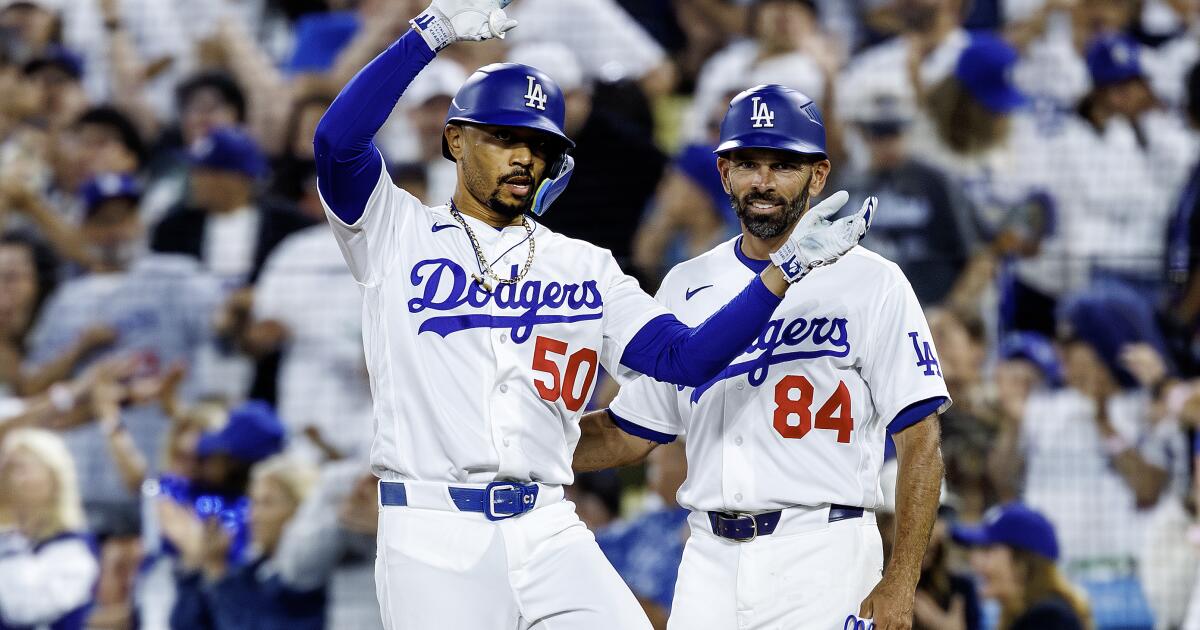
Mookie Betts’ eighth-inning single gives Dodgers the win over the Rockies
-
World42 minutes ago
From sewers to swimming sites: how Europe's cities reclaim their rivers
-

 News1 hour ago
Three more people charged with damaging Reflecting Pool after Trump’s multimillion-dollar restoration | CNN Politics


