West
Colorado gold mine tour guide identified as victim killed in elevator mishap: 'A good man,' sheriff says

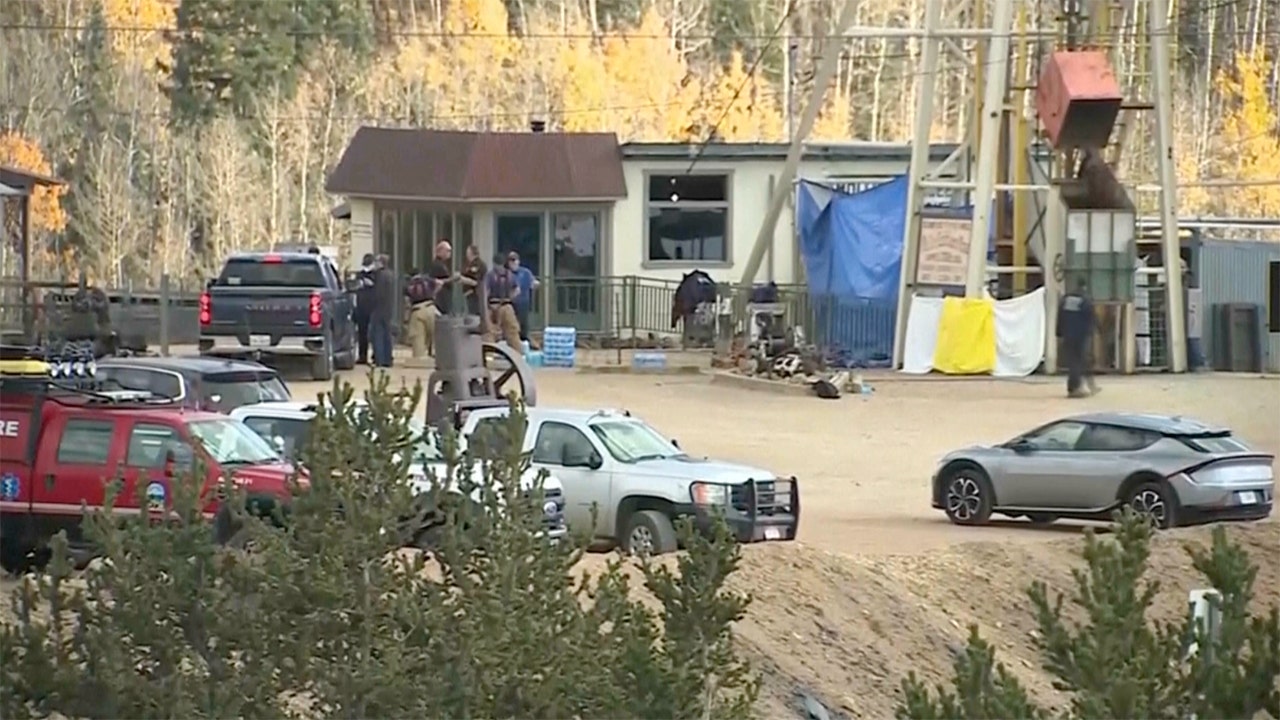
A tour guide was the lone death after an elevator malfunction inside a former Colorado gold mine turned popular tourist attraction trapped 23 people as far as 1,000 feet underground, authorities said Friday.
Patrick Weier, 46, was killed during the incident at the Mollie Kathleen Gold Mine in Cripple Creek, the Teller County Sheriff’s Office said.
Weier, a mine tour guide, left behind a seven-year-old child.
“He was a good man,” Teller County Sheriff Jason Mikesell told reporters during a news conference Friday. “My feelings are that he was attempting to make everybody safe. I don’t know what occurred though. . . . But I do know that, for us and what it looks like, he may have been a hero from the beginning.
“Anytime you’re dealing with heavy machinery and 1,000-foot level, up to [the] 500[-foot] level in a mine, there could be accidents. And this was a tragic accident.”
AURORA POLICE DENY TREN DE ARAGUA GANG HAS ‘TAKEN OVER’ THE CITY IN PRESSER: ‘NOT AN IMMIGRATION ISSUE’
Several people were rescued after becoming trapped in a former Colorado gold mine on Thursday. (KMGH)
According to officials, the elevator inside the mine experienced a mechanical failure at about 500 feet around noon Thursday.
Details about the deadly incident remain under investigation by several agencies, including OSHA, the Occupational Safety and Health Administration.
“We are immensely grateful for the quick response of all the agencies involved and are holding everyone in our prayers,” said Cripple Creek Mayor Annie Durham.
Eleven people, including two children, who had been riding in the elevator were initially rescued. Four people sustained minor injuries including back pain, neck pain and arm pain, the sheriff said.
IDAHO HUNTER BITTEN BY GRIZZLY DESCRIBES ‘SURPRISE’ ATTACK
The Mollie Kathleen Gold Mine Tour in Cripple Creek, Colo., is located in a historic mining town just south of Colorado Springs. Guided tours inside the former gold mine are a popular tourist destination in the area. (Getty Images)
Twelve other adults were trapped 1,000 feet below and were rescued roughly six hours later. They had access to water, blankets and used radios to communicate with authorities, who told them there was an elevator issue, Mikesell said. They were also fed pizza, which they requested, Mikesell said.
The family-owned mine will remain closed.
“We would like to send our prayers and condolences to everyone involved. We would also like to thank all of the first responders and emergency personnel who helped us through such a difficult time. The Mollie Kathleen will be closed until further notice,” its website states.
On Thursday, Colorado Gov., Jared Polis said he was “saddened to learn of the loss of a life in this tragic accident and my heart goes out to the family and loved ones during this difficult time.”
Tarps cover the entrance to a mine, where several people were rescued Thursday after getting trapped inside the former Colorado gold mine. (KMGH)
The mine opened in the 1800s and closed in 1961, before re-opening to conduct educational tours for the last several decades.
Its website describes a one-hour tour in which visitors descend 1,000 feet underground into a “safe, clean and dry” environment.
The mine was scheduled to host its last day of the season on Sunday.
Mollie Kathleen Gortner discovered the site of the mine in 1891, when she saw quartz laced with gold, according to the company’s website.
Thursday’s mishap wasn’t the first for the mine. Officials on Friday referred to an unspecified incident in 1986.
The Associated Press contributed to this report.
Read the full article from Here


One characteristic that distinguishes male grizzly bears from female grizzly bears is a larger head.
With that in mind, check out the grizzly bear featured this week on the Mission Valley Montana Grizz Cam Facebook page. (Photo and video posted below; view Instagram version here.)
The imagery, captured after dusk on July 3, shows a large grizzly bear pausing and sniffing in front of the camera before exiting the frame. Several followers commented on the beauty of the the striking bruin.
“Absolutely MAGNIFICENT!” one person exclaimed.
ALSO: Bison fight on Yellowstone road reveals raw power of iconic beasts
But others remarked about the size and shape of the grizzly bear’s head, and the appearance of thicker fur on its shoulders.
This, along with the gray lighting, lends a surreal quality to the footage. (Click here if video player doesn’t appear below.)
“No doubt that’s a big-headed male griz,” one follower remarked. “It looks like he picked up some scent left at the camera site and moved off!”
“Look at that head! YEOW!” another follower exclaimed. “What an amazing critter.”
The folks behind Mission Valley Montana Grizz Cam use motion-sensor cameras in different locations to capture footage of grizzly bears in Mission Valley, in northwestern Montana.
The Grizz Cam website states: “In 2015 we started seeing a lot of Grizzly Bears on our property so we decided that setting up some trail cameras might lead to some interesting footage and give us insight.
“Several cameras were put in various locations, and we came to realize there were more bears than any of us had anticipated.”
While many Grizz Cam clips look similar, and some feature brilliant daytime colors and audio, this post stands out because of the unique appearance of the bear.
As one follower stated, “That’s a bad boy there.”


These four pals want to make your home their home. Here’s what to know about them.
ALBUQUERQUE, N.M. — Say hello to Lucy, Bobo, Baxter and Dion. They’re up for adoption, with Lucy and Bobo up for adoption from Pitties and Kitties of New Mexico.
“Bobo came from the city shelter. He was very, very stressed out. So we took him in and he’s doing pretty great,” Pitties and Kitties’ Holly Dusthimer said. “Lucy is also from the city shelter. We’ve had her since about April. She is painfully shy but once you get to know her, she’s absolutely the sweetest girl. She is dog-friendly, she’s can be a little difficult to introduce other dogs but when she knows them she absolutely loves them.”
Bobo is about five years old. Meanwhile, Lucy is currently living with cats, hence Pitties and Kitties. The organization has a fundraiser coming up July 25th at the Rail Yards.
“It’s the Disco Doggy Fashion Show, it’s a bunch of sustainable fashion designers and then a bunch of adoptable dogs. It’s not just our rescue. There are a few other rescues going. The dogs will be walking the runway with the fashion models, so it’ll be equal parts awesome, equal parts chaos,” Dusthimer said.
Tickets are available now (here online) but they’re also selling fast. If you can’t make it, maybe look at one of these pals to adopt in the video above.
-

 Missouri1 minute ago
Explosion reported after Missouri school employee hits firework with lawn mower
-

 Montana4 minutes ago
Surreal trail-cam footage shows giant, ‘big-headed’ grizzly bear
-

 Nebraska9 minutes ago
Judge sentences Northeast Nebraska man for sexual assault of a minor, faces possible deportation
-

 Nevada16 minutes ago
VOTE: Do you think Northern Nevada has enough resources to support family caregivers?
-

 New Hampshire19 minutes ago
Tidemark, BOD Holdings Complete 135-Unit Multifamily Project in Somersworth, New Hampshire
-

 New Jersey24 minutes ago
Authorities offer $1,000 reward for tips in brutal stabbing of New Jersey mom | Fox News Video
-

 New Mexico31 minutes ago
Love 4 Pets: Lucy, Bobo, Baxter, Dion
-

 North Carolina34 minutes ago
Sickness causing explosive diarrhea reportedly reaches 145 cases in North Carolina

