California
Whistleblower Seeks To Determine If Hunter Biden Paid California Taxes
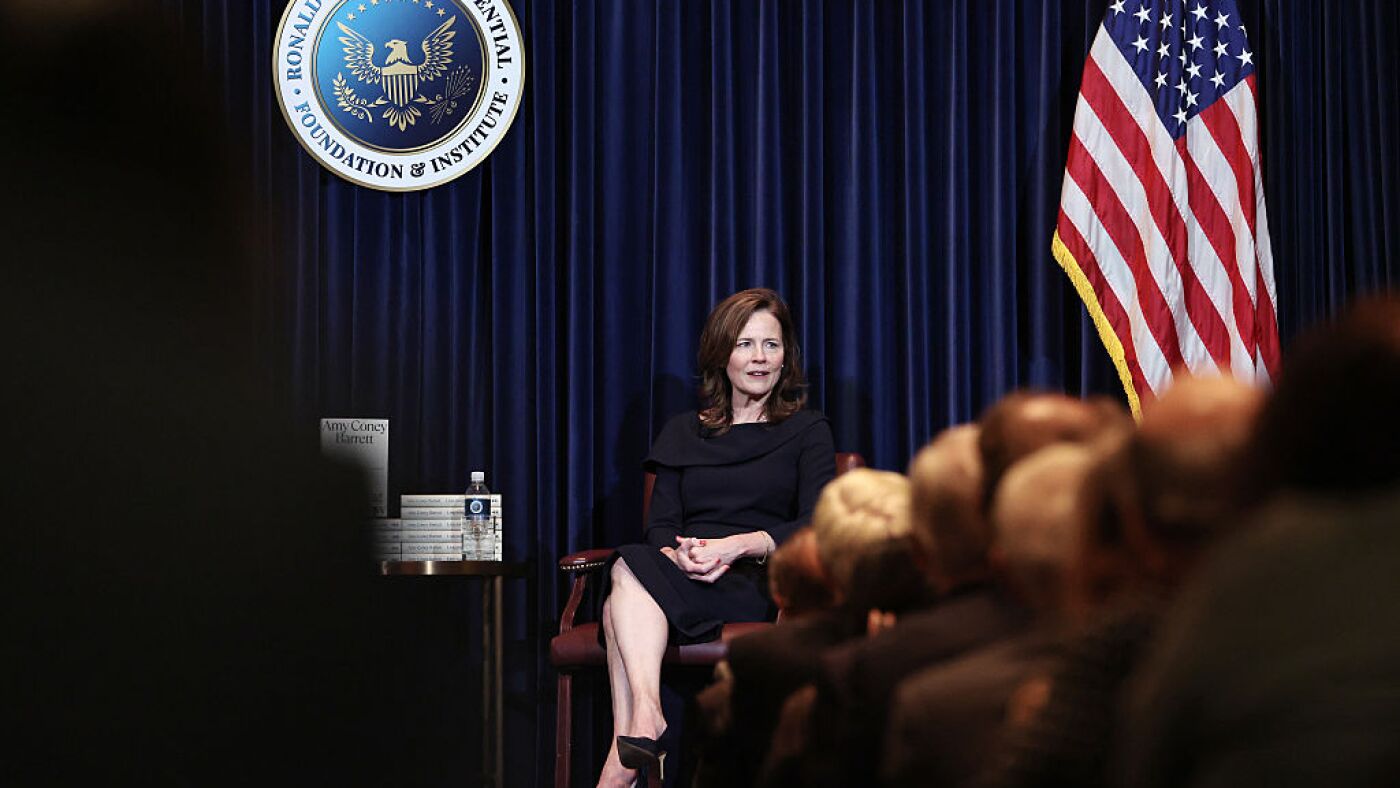
Hunter Biden, son of US President Joe Biden, arrives at court for his trail on tax evasion in Los … [+]
Thanks to the presidential pardon from his father, Hunter Biden will no longer have to worry about the federal charges he was facing for failure to pay federal income tax on millions of dollars in earnings. President Joe Biden’s December 1 pardon does not, however, immunize his son from prosecution for failure to pay state income tax. Whether or not Hunter Biden fulfilled his state tax obligations to California is a question now being pursued by a public whistleblower.
Hunter Biden was a resident of California, home to the highest top marginal income tax rate in the country at 13.3%, during the years for which he has pled guilty to federal tax evasion. While media coverage has focused on unmet obligations to the IRS, the prospect of unpaid state tax liabilities is a topic that has never received much attention. In early December, James Lacy, president of the United States Justice Foundation, filed a public complaint (Case Number 12024-14638) with the California State Auditor calling for an investigation of the California Franchise Tax Board in order to determine whether Hunter Biden filed and paid state taxes for the years he has pled guilty to federal tax evasion.
Given the amount of income on which Hunter Biden failed to pay federal taxes, it’s a potentially large sum of money that he also might have neglected to pay to the government of California, a Democrat-run state where taxpayers are on the hook for an estimated trillion dollars-worth of unfunded public pension liabilities and where employers were recently hit with a payroll tax hike triggered by Governor Gavin Newsom’s (D-Calif.) decision to not repay unemployment insurance loans taken out from the federal government during the pandemic.
“Californians who file their tax returns and timely pay their taxes deserve to know whether or not Hunter Biden has received any special treatment from the Franchise Tax Board regarding his tax liability,” said Lacy. “I am hoping my Whistleblower Complaint will draw attention to this issue and bring some transparency to whether our state tax system has acted fairly.”
“If Hunter Biden failed to pay federal taxes, it’s reasonable to suspect he also failed to pay applicable state income taxes for those years,” says Ryan Ellis, an IRS-enrolled agent. Lacy also called on the Governor to act, saying “Newsom should also reveal to California taxpayers whether or not Hunter Biden was secretly ‘pardoned’ from state tax liability and enforcement as well.”
California Combines High Tax Rates With Muscular Collection
Aside from the nation’s highest state income tax rate, California has long been considered the most aggressive state in the nation when it comes to taxing foreign-sourced income. “Unfortunately for the President’s son, not only did he face the highest state income tax rate, he was also dealing with a state whose tax law has the longest and most aggressive arm,” Ellis said. “Comparatively speaking, California is the most litigious state I have seen in terms of chasing people down for money. Only New York rivals them.”
“It doesn’t matter if the income was coming from the former Mayor of Moscow, a Chinese private equity firm, or a Ukrainian gas company, California tax obligations are global and would’ve applied for the years in which Hunter Biden was a Golden State resident,” added Ellis, who runs his own tax preparation business and is president of the Center for a Free Economy.
The Department of Justice noted in a September 5 press release that “Hunter Biden engaged in a four-year scheme in which he chose not to pay at least $1.4 million in self-assessed federal taxes he owed for tax years 2016 through 2019 and to evade the assessment of taxes for tax year 2018 when he filed false returns.” While Hunter Biden won’t face repercussions for skipping out on those federal tax obligations thanks to the pardon from his father, that doesn’t shield him from state level prosecution for failure to pay taxes to California.
Why would a person pay state taxes on income for which it’s known they did not pay federal taxes owed? That question and the desire to answer it is behind the complaint recently filed with the State Auditor. Fortunately for Hunter Biden, California tax authorities and the California press corps have thus far demonstrated little interest in answering that question.
Hunter Biden also doesn’t have to worry about the most recent state wealth tax proposal introduced Sacramento. That’s because Governor Newsom confirmed earlier this year that he opposes the latest wealth tax bill introduced by California legislators. That should be welcomed news for Hunter Biden, who purchased a $142,000 sports car with funds provided by a Kazakh businessman, and who received a 3.16 carat diamond from a Chinese businessman, both of which would be prime targets of the sort of wealth tax sought by some California lawmakers.
In his 2023 State of the Union Address, President Biden promoted his effort to make “the wealthiest and the biggest corporations begin to pay their fair share. That message was echoed throughout 2024 by Vice President Kamala Harris (D), Senator Chuck Schumer (D-N.Y.), and other prominent Democrats. Any politician who wants to continue calling for stricter gun control and higher tax burdens on the rich, however, will have a hard time doing so in the future if they declined to comment when the President’s son was let off the hook for failing to pay taxes on millions in income and violating of gun laws.
California
Contributor: California law limiting bail is clear. Will judges keep ignoring it?
Gerald Kowalczyk tried to buy a hamburger with credit cards he found on the floor. Then, while presumed innocent, he spent months in a California jail — not because a judge determined he was dangerous, not because he threatened anyone, but because the court set bail at $75,000 for a man who couldn’t afford it, then simply denied bail altogether, in defiance of the law. Last week, the California Supreme Court unanimously said no more. The court held that pretrial liberty is the norm; incarceration before conviction for any crime is the rare, carefully limited exception. If courts choose to condition freedom on a monetary payment it “must” be “an amount that is reasonable.”
For years, California courts ran an unconstitutional shadow detention system. The mechanics were straightforward: Set bail at an amount the defendant cannot pay and the result is the same as ordering detention outright. As the court explained in its Kowalczyk ruling, pretrial detention requires strong evidence of a serious charge and “clear and convincing evidence establishing a substantial likelihood that the defendant’s release would result in great bodily harm to others.” Instead, as Justice Joshua P. Groban explains in concurrence, courts have used money bail to detain poor people accused of nonviolent offenses with “devastating repercussions for their employment, education, housing, access to public benefits, immigration status, and family stability.”
This wasn’t a bug. It was the system.
Last week’s ruling closes that loophole — unambiguously and unanimously. Courts can no longer use unaffordable bail as a backdoor detention order. Where detention isn’t authorized, bail must be set at an attainable amount, based on the defendant’s actual circumstances. The ruling builds directly on the Humphrey precedent from 2021, a California Supreme Court decision that first held wealth-based detention unconstitutional and a case I helped bring.
I know how hard these victories are to win. I also know how easily they can be ignored.
Even after Humphrey was decided, across Santa Clara, San Mateo and Alameda counties, judges asked about a defendant’s financial circumstances exactly once out of nearly 250 observed cases. In more than 95% of hearings, judges cited no legal standard at all when ordering detention. More than 90% of people jailed pretrial were charged with offenses that didn’t even qualify for detention under the California Constitution: shoplifting, driving without a license, vandalism. These findings came from Silicon Valley De-Bug, a community organization whose members spent years watching what happens in arraignment courtrooms.
The system didn’t follow the rules set out in Humphrey. We must ensure the system makes good on the unanimous ruling in Kowalczyk.
Start with public defense. California is one of just two states that contributes no funding to trial-level public defense, leaving the 58 counties with no state standards or oversight. The result is a patchwork of wildly unequal and inadequate representation. Last week’s ruling requires courts to make individualized findings about flight risk, public safety, alternative release conditions and ability to pay — which means defense attorneys must be present at or before arraignment, prepared to make ability-to-pay arguments, demand findings and challenge unaffordable bail on the record. In counties where public defenders carry caseloads of 100 or more, that is not happening. It cannot happen without resources.
Then there is the question of alternatives. The ruling requires judges to consider conditions of release — drug treatment, check-ins, social services referrals, in serious cases ankle monitoring — before resorting to money bail or detention. But these options exist only where counties have invested in pretrial services outside of law enforcement, programs such as San Francisco’s Pretrial Diversion Project. Most haven’t. A constitutional right to alternatives is hollow without alternatives for judges to choose from.
Finally, the Judicial Council, which makes policy for California courts, should establish monitoring standards, reporting requirements and training protocols that ensure courts no longer impose unnecessary or unconstitutional pretrial incarceration.
Kenneth Humphrey spent 250 days in jail for $5 and a bottle of cologne. Gerald Kowalczyk spent months inside for a hamburger. Behind each of them are tens of thousands of Californians who spent similar time behind bars unjustly, who lost jobs and homes and custody of their children, because the system treated their poverty as grounds for imprisonment.
The Supreme Court has now said clearly what our Constitution has since 1849: Pretrial liberty is the norm. Pretrial detention is the carefully limited exception. There is a good reason for the presumption of innocence: 1 in 3 California arrests does not lead to any conviction, and upending people’s lives by jailing them pretrial is so destabilizing it actually increases future crime.
Let’s ensure this presumption of innocence means something in practice if you, or your loved one, need it.
Chesa Boudin is the former district attorney of San Francisco and the executive director of the Criminal Law & Justice Center at UC Berkeley School of Law.
California
29 youths busted with fake IDs at California restaurant
Twenty-nine people were busted with fake IDs inside a sushi restaurant on California’s Central Coast on April 23, according to the San Luis Obispo Police Department.
Undercover agents with the California Department of Alcoholic Beverage Control busted the underage drinkers at HaHa Sushi and Ramen on the 1000 block of Olive Street. Inside the restaurant, agents saw “a large group of youthful-appearing individuals” ordering and drinking alcohol, the San Luis Obispo Police Department said.
“In accordance with state law, agents contacted and identified the members of the group, discovering no one was 21 years old and every person was in possession of a fake identification card,” police said.
During the investigation, 29 people were cited and released for possession of a fake ID. Six of these suspects were arrested for being minors in possession of alcohol. All of the suspects were cited and released from custody at the restaurant.
“Preventing the sale of alcoholic beverages to minors helps increase public safety by reducing DUI arrests and collisions,” the San Luis Obispo Police Department said. “Statistics have shown that young people under the age of 21 have a much higher risk of being involved in a collision than older drivers. About 25% of fatal crashes involve underage drinking, according to the National Highway Traffic Safety Administration.”
California
California junior college athletes speak out on trans controversy that’s now in the Trump admin’s crosshairs
Santa Rosa Junior College was just supposed to be a stepping stone for Madison Shaw. Instead, she stepped right into a transgender athlete scandal that is now being investigated by the federal government.
With her graduation coming up, she has to move forward without being able to chase her dream of playing NCAA volleyball, which was the whole reason she went to Santa Rosa in the first place.
“It was the only plan I had,” Shaw told Fox News Digital of transferring to an NCAA program.
“I was planning on going to Chico [State University] and transferring, and getting set up through the recruiting process in that. And I wasn’t even able to upload any film or have a coach come out for my sophomore year. Because that year I was forced to be off the team.”
CLICK HERE FOR MORE SPORTS COVERAGE ON FOXNEWS.COM
Shaw had to step away from her volleyball team in the fall because she didn’t want to share a locker room with a biological male, and felt her Title IX rights to privacy, safety and equal opportunity were being violated. She had to throw away her plans for her sophomore season, and any chance of making it to an NCAA program.
Because Santa Rosa, as a junior college and not affiliated with the NCAA, and did not have to comply with the NCAA’s updated policy to prevent biological males from competing in women’s sports, Madison and her teammates ended up on the same roster as a trans athlete.
The California Community College Athletic Association (CCCAA) allows transgender athletes to participate based on their gender identity. Biological males can compete on women’s teams after one calendar year of testosterone suppression treatment.
Santa Rosa and the CCCAA as a whole have been under Title IX investigations by the U.S. Department of Education, and the federal Title IX task force, since January, after Madison and two teammates sent an S.O.S.
SANTA ROSA WOMEN’S VOLLEYBALL PLAYERS OPEN UP ON TRANS TEAMMATE’S ALLEGED SPIKES TO THE HEAD
Madison, and her freshman teammates Brielle Galli and Gracie Shaw, Madison’s sister, filed a Title IX complaint last September that brought attention to what was going on with their team.
Once the complaint became public, and garnered national media attention, multiple tense on-campus incidents allegedly occurred.
The three women allege Santa Rosa President Dr. Angélica Garcia led a pro-trans rally before a volleyball game, handed out packets to attendees.
“The president of our school had a rally to support our male athlete and had packets that were being hand handed out that said that our school is a gender inclusive closet,” Gracie Shaw alleged, with Madison Shaw and Galli corroborating the allegations.
INSIDE GAVIN NEWSOM’S TRANSGENDER VOLLEYBALL CRISIS
Santa Rosa Junior College students Gracie Shaw, Brielle Galli and Madison Shaw (Fox News)
Teammates who had once been friends began distancing themselves, and in some cases, they said, actively excluded them.
“We were completely ostracized,” Gracie Shaw said. “We were left in the dark.”
They said teammates created separate group chats without them and held meetings they were not invited to, effectively cutting off communication.
The players said they received backlash on social media and, at times, felt uncomfortable on campus. In one instance, they recalled being recorded and photographed by other students after being recognized in connection with the complaint.
The incident occurred when two other students set up a table with a sign that read “We are Christians, ask us anything.”
The women claim that the two men at the table were being told by other students that they were “hateful people.”
And soon, the anti-Christian crowd realized who the three women were, and two other students allegedly began to record Gracie Shaw and Galli, non-consensually.
The women say the only time the college and its administrators expressed concern for their well-being was in an investigative interview after news of their Title IX complaint had gone public.
“Those interviews really rubbed me the wrong way,” Galli said.
“They kept pushing the same questions on us trying to get a different answer and trying to make us say something that wasn’t true. They kept stating that or they wanted us to state that it was our choice when really we were left with no choice with the way that we were made to feel uncomfortable and unsafe…
“They kept in bringing up the fact that there are so many resources available to us, so many counseling options and just so many resources that are just the school will provide for us. And that was a little ridiculous to me because throughout the whole season when we were participating, we had made it clear to our coach that we didn’t feel safe coming to the games.”
Santa Rosa Junior College provided a statement to Fox News Digital responding to the three women’s statements.
“Santa Rosa Junior College is committed to fostering an inclusive and supportive environment for all students and employees. The District complies with California Community College Athletic Association regulations, which govern student eligibility and participation in our athletic programs,” the statement said.
“We respect the legal privacy rights of all students and cannot discuss individual circumstances. What we can affirm is that SRJC takes all reports seriously and responds through established procedures.”
But there were some moments when the women felt they were being supported, not by administrators, but male athletes at a competing school.
When Santa Rosa Junior College faced Sierra College in Rocklin, California, weeks after the complaint was filed, a “save women’s sports” protest broke out outside of the gym.
One of the protesters, local women’s sports activist Beth Bourne, handed out protest signs to students who attended the game and said it was the first time she’d seen college students protest the issue in person.
Sierra’s men’s athletes even joined in on the protesting.
California college students protest the participation of a transgender volleyball player at a women’s game. (Beth Bourne)
“There were men that were college students… that were holding those signs in support of us. Even though they probably didn’t know who we were. They knew that this was something that, that they could, even if it’s a small thing, just like just holding a sign up, they knew that it would make an impact,” Galli said.
It was a rare bright moment in an otherwise grueling school year. But now the summer is coming.
The women can at least move forward knowing their activism caught the attention of the federal government, as the Title IX investigations into the college and the entire CCCAA press on.
And as the three women look to regroup and determine the next step in their education, they each expressed gratitude for President Donald Trump’s administration for having their backs.
But they’re still dealing with the irreversible effects on their futures, and are now navigating life after missing a chance at their NCAA dreams.
Madison Shaw said she is currently working three jobs as she tries to save up for tuition.
“Coming from a very athletic family, we all played sports,” she said. “For them to see this opportunity taken away was very hard on them, knowing that I wasn’t going to get the same opportunities they had when they played sports. And even just financially, this was a way for me to move on past the JC, so it was hard for them to watch.”
Galli found herself in the same situation.
“I saw it as my opportunity to pursue [NCAA sports],” Galli said of her decision to play at Santa Rosa. “I wanted to reach out and try to get recruited, and like Madison said, we didn’t really get the opportunity to play so we didn’t have any film that we could send to the coaches.”
CLICK HERE TO DOWNLOAD THE FOX NEWS APP
Gracie Shaw did not step away from the team right away, and continued practicing, but wouldn’t play in games as a form of protest. But eventually she just couldn’t take it anymore. she stepped away from the team as the situation progressed, and more national attention befell the team.
“I always wanted to get recruited and play at the next level, that was the plan,” Gracie Shaw said.
Madison Shaw continues to work her jobs and explore opportunities outside of playing sports, while Galli and Gracie Shaw are currently set to do another year of junior college.
Follow Fox News Digital’s sports coverage on X, and subscribe to the Fox News Sports Huddle newsletter.
-
Kansas58 seconds agoKansas State football player’s dad blasts sport’s current state as son departs
-
Kentucky7 minutes agoKentucky Derby winner Golden Tempo will skip Preakness
-
Louisiana13 minutes agoSupreme Court denies motion on Louisiana congressional map ruling
-
Maine19 minutes agoContentious Belfast family lobster pound lawsuit makes it to Maine high court
-
Maryland25 minutes agoMaryland State Fair celebrates America’s 250th anniversary across three weekends
-
Michigan31 minutes agoMichigan State Police request public’s help in locating missing woman out of Battle Creek
-
Massachusetts37 minutes agoWrong-way crash kills driver, state trooper in Lynnfield
-
Minnesota43 minutes agoFood relief efforts in Minnesota