California
Lagoon Valley is the Northern California’s first “conservation community” in Vacaville, developers say


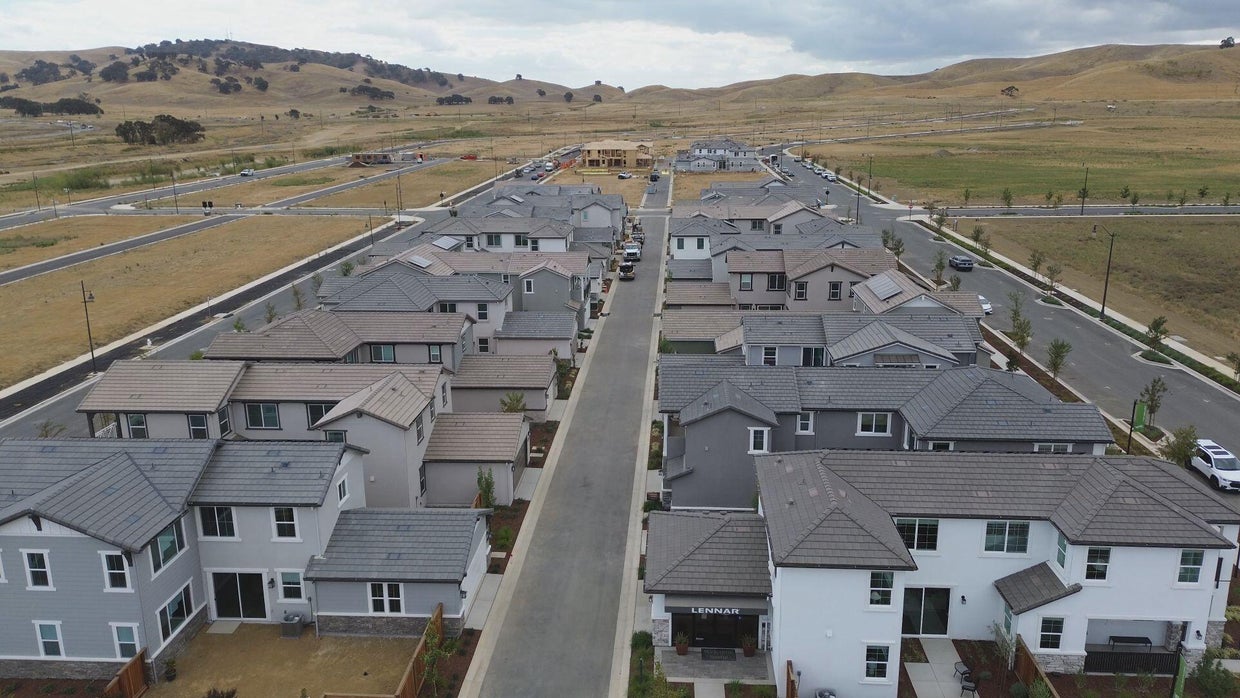
Roughly halfway between San Francisco and Sacramento sits a new housing community that developers call the first “conservation community” in Northern California.
The Lagoon Valley development in Vacaville is opening in phases, with homes up for sale now in multiple neighborhoods, promising a host of new amenities along the way.
About 150 homes have been built, but the development is approved for just over 1,000. Construction will continue over the next five years.
Curt Johansen, director of development in California for Seattle-based Triad Development, says his vision was to build a first-of-its-kind community in Solano County. The project is about 20 years in the making.
“Over 30 years ago, the city of Vacaville approved a project here that was, I would call it, unsustainable. It didn’t actually take into consideration the sensitivities of this beautiful valley and all of the nature that’s going on here,” Johansen said.
The land was once slated for office space and a massive strip mall. That proposal was met with pushback and even petitions from the community to shut it down.
“It was going to be a 7-million-square-foot office complex, basically. We were contacted by the city and they requested we take a look at it, see if we could do something better,” Johansen said.
Johansen said their mission is to protect the environmental treasure that many Solano County neighbors have fought to preserve for decades.
“We decided to take 85% of the land and forever protect it in open space and recreation, and then that means the built environment is very small. People know that all this open space that surrounds them is going to be there forever,” Johansen said.
The idea of a conservation community is that you prioritize first where you will not build, putting the integrity of the land and the surrounding natural environment first.
Lagoon Valley has preserved more than 1,300 acres of wild open land and also created a new wildlife wetland preserve.
Johansen called it a different and unconventional approach.
“Conventional development says, let’s put houses wherever we can because that’s going to make the most money. This is much more of a triple-bottom-line concept, where we have to balance the environmental sensitivities, the social needs, as well as the housing needs. The idea is to start with areas that just should never be built up. That’s what we did. Then eventually, the 15% left became where the neighborhoods would go,” Johansen said.
Johansen says there are only about 40 conservation communities nationwide. He traveled to study what made them special, and also went to Northern Europe for influence on sustainable, walkable living.
A huge focus for ‘conservation living’ starts with climate resiliency, protecting against fire and flood.

“The community is designed to have buffers designed for flood protection in that we have 156 acre-feet of storage included throughout the Valley for water that comes out of all the watersheds around us. And what that does is it helps hold the water, slowly let it out, because historically, the city has had a lot of flooding problems downstream from here. It’s a huge watershed area, and so we’re managing all of that storm drainage on site and slowly letting it out to protect downstream owners. On wildfires, we’ve set this up so that the perimeter is very defensible. It’s not your usual 100-foot type perimeter. We do 600-700 feet of irrigated areas to protect against wildfires,” Johansen said.
Another part of the model is resource conservation. Every home is equipped with solar panels.
“The homes are built to exceed California standards for energy conservation. That’s really important,” said Johansen. “We went the extra step, and we actually required them to dual pipe all the homes to reclaim greywater. So all of the homes have the ability to actually irrigate their entire yards with greywater reclaimed from their own showers the day before.”
So, where does the water come from?
“We have our own water system here. We actually get the potable supply from the city, but we built our own 2.7 million-gallon storage reservoir just for Lagoon Valley,” Johansen said.
With homes for sale and new neighbors already moving in, on tap next are the places to play and recreate in what is designed to be a walkable, bike-friendly community.
“We didn’t want this to be just a sort of a bedroom community, even with all its beauty and the wildlife habitat. We wanted it to actually be a place where people had things they needed here,” Johansen said.
Next to be built are new public and private parks and an 18-hole championship golf course.

They are also constructing a town center that will be home to local shops and restaurants, along with an organic farm for neighbors to grow their own produce.
In the event center, which broke ground last month, developers are building sports courts, pools, a fitness center and meeting spaces.
Johansen, when asked if a large development like this slaps Bay Area urban sprawl on a small town, says he does not want to make Solano County something it is not.
“There’s no doubt about it. Solano is a Bay Area county. It may be the farthest out, but what I like about it is the north end of the Bay Area, Solano, Napa and Sonoma, they all still have a lot of agriculture, and that’s hard to find,” Johansen said. “Preserving open space and agriculture is so important. There’s a mindset in the north end of the Bay Area about that and so we felt like our conservation mentality fits nicely,” Johansen said.
Their priority is to preserve the region’s agricultural integrity while solving a big problem.
“We need more housing. We have a housing crisis. We know that right, there’s no reason why more and more communities can’t be done to scale so that they’re big enough to provide some housing, but at the same time, they’re preserving that whole ethic of what the region is about,” Johansen said.
In the new community, the price points range from affordable housing to a higher-end gated community.
Homes are on sale now.



A California bill would let insurers monitor customers’ driving data in exchange for discounted premiums.
Assemblymember Tina McKinnor, the author of AB 311, said the digital monitoring, known as telematics, rewards good driving and would improve safety. In real time, telematics technology would track data such as speed, location and how a vehicle is being driven.
“We have to slow people down,” McKinnor said. “That is the whole purpose for this bill, is driver safety.”
A voter-approved law from 1988, Prop 103, required insurance rates to be based mainly on driving record, miles driven and experience. It made California the only state in the country to prohibit telematics.
McKinnor believes the law is outdated. She argued that her bill would also help good drivers who pay higher rates because of where they live.
“Where I live definitely brings my insurance up,” McKinnor said. “If we both drive the same way, we’ll get charged the same way, instead of by our ZIP code.”
California’s Department of Insurance and consumer groups oppose the bill, citing privacy concerns.
“We can’t look behind the algorithm and see what weight it’s giving to different criteria, which is a big problem,” said Jamie Court, president of Consumer Watchdog. “Auto insurance, otherwise, is transparent. This is why the Department of Insurance is opposed, because of the lack of transparency in the algorithm.”
The proposed savings in exchange for good driving might not be guaranteed. Telematics data from the Maryland Insurance Administration showed that 31% of drivers who opted into the program saw a drop in rates, 24% saw an increase and 45% saw no change to their premiums.
“This collects an awful lot of data about people, more than they know, and it’s like having Big Brother in your back seat,” Court said.
McKinnor insisted that drivers will not be forced to enroll in the program.
“It’s still opt-in in the other 49 states,” she said. “We’re not going to make this mandatory. It’ll be a per-volunteer situation.”
McKinnor’s bill passed through the legislature’s insurance committee. It’s expected to be presented to the full Senate in August.

Huntington Beach police are vowing to prevent a potential “takeover” event being promoted across social media that they believe could get out of control.
Police said they became aware of the event from a flyer online advertising an “end of summer beach bash” in the city.
“Dear ‘Beach Bash’ organizers…” police said in an Instagram post Thursday. “Thanks for the flyer. We’ve seen it too.”
They continued, “We have no intention of allowing that to happen here.”
No further details were provided about when the event was planned to take place or the exact location.
Police and the city of Huntington Beach said they’re working to prevent the event following similar events in Southern California that resulted in violence, vandalism and other criminal activity.
One chaotic event that was held in Newport Beach on the Fourth of July ended with more than 400 people being arrested, according to police. Some partygoers were seen fist fighting, while others allegedly vandalized property and local businesses, including a Pavilions grocery store.
Newport Beach police said social media posts drew a large influx of people to Newport Pier in a short amount of time, and the event got out of control.
Huntington Beach PD warned that anyone who organizes, promotes or participates in criminal activity associated with a takeover event may be arrested or prosecuted. Charges may include incitement to riot, vandalism, theft, assault, reckless driving, unlawful assembly, conspiracy or other applicable offenses.
They also warned that juveniles would not be exempt from punishment, and parents or guardians may also be liable for damages caused by their child’s actions.
The HBPD Special Investigations Bureau has already identified individuals believed to be involved in organizing and promoting the event, according to police.
If you have information regarding this event, you are urged to contact Huntington PD’s Special Investigations Bureau at 714-536-5991.
California
Popular California Fast-Casual Chain Mendocino Farms Opens 100th Location in Santa Barbara – edhat

Santa Barbara has become home to a milestone location for a popular sandwich and salad chain.
Mendocino Farms has officially opened its doors at La Cumbre Plaza, marking the company’s 100th location.
Located at 3851 State Street, the restaurant is Mendocino Farms’ first location in Santa Barbara.
Announcing its new store in a social media post, Mendocino Farms said the restaurant offers chef-curated sandwiches and fresh salads using seasonal ingredients.
“Whether you’re fueling your next adventure or settling in for a sunny lunch with friends, we can’t wait to be part of your community. Here’s to our next chapter, together!” the business wrote on Instagram.
View this post on Instagram
The restaurant features a custom mural by local artist DJ Javier, as shared by Mendocino Farms in an Instagram post.
The store opened on June 30 and marked its first day with a host of activities to celebrate its launch.
The opening day featured a live DJ, activities such as ‘Rodeo Riviera’, a hat bar, live sandwich-making sessions with the chefs, and a postcard station.
The location is open daily between 10:30 a.m. and 9 p.m., according to its website.
Diners can enjoy a special summer menu along with the regular options of sandwiches and salads that Mendocino Farms is known for.
View this post on Instagram
In addition to its menu options, the restaurant also offers catering services with deliveries available from 10 a.m. onwards.
The space occupied by Mendocino Farms earlier housed Panera Bread, which closed in 2025, per the Restaurant Guy.
About Mendocino Farms
The Los Angeles-based fast-casual chain is known for its selection of freshly made sandwiches, salads, wraps, and soups.
Founded in 2005, Mendocino Farms offers classic as well as limited signature items.
The company opened its first location below the Museum of Contemporary Art in Los Angeles and has since expanded into a regional brand, according to the Restaurant Guy.
In addition to California, Mendocino Farms has locations in Arizona, Colorado, Illinois, Texas, and Washington, the company’s website shows.
The restaurants feature a rotating menu of items, along with a range of kids’ menu items that are served with a beverage and a choice of side.
Additionally, the chain offers a variety of dessert options, packaged chips, and packaged beverages.
The company is known for sourcing all its ingredients from ethical local farms and small producers.
All meat and poultry items served are antibiotic-free and humanely raised, while eggs are sourced from cage-free farms, according to its website. Fruits and vegetables are hand-picked, and bread is locally and freshly sourced.
The menu includes a range of items to accommodate all types of diets, such as flexitarian, vegan, and gluten-free.
-

 Los Angeles, Ca1 hour ago
O.C. police prep for beach, theme park ‘takeovers’ promoted on social media
-

 Detroit, MI2 hours ago
Detroit city leaders to DHS: Stop ICE pursuits which endanger the community
-

 San Francisco, CA2 hours ago
SF Supervisor Jackie Fielder hosts listening session after medical leave
-

 Dallas, TX2 hours ago
The Stewpot artists find healing, purpose and income through art in Dallas
-

 Miami, FL2 hours ago
Can Jason Marshall push for a starting spot – The Splash Zone 7/10/26
-

 Boston, MA2 hours ago
Police investigating shooting in Downtown Crossing – Boston News, Weather, Sports | WHDH 7News
-
 Denver, CO2 hours ago
Denver mayor announces new $100 million plan to bring in 10,000 jobs
-

 San Diego, CA2 hours ago
WEBTOON Brings Top Creators for San Diego Comic-Con Panels

