California
How much water is in Lake Shasta, California reservoirs in 2026?


In recovery: One year after the California wildfires
One year after the Eaton Fire, Altadena residents struggle to recover the loss.
Lake Shasta and California’s other lakes and reservoirs got a big boost from wet holiday storms. Nearly two weeks into 2026, all of the state’s 17 major reservoirs are brimming above their 30-year average after atmospheric rivers dumped heavy rain on much of the state starting the week before Christmas, lasting into Wednesday, Jan. 7.
Both the rain and the rainwater draining from the ground into lakes helped raise reservoir levels, the National Weather Service said.
Lake Shasta waters lapped just short of 29 feet from the top on Jan. 11, after rising about 45 feet since Dec. 18 — the day before the first heavy winter storm of the season rolled over Shasta County, according to the California Department of Water Resources.
Two other major Southern California supply reservoirs were full or near full as of Jan. 11, according to state data.
- Lake Cachuma is 101% full. The reservoir contained 58% more water than its 30-year historic average.
- Lake Casitas is 98% full, 27% more than its average.
Lakes continue to fill for days after storms pass as the heavily saturated soil continues to drain into waterways, said meteorologist Bill Rasch at the weather service’s Sacramento branch.
Based on state water resources department reports, here’s how much water other major reservoirs held on Jan. 11, starting with the three biggest.
How full is Lake Shasta?
Lake Shasta, the biggest state-owned reservoir, was 82% full, according to the state’s latest data. With several months left to go in the area’s rainy season, the lake was 35% more full than its historic average over the past 30 years.
However, Lake Shasta started the water year 4% higher than average on Oct. 1, 2025, after Northern California’s super wet spring.
How full is Lake Oroville?
The state’s second-largest reservoir, Lake Oroville — located 80 miles north of Sacramento in the Sierra Nevada foothills — was 78% full and held 39% more water than usual on Jan. 11.
Oroville also started the water year with an advantage: It was 7% more full than usual on Oct. 1.
How full is Trinity Lake?
Another far Northern California reservoir and the state’s third largest, Trinity Lake, was 84% full and held 38% more water than usual.
It’s the second year in a row that the lake has shown healthy water levels. Trinity’s waters plummeted over several years of drought, dropping to to 40% of its historic average in January 2023.
While only about 25 miles northwest of Lake Shasta, Trinity fills more slowly over the calendar year and requires more time to recover after drought than its counterpart, the Bureau of Reclamation has said.
How much water is in 12 other California lakes and reservoirs
Here’s how much water is in 12 other major state reservoirs a week into 2026, according to water resources department data, and how much more water they contain compared to their historical average on Jan. 11.
- New Bullards Bar (40 miles northeast of Marysville in Yuba County): 82% full, 29% more than average
- Folsom Lake (25 miles east of Sacramento): 60% full, 41% more than average
- Camanche Reservoir (45 miles southeast of Sacramento): 73% full, 22% more than average
- Lake Sonoma (30 miles north of Santa Rosa): 70% full, 21% more than average
- San Luis Reservoir (70 miles east of Santa Cruz): 73% full, 9% more than average
- New Melones Reservoir (55 miles east of Stockton on the Stanislaus River): 73% full, 29% more than average
- Don Pedro Reservoir (45 miles east of Modesto): 80% full, 17% more than average
- Castaic Lake (45 miles north of Pasadena): 78% full, where it stands on average
- Lake McClure (50 miles east of Modesto): 69% full, 52% more than average
- Diamond Valley Lake (40 miles southeast of downtown Riverside): 94% full, 30% more than average
- Millerton Lake (20 miles north of Fresno): 77% full, 40% more than average
- Pine Flat Lake (35 miles east of Fresno): 45% full, 24% more than average
Jessica Skropanic is a features reporter for the Record Searchlight/USA Today Network. She covers science, arts, social issues and news stories. Follow her on Twitter @RS_JSkropanic and on Facebook.



A California bill would let insurers monitor customers’ driving data in exchange for discounted premiums.
Assemblymember Tina McKinnor, the author of AB 311, said the digital monitoring, known as telematics, rewards good driving and would improve safety. In real time, telematics technology would track data such as speed, location and how a vehicle is being driven.
“We have to slow people down,” McKinnor said. “That is the whole purpose for this bill, is driver safety.”
A voter-approved law from 1988, Prop 103, required insurance rates to be based mainly on driving record, miles driven and experience. It made California the only state in the country to prohibit telematics.
McKinnor believes the law is outdated. She argued that her bill would also help good drivers who pay higher rates because of where they live.
“Where I live definitely brings my insurance up,” McKinnor said. “If we both drive the same way, we’ll get charged the same way, instead of by our ZIP code.”
California’s Department of Insurance and consumer groups oppose the bill, citing privacy concerns.
“We can’t look behind the algorithm and see what weight it’s giving to different criteria, which is a big problem,” said Jamie Court, president of Consumer Watchdog. “Auto insurance, otherwise, is transparent. This is why the Department of Insurance is opposed, because of the lack of transparency in the algorithm.”
The proposed savings in exchange for good driving might not be guaranteed. Telematics data from the Maryland Insurance Administration showed that 31% of drivers who opted into the program saw a drop in rates, 24% saw an increase and 45% saw no change to their premiums.
“This collects an awful lot of data about people, more than they know, and it’s like having Big Brother in your back seat,” Court said.
McKinnor insisted that drivers will not be forced to enroll in the program.
“It’s still opt-in in the other 49 states,” she said. “We’re not going to make this mandatory. It’ll be a per-volunteer situation.”
McKinnor’s bill passed through the legislature’s insurance committee. It’s expected to be presented to the full Senate in August.

Huntington Beach police are vowing to prevent a potential “takeover” event being promoted across social media that they believe could get out of control.
Police said they became aware of the event from a flyer online advertising an “end of summer beach bash” in the city.
“Dear ‘Beach Bash’ organizers…” police said in an Instagram post Thursday. “Thanks for the flyer. We’ve seen it too.”
They continued, “We have no intention of allowing that to happen here.”
No further details were provided about when the event was planned to take place or the exact location.
Police and the city of Huntington Beach said they’re working to prevent the event following similar events in Southern California that resulted in violence, vandalism and other criminal activity.
One chaotic event that was held in Newport Beach on the Fourth of July ended with more than 400 people being arrested, according to police. Some partygoers were seen fist fighting, while others allegedly vandalized property and local businesses, including a Pavilions grocery store.
Newport Beach police said social media posts drew a large influx of people to Newport Pier in a short amount of time, and the event got out of control.
Huntington Beach PD warned that anyone who organizes, promotes or participates in criminal activity associated with a takeover event may be arrested or prosecuted. Charges may include incitement to riot, vandalism, theft, assault, reckless driving, unlawful assembly, conspiracy or other applicable offenses.
They also warned that juveniles would not be exempt from punishment, and parents or guardians may also be liable for damages caused by their child’s actions.
The HBPD Special Investigations Bureau has already identified individuals believed to be involved in organizing and promoting the event, according to police.
If you have information regarding this event, you are urged to contact Huntington PD’s Special Investigations Bureau at 714-536-5991.
California
Popular California Fast-Casual Chain Mendocino Farms Opens 100th Location in Santa Barbara – edhat

Santa Barbara has become home to a milestone location for a popular sandwich and salad chain.
Mendocino Farms has officially opened its doors at La Cumbre Plaza, marking the company’s 100th location.
Located at 3851 State Street, the restaurant is Mendocino Farms’ first location in Santa Barbara.
Announcing its new store in a social media post, Mendocino Farms said the restaurant offers chef-curated sandwiches and fresh salads using seasonal ingredients.
“Whether you’re fueling your next adventure or settling in for a sunny lunch with friends, we can’t wait to be part of your community. Here’s to our next chapter, together!” the business wrote on Instagram.
View this post on Instagram
The restaurant features a custom mural by local artist DJ Javier, as shared by Mendocino Farms in an Instagram post.
The store opened on June 30 and marked its first day with a host of activities to celebrate its launch.
The opening day featured a live DJ, activities such as ‘Rodeo Riviera’, a hat bar, live sandwich-making sessions with the chefs, and a postcard station.
The location is open daily between 10:30 a.m. and 9 p.m., according to its website.
Diners can enjoy a special summer menu along with the regular options of sandwiches and salads that Mendocino Farms is known for.
View this post on Instagram
In addition to its menu options, the restaurant also offers catering services with deliveries available from 10 a.m. onwards.
The space occupied by Mendocino Farms earlier housed Panera Bread, which closed in 2025, per the Restaurant Guy.
About Mendocino Farms
The Los Angeles-based fast-casual chain is known for its selection of freshly made sandwiches, salads, wraps, and soups.
Founded in 2005, Mendocino Farms offers classic as well as limited signature items.
The company opened its first location below the Museum of Contemporary Art in Los Angeles and has since expanded into a regional brand, according to the Restaurant Guy.
In addition to California, Mendocino Farms has locations in Arizona, Colorado, Illinois, Texas, and Washington, the company’s website shows.
The restaurants feature a rotating menu of items, along with a range of kids’ menu items that are served with a beverage and a choice of side.
Additionally, the chain offers a variety of dessert options, packaged chips, and packaged beverages.
The company is known for sourcing all its ingredients from ethical local farms and small producers.
All meat and poultry items served are antibiotic-free and humanely raised, while eggs are sourced from cage-free farms, according to its website. Fruits and vegetables are hand-picked, and bread is locally and freshly sourced.
The menu includes a range of items to accommodate all types of diets, such as flexitarian, vegan, and gluten-free.
-

 World5 minutes ago
Does more World Cup history beckon for Norway? England stand in their way
-
 News32 minutes ago
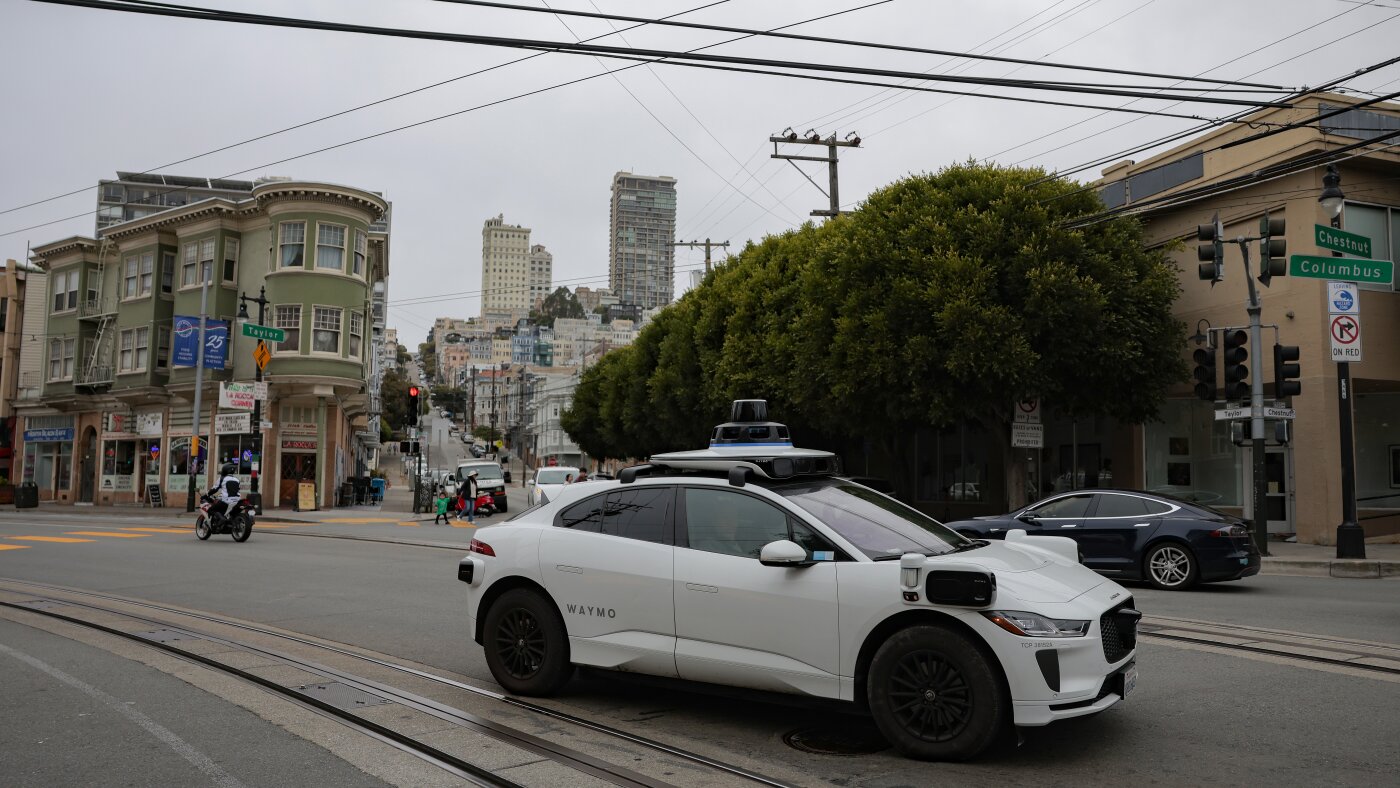
Waymo called the cops on teen riders, raising privacy concerns
-

 Los Angeles, Ca2 hours ago
O.C. police prep for beach, theme park ‘takeovers’ promoted on social media
-

 Detroit, MI2 hours ago
Detroit city leaders to DHS: Stop ICE pursuits which endanger the community
-

 San Francisco, CA2 hours ago
SF Supervisor Jackie Fielder hosts listening session after medical leave
-

 Dallas, TX3 hours ago
The Stewpot artists find healing, purpose and income through art in Dallas
-

 Miami, FL3 hours ago
Can Jason Marshall push for a starting spot – The Splash Zone 7/10/26
-

 Boston, MA3 hours ago
Police investigating shooting in Downtown Crossing – Boston News, Weather, Sports | WHDH 7News

