California
Halloween events in Southern California


Here’s a list of Halloween events around Southern California. Share your Halloween haunts with #abc7eyewitness!
LOS ANGELES COUNTY
Halloween Horror Nights
September 5 – November 3 on select dates
The amusement park guarantees a living, breathing, three-dimensional world of horror with terrifying experiences from TV and movies.
Universal Studios
100 Universal City Plaza, Universal City
universalstudioshollywood.com
Fright Fest
September 7 – November 3 on select dates
Fright Fest is back at Six Flags Magic Mountain. You can expect haunted mazes, scare zones, and scream-worthy rides.
Six Flags
26101 Magic Mountain Pkwy, Valencia
sixflags.com
Los Angeles Haunted Hayride
September 21 – November 2 on select dates
The 30-acre attraction consists of a nighttime tractor ride where you see tons of scary creatures and characters along the way, a haunted village, scary trick or treating, and a spooky corn maze. But beware! It’s not recommended for children under 12.
Griffith Park Old Zoo
4730 Crystal Springs Avenue, Los Angeles
losangeleshauntedhayride.com
Nights Of The Jack
September 27 – November 2 on select dates
Enjoy the enchanting King Gillette Ranch grounds in this 2/3 mile walking trail. This Halloween wonderland features a live pumpkin carver, gift shop, top LA food trucks, and tons of other “Instagrammable” moments for all to enjoy! Advanced ticket purchase is required.
King Gillette Ranch, Calabasas
nightsofthejack.com
Boo at the Los Angeles Zoo
October 19 – 27 on select dates
October 19, 20, 26, or 27, you’ll find trick-or-treat stations throughout the zoo.
The annual spook spectacular allows ghouls and goblins of all ages to get up close to all sorts of creepy critters…so close, you can touch them.
5333 Zoo Drive, Los Angeles
lazoo.org
Mr. Jack O’ Lanterns Pumpkin Patch
October 4 – 31 on select dates
Enjoy games, activities, bounce houses, pumpkin carving, mazes, and more!
West LA, Torrance, Hollywood
mrjackolanternspumpkins.com
Mr. Bones Pumpkin Patch
October 5 – 31 on select dates
Founded in 1987, Mr. Bones Pumpkin Patch is a family-owned and operated business that focuses on bringing the farm to the city and celebrating the magic of Halloween.
10100 Jefferson Blvd, Culver City
mrbonespumpkinpatch.com
Carved
October 4 – 30 on select dates
For three weeks, Descanso Gardens will be transformed, featuring a mile-long trail lined with thousands of professionally carved jack-o-lanterns made from real pumpkins.
Descanso Gardens
1418 Descanso Drive, La Cañada Flintridge
descansogardens.org
Scream-Tacula Season
October 11 – 31 on select dates
Celebrate the spooky season by watching your favorite Halloween Movie with props.
The El Capitan Theatre
1755 N. Highland Avenue, Hollywood
elcapitantheatre.com
Haunted Little Tokyo
October 26 on select dates
Get ready for a night of DJs, drinks, food, a costume contest, ghost tours, and a spooky scavenger hunt.
Little Tokyo
249 S Los Angeles St, Los Angeles
littletokyola.org
Scarium Family Night
October 18
Aquarium of the Pacific
Dive into fun and spooky Halloween activities for the whole family!
100 Aquarium Way, Long Beach
aquariumofpacific.org
Halloween Carnaval
October 31
Historic Route 66
Celebrate Halloween on Santa Monica Boulevard and at West Hollywood’s One-of-a-Kind Bars, Restaurants, and More.
Santa Monica Boulevard between N. Doheny Drive and N. La Cienega Boulevard
halloweencarnaval.com
ORANGE COUNTY
Halloween Time at the Disneyland Resort
August 23 – October 31 on select dates
You can catch spooktacular thrills at the Haunted Mansion Holiday, Luigi’s Honkin’ Haul-O-Ween, Mater’s Graveyard JamBOOree and Guardians of the Galaxy – Monsters After Dark.
1313 Disneyland Dr, Anaheim
disneyland.com
The 17th Door Haunt Experience
September 27 – November 3 on select dates
The 17th Door converts a Fullerton strip mall into a prison from hell. You’ll get a spook out of this extreme haunted house. The attraction is not suitable for children.
West Fullerton Shopping Center
1851 W Orangethorpe Ave, Fullerton
the17thdoor.com
Tanaka Farms Pumpkin Patch
September 14 – October 31 on select dates
The popular pumpkin patch will be open for the best photo opportunities, best selection of pumpkins in the field, and the “least-crowded patch experience,” according to its website.
5380 University Dr, Irvine
tanakafarms.com
Knott’s Spooky Farm and Knotts Scary Farm
September 19 – November 2 on select dates
Halloween has taken over Knotts Berry Farm! You can catch Knott’s Spooky Farm, a family-friendly Halloween celebration geared for kids ages 3-11, on weekends and October 31. Knott’s Scary Farm is not recommended for kids under 13.
8039 Beach Blvd., Buena Park
knotts.com
Fall-O-Ween
October 11-13 & 18-20
Fall-O-Ween returns for its fourth year, offering a festive, family-friendly Halloween experience with straw mazes, scavenger hunts, and surprises!
Heritage Hill Historical Park
falloween.com
Bats: Heroes of the Night
October 11
This night offers a unique chance to observe bats in flight and listen to their calls – a perfect Halloween adventure!
Limestone Canyon Nature Preserve
batsheroesofthenight.com
Ghosts and Goblins of the Ocean Beach Cleanup
October 13
Join Dana Point Harbor for a spooky Stand Up To Trash beach cleanup and lunch & learn.
Dana Point Harbor
ghostsandgoblinsbeachcleanup.com
Full Moon Hike on Hicks Haul Road
October 16
Enjoy a peaceful autumn evening hike with Irvine Ranch Conservancy through stunning rock formations and learn about native plants as you listen to the sound of nature.
Irvine Open Space Preserve
fullmoonhike.com
BOO at the Oaks
October 18
Boo at the Oaks offers guided night hikes, nature stations, crafts, and a scavenger hunt for prizes.
Santiago Oaks Regional Park
booattheoaks.com
Honey Tasting at Glen Ivy
October 23
Enjoy the sweetness of fall by switching out the candy for locally sourced honey!
Glen Ivy Hot Springs
honeytastingglenivy.com
Halloween Zoo-Tacular
October 26
It is a perfect way for kids to celebrate Halloween while spending time with wildlife where visitors can watch the animals enjoy treat-filled pumpkins.
OC Zoo at Irvine Regional Park
oczootacular.com
BOO at the Bay
October 26
Family and friends are invited to join this free event filled with spooky stories, creepy crafts, science experiments, and fun games!
Upper Newport Bay Nature Reserve
booatthebay.com
Anaheim Fall Festival and Halloween Parade
October 26
Check out the Anaheim Fall Festival in Downtown Anaheim! This month-long festival includes a costume contest, scavenger hunt, parades, and more!
Center Street, Anaheim
anaheimfallfestival.com
Spooky Plants Among Us
October 31
Join Irvine Ranch Conservancy for a spooky hike that will uncover the mysteries of local plants!
Red Rock Wilderness
spookyplantsamongus.com
Little Folk Club
October 31
Little Folk Club returns for a spooktacular Halloween celebration filled with interactive music and festive fun.
Dana Point Harbor
littlefolkclub.com
INLAND EMPIRE
Frosty’s Forest and Pumpkin Patch
October 7, 14, 21st on select dates
You and your family will enjoy the twists and turns of the 4-acre attraction, along with plenty of other daytime activities.
14861 Ramona Ave, Chino
frostysforest.com
Castle Dark
September 20 – October 27 on select dates
Frightful fun is in store with six all-new haunted experiences, including the Cinema of Fear and Night Shift mazes, and more!
Castle Park
3500 Polk Street, Riverside
castlepark.com
Riverside Ghost Walk: CarnEVIL
October 25 & 26
This year’s walk will feature two walking tour options that wrap through Riverside’s oldest park, established in 1883.
White Park
3936 Chestnut Street, Riverside
crballet.net
VENTURA COUNTY
Fall Harvest on the Farm
September 28 – October 31 on select dates
This year’s annual Fall Harvest Festival includes a tractor-drawn wagon ride, corn maze, pig races, a pumpkin house, live music, and a whole lot more. Festival hours are 9 a.m. – 6 p.m.
Underwood Family Farm
3370 Sunset Valley Road, Moorpark
underwoodfamilyfarms.com
Copyright © 2024 KABC Television, LLC. All rights reserved.



California
Forest Service workers held hostage at gunpoint by father, son in CA forest for hours: Authorities

SISKIYOU COUNTY, Calif. — Law enforcement in far Northern California’s Siskiyou County announced the arrests of a father and his adult son in the alleged kidnapping of two U.S. Forest Service workers, who are now safe and free.
The sheriff says they got a call around 10:55 a.m. Thursday from the Forest Service that a man had taken two Forest Service employees hostage in a very remote area.
The 49-year-old suspect had zip-tied the two Forest Service workers, holding them at gunpoint for nearly 15 hours in a trailer near Gumboot Lake in the Shasta-Trinity National Forest, officials said.
The suspect indicated he wanted to speak with the FBI, but it remains unclear why. Officials are still investigating motives for the kidnapping.
A huge contingent of law enforcement moved into the area. The FBI’s Hostage Rescue Team arrived on a Boeing 757 from Quantico as snipers, SWAT teams, bomb units, and drones were deployed.
Dashcam footage shows armed officers in tactical gear hitching a ride from a passing pickup truck.
Eventually, after many hours of negotiating, the two Forest Service workers were released just before 2 a.m. and are now safe at home.
The suspect and his adult son came out and were arrested at around 2:30 a.m.
The father will be charged with kidnapping a federal employee. In the trailer, he had an AR-15, knives, and claimed to have grenades.
It’s unclear if the trailer was his, but it did not belong to the Forest Service.
ABC7 Eyewitness News contributed to this story.
Copyright © 2026 ABC News Internet Ventures.
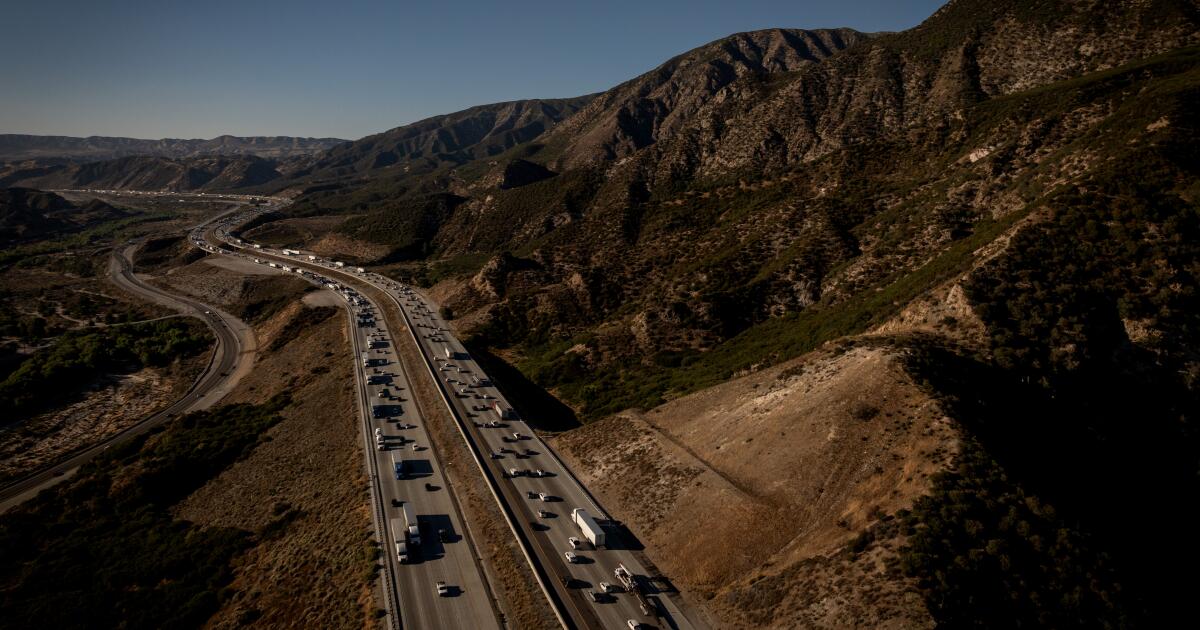
It lurks ominously beneath California’s many natural wonders, a reminder that nothing in this landscape is truly permanent.
It’s been described as “the mother of all earthquake faults,” the source of both our geological birth and, perhaps, our ultimate undoing.
But the most unnerving thing about the San Andreas fault these days may be its silence. It’s a mystery scientists are still trying to unlock.
The San Andreas is central to any discussion of California. It’s the massive 800-mile spine of the state, trundling up the Coachella Valley to the San Gabriel Mountains, and pushing along the edge of Silicon Valley to beyond the Golden Gate.
There is no simple answer for why California’s longest fault, responsible for some of America’s most powerful earthquakes, has produced so few in the last century.
But it is clear that the quiet period is only increasing strain on the San Andreas, as well as on the state’s second-longest fault, the San Jacinto.
A new study underscores the concern. Researchers estimated that key sections of the fault in Southern California are at their highest level of tectonic strain in the last 1,000 years.
The San Andreas, in other words, is locked, loaded and inevitable.
A red-hot San Andreas
Tectonic stress on these sections of the San Andreas and San Jacinto faults is high — shown in red — a product of no significant quakes on them for more than a century. At the Cajon Pass, sections of the faults are at their highest strain in 1,000 years, calculations suggest.
Average tectonic stress, in megapascals

Liliane Burkhard / University of Bern / University of Hawai’i at Manoa; Statewide California Earthquake Center Community Fault Model
Sean Greene LOS ANGELES TIMES
Ticking tectonics
There are generations of Californians who have never experienced the fury of the San Andreas.
The fault was responsible for a megaquake that ripped through the then-sparsely populated state in 1857 — an event that, if repeated today, would reap mass destruction.
In 1906, “a crack in the edge of the world,” as author Simon Winchester described it, flattened San Francisco.
Modern Californians have been forced to make do with Hollywood’s CGI versions of the fault, which cast it as one of our state’s darkest villains.
But sooner or later, scientists say, California’s earthquake faults will rupture in a way not seen in the modern era. While California has seen sizable temblors since the great San Francisco quake of 1906, the state’s faults are capable of producing intense shaking over a much larger area than seen during more modern events such as the Sylmar, Loma Prieta or Northridge quakes.
“We keep accumulating that earthquake energy, and it has to be released. And the only way it gets released is through large earthquakes,” said U.S. Geological Survey geologist Kate Scharer, one of the new study’s co-authors. “The small ones don’t really do it.”

A section of the California Aqueduct crisscrosses the San Andreas fault dozens of times.

-
Share via
The latest study, published last month in the Journal of Geophysical Research: Solid Earth, set out to create a model that calculated the seismic strain on three key segments of the San Andreas and San Jacinto faults where they intersect at the Cajon Pass in San Bernardino County.
The model is based on a number of factors: the estimated timing of earthquakes on the faults over a record of the last 1,000 years; satellite observations of how fast tectonic plates are moving; and estimates of how rigid Earth’s crust is, which determines how much stress can be accommodated and then released, Scharer said.
The computer model “found that tectonic stress has now reached higher levels than at any point in that entire record. From the model, we see that the conditions that historically preceded large joint ruptures crossing both fault systems are now approaching,” said Liliane Burkhard, the lead author of the study and a scientist at the University of Bern in Switzerland and the Hawaii Institute of Geophysics and Planetology at the University of Hawaii.
The last major temblor to strike urban Southern California, the magnitude 6.7 Northridge earthquake of 1994, resulted in severe damage and the deaths of about 60 people. But it was also mostly limited to a relatively small area of Los Angeles County.
By comparison, a hypothetical magnitude 7.8 earthquake on the southern San Andreas would simultaneously bring violent shaking to L.A., Orange, Riverside, San Bernardino, Ventura and Imperial counties and could result in 1,800 deaths, according to a U.S. Geological Survey estimate published in 2008.
The findings of the latest study don’t change the overall expectation of a big earthquake hitting Southern California. But they underscore the persistent risk — as well as the possible scale of the disaster.
There’s a 60% chance of a magnitude 6.7 or greater earthquake striking the Los Angeles region by 2045, according to USGS estimates published in 2015. There’s about a 1 in 5 chance of such a quake striking on the San Andreas fault within L.A. County and the Inland Empire.
Why the drought?
The decades-long relative earthquake drought “is an unusually long interseismic period, and stress has been accumulating continuously throughout,” Burkhard said.
The authors created a 28-second animation, showing how tectonic strain increased along the faults over the last 1,000 years. Big earthquakes then release that strain, before the cycle starts again.

This animation condenses 1,000 years of the Cajon Pass’s earthquake history into 28 seconds. Tectonic stress, shown in shades of orange and red, builds up along three fault segments. Following an earthquake, that stress is released. (Liliane Burkhard / University of Bern / University of Hawai’i at Manoa)
The study calculated that the San Andreas fault just northwest of the Cajon Pass and the San Jacinto fault just southeast of the pass are at their highest tectonic strain since the year 1100.


The pass, located roughly 50 miles northeast of downtown Los Angeles, marks the dividing line between the San Gabriel Mountains to the west and the San Bernardino Mountains to the east.
Specifically, the study’s authors calculated that the current tectonic stress was 2.8 megapascals on the San Andreas northwest of the pass, surpassing the previous highs of 2.7 just before big quakes in 1469 and 1691.
For the San Jacinto, the authors calculated a current seismic stress of 3.6 megapascals, surpassing the previous high of 2.9 before an earthquake in the year 1249.
The study noted that it has been an unusually long time since a megaquakes has hit Southern California. The San Andreas fault northwest of the Cajon Pass usually has big quakes every 100 to 150 years, Scharer said, though intervals of about 200 years are not unheard of.
On the San Andreas southeast of the pass, big quakes usually happen every 200 to 250 years. But the most recent quake on the San Andreas along the Salton Sea, close to the Mexican border, was about 300 years ago.
There are some limitations to the study’s model, scientists acknowledge. For instance, the model presumes that when large earthquakes hit, all the tectonic stress that had been accumulated in the fault gets released, “so you start at a ground state of zero and then you accumulate back up until you have that next big event,” Scharer said.
But whether all that stress actually gets released during a big quake is not definitively known.

The Mormon Rocks in Phelan, Calif.
Tectonic risks
Whenever it strikes, a supersized earthquake on the southern San Andreas would be like no earthquake seen in living memory in California.
The 1857 quake, estimated to be a magnitude 7.9, produced 63 times more shaking energy than the 1994 Northridge earthquake, and across a much larger swath of the state.
In 1994, “violent shaking,” or Level 9 on the Modified Mercalli Intensity Scale, causing great damage in substantial buildings, affected only part of the San Fernando Valley.

But a magnitude 7.8 San Andreas quake hypothesized by the USGS in its 2008 ShakeOut scenario would cause that kind of shaking across Southern California.
In 1994, emergency responders from across Southern California were able to focus the bulk of their efforts on especially hard-hit areas. That wouldn’t be possible in a regionwide disaster.


It might be tempting for Californians to tune out talk of the “Big One” after hearing about it for most of their lives. But generational catastrophes do strike — be they an earthquake in San Francisco in 1906, a hurricane in New Orleans in 2005 or tsunamis in the Indian Ocean in 2004 or Japan in 2011.
Tectonic rewards
Earthquakes are part of the bargain of living in California, a product of the same forces that allow people to ski and surf on the same day. The same tectonics that drive earthquakes act as the state’s landscape artists, said Julian Lozos, associate professor of geological sciences at Cal State Northridge.
“Because we are on the edge of the continent, we’re on a plate boundary, and have been a plate boundary for a couple hundred million years. There’s constantly been stuff crashing into North America, and getting stuck to it, and getting uplifted, and erupted through, and slid around,” Lozos said.
The Sierra Nevada, California’s mightiest mountain range, “are the guts of the volcanoes that used to be there when there was a subduction zone … and then when those volcanoes stopped erupting, the guts of them lifted up through the crust,” Lozos said.

Big Pines Highway rises out of a valley to ride a ridge created by the tectonic forces of the San Andreas fault, two miles southeast of the unincorporated Mojave Desert community of Valyermo, home to about 450 residents.
The same forces that produce earthquakes are also what led gold to form in the Sierra foothills, inciting the state’s famous rush.
Tectonic movement also created today’s Central Valley, a highly productive agricultural area that was once part of the ocean, then an inland sea, and then a freshwater lake, Lozos said.
“Everything about what we see here is stuff that formed because of that plate boundary then, and it’s getting moved around by the plate boundary now,” Lozos said. “And so if we didn’t have anything like that, we would be Nebraska.”
But the risks, like the rewards, are significant. The San Andreas runs right through cities in the Inland Empire. The Los Angeles Basin is also at risk.
If an earthquake on the San Andreas comes from the south and heads north, it would shuttle all that shaking energy “right into downtown,” Lozos said, causing shaking that could last two to three minutes.
“Geologically, L.A. is a bowl of Jell-O. It is a hard rock bowl full of really soft, squishy stuff that shakes very easily,” Lozos said.

It is business as usual at the Wrightwood Inn on a recent Tuesday night. According to a recent study, seismic pressure has been gradually building in the area for more than a century.
It’s not certain why it’s been so quiet between earthquakes, said Scharer. Another study, published in 2023, suggested the lack of sudden, major floodwaters funneling into Lake Cahuilla, the larger historical predecessor to the Salton Sea, may have something to do with it.
Scharer said the study’s results are a good reminder to prepare for the next big earthquake.
To be sure, the computer model’s results are not a prediction, and all models have their limitations and uncertainties. Still, its suggestion that the fault systems are “more loaded than at any point in the 1,000-year record,” Burkhard said, “is a finding worth taking seriously.”
“In the end, the most important message is a simple one: Let’s make sure we are prepared,” she said.

A new poll in the race for California Governor shows Democrat Xavier Becerra is leading Republican Steve Hilton by a wide margin — 61% to 36%.
Becerra leads Hilton across several demographics: age, gender, homeownership, income, racial/ethnic groups and across the state’s major regions.
The poll also found 85% of likely voters say that the gubernatorial candidates’ positions on the environment are important — 60% of Democrats call it “very important,” compared to 29% of Republicans.
The poll surveyed 1,578 California adults from June 29 through July 6 and was conducted by the Public Policy Institute of California. The poll was conducted in English and Spanish, and 1,003 of those who were polled were likely voters.
The same poll found that a large majority of Californians do not want new data centers built in their area. Only about a quarter of those surveyed are in favor of the construction of data centers.
The PPIC survey focused on Californians and the environment.
Another key finding was that Californians are most likely to name wildfires as the top environmental issue facing the state today, followed by climate change, government overregulation and water supply. Of those polled, about six in 10 think that the state and local governments are not doing enough to address wildfires.
The California General Election will be held on Nov. 3, 2026.
Copyright © 2026 KABC Television, LLC. All rights reserved.
-
 Alaska3 minutes ago
EPA waives Clean Air Act restrictions on high-sulfur diesel for the North Slope
-

 Arizona9 minutes ago
Arizona lacrosse leaders believe sport is poised to grow
-

 Arkansas15 minutes ago
Two Narratives, One Ballot Box: Trump’s Concerns and Arkansas’ Response
-

 California21 minutes ago
Forest Service workers held hostage at gunpoint by father, son in CA forest for hours: Authorities
-

 Colorado27 minutes ago
The presiding judge of Colorado Springs Municipal Court will retire
-

 Connecticut33 minutes ago
Wethersfield woman accused of sexually coercing minor from New York after meeting him online
-

 Delaware39 minutes ago
Canadian Wildfire Smoke Pushes Delaware Air Quality to Code Red | Delaware LIVE News
-

 Florida45 minutes ago
Will Florida see its next named storm this weekend?

