Connect with us

California

Come to California If You Want to Live | Connecting California

Published

on

Come to California If You Want to Live | Connecting California


California has its shortcomings, but columnist Joe Mathews explains why the Golden State outshines most of the nation in life expectancy. Cropped version of “Mulholland Drive: The Road to the Studio” painting (1980) by David Hockney. Courtesy of Rob Corder/Flickr (CC BY-NC 2.0 DEED).

Advertisement

Come to California if you want to live.

That’s my New Year’s suggestion for a new state slogan. California is losing population for the first time since it became a state. The cause of the problem is not people leaving—in fact, our levels of departures, as percentage of population, are among the very lowest in the nation. Rather, the problem is that so few people are moving here.

The biggest reason for that is well known: The cost of living in the Golden State is among America’s highest. But less well known is that our high costs buy you more living. Literally. On average, Californians live to 79, which beats the American average by more than two years, along with the average of all but three other states.

Historically, California was middling in life expectancy. But during the 21st century, federal data has ranked it at or near the very top of the 50 states. Lately, only Hawai‘i residents, who reach an average 80.7 years, have lived longer. Our biggest metro areas are among the healthiest places in the country. The Bay Area ranks second in life expectancy nationally, and Los Angeles third.

Advertisement

Nor do you have to spend your whole life here to gain the extra time. Stanford and MIT researchers have found that moving to California even after age 65 can increase your life span by more than a year, or 5%.

Why do we live longer? There are many reasons. Wealthier, higher-income states with relatively high levels of education—like California—tend to rank highest in life expectancy. Money, after all, buys more access to better health care, and California’s rich people live near some of the world’s best hospitals and highest-quality health systems.

Healthy behavior helps. The percentage of us who smoke is lower than that of any state besides Utah. Our obesity rate is the fourth-lowest in the U.S. We have some of the country’s lowest rates of infant mortality and suicide.

The cost of living in the Golden State is among America’s highest. But less well known is that our high costs buy you more living. Literally.

Our more liberal public policy counts too. California’s strong environmental protections for air and water help us live longer. Gun control keeps many of us alive—we have the eighth-lowest rate of gun deaths and gun ownership. A new study from the gun control non-profit Everytown for Gun Safety finds that the Golden State has the strongest gun laws in the country. If every other state copied our regulations, the study found, nearly 300,000 lives could be saved over the next decade.

Advertisement

Then there’s our nation-leading commitment to health care coverage. This month, California became the first state in the union to make all unauthorized immigrants eligible for Medi-Cal, California’s name for the federal health care program Medicaid. With this move, Golden State becomes the first state to expand Medicaid to cover all low-income residents. That portends even longer lives for future Californians, since low-income populations usually have the highest mortality rates.

The news is not all good. California saw its life expectancy drop below 80 years during the pandemic. But the overall U.S. life expectancy dropped even further, to just over 76 years. And there is a significant disparity—approaching 7 years—in expected life span between residents of California’s urban and suburban coastal counties, and those who live in the rural North State and Central Valley.

Frustratingly, California also lags in rankings of mental health services—which is one reason that Prop 1, a $6.38 billion mental health measure, is on the March ballot. And the state has failed to reduce the number of people in the state who are unhoused, a life circumstance that according to a UCSF study makes you 16 times more likely to die suddenly.

California also struggles to prevent deadly drug use, especially among young people. A new “report card” on California from the advocacy coalition Children Now gives the state a “D-” on substance abuse prevention, saying that California’s “unfocused” plan offers little in early intervention “and instead requires kids to ‘fail first’ before getting the help they need.”

Of course, the other states also struggle with drugs, mental health, and homelessness, and many of them offer less in services and support than we do. The statistics demonstrate that California, for all its failures, is a great place to settle if your goal is to stick around awhile on earth.

Advertisement

And if my formulation—“Come to California if you want to live”—seems too sharp, then the state might instead borrow a line from the comedian Mort Sahl, who spent his later years in Marin County, whose residents enjoy the state’s longest life expectancy (more than 83 years).

“You haven’t lived,” Sahl said, “until you’ve died in California.”

He died in 2021, in Mill Valley, at age 94.


Source link

Advertisement

California

California Central Valley city’s first-ever Pride event moves indoors after pushback

Published

on

California Central Valley city’s first-ever Pride event moves indoors after pushback


Oakdale’s first Pride event is moving forward this weekend after organizers changed venues following pushback over its original location and a planned drag performance.

Some residents pushed back over the event’s original location at Dorada Park and a planned drag performance.

“I also understand staff has issued a permit for a so-called Pride event,” one speaker said during the latest City Council meeting.

Another speaker raised concerns about the event being advertised as open to all ages, including children, and having a drag queen host.

Advertisement

After the public pushback, organizers moved the event indoors to the Bianchi Center.

“It was a huge upgrade to be able to provide a more accessible space in the heart of Oakdale,” said Ryan Hall, president of CalPride.

Hall said the idea to bring Pride to the city did not come from outside Oakdale, it came from people living there.

“That’s my place as a mom of rainbow kids, absolutely,” said Elizabeth May, owner of Sisters Coffee.

May’s coffee shop hosts a monthly LGBTQ+ social.

Advertisement

“I had a young man walk in here and say, ‘We don’t have anywhere to have a social here for LGBTQ.’ I said, ‘Heck yes,’” May said.

Still, the backlash has left parents like May concerned.

“How does it feel? Scary. I’m excited, but as a mom of a kid in the community, I’m nervous for them,” May said.

May said the venue change helped ease some of the tension.

“The different venue made a win-win situation for everyone. I was very proud of the kids for making that hard decision,” May said.

Advertisement

For organizers, the drag performance is part of the celebration.

“Enjoy some line dancing, enjoy some live music, enjoy the drag show, and then also enjoy community members and our local businesses, our local artists and partner organizations,” Hall said.

Oakdale Pride is scheduled for Sunday from 10 a.m. to 2 p.m. Entry is free.


Source link

Continue Reading

California

Newsom urges a national ‘billionaires’ tax’ while fighting one in California

Published

on

Newsom urges a national ‘billionaires’ tax’ while fighting one in California


California Gov. Gavin Newsom, a Democrat who is considering a run for president as he approaches the end of his term, called for a national “billionaires’ tax” on Friday even as he fights another proposal targeting the wealthy in his home state.

Newsom also said the U.S. government should own a stake in artificial intelligence companies. His proposals, outlined in a Substack post, aligns him with the Democratic Party’s populist left, and he argued that urgent changes are needed to prevent the elite concentration of wealth and power from undermining democracy.

“It’s time for an economic reset for America,” Newsom wrote.

The governor announced his agenda a day after an influential health care union in California pledged to go forward with a ballot measure that would impose a one-time 5% tax on the assets of billionaires living in the state as of Jan. 1, 2026.

Advertisement

Newsom opposes that measure, as do many of the liberal interest groups that typically favor higher taxes. They fear it would drive billionaires out of California, eroding the state’s tax base over the long term for a one-time influx of cash. A technology mecca, California has more billionaires than any other state — a few hundred, by some estimates.

“You may not be able to pick up and move to Texas or Florida to shelter your income from taxation, but I promise you that billionaires can, and do,” Newsom wrote. “Wealth is movable, and it shops for the state with the lowest taxes. The fight belongs at the federal level, where this broken system was created in the first place.”

A minimum tax on large net worths

Newsom said the solution is a new national tax policy, rather than a state-by-state system. He proposed a minimum tax on anyone with a net worth above $100 million. He also wants to make it illegal for the wealthy to borrow against their stock portfolios to fund their luxury lifestyles tax free.

Newsom said there should be new rules for inheritance taxes, warning that “the transfer of wealth among the ultra-wealthy will lock in a permanent American aristocracy of inherited wealth.” And he wants to raise corporate tax rates to where they were before President Donald Trump’s first-term tax cut.

READ MORE: Sanders and Newsom clash over proposed tax on California’s billionaires

Advertisement

The need is especially urgent as artificial intelligence threatens to displace workers and further concentrate wealth, he wrote.

“We need to ensure every American owns a stake in the future being built by AI through a national public equity fund that takes a major stake in the new economy,” he wrote. “Simply, as artificial intelligence reshapes the country, every American should own a piece of the future it builds.”

Revenue generated by his proposals could be used to retrain workers, fund universal child care, make college free and increase funding for health care.

‘Money buys influence’

Newsom, who has drawn attention as one of Trump’s most high-profile political antagonists, is getting an early start on laying out a policy framework for his potential White House bid months before the midterm elections, which have typically marked the informal start of overt presidential campaigning.

WATCH: News Wrap: Newsom says Trump ordering DOJ to investigate him and wife

Advertisement

The embrace of a wealth tax by Newsom, a moderate on tax policy despite his liberal reputation, signals a notable shift in the political landscape since Massachusetts Sen. Elizabeth Warren struggled to get traction in her 2020 campaign, which she largely centered around a 2% levy wealth tax.

Newsom portrayed the nation’s tax code as a corrupt system built to help an elite few.

“Money buys influence, and influence rewrites the rules,” he wrote. “Those rewritten rules funnel even more wealth to the few. Under this weight, democracy itself starts to buckle.”

A free press is a cornerstone of a healthy democracy.

Support trusted journalism and civil dialogue.

Advertisement


Source link

Advertisement
Continue Reading

California

This 1947 adobe home has found a new life as a ‘modern California hacienda’

Published

on

This 1947 adobe home has found a new life as a ‘modern California hacienda’


This is the latest instalment of The Inside Story, Wallpaper’s series spotlighting intriguing, innovative and industry-leading interior design.

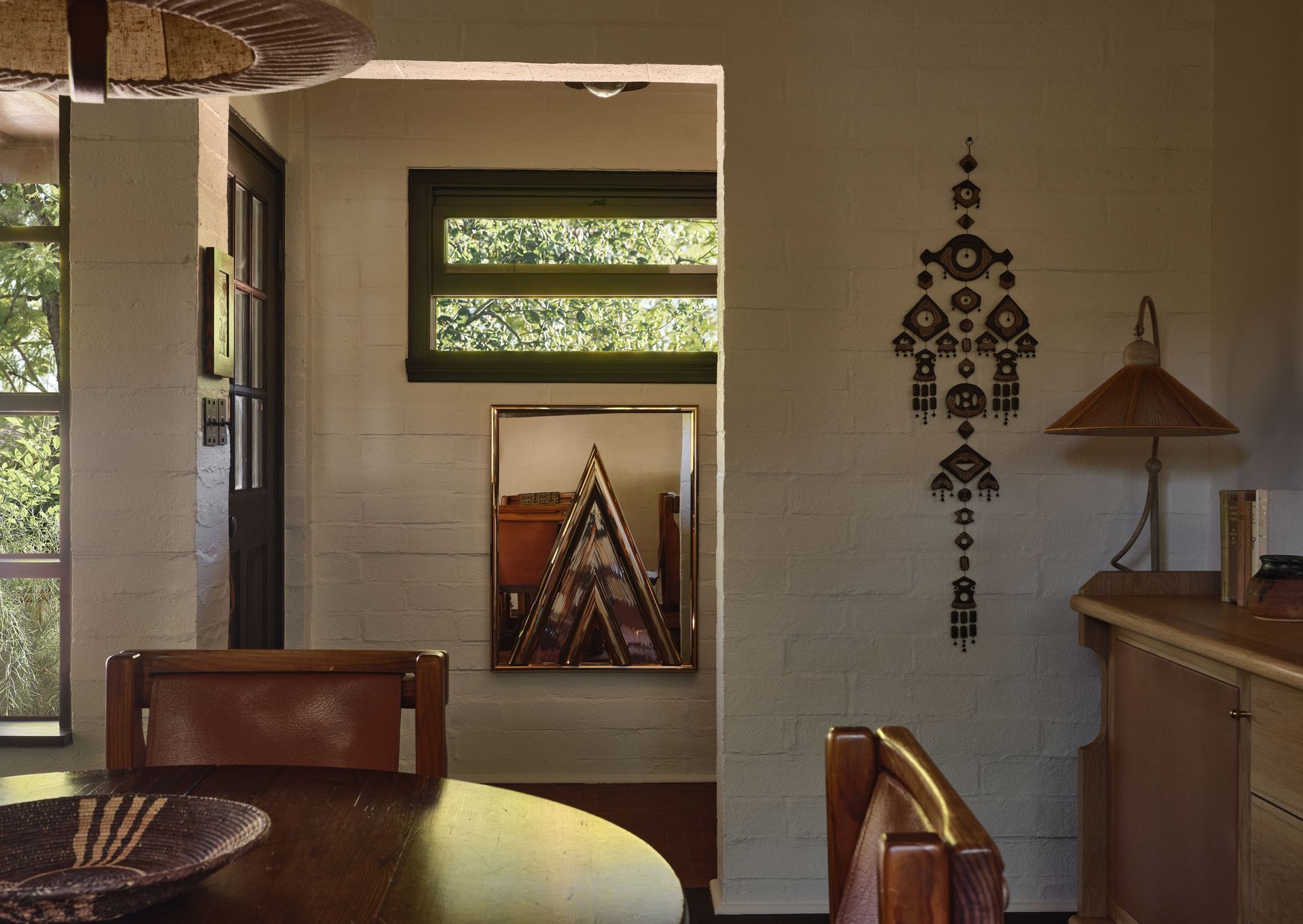
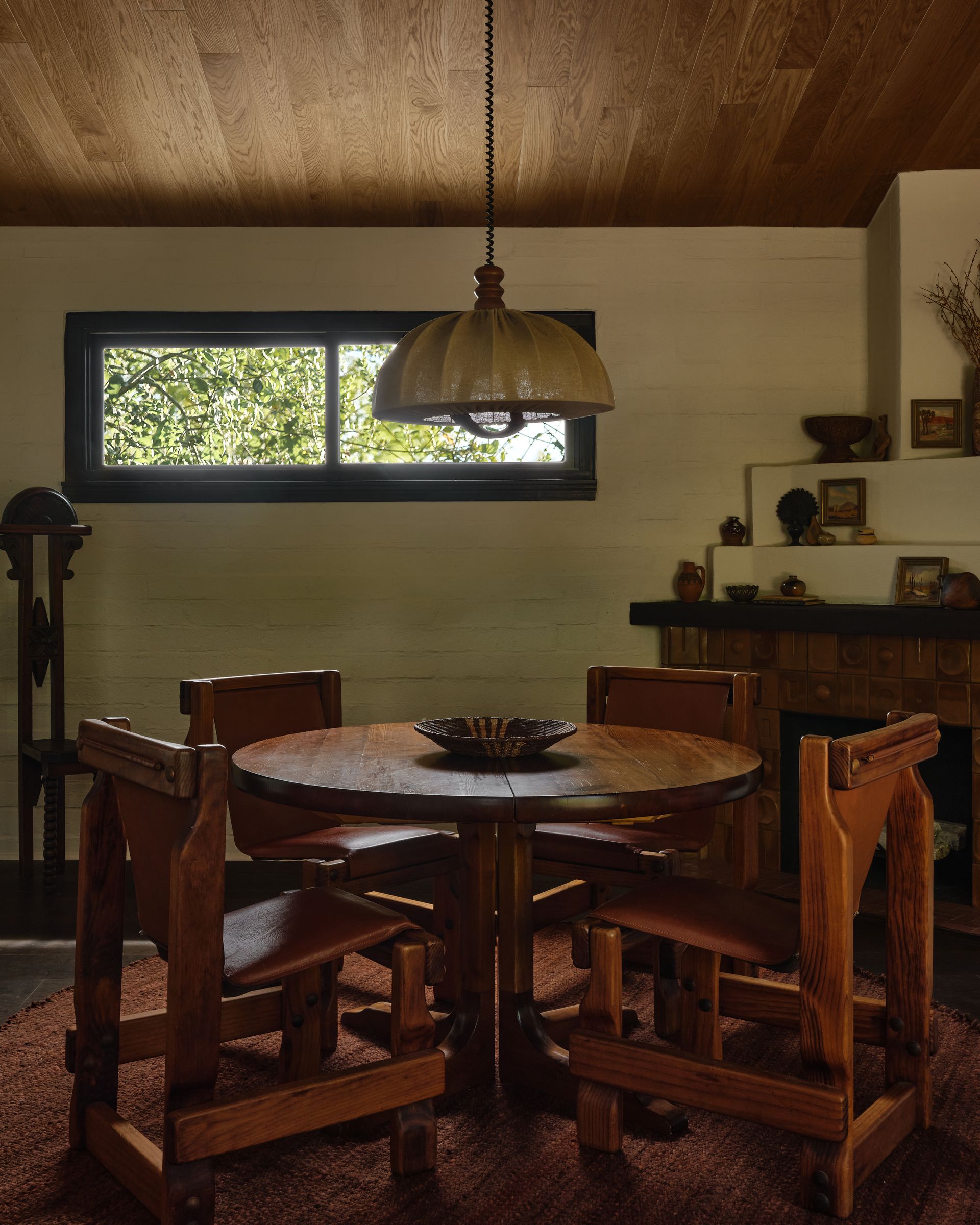
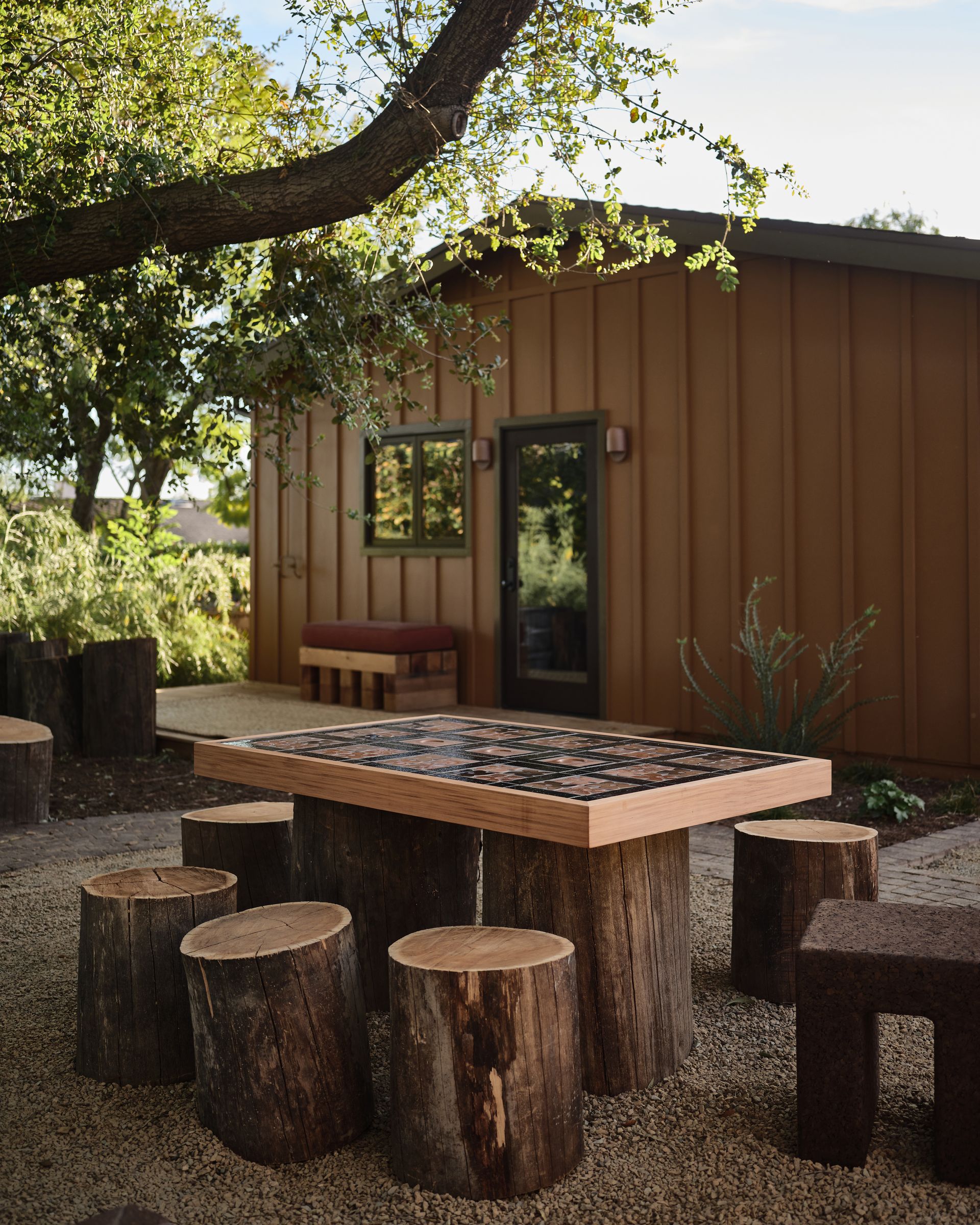
Nestled at the base of the San Gabriel Mountains in Sierra Madre, a 1947 adobe home – a traditional building method using sun-dried bricks of organic materials – has been reimagined. Removed from the noise and polish of Los Angeles, this neighbourhood is shaded by California oaks, eucalyptus and pine, and shares its hillside with bears. It’s an unusual setting for a design story.

(Image credit: Michael P.H. Clifford)
Advertisement

mid-century california home redesigned by Kirsten Blazek

(Image credit: Michael P.H. Clifford)

The home’s transformation began with a fire that destroyed much of the structure, leaving only the original adobe brick wall standing. Rather than rebuild from scratch, designer Kirsten Blazek of A1000XBetter chose to work with what remained.

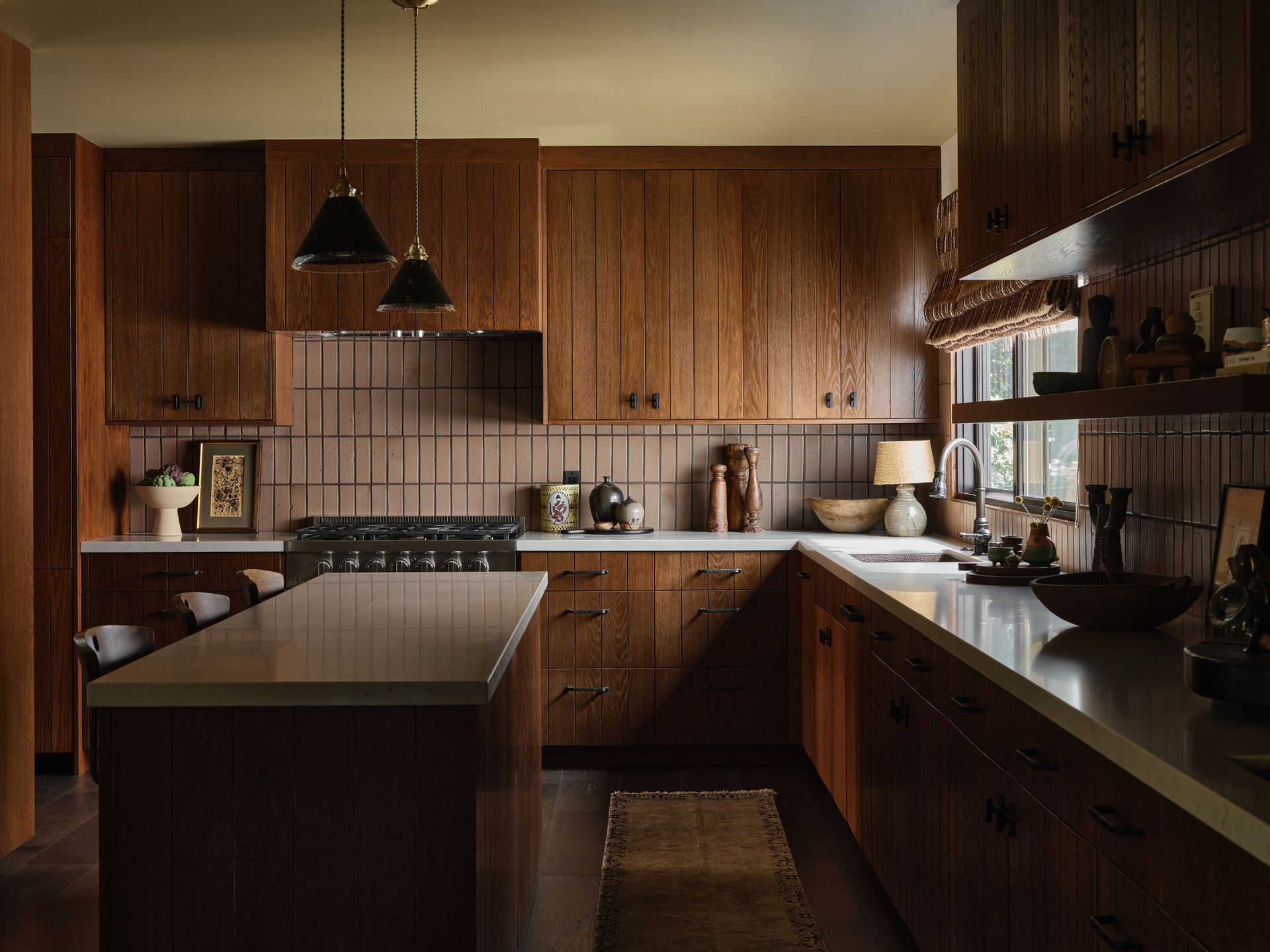
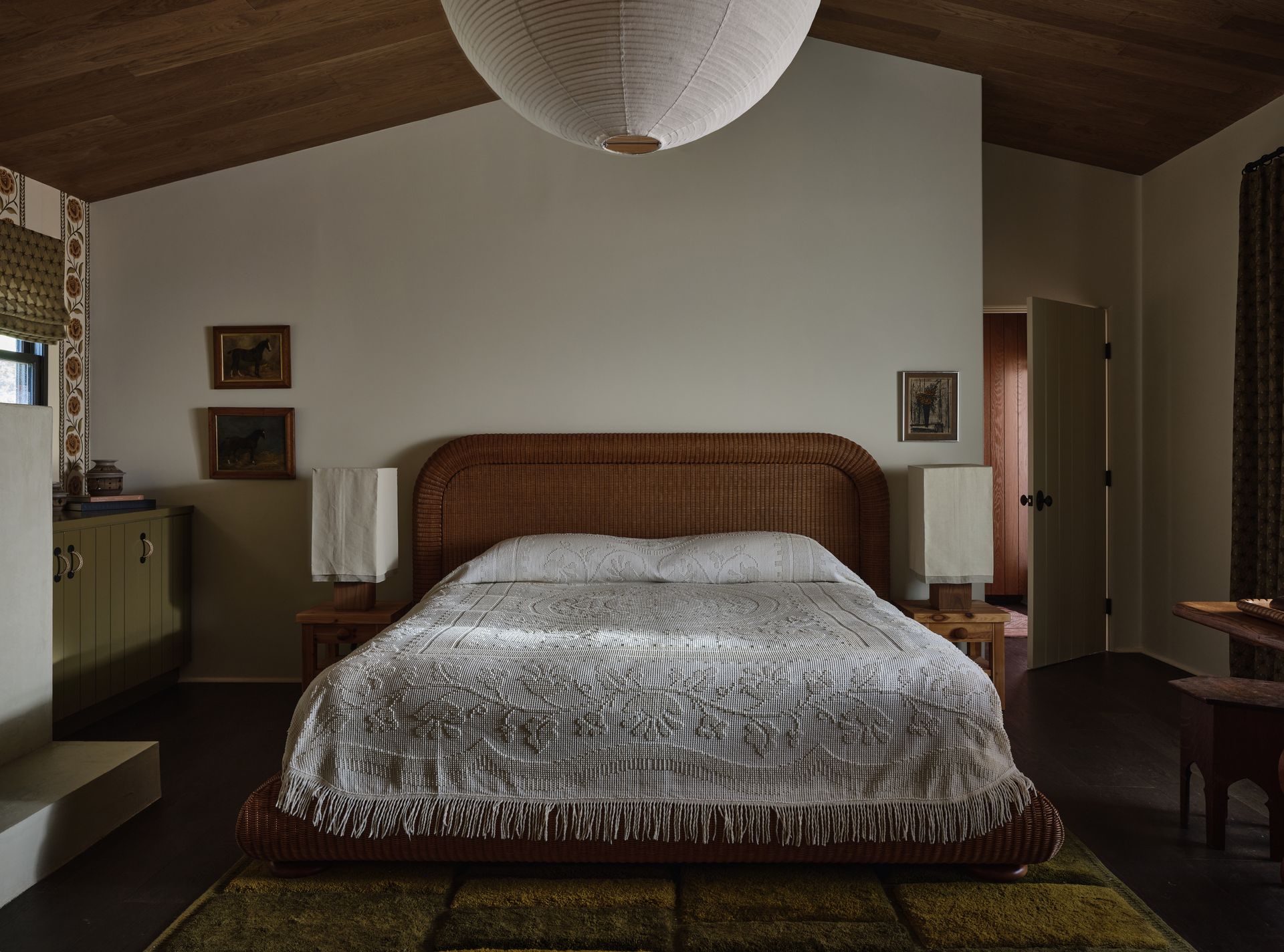
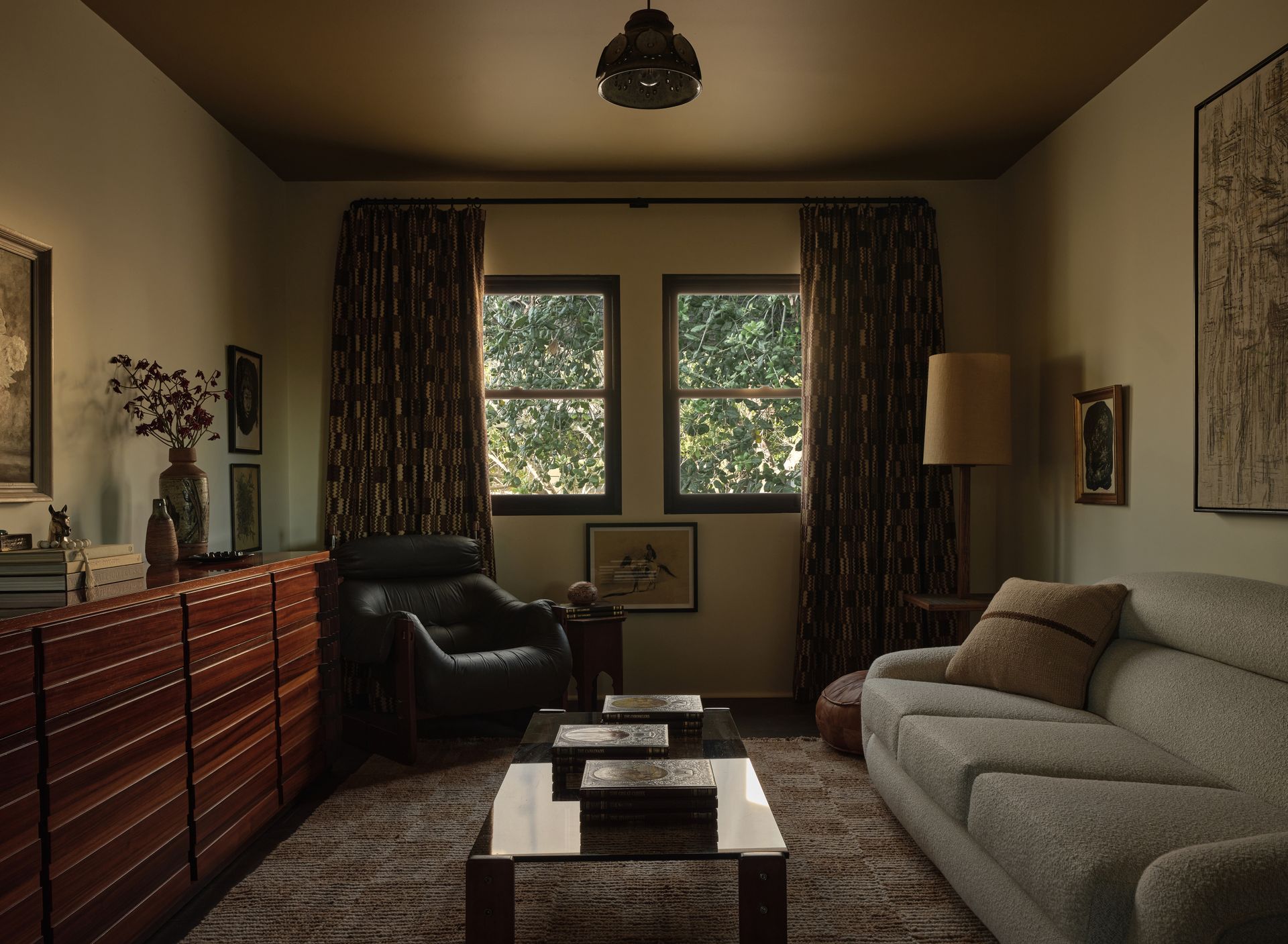
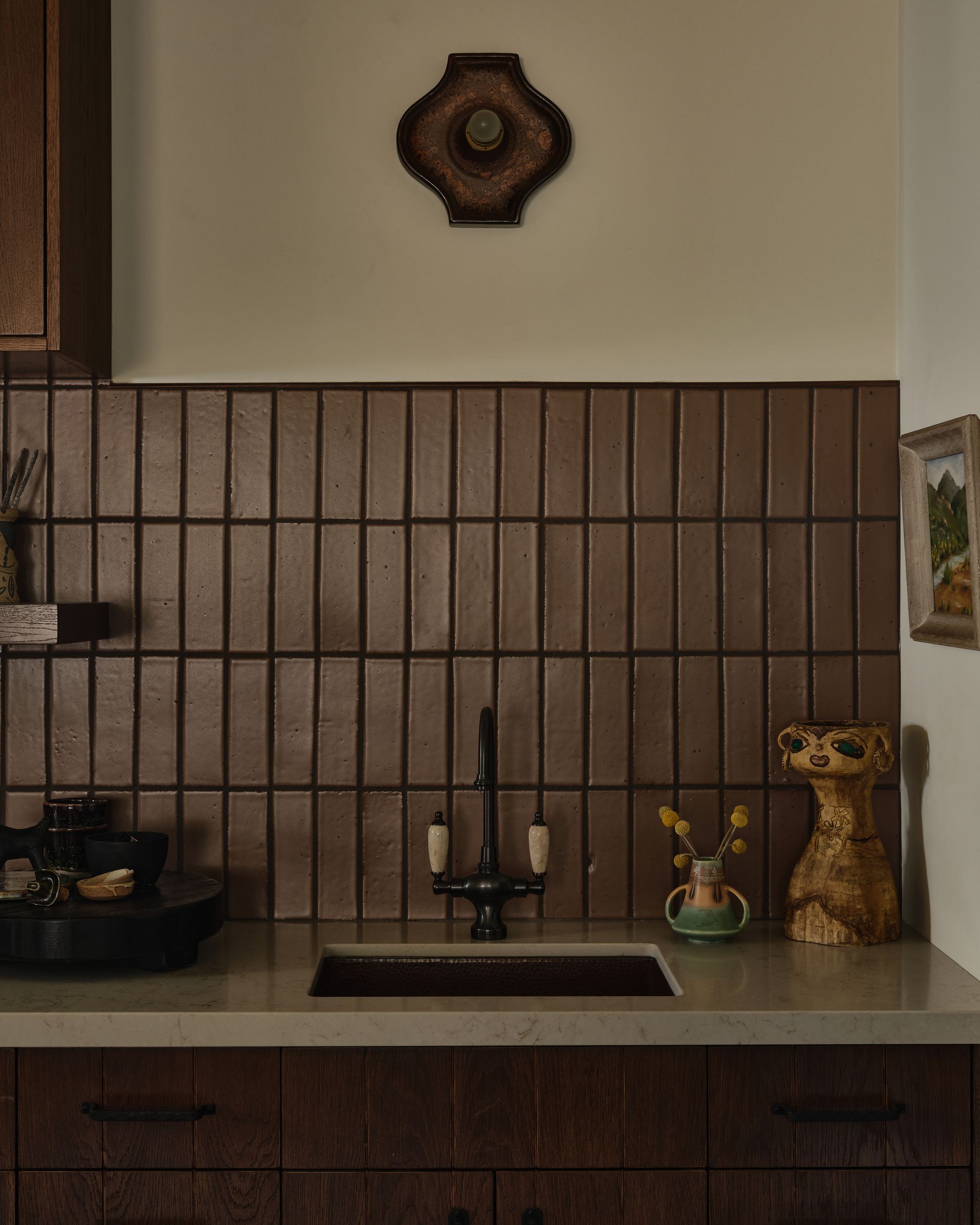
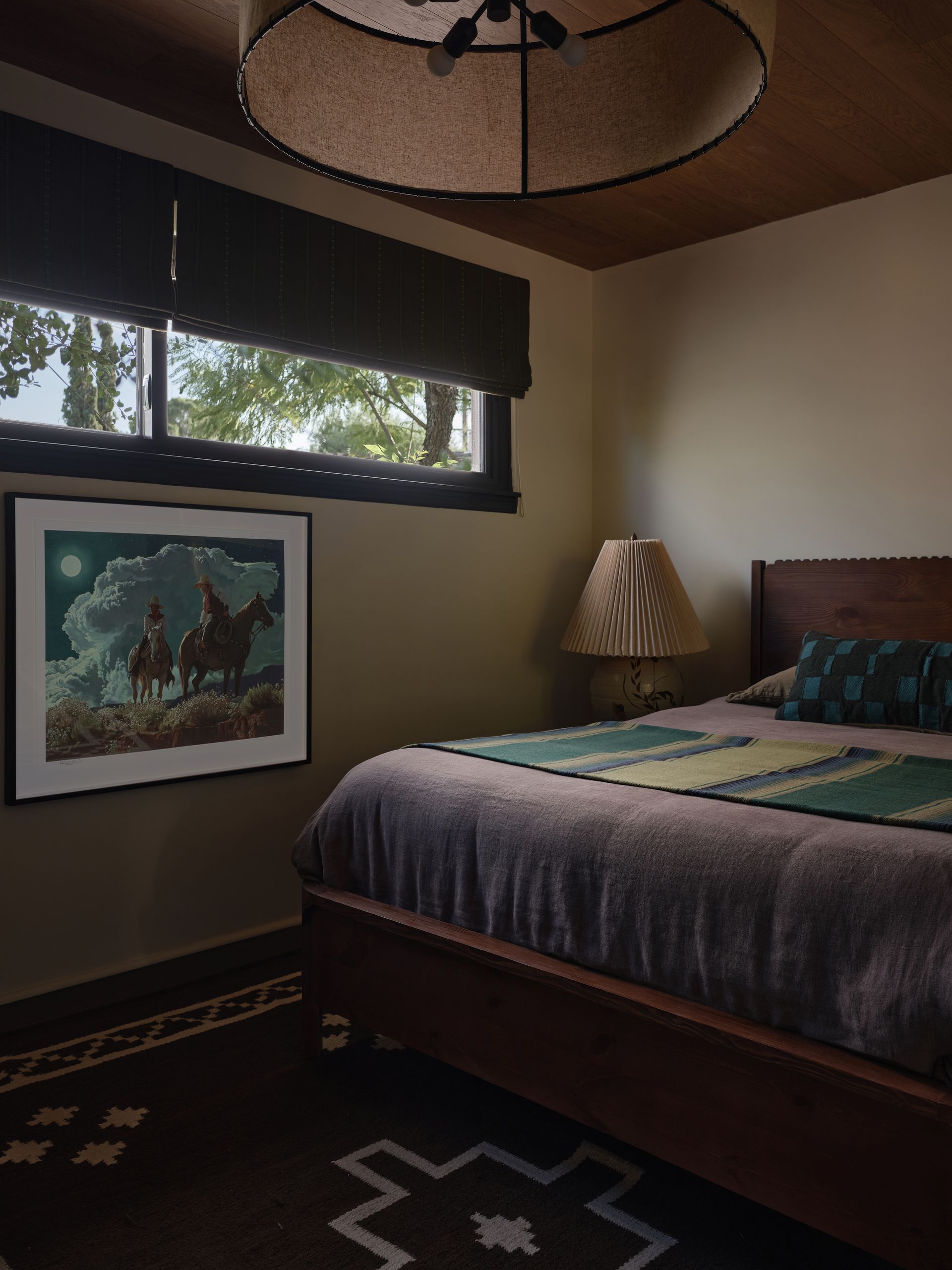
‘The overall vision was to maintain as much of the original character and style of the home as possible, while making it more functional for modern living,’ she explains. New rooms were added – a kitchen, a primary suite, a family room – though the expansion was restrained. ‘We worked mainly within the original footprint,’ the designer notes, ‘only adding a small amount of square footage for the primary closet.’

mid-century california home redesigned by Kirsten Blazek

(Image credit: Michael P.H. Clifford)
mid-century california home redesigned by Kirsten Blazek

(Image credit: Michael P.H. Clifford)
Advertisement

mid-century california home redesigned by Kirsten Blazek

(Image credit: Michael P.H. Clifford)

On the original adobe side, the layout was left untouched. The hallway windows, original to the 1947 build and ‘one of [Blazek’s] favourite features’, were preserved. ‘I wanted the house to feel like a modern California hacienda,’ she says of her guiding aesthetic, ‘and embraced that through every colour choice and finish.’


Source link

Continue Reading
Advertisement

Trending