California
California to become an independent country and leave US? A big initiative is already cleared


ALSO READ: Justin Baldoni, Blake Lively exchanged ‘affectionate’ messages before things took a U-turn? All details
California to become an independent country?
A new ballot initiative by Marcus Evans of Fresno reportedly asked voters whether the state should become an independent country was cleared by the California Secretary of State’s Office to move forward. To qualify for the state’s 2028 ballot, more than 545,000 signatures from registered voters must be gathered by July 22.
If approved, the measure would not trigger immediate independence, but it would create a 20-member commission to study whether California could govern itself as a separate nation, according to Fox LA. The secession would require a constitutional amendment which would need approval from two-thirds of the states.
According to the guidelines, if at least 50% of registered voters participated and at least 55% voted “yes,” it would constitute “a vote of no confidence in the United States of America.” Furthermore, it would express the “will of the people of California” to become an independent country.ALSO READ: These 200-year-old books predicted Trump’s return and rise of his son Barron: TikTok video fuels wild theories
According to the initiative’s language, it would not change California’s current government or relationship with the United States. However, it would create a commission to report on California’s viability as an independent country.
Then a 20-member commission would be created to study the viability of California operating as an independent state in 2027 and to publish a report the following year.
Then the question would appear on the ballot in 2028. And if that’s approved, the proposal would declare a “vote of no confidence in the United States of America” — without changing the state’s government or its relationship with the U.S. The measure also calls for the U.S. flag to be removed from all state buildings.
The initiative estimates one-time election-related costs, and forming a commission on national sovereignty and independence would cost $10 million. It estimates that operating the commission would take another $2 million in annual state costs.
ALSO READ: Barron Trump’s weird restroom and lunch protocol revealed, classmates call him ‘very mysterious’
According to the news release from the California Secretary of State, “If enacted, this measure places the following question on November 2028 ballot: “Should California leave the United States and become a free and independent country?” If at least 50% of registered voters participate in that election, and at least 55% vote “yes”, it would constitute “a vote of no confidence in the United States of America” and “expression of the will of the people of California” to become an independent country, but would not change California’s current government or relationship with the United States.”
What does the US Constitution say?
The US Constitution does not provide for secession. A constitutional amendment would require the approval of two-thirds of Congress and 38 states. Since this secession movement is still in its infancy, there’s obviously no word yet on what an “free and independent” California flag or national anthem would be. But it seems that Phantom Planet’s iconic song “California” should be top runner.
ALSO READ: Trump tasks Elon’s SpaceX to bring back stranded Sunita Williams. How will Musk help her come back from space?
The new initiative was cleared today, but it’s not the first time a proposal has come forth for California to be its own independent country. Interest in pushing for California’s secession from the United States increased in 2016 after the presidential election that year.
The effort became known as “Calexit.” The “Calexit” name is a play on the successful “Brexit” campaign for Britain to leave the European Union. The movement was backed by YesCalifornia Independence Campaign at the time. However, according to a statement on their website, the YesCalifornia Independence Campaign has dismantled and that “moving forward, any efforts to advocate for California’s secession or independence referenda will not be affiliated with or sanctioned by YesCalifornia or the CalExit campaign.”


SACRAMENTO — Gov. Gavin Newsom on Monday signed his final state budget as governor, a $351.7-billion spending plan that seeks to uplift the poorest Californians through a tax system reliant on the stock market gains of the wealthy.
In a video message, Newsom extolled free school meals, universal transitional kindergarten, 130,000 subsidized childcare slots and other accomplishments in his tenure at the state Capitol, a period in state history marked by a dramatic expansion of state government and over $100 billion in increased spending.
“Over the past eight years, we built great things for the people of California — some of the boldest actions any government in this country has taken in a generation,” Newsom said. “And we did this without breaking the bank. We did this by design.”
The agreement ends weeks of lobbying by outside interests and negotiations among lawmakers and the governor at the state Capitol about how to handle a surge of income tax collected on stock market gains related to artificial intelligence.
Economists have warned that the revenue bump is potentially temporary and analysts say the growth in state spending could leave California in a challenging position if the economy declines.
Assemblymember David Tangipa (R-Fresno) agreed with Democrats that the budget is “compassionate.”
“My fear is that it’s not too much of a competent budget, and the budget continues a pattern that Californians know all too well: Spend now, justify it later, and hope somebody else pays the bill,” he said during a floor debate Monday.
Here’s what you need to know about the spending plan, which takes effect July 1.
Who decides the state budget?
The simplest answer is: Democrats. California voters have elected Democrats to represent 30 of the 40 seats in the Senate and 60 seats of the 80 seats in the Assembly. The budget was passed through a majority vote in each house of the Legislature and signed by Gov. Gavin Newsom, also a Democrat.
A more complex answer is that the budget is a product of dozens of legislative hearings, millions of dollars spent on lobbying by outside interests, talks among lawmakers and the governor and ultimately subject to the same political dynamics that rule the Democratic party.
Senate President Pro Tem Monique Limón (D-Goleta) and Assembly Speaker Robert Rivas (D-Hollister), in consultation with the chairs of the budget committees, represent their Democratic caucuses and reach a final agreement on the details of the spending plan with Newsom. In reality, staff members for the three parties handle most, if not all, of the back of forth negotiations to get there.
Union leaders seeking better pay, working conditions, benefits for workers and opportunities to expand their ranks are often brought in to consult or hammer out thorny deals as business groups try to fight off more regulations, taxes and costs, and support policies that increase their financial performance.
Democrats are spending more than ever before. How is that possible?
The Legislative Analyst’s Office, the nonpartisan fiscal advisor for lawmakers, recently examined the increase in state spending since 2019-20, Newsom’s first full year in office.
Between the budget approved that year and the spending proposal Newsom unveiled in January, spending from the state’s main operating fund had grown by over $100 billion, or 70%. That was largely by a 60% increase in revenue during that time. California typically operates with a spending deficit because Democrats spend more money than the state brings in.
The LAO found that the increase in spending stemmed from the growing cost of sustaining programs and services that were already in place when Newsom took office. About 30% of the remaining spending growth was categorized as new, either by newly created programs or the expansion of existing services.
Among the report’s conclusions: California could not afford the programs that predated Newsom and the ones he and the Legislature adopted.
To balance the budget over the last few years, Newsom and lawmakers have dipped into the state’s reserves at a time when California is experiencing strong revenue growth, which the LAO has cautioned against. Democrats have also increased taxes on businesses, paid for programs out of other funds and suspended reserve deposits among other solutions.
This year, the state budget places $6.4 billion in higher than expected revenue into a temporary holding account to knock down a deficit and balance the budget through 2027-28.
Democrats are pursuing a change to the state constitution on the November ballot that would allow them to set aside more money in years of good revenue growth to prevent cuts in future downturns.
Where is the money going?
Education and Medi-Cal are the two largest costs for the state.
Medi-Cal is the state’s version of subsidized health insurance for low-income Californians and provides medical, dental and vision care for an estimated 14.5 million people, or about one-third of the state population.
The federal government pays for more than half of the cost of the program. California is expected to spend about $50 billion from the general fund next year out of a total estimated at more than $220 billion in costs shared between the state and federal government, according to the LAO. State taxes and fees on providers also help fund Medi-Cal.
Overall, Medi-Cal costs more than any other state program and takes up about 40% of total spending, including federal funds the state receives, according to the LAO.
Spending on Medi-Cal has more than doubled over the last 10 years, which the LAO attributes to an increase in costs per enrollee, more enrollees and a greater share of seniors seeking care, among other factors.
Under Newsom, California has expanded Medi-Cal, including offering coverage to include all immigrants regardless of their immigration status, which the governor said has dropped the state’s uninsured rate down to 5.9%
The cost of Medi-Cal has grown beyond what Democrats expected and resulted in Newsom suggesting spending cuts.
The final budget agreement rejects a call by Newsom to lower the asset limit to $2,000 now and instead lowers it to $21,000 in 2027-28 to be eligible for Medi-Cal. The Legislature also delayed the governor’s proposal to reduce dental coverage and shift asylum seekers and other immigrants to restricted scope Medi-Cal, according to Jason Sisney, the lead budget advisor for the Assembly who posts about the budget on Substack.
The budget includes Newsom’s proposal to shift enrollees with unsatisfactory immigration status, a term that includes undocumented immigrants and others, from managed care to fee-for-service to save costs.
Under Proposition 98, approved by voters in 1988, California has a minimum funding guarantee for schools and community colleges and dedicates roughly 40% of general fund revenue to education.
Sisney said the budget increases the Local Control Funding Formula by $2.2 billion and provides historic general fund per pupil spending of $21,148. Support for special education also grew by $1.8 billion.
The California Community Schools Partnership Program received a $1-billion boost and Democrats directed $2.8 million in additional funding to the program that provides free meals for school children.
The budget also establishes 22,770 new slots for free or reduced childcare, which Newsom had proposed decreasing.

OROVILLE — Bradley Scott Sayer was charged with two counts of first-degree murder and discharge of firearm with injury during his arraignment Thursday at the Butte County Superior Court.
Sayer, 18, is the suspect in the Chico library shooting on Monday in which two men were killed, and he could face life in prison. If convicted, Sayer is facing the highest penalty for capital murder with special circumstances, which would be life in prison without the possibility of parole. Butte County District Attorney Mike Ramsey, who is the prosecutor of the case, said the court is not seeking the death penalty.
Sayer was not given bail, as Ramsey said the court felt Sayer was “too dangerous.” Ramsey also said Sayer is on suicide watch in at the Butte County Jail.
“We felt that it would be too dangerous to let him go at this juncture,” Ramsey said. “He planned a mass shooting, and there’s no reason to believe that if he was let go, that he wouldn’t continue to do that.”
Sayer was staying at his father’s house, who was out of town, the day of the shooting, according to Ramsey. He then went to the closet in his father’s room and took two .22 caliber rifles and a 20-gauge shotgun, as well as several boxes of “No. 3 birdshot shells” before leaving for the library.
Sayer will appear in court next at 8:30 a.m. July 16 at the Butte County Superior Court, where he is expected to enter a plea. He is being represented by Roberto Marquez as retained counsel.
Autopsies
The Chico Police Department released a final update regarding the shooting case. The Butte County Sheriff’s Office completed the autopsies of both Jacob Cody Hull and Robert Johnson.
“The autopsies were completed; results indicate that both victims died as result of gunshot wounds. The wounds are consistent with a shotgun being used. The decedents will be turned over to their families who will be making funeral arrangements. The suspect remains in custody at the Butte County Jail being held in isolation,” Butte County Sheriff Kory Honea said.
California
CA state senator physically, verbally harassed at pride parade for Israel stance | The Jerusalem Post

California State Senator Scott Wiener was harassed for his stance on Gaza during the San Francisco Trans March on Friday, to the point where it was no longer safe for him to remain, Wiener said.
A group of people were so “physically and verbally aggressive that it was impossible for me to safely remain in the park,” Wiener stated, adding that this was the first time he did not participate in the march.
Wiener was surrounded by people who made statements about his “Israeli handlers, among many other inaccurate, extreme, and vile statements,” Wiener said.
“We f***ing hate you. You stopped being queer the moment you started supporting Israel,” one person yelled in a video later shared on social media.
Wiener stated that while he has no objection to anyone disagreeing, opposing, or protesting him, the “harassment, including cornering me, touching me, or trying to physically bully me out of a public event, that crosses a line.”
“In San Francisco, we’re better than that,” he added.
Mayor Daniel Lurie made a statement on X/Twitter condemning the harassment, calling the language used “targeted, hateful, and antisemitic.”
In San Francisco, we welcome disagreement and respectful dialogue around issues many of us feel passionately about – but we cannot allow harassment and threats of violence,” Lurie wrote.
The California State Senate Democratic Caucus also released a statement on X, condemning the hate Wiener received.
“The harassment and violence shown from yesterday’s march in San Francisco towards Senator Scott Wiener is unacceptable and must be called out,” the statement read.
The caucus also pointed to Wiener’s work on legislation “advancing the rights and protections for Transgender, Gender Expansive and Intersex people.”
“The CA Senate Democratic Caucus and CA LGBTQ Caucus jointly denounce the verbal harassment and attacks he experienced,” the statement said.
-
 Entertainment2 minutes ago
Alannah Keyser is latest fired ‘Love Island USA’ contestant to apologize for using a racist slur
-

 Lifestyle9 minutes ago
Chanel’s Bruno Pavlovsky on Reengineering an Iconic Brand
-
 Politics12 minutes ago
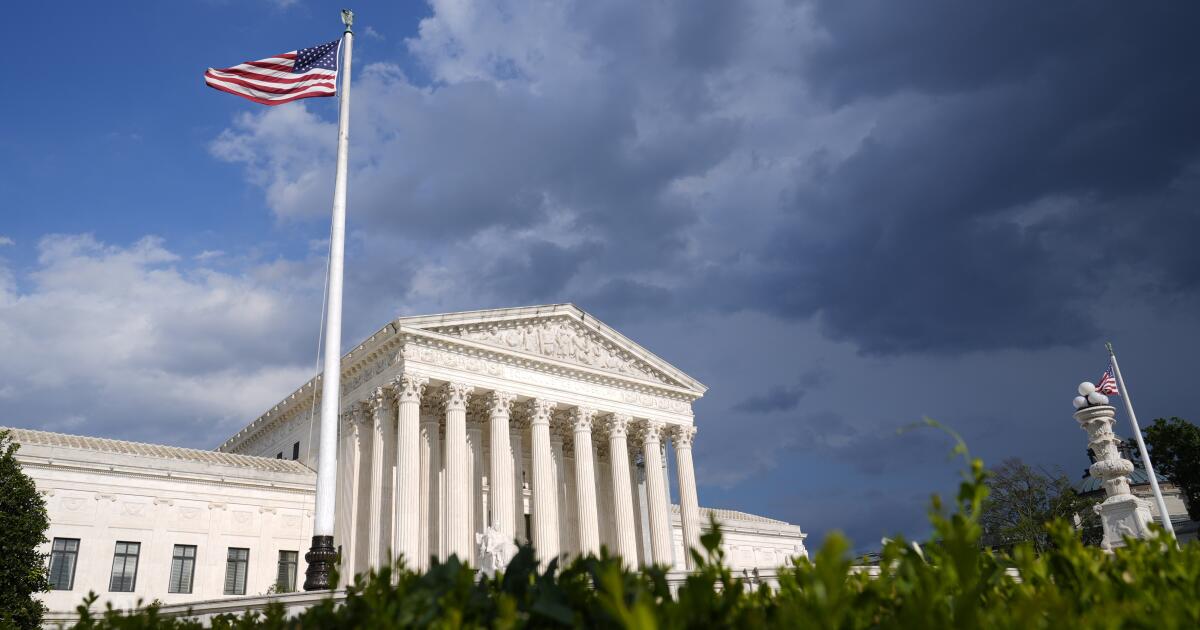
Supreme Court limits police use of cellphone data to find crime suspects
-
 Sports24 minutes ago
Teoscar Hernández returns, and Dodgers unleash 17-hit barrage in win over Athletics
-

 World32 minutes ago
DR Congo says 1,307 Ebola cases confirmed, including 377 deaths
-
 News57 minutes ago
Michigan governor threatens to pull troops from D.C. if used for Trump task force
-

 New York2 hours ago
Metropolitan Diary Challenge Day 2: How to Write Your N.Y. Story
-

 Los Angeles, Ca2 hours ago
Company has weeks to complete cleanup of Boyle Heights warehouse fire, officials announce

