California
California surgeon general sets goal of reducing maternal mortality by 50%

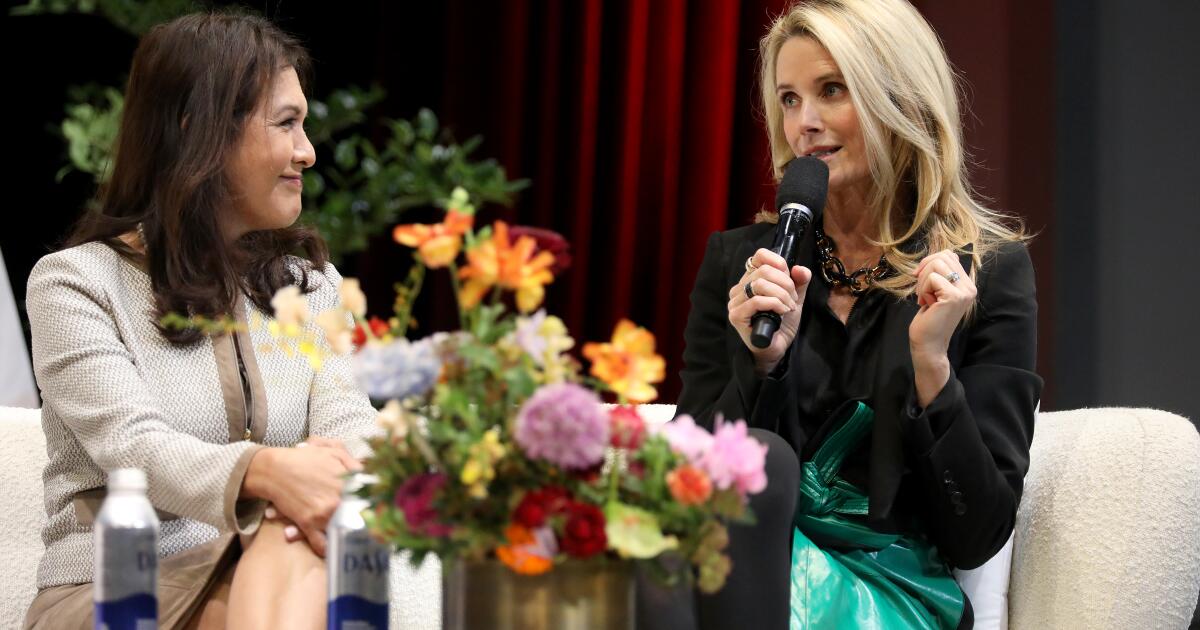
California’s surgeon general has unveiled a new initiative to reduce maternal mortality and set a goal of halving the rate of deaths related to pregnancy and birth by December 2026.
Health officials say that more than 80% of maternal deaths nationwide are preventable. California has achieved a much lower rate of such deaths than the U.S., but maternal mortality resurged in recent years amid the COVID-19 pandemic, state data show.
“We have the lowest rate in the country. Now we can do better,” California Surgeon General Dr. Diana E. Ramos said in an interview.
Ramos was joined in announcing the effort Tuesday by First Partner Jennifer Siebel Newsom, the wife of Gov. Gavin Newsom.
In California, leading causes of such deaths include heart disease, bleeding, “behavioral health” issues such as mental illness and substance use, and infection. More than a fifth of pregnancy-related deaths in California occur the day of delivery, but the majority happen in the days, weeks and months that follow, according to state data.
The crisis has been especially stark among Black women, who have faced a maternal mortality rate more than three times that of white women in California. In Los Angeles County, there has been a public outcry in recent years over the deaths of women like April Valentine, 31, and Bridgette Burks, 32 — Black mothers who left behind devastated families.
Health researchers have faulted numerous factors for the higher rates of maternal mortality among Black women, including the physical effects on the body of enduring years of racism; higher rates of diabetes and other chronic conditions that increase risk; and inequities in the care received by Black patients.
California officials said they are also concerned about rising rates of maternal mortality among Latinos and Asian/Pacific Islander communities in the state.
The “Strong Start & Beyond” initiative, officials said, would help patients understand potential risks before they become pregnant and prompt earlier action to address hazards such as heart disease. It would also alert Californians to doula services and other programs intended to support people before, during and after birth.
Ramos said California had reached the lowest rate of maternal mortality in the nation through its system of reviewing maternal deaths and other efforts centered on hospitals, physicians and other healthcare professionals. Up until now, “the focus has been primarily on the healthcare setting,” she said.
But “if we keep on doing the same thing — just focusing on the healthcare team — we’re going to get the same results,” Ramos said. Health officials and experts decided they needed to bolster that work, “and that’s why we’re bringing in the patient.”
“It seems so simple, but oftentimes, the pregnant person doesn’t feel like they have a voice or they have the information they need to make informed decisions,” Ramos said.
U.S. Secretary of Health and Human Services Xavier Becerra said in a statement accompanying the launch of the new effort that “reducing maternal mortality isn’t a ‘should,’ it’s a ‘must.’ California gets it.”
The planned strategies outlined in the California Maternal Health Blueprint, released Tuesday, include a new questionnaire that patients can take at home to assess their risk of pregnancy complications and get recommendations for next steps based on their results.
As an obstetrician-gynecologist, Ramos said she found that it was often at their first prenatal appointment that a patient would first hear, “You’re going to be a high-risk patient.’ And more times than not, patients would say … ‘I wish I would have known that I could have done X, Y or Z to decrease my risk.’”
California officials also want all medical facilities in the state to use an existing screening tool for gauging the risk levels of pregnant patients.
Ramos said those results could help guide where patients go for births. Hospitals with limited resources could refer patients with a higher risk of complications — such as someone who “is going to be at risk for hemorrhage, is going to be at risk for ICU admission” — to the medical facilities best equipped to handle them.
The new effort comes as pregnant patients may face dwindling choices for hospital births: Nationally, roughly 1 in 25 obstetric units closed in 2021 and 2022, according to a March of Dimes report.
Under “the modern fee-for-service healthcare model … hospitals must fund round-the-clock capacity but are only reimbursed when their facilities and staff are in action,” wrote Dr. Anna Reinert, an assistant professor of clinical obstetrics and gynecology at USC’s Keck School of Medicine, in a recent op-ed.
“So if not enough deliveries are happening, expenses outweigh reimbursement. This drives hospitals to get out of the baby delivery business altogether,” Reinert wrote.
California has faced a wave of such closures in the last decade, including at many hospitals in Los Angeles County. A CalMatters analysis found that such closures had disproportionately affected Black, Latino and low-income communities. Among the latest hospitals to announce it would shut down a labor and delivery unit is USC Verdugo Hills Hospital in Glendale, which plans to halt maternity care on Nov. 20.



Newsom slams Trump amid U.S. military action in Iran
Newsom criticized Trump for spending little time acknowledging four U.S. service members killed in the conflict with Iran during recent remarks.
California Democrats running for governor, your party has a message for you. Think carefully about your candidacy and campaign ahead of the swiftly approaching filing deadline.
California Democratic Party Chair Rusty Hicks urged candidates looking to assume the state’s highest office to “honestly assess the viability of their candidacy and campaign” as March 6, the final day to declare candidacy, nears. Hicks said that concerns about the crowded field of Democrat candidates “persist” in an open letter on Tuesday, March 3.
It comes as five leading candidates, several of which are Democrats — Katie Porter, Eric Swalwell, and Tom Steyer — are in a “virtual tie” per a recent poll, the Desert Sun reported, which is part of the USA TODAY Network.
Two Republican candidates pushing out California democrats in the gubernatorial bid may be “implausible,” but “it is not impossible,” Hicks said of the reasoning behind his latest message. Steve Hilton and Riverside County Sheriff Chad Bianco, both Republicans, lead in RealClear Polling’s average of various polls.
The party chair spotlighted the need for California Democrats’ leadership, particularly over Proposition 50, the voter-approved measure that will temporarily implement new congressional district maps, paving the way for Democrats to secure more seats in the U.S. House of Representatives.
“If in the unlikely event a Democrat failed to proceed to the general election for governor, there could be the potential for depressed Democratic turnout in California in November,” Hicks said. “The result would present a real risk to winning the congressional seats required and imperil Democrats’ chances to retake the House, cut Donald Trump’s term in half, and spare our nation from the pain many have endured since January 2025.”
During a press conference on March 2, Gov. Gavin Newsom said that when he is out in communities, people aren’t talking about the governor’s race. It’s an observation he called “interesting,” considering voting in the primary election starts in May.
“It’s been hard, I think, to focus on that race,” Newsom said, pointing to the attention on President Donald Trump, redistricting, and other matters.
What exactly is California Democratic Party asking of candidates?
In his open letter, Hicks gave directions to candidates.
First, assess your candidacy and campaign. If you don’t have a viable path to the general election, don’t file to get your name on the ballot for the primary election in June. Also, be prepared to suspend your campaign and endorse another candidate by April 15 if you decide to file but can’t show “meaningful progress towards winning the primary election.”
When is the next California election? Primary election in 2026
California voters will trim the field of candidates for governor on June 2. Only the two candidates who receive the most votes, regardless of party preference, will move on to the November election.
Paris Barraza is a reporter covering Los Angeles and Southern California for the USA TODAY Network. Reach her at pbarraza@usatodayco.com.
California
Supreme Court blocks California law limiting schools from telling parents about trans students

BAKERSFIELD, Calif.(KBAK/KBFX) — The U.S. Supreme Court has temporarily blocked a California law that limited when schools could require staff to disclose a student’s gender identity, clearing the way for schools to tell parents if their children identify as transgender without getting the students’ approval.
Rear view of multiracial students with hands raised in classroom at high school
The decision came after religious parents and educators, represented by the Thomas More Society, challenged California school policies aimed at preventing staff from disclosing a student’s gender identity.
Erwin Chemerinsky, dean and professor of law at the University of California Berkeley School of Law, said the ruling favors parents’ ability to be informed. “The Supreme Court today rules in favor of the claim of parents to be able to know the gender identity and gender pronoun of the children,” Chemerinsky said.
FILE:{ }transgender flag against blue sky background { }(Photo: AdobeStock)
The decision temporarily blocks a state law that bans automatic parental notification requirements if students change their pronouns or gender expression at school. The Thomas More Society called the decision a major victory for parents, saying the court found California’s policy likely violates constitutional rights.
Chemerinsky said the Supreme Court’s action is an emergency ruling. “This law is now put on hold. So what this means is that schools can require that teachers and other staff inform parents of the gender identity or gender pronouns of children,” he said.
Kathie Moehlig, founder and executive director of Trans Family Support Services, said she is concerned about how the ruling could affect students who do not have supportive families.
“I am really concerned about our kids that do come from these non affirming homes, that they know that they’re going to get in trouble, that they’re going to possibly have violence brought against them possibly kicked out of their homes,” Moehlig said.
Moehlig said parents should eventually know, but that the conversation should happen when a student feels safe. “Our students are going to be less inclined to confide in any adults that might be able to help to get them access to mental healthcare, to a support system. They may still tell their peers but they’re certainly not going to tell any other adult,” she said.
Equality California, a LGBTQ+ civil rights organization, shared a statement:
Equality California, the nation’s largest statewide LGBTQ+ civil rights organization, released the following statement from Executive Director Tony Hoang in response to today’s U.S. Supreme Court shadow docket ruling in Mirabelli v. Bonta regarding California’s student privacy protections for transgender youth. Today’s decision by the U.S. Supreme Court to intervene in this case is deeply disturbing. By stepping in on an emergency basis, the Court has effectively upended California’s student privacy protections without hearing full arguments and before the judicial process has run its course. While not surprising, this move reflects a dangerous willingness to short-circuit the established judicial process to dismantle protections for transgender youth. While this case continues to be litigated, the ruling revives Judge Benitez’s prior decision, which broadly targets numerous California laws protecting transgender and gender-nonconforming students — threatening critical safeguards that prevent forced outing and allow educators to respect a student’s affirmed name and pronouns at school. These protections exist for one reason: to keep students safe and ensure schools remain places where young people can learn and thrive without fear. To be clear: today’s decision does not impact California’s SAFETY Act, which prohibits school districts from adopting policies that forcibly out transgender students. The SAFETY Act remains in full effect, and we will continue defending it. Transgender youth deserve dignity, safety, and the freedom to learn without fear. We will never stop fighting for transgender youth and their families. Equality California will continue working with parents, educators, and advocates to ensure schools remain safe, welcoming, and focused on the success and well-being of every student.
The case now returns to the U.S. Court of Appeals for the Ninth Circuit, which will decide whether the California law is constitutional.

Congressman Kevin Kiley has announced his plan to run in California’s newly redrawn 6th district.
In a statement on Monday, Rep. Kiley revealed he had considered running in the 5th District – which could have set up a possible showdown between two current Republican officeholders.
“It’s true that I was fully prepared to run in the new 5th, having tested the waters and with polls showing a favorable outlook in a “safe” district. But doing what’s easy and what’s right are often not the same,” Kiley stated.
Kiley currently represents California’s 3rd district, which originally comprised counties making up much of the back spine of the state.
As of the Prop. 50 redistricting push, the 3rd district was redrawn for the 2026 midterm election to lean toward the Democratic Party – with those eastern spine of California counties lopped off and more of Sacramento County, including Rancho Cordova, added.
California’s new 6th district is now comprised of Rocklin, Roseville, Citrus Heights, much of North and East Sacramento, and the city of West Sacramento. Democratic Rep. Ami Bera currently represents the district, but will be running for the new 3rd district in 2026.
Other declared candidates for the 6th district include Democrats Lauren Babb Thomlinson, Thien Ho, Richard Pan, Kindra Pring, Tyler Vandenberg, and Republicans Christine Bish, Craig DeLuz, and Raymond Riehle.
Kiley was first elected to the House in 2022 and was reelected in 2024.

Police search for suspect, accomplice after teen injured in shooting outside Detroit school gym

Celebrated San Francisco historic landmark, the Huntington Hotel officially reopens

GOP candidates for Texas House face off in Collin County, Park Cities, North Dallas

First Alert: Mix of snow and rain today, then looking ahead to warmer weather

Former Avs defenseman launches beer brand in Denver

Florida High School Football Rankings: Top 25 teams – Oct. 21

Cleary's 21 help Le Moyne down Central Connecticut State 69-64 in OT

How old is Bo Nix? What to know about Oregon quarterback ahead of 2024 NFL Draft

99th annual Pony Swim held in Virginia

Indiana Members Credit Union announced as new anchor tenant at Bottleworks District

Fraud-plagued Minnesota sues Trump admin for withholding $243M in Medicaid payments

Is Iran expanding attacks to target energy and civilian sites in the Gulf?

Trump claims US stockpiles mean wars can be fought ‘forever’; Kristi Noem testifies before Congress – US politics live

War in the Middle East: Iran’s broad retaliation in the Gulf • FRANCE 24 English

Melania Trump presides at UN Security Council meeting • FRANCE 24 English
-

 World6 days ago
Exclusive: DeepSeek withholds latest AI model from US chipmakers including Nvidia, sources say
-

 Massachusetts6 days ago
Mother and daughter injured in Taunton house explosion
-

 Denver, CO6 days ago
10 acres charred, 5 injured in Thornton grass fire, evacuation orders lifted
-

 Louisiana1 week ago
Wildfire near Gum Swamp Road in Livingston Parish now under control; more than 200 acres burned
-

 Oregon4 days ago
2026 OSAA Oregon Wrestling State Championship Results And Brackets – FloWrestling
-

 Florida3 days ago
Florida man rescued after being stuck in shoulder-deep mud for days
-

 Technology1 week ago
Arturia’s FX Collection 6 adds two new effects and a $99 intro version
-

 News1 week ago
Video: How Lunar New Year Traditions Take Root Across America