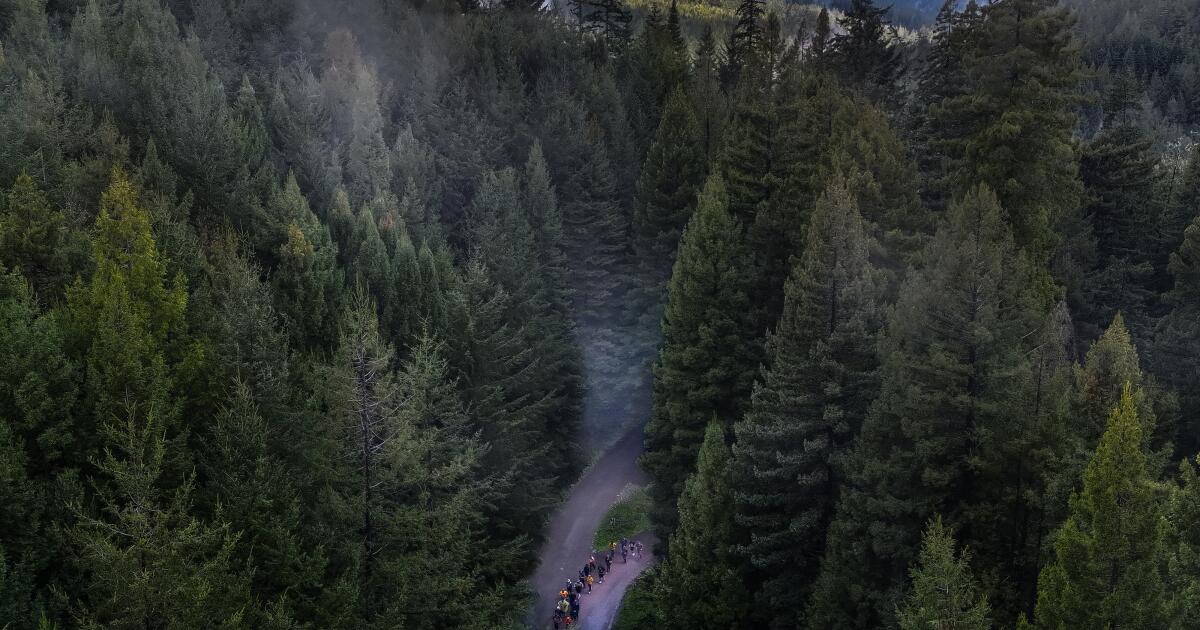
Daniel Felix, 10, looks out from atop a gargantuan stump of an old-growth redwood on his tribe’s ancestral land. Once, this forest on California’s North Coast was replete with the ancient behemoths that can live beyond 2,000 years.
Only a fraction are left now, depleted by a logging company before the state acquired the forest in the 1940s.
This is unique public land, Jackson Demonstration State Forest, spanning 50,000 acres. Trees are plentiful here, but they might not live a millennium. California’s 14 demonstration forests are required to produce and sell timber to show — or “demonstrate” — sustainable practices. Money from logging — roughly $8.5 million a year — pays for management of the forests by the California Department of Forestry and Fire Protection, or Cal Fire.
Daniel’s tribe, the Coyote Valley Band of Pomo Indians, has pushed to rein in the cutting — spearheaded by his late great-grandmother, Priscilla Hunter. They’re part of a diverse coalition that includes environmental activists, local politicians and other tribes.
Advertisement
Now they may finally get their wish. Assemblymember Chris Rogers (D-Santa Rosa) has introduced a bill that would nix the forests’ logging mandate, instead prioritizing values such as carbon storage, wildfire resilience and biodiversity.
The bill represents the latest chapter in a region legendary for fierce battles over logging, and it marks an uncommon alliance between tribes and the environmental movement.
Under Assembly Bill 2494, there could still be logging, but it would have to support those new principles, and the forests would be funded differently.
And it proposes another significant change. It would pave the way for giving tribes a say in managing the lands for the first time since they were forcibly evicted more than a century ago, and for integrating Indigenous knowledge — like cultural burning — into the forests.
“It’s what we dreamed of,” said Polly Girvin, Hunter’s former partner and a retired lawyer focused on Native American issues. “And to have it come true? I’m used to movements that sometimes take 30 years in Indian Country to get to the justice you’re seeking.”
Advertisement
Kids play in the stump of an ancient redwood during a potluck held after the spirit run in Jackson Demonstration State Forest last month.
(Paul Kuroda / For The Times)
Some backers say the bill offers a new economic path forward for communities behind the so-called redwood curtain. With the decline of logging and cannabis, they see tourism driven by ultramarathons, mushroom foraging and other outdoor activities as a financial savior.
“If we had an increase of 10% of visitors coming to our county because of recreational opportunities, that would more than surpass all of the timber tax in our county,” Mendocino County Supervisor Ted Williams said, projecting an increase in money from a lodging tax.
Advertisement
But the push to reshape forest management is fiercely opposed by loggers and mill owners, who say their work is sustainable and provides blue-collar jobs in a region where they’ve dwindled. Already California imports most of its wood from Oregon, Washington and Canada.
“California has the most rules and regulations of anywhere in the world so all they’re doing is exporting the environmental impact to somewhere else, still using the product,” said Myles Anderson, owner of a logging company in Fort Bragg founded by his grandfather. “It’s pretty disgusting, really.”
Anderson believes the bill will greatly reduce logging, even stop it altogether. In his office, with photos of him and his father at a logging site decades ago, he points out it’s sponsored by the Environmental Protection Information Center. Why else would they and other environmental groups “support it if they didn’t see the same thing that I’m seeing?”
Last month, activists who have sought to rein in logging at Jackson held their first major gathering in about four years, galvanized by the bill that they see as a significant step in the right direction.
(Paul Kuroda / For The Times)
Advertisement
A new but old fight
About five years ago, community members caught wind of plans to chop down towering redwoods within Jackson, near the coastal town of Caspar. Priscilla Hunter would come out to the forest “and could hear them crying — it was our ancestors,” said her daughter Melinda Hunter, the tribe’s vice chairwoman. “Then she had to protect [the trees].”
Environmental activists and Native Americans, not historically allies in the region, joined forces to fight it. “Forest defenders” camped out high in the canopy and blocked logging equipment with their bodies. Some were arrested.
The uprising harked back to the 1980s and 1990s, when iconic environmentalist Judi Bari led Earth First! campaigns against logging in the region. Many of the old tree sitters — white-haired and brimming with stories of Bari — have come out of the woodwork for the latest battle.
For them, it was a win. Cal Fire paused new timber sales and, citing public safety, halted some that were underway — including one expected to generate millions of dollars for Myles Anderson’s logging company.
“We were left with nothing,” Anderson said.
Advertisement
Then, last year, Cal Fire approved the first harvest plan since that hiatus. It riled up the sizable, ecologically minded community.
Jessica Curl, 47, remembers growing up nearby “in a terrain of trunks” as trucks carried out logs. Now the redwoods are regrowing, “gorgeous” and gobbling carbon, she said.
“We’re so lucky to live in an area where we have this amazing climate-change mitigation tool, that if we would just leave it alone would do this amazing work that we’re trying to think of all these cool, inventive things to do.”
Isidro Chavez receives burning sage, or smudging, after a run in Jackson Demonstration State Forest. Smudging is a ritual used to cleanse spaces and individuals of negative energy, promote calm and improve mood.
(Paul Kuroda / For The Times)
Advertisement
Tears of grief, resolve
A group of “spirit runners” — a Native American tradition of bringing prayer — sprinted through the heart of Jackson forest as rain poured through the canopy. The mid-April event marked activists’ first major gathering since protests wound down in 2022.
Attendees gathered in a circle to wait for them. Misty Cook, of the Sherwood Valley Band of Pomo Indians, read a statement as eyes misted all around:
“All the living things around us, they miss us. They miss the language. They miss our touch, our hands, touching all of the things — the water, the plants. They miss the songs. They miss the beat of our footsteps and our voices, and they miss the children’s laughter and play, which was so important. They want us to gather them, to use them and to share them. Otherwise they will get sick and possibly die.”
Cal Fire launched a tribal advisory council to bring Indigenous perspective into Jackson. But some local tribes say it’s not enough because they lack decision-making power.
When the runners arrived, the circle absorbed them. Then they continued on to the site of a controversial proposed harvest, Camp Eight. They wrapped a bandana that belonged to Priscilla Hunter around a small tree — a quiet, somber act where she took her last stand. Runners took turns embracing the trunk.
Advertisement
Redwoods at the Capitol
In March, Rogers’ bill cleared a committee and is now in the Assembly Appropriations Committee’s suspense file. A hearing is set for Thursday.
Funding is a major point of contention. Environmentalists say funding these forests with timber operations incentivizes cutting bigger trees. Cal Fire maintains decisions are driven by forest health, not industry demand.
AB 2494 would fund the forests through a tax on lumber and engineered wood products. The shift could create “[o]ngoing state costs and cost pressures of an unknown but potentially significant amount, possibly in the low millions of dollars annually,” according to a legislative analysis.
The California Forestry Assn., a timber industry trade group, says the idea is a nonstarter.
Cal Fire declined to comment on pending legislation but Kevin Conway, the agency’s staff chief for resource protection and improvement, said its nearly 80-year history managing Jackson reflects “care and attention.” Since the state acquired the forest, “we have more trees on the landscape, more habitat and those trees are trending larger,” he said.
Advertisement
For the tribes who have rallied and prayed, a burning question is whether the land will again reflect their vision, or remain shaped by decisions made by others.
Buffie Campbell, executive director of the InterTribal Sinkyone Wilderness Council — co-founded by Priscilla Hunter and one of the groups supporting the bill — said young people wouldn’t be able to fathom the significance of the legislation passing. Maybe that’s a good thing.
“Maybe they don’t need to know about all the fighting that we have to do before they get to go out and enjoy and be tribal guardians stewarding their land.”
California Gov. Gavin Newsom, a Democrat who is considering a run for president as he approaches the end of his term, called for a national “billionaires’ tax” on Friday even as he fights another proposal targeting the wealthy in his home state.
Newsom also said the U.S. government should own a stake in artificial intelligence companies. His proposals, outlined in a Substack post, aligns him with the Democratic Party’s populist left, and he argued that urgent changes are needed to prevent the elite concentration of wealth and power from undermining democracy.
“It’s time for an economic reset for America,” Newsom wrote.
The governor announced his agenda a day after an influential health care union in California pledged to go forward with a ballot measure that would impose a one-time 5% tax on the assets of billionaires living in the state as of Jan. 1, 2026.
Advertisement
Newsom opposes that measure, as do many of the liberal interest groups that typically favor higher taxes. They fear it would drive billionaires out of California, eroding the state’s tax base over the long term for a one-time influx of cash. A technology mecca, California has more billionaires than any other state — a few hundred, by some estimates.
“You may not be able to pick up and move to Texas or Florida to shelter your income from taxation, but I promise you that billionaires can, and do,” Newsom wrote. “Wealth is movable, and it shops for the state with the lowest taxes. The fight belongs at the federal level, where this broken system was created in the first place.”
A minimum tax on large net worths
Newsom said the solution is a new national tax policy, rather than a state-by-state system. He proposed a minimum tax on anyone with a net worth above $100 million. He also wants to make it illegal for the wealthy to borrow against their stock portfolios to fund their luxury lifestyles tax free.
Newsom said there should be new rules for inheritance taxes, warning that “the transfer of wealth among the ultra-wealthy will lock in a permanent American aristocracy of inherited wealth.” And he wants to raise corporate tax rates to where they were before President Donald Trump’s first-term tax cut.
READ MORE: Sanders and Newsom clash over proposed tax on California’s billionaires
Advertisement
The need is especially urgent as artificial intelligence threatens to displace workers and further concentrate wealth, he wrote.
“We need to ensure every American owns a stake in the future being built by AI through a national public equity fund that takes a major stake in the new economy,” he wrote. “Simply, as artificial intelligence reshapes the country, every American should own a piece of the future it builds.”
Revenue generated by his proposals could be used to retrain workers, fund universal child care, make college free and increase funding for health care.
‘Money buys influence’
Newsom, who has drawn attention as one of Trump’s most high-profile political antagonists, is getting an early start on laying out a policy framework for his potential White House bid months before the midterm elections, which have typically marked the informal start of overt presidential campaigning.
WATCH: News Wrap: Newsom says Trump ordering DOJ to investigate him and wife
Advertisement
The embrace of a wealth tax by Newsom, a moderate on tax policy despite his liberal reputation, signals a notable shift in the political landscape since Massachusetts Sen. Elizabeth Warren struggled to get traction in her 2020 campaign, which she largely centered around a 2% levy wealth tax.
Newsom portrayed the nation’s tax code as a corrupt system built to help an elite few.
“Money buys influence, and influence rewrites the rules,” he wrote. “Those rewritten rules funnel even more wealth to the few. Under this weight, democracy itself starts to buckle.”
A free press is a cornerstone of a healthy democracy.
This is the latest instalment of The Inside Story, Wallpaper’s series spotlighting intriguing, innovative and industry-leading interior design.
Nestled at the base of the San Gabriel Mountains in Sierra Madre, a 1947 adobe home – a traditional building method using sun-dried bricks of organic materials – has been reimagined. Removed from the noise and polish of Los Angeles, this neighbourhood is shaded by California oaks, eucalyptus and pine, and shares its hillside with bears. It’s an unusual setting for a design story.
(Image credit: Michael P.H. Clifford)
Advertisement
(Image credit: Michael P.H. Clifford)
The home’s transformation began with a fire that destroyed much of the structure, leaving only the original adobe brick wall standing. Rather than rebuild from scratch, designer Kirsten Blazek of A1000XBetter chose to work with what remained.
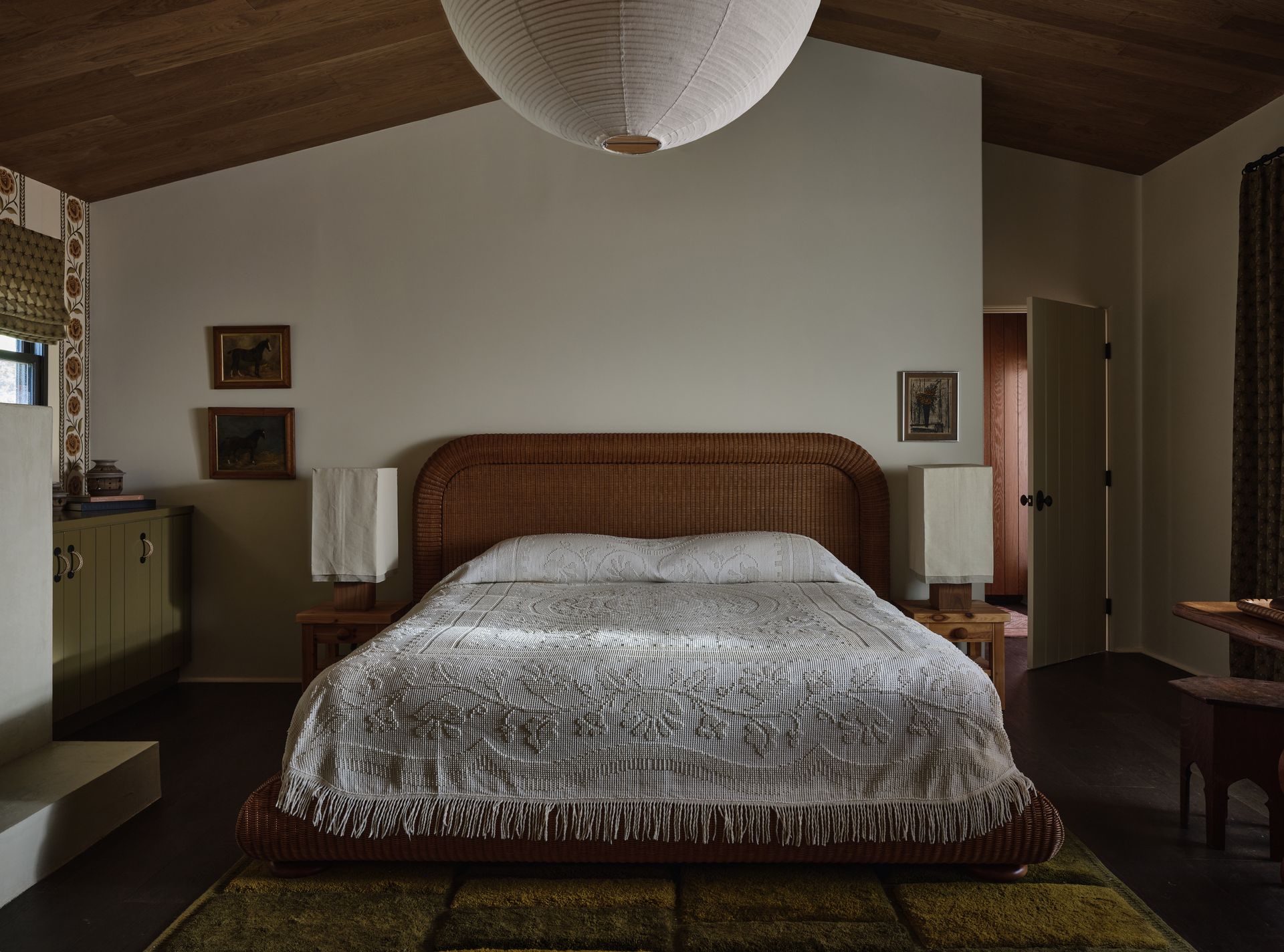
‘The overall vision was to maintain as much of the original character and style of the home as possible, while making it more functional for modern living,’ she explains. New rooms were added – a kitchen, a primary suite, a family room – though the expansion was restrained. ‘We worked mainly within the original footprint,’ the designer notes, ‘only adding a small amount of square footage for the primary closet.’
(Image credit: Michael P.H. Clifford)
(Image credit: Michael P.H. Clifford)
Advertisement
(Image credit: Michael P.H. Clifford)
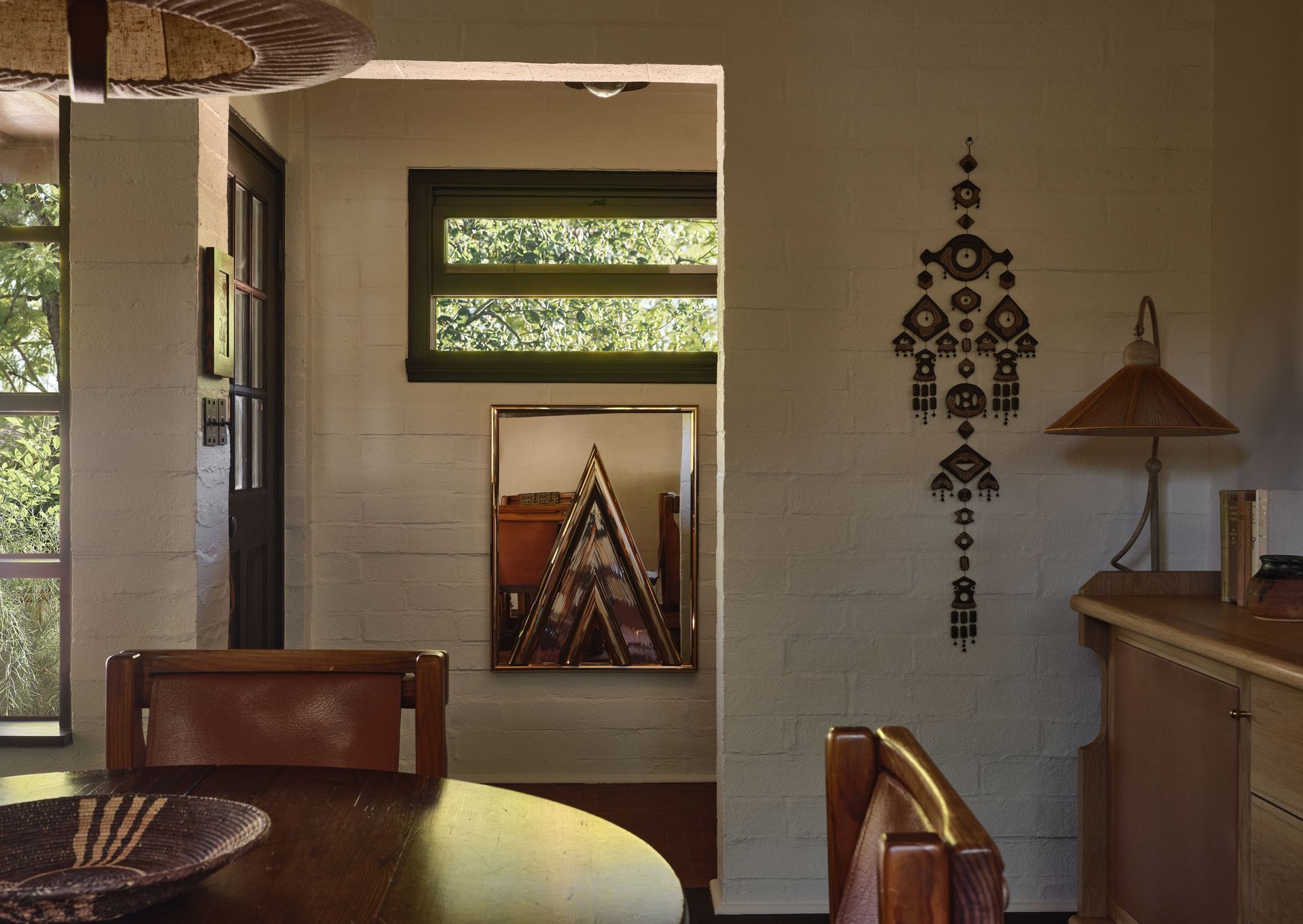
On the original adobe side, the layout was left untouched. The hallway windows, original to the 1947 build and ‘one of [Blazek’s] favourite features’, were preserved. ‘I wanted the house to feel like a modern California hacienda,’ she says of her guiding aesthetic, ‘and embraced that through every colour choice and finish.’
That palette draws directly from the landscape. Dunn-Edwards paints in warm, grounded tones – including an exterior shade named ‘Wild Horses’ – echo the surrounding terrain and scrubland. ‘I very much gravitate to an earth-based palette,’ says Blazek, ‘and the location at the base of the San Gabriel Mountains made that feel completely natural.’
Recreate the mood
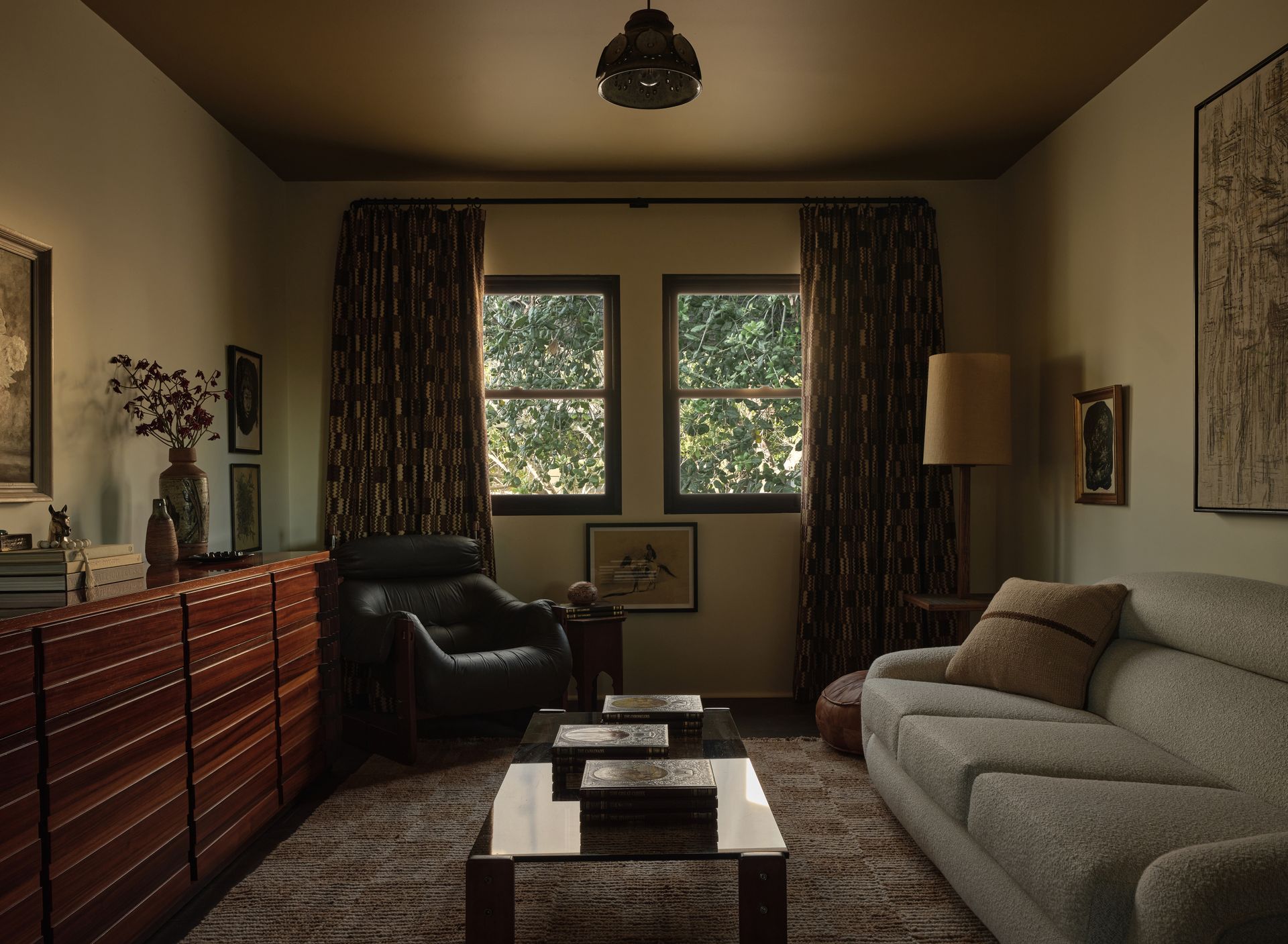
The interiors, meanwhile, speak to a lifelong passion. ‘I have a deep connection with the American Southwest and have long collected Native American and western-influenced art and objects,’ she says. Yet the rooms never tip into pastiche. Midcentury furniture – sourced from MidcenturyLA, Amsterdam Modern and Lawson-Fenning – grounds the collected pieces with clean, modern lines. Rugs from Pampa and Salam Hello add warmth underfoot; drapery by Zak and Fox frames the windows. ‘I never want my work to feel too referential,’ Blazek reflects. ‘I love midcentury lines, so there’s a pleasing blend of both genres throughout.’
Advertisement
Receive our daily digest of inspiration, escapism and design stories from around the world direct to your inbox.
(Image credit: Michael P.H. Clifford)
(Image credit: Michael P.H. Clifford)
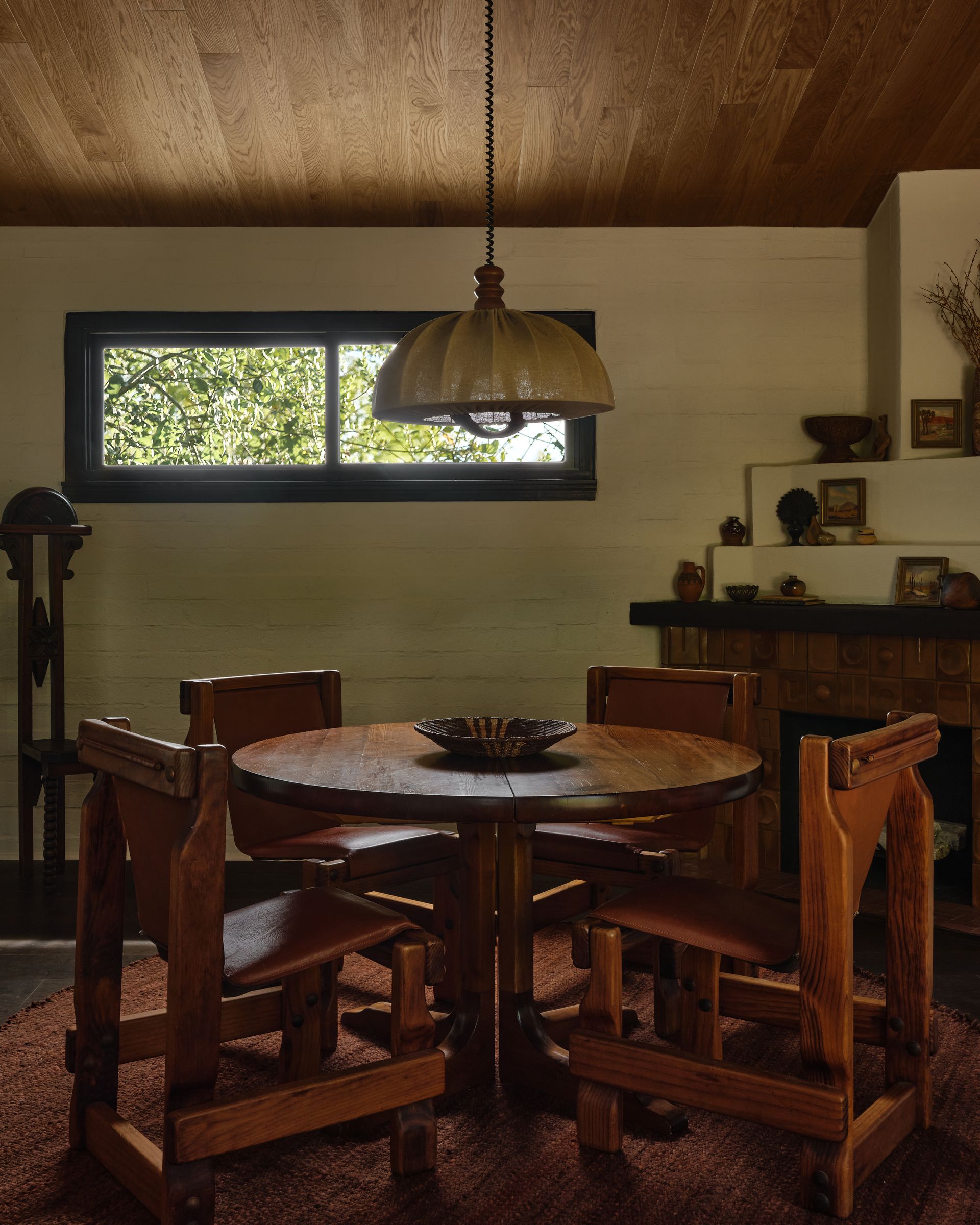
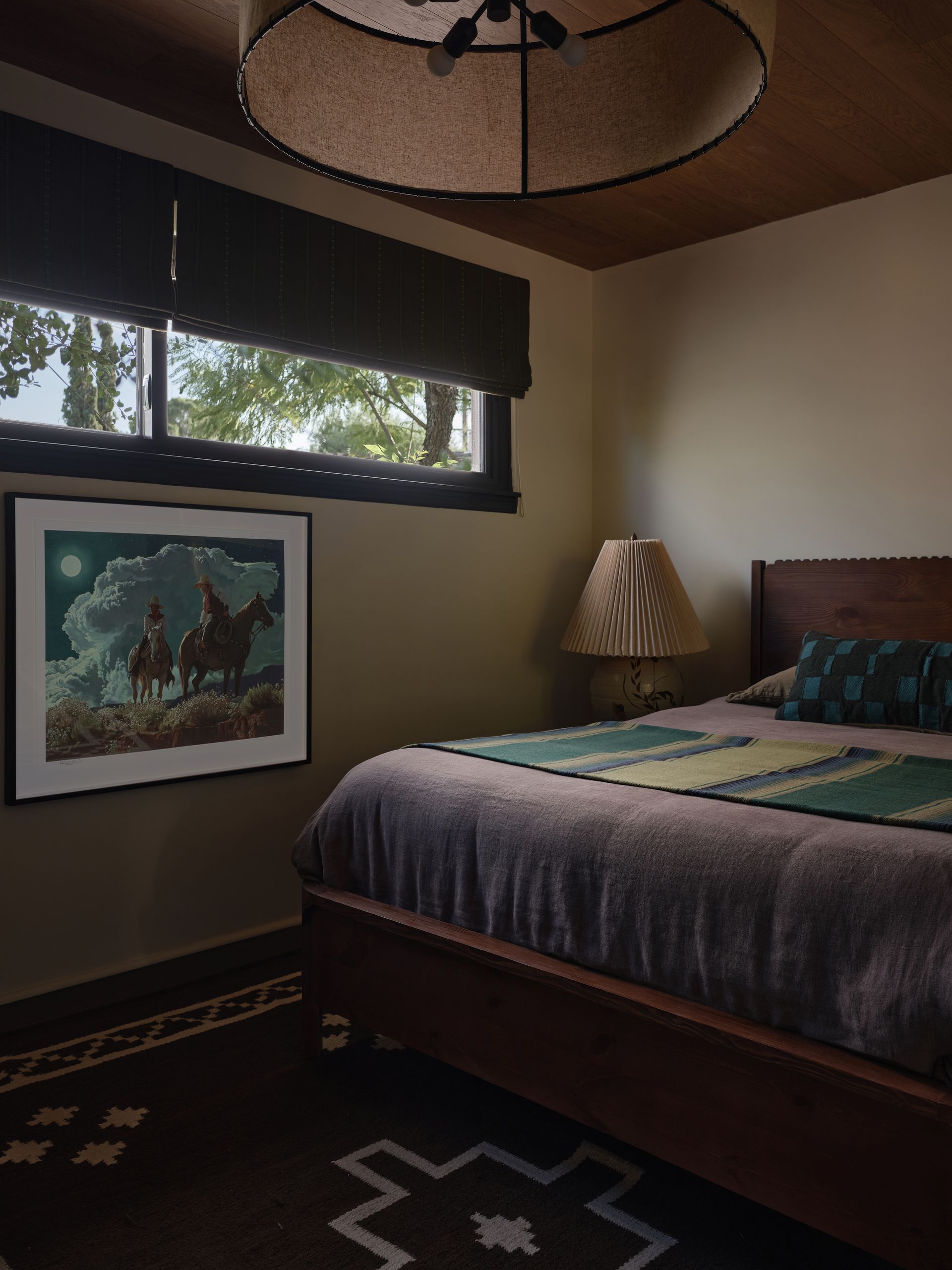
Among her favourite moments is the dining room fireplace – original to the house, but updated with dimensional tile from Lofa Tile. Nearby, a framed print by artist Mark Maggiori anchors the wall. ‘It’s one of my favourite pieces,’ she says. ‘I was grateful to finally find the perfect place for it.’
(Image credit: Michael P.H. Clifford)
Advertisement
(Image credit: Michael P.H. Clifford)
Between the ancient craft of adobe and the clean geometry of midcentury design, this renovation represents both preservation and reinvention – a modern hacienda rooted in its land, its past and the strength of Blazek’s vision.
CDFW News | California Fish and Game Commission Takes Emergency Action to Prevent White Shark Take and Reduce Potential Interactions Between Hooked Sharks and Swimmers
Prosecutors Honored for Their Work to Protect Wildlife; Southern Resident Killer Whale Named CESA Candidate
Anticipating a larger presence of white sharks in Southern California as a result of warmer El Niño ocean conditions, the California Fish and Game Commission (Commission) adopted emergency regulations at its June 17-18, 2026 meeting to further protect the large ocean predator and reduce the potential for dangerous interactions with ocean users. These regulations will prohibit the use of certain fishing gear from beaches and nearshore that are used to hook large sharks and could create hazards for nearby beachgoers.
Forecasted warmer waters shift the preferred range for juvenile white sharks northward from Mexico and lead them to stay in California nearshore areas later in the year. The emergency regulations protect not only white sharks but also people recreating in the ocean, decreasing the risk of dangerous human encounters with sharks that are hooked with wire leaders from piers and beaches.
Specific gear types used to target large sharks, including hooks greater than 1.5 inches in maximum inside measurement and wire or metallic lines and leaders, will be prohibited when recreational fishing from shore or within 1,000 yards of shore from Pigeon Point (San Mateo County) south to the U.S.-Mexico border. Shore fishing includes beaches, banks, piers, jetties, breakwaters, docks and other man-made structures connected to the shore. Unless extended, the emergency regulations will expire 180 days after being filed with the secretary of state. The Commission may pursue up to two 90-day extensions of the emergency action and, ultimately, may propose continuing the restrictions through a regular rulemaking if the regulations prove to be effective.
Advertisement
Prosecutor of the Year
Commissioners recognized two deputy district attorneys who have demonstrated their dedication to protecting California’s natural resources and have effectively collaborated with the California Department of Fish and Wildlife (CDFW) to prosecute wildlife crimes. San Luis Obispo County Deputy District Attorney Ken Jorgensen and San Diego County Deputy District Attorney Michael McCann were presented with the Prosecutor of the Year Award for 2025.
Jorgenson’s work resulted in a landmark $165,000 settlement and injunctions in a case involving rare plant habitat destruction, and in another case a $12,500 fine and five years of probation for often under-prosecuted commercial fishing violations.
McCann assisted in the prosecution and investigation surrounding a global wildlife trafficking ring connected to illegal drug and firearm trade. The investigation disrupted a sophisticated trafficking network and resulted in multiple felony and misdemeanor charges, with more anticipated.
Southern Resident Killer Whale
Advertisement
The Commission named the southern resident killer whale (orca) a candidate species for listing under the California Endangered Species Act (CESA). This population of orcas inhabits ocean waters from British Columbia to California and is estimated to now number as few as 75.
Orcas face threats such as limited availability of prey; Chinook salmon are a primary food source and have experienced population decline across the entire West Coast range of orcas. The species’ abundance has also been impacted by past practices of capture for live display.
CDFW will have one year to complete a review on the status of orcas, of the best available science, before the Commission can make a final decision on CESA listing. Orca is currently listed as endangered under the federal Endangered Species Act and is considered depleted under the federal Marine Mammal Protection Act.
Western Spadefoot
Continued from the Commission’s April meeting, a decision to consider CESA candidacy for western spadefoot frog was postponed to the August meeting to give environmental advocates and the solar industry additional time to collaborate on proposing exceptions to CESA protections that would be allowed under Fish and Game Code Section 2084.
Advertisement
Meeting Participation and Next Meeting
Commission President Eric Sklar, Vice President Darius Anderson and Commissioners Samantha Murray and Erica Zavaleta were in attendance for both days of the June Commission meeting. Commissioner Jacque Hostler-Carmesin was in attendance for the first day. The meeting was held in Sacramento.
The complete agenda for the meeting, along with supporting information, is available on the Commission website. Archived video of past Commission meetings is available online. The next regularly scheduled meeting of the Commission is scheduled for Aug. 12-13, 2026, at the California Natural Resources Agency building in Sacramento. Participants are encouraged to attend in person, with options available for Zoom or phone; for more information visit the Commission website.
The Commission authorized public notice of upcoming potential regulation changes related to:
Harpoons and Flying Gaffs Allowance: A discussion hearing is scheduled for Aug. 12-13 and an adoption hearing Oct. 14-15 on amendments to regulations related to allowing use of harpoons and flying gaffs in the recreational tuna fishery.
Advertisement
###
Media Contacts: Krysten Kellum, CDFW Communications, (916) 825-7120 Alicia de la Garza, CDFW Communications, (916) 754-7237