Arizona
Why Arizona has fewer blackouts than other hot states


5 myths about Arizona’s heat
Can you fry an egg on a sidewalk? A look at some common misconceptions about Arizona’s heat and climate.
The Republic
Power grids in the Western United States are struggling. As temperatures increase and populations grow, so does the stress on systems that keep our electricity running.
For the West, electricity is most important in the hot summer months. It keeps our cool air-conditioners pumping.
Going without air conditioning for too long can be not only an annoyance, but also a major health risk, especially in states like Arizona with over 100-degree averages each summer.
A 2023 study by the Environmental Science and Technology journal showed that about half of Valley residents would need emergency medical care if a blackout occurred in the middle of the day.
Arizona has fewer outages than national average
But across the nation, blackouts are on the rise. The study also found that between 2016 and 2021, there was a 150% increase in power grid outages across the United States.
Despite this, Arizona is drastically below the national average when it comes to grid failures. In the last 24 years, the state has only had six outages due to extreme weather, according to Climate Central data.
Typically, a monsoon storm will cause power outages, according to Ashley Kelly, director of transmission operations and maintenance for APS.
APS services the majority of Arizona in energy distribution.
“Maintaining balance between how much you’re generating and how much your customers are using your energy is something that we do on a minute-by-minute basis. And so if there are disruptions, it’s normally because there’s an imbalance to that or a piece of equipment has gotten damaged,” she said.
Planning for the future
Overplanning is a way to stay ahead of any possible issues that could arise due to extreme heat, Tayla Beckham told Valley 101. She is the manager of real-time operations at APS.
This week on Valley 101, a podcast by The Arizona Republic and azcentral.com, we’ll look into what makes Arizona’s power grid efficient and if it is prepared to withstand rising temperatures in the future.
Listen to the episode
Listen to Valley 101 on your favorite podcast app or stream the full episode below.
Submit your questions to us about metro Phoenix and Arizona for a chance to be chosen for the podcast.
Note: Valley 101 is intended to be heard, but we offer an AI transcript of the episode script. There may be slight deviations from the podcast audio.
Follow Valley 101 and all azcentral podcasts on X, formerly Twitter, and on Instagram.
Reach the reporter at aluberto@gannett.com. Follow her on X, formerly Twitter: @amandaluberto.
Catch up on past episodes of Valley 101:



A new study has ranked Arizona as one of the worst states to move to for two years in a row, largely due to what it calls a poor quality of life.
The study conducted by Consumer Affairs analyzed the best states to move to in the United States, putting Arizona at the bottom of the list.
Before Arizonans get too defensive about the Grand Canyon State, Consumer Affairs used factors such as affordability, safety, economic strength and education to measure each state, leaving out factors like entertainment, retirement benefits and other considerations that may be important to people living here.
Popular states such as California and New York also landed at the bottom of the list due to their lack of affordability, even though they both have some of the best health care and education in the nation, Consumer Affairs noted.
Here’s why the study says you shouldn’t move to Arizona. Do you agree?
Why you shouldn’t move to Arizona
Arizona ranked No. 10 out of the worst states to move to, scoring especially poorly in quality of life.
Quality of life was measured by the state’s Social Progress Index, average air quality, weather, environmental protection and number of national parks. Due to Arizona’s extreme summers and Phoenix’s consistently poor air quality, it’s easy to see why Arizona ranked No. 44 in quality of life out of 50 states, even though the Grand Canyon is one of the most popular national parks in the nation.
However, Arizona also ranked poorly in other categories, sitting at No. 42 in health care and education, No. 41 in safety and No. 34 in affordability out of 50 states.
There was one category Arizona did impressively well in, ranking No. 5 in economic strength even as one of the youngest states in the country. Still, Arizona’s economic power wasn’t enough to boost its ranking.
Top 10 worst states to move to
Arizona wasn’t alone; some of the biggest states in the country were also considered the worst states to move to in 2026.
- New Mexico
- Louisiana
- California
- Arkansas
- Oklahoma
- Nevada
- Alaska
- Mississippi
- Oregon
- Arizona
Top 10 best states to move to
- Utah
- New Hampshire
- Idaho
- Minnesota
- Massachusetts
- Maine
- North Dakota
- Pennsylvania
- Iowa
- South Dakota
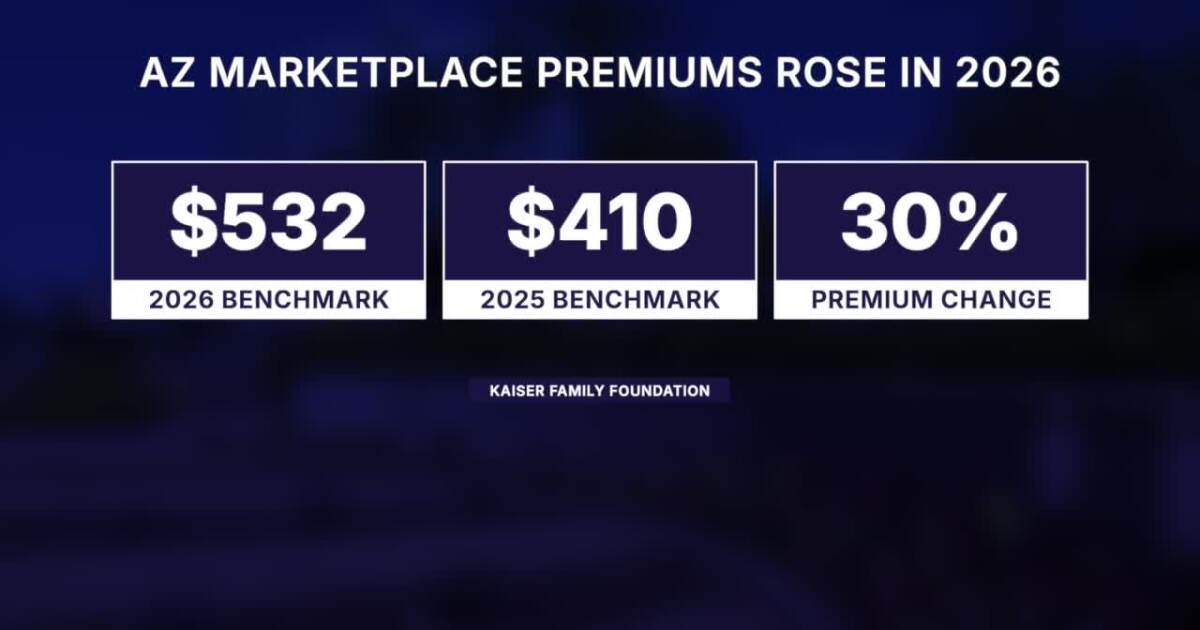
PHOENIX — Arizona’s ACA marketplace enrollment fell from 363,000 to just over 255,000 in a single year — a nearly 30% decline and the third-largest annual drop in the country.
Rising premiums and expired tax credits are driving the trend, with the average benchmark plan premium in Arizona now at $532 — up 30% from 2025.
In the player above, ABC15 Data Analyst Garrett Archer takes a look inside the numbers on how healthcare premiums are impacting health insurance enrollment.
This story was reported on-air by a journalist and has been converted to this platform with the assistance of AI. Our editorial team verifies all reporting on all platforms for fairness and accuracy.
Want more news in your community? Add ABC15 as a preferred source on Google below:

Arizona
Arizona man pleads guilty after illegally living in forest for years among ‘1,000lbs of trash’

A man in Arizona has pleaded guilty to violating federal fire restrictions and unlawfully residing in a national forest, after authorities said he spent years living at a makeshift campsite surrounded by what officials described as “approximately 1,000 pounds of trash”.
Mark Aaron Gatz was arrested on 25 June at his illegal campsite in Arizona’s Tonto national forest, according to court records. A United States Forest Service (USFS) officer wrote in documents submitted to court that Gatz had been operating an “illegal campsite” with a “hot wood burning campfire” despite fire restrictions and that he had told investigators that he had been living in the forest for about eight years.
The officer wrote that a records check found that Gatz had previously received multiple citations and was the subject of six outstanding federal arrest warrants for earlier violations, including for building fires during fire restrictions, constructing on national forest service lands, unsanitary conditions and occupying national forest as a residence.
Gatz “said that he knew about current fire restrictions but had to have fire to eat”, authorities said. The documents show that USFS officers made contact with Gatz multiple times over the last year or so, and issued him warnings as well as a violation notice for having campfires during fire restrictions.
Notes from officers’ previous encounters with Gatz earlier this year, submitted into the court docket, state that authorities observed “trash such as clothing, pans, tools, and plastic cups scattered throughout the campsite along with a structure that was four feet in height build using wood panels”.
During an encounter with Gatz in May, officers reported observing “approximately 1,000 pounds of trash” at the site, which they said included tires, plastic bags, trash bags, aluminum cans and other items. They also wrote that they found that the campfire site had been left unattended by Gatz the previous day while still hot.
In a separate report filed by law enforcement from an encounter in February, one officer wrote that “upon arrival at the camp, I was flabbergasted by the amount of debris in the area”.
Investigators said that during that encounter, the debris consisted of three ladders, six to eight totes “overfilled with debris”, five 55-gallon drums, eight tires, multiple bicycle frames, 5 gallons of motor oil, plywood and other “miscellaneous lumber”, and they wrote that trash was scattered over approximately half an acre of Forest Service land and creating what officers described as public safety concerns.
In a separate report from July 2025, officers said they observed what they described as a “large messy campsite” while patrolling the area due to complaints “from the district office abut one large messy camp”.
“There was roughly half an acre of resources ruined due to so much trash and goods on the ground for an extended period of time,” the officer wrote.
This week, after Gatz pleaded guilty, he was sentenced to time served and three years of probation, according to court records.
A representative for Gatz did not immediately respond to a request for comment.
-
 Business1 minute ago
California soccer fans sue StubHub after it fails to deliver expensive World Cup tickets
-
 Entertainment4 minutes ago
Lucas Museum to give free annual passes to South L.A. neighbors, host community preview day
-
 Lifestyle9 minutes ago
Meow Wolf taps famed L.A. animation house for its new Los Angeles venue
-
Politics16 minutes ago
Column: Trump decries ‘communism’ while his government takes ownership of companies
-
 Science19 minutes ago
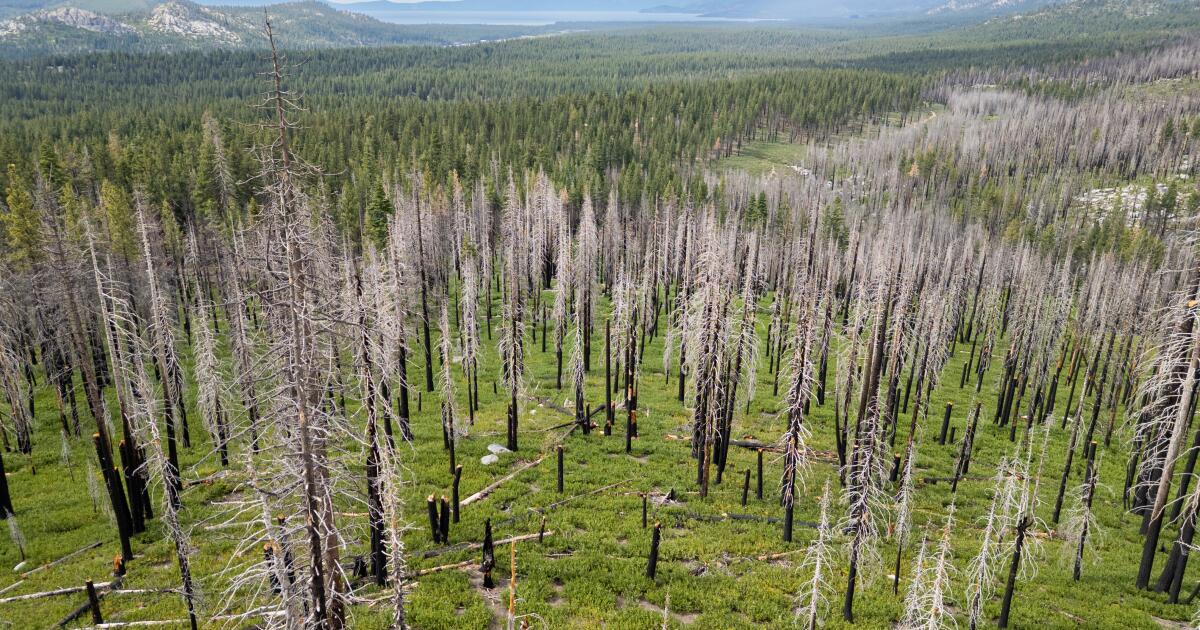
‘I’d rather my house burn down than get cancer’: Herbicide use upends California’s fight to save forests
-
 Sports24 minutes ago
Dodgers scheduled to visit White House in late July to celebrate 2025 World Series win
-

 World34 minutes ago
Former US Olympian pleads not guilty in DC reflecting pool vandalism case
-
 News1 hour ago
Former Olympian pleads not guilty in reflecting pool vandalism charges


