Arizona
EPA orders the Air Force, Arizona National Guard to clean up groundwater contamination


AZ Gov. Katie Hobbs lays out plan to protect groundwater
Gov. Katie Hobbs introduces the Phoenix Active Management Area groundwater model on June 1, 2023, in Phoenix. Because the model shows a projected shortfall, the governor has announced the state’s water agency will stop approving new developments that rely solely on groundwater.
Arizona Republic
PHOENIX — The U.S. Environmental Protection Agency is demanding the U.S. Air Force and Arizona National Guard take action as concentrations of toxic “forever chemicals” are increasing in the groundwater in a historically contaminated area in the south side of Tuscon, Arizona.
The EPA found the pollution came from the nearby military properties and ordered them to clean up the contamination. High concentrations of PFAS, or per- and polyfluoroalkyl substances, were detected in Tucson’s groundwater near the Tucson International Airport at the National Guard base and at a property owned by the U.S. Air Force.
The contaminants threaten the groundwater extracted at a water treatment run by Tucson Water in the Tucson Airport Remediation Project area, known as TARP. That water was intended for drinking, the EPA said in its May 29 order.
Samples taken at the treatment plant showed concentrations of PFAS as high as 53,000 parts per trillion, which is 5,300 times the allowable amount. The limit allowed in drinking water ranges from 4 parts per trillion to 10 parts per trillion, depending on the type of PFAS.
To prevent the contaminations’ further migration towards city wells, the agency gave the Air Force and the Air National Guard 60 days to develop a remediation plan. The Morris Air National Guard Base leading the remediation project did not respond to the Arizona Republic, part of the USA TODAY Network, and its requests for comment.
Tucson Water, the city’s water utility, said the wells impacted by the contamination are not in service and customers are not being served contaminated water. But with concentrations of PFAS continuing to increase, the issue remains a concern for the city.
“When we have an area where the water quality is impacted and we’re not able to serve that to customers, that is an added cost. It really diminishes the resource that we have available,” Natalie DeRoock, a Tucson Water spokesperson said. She noted that other than the Colorado River water the city pumps in, Tucson depends on groundwater, a finite resource.
The water utility stopped serving water treated at TARP to residents in 2021, when increased PFAS levels caused the plant to temporarily shut down as the filter system sequestering the contaminants could not handle the increase.
What are PFAS? ‘Forever chemicals’ are common and dangerous.
What will remediation look like?
DeRoock said the water treated at the TARP facility exceeds state and county standards for clean water, so the city decided to divert the water to the Santa Cruz River rather than use it as drinking water. She said the city wanted people to feel confident about their drinking water, and instead decided to use that water to maintain the water levels in the Santa Cruz River and to help with the riparian habitat restoration.
As part of the EPA’s order, the remediation plan submitted by Air Force and National Guard must ensure the water is clean enough to be used as drinking water.
“With appropriate response, Tucson Water would be able to resume delivering water from the TARP facility to the drinking water system, as it was originally designed to do,” said Joshua Alexander, a spokesperson for the EPA.
Alexander said remediation is a complicated process that could take years. It could require the creation of new water treatment facilities or the modification of current existing facilities to treat an increased volume of water.
He noted several technologies that successfully remove PFAS from water, including granular activated carbon, a filtration system that uses carbon to remove contaminants from drinking water. He pointed out that new technologies are also being developed worldwide to remove PFAS from drinking water.
PFAS is a danger to public health
PFAS are long-lasting chemicals that have been used since the 1940s in a wide range of industries and products — from fire retardants and popcorn bags to personal care items and clothing — that can now be found globally in water. PFAS are considered hazardous substances that can cause severe health issues with long-term exposure, even in low traces.
Studies show PFAS exposure can negatively impact the body’s immune and cardiovascular systems, as well as vaccine response. Studies have also linked oral exposure to PFAS to adverse health effects on the liver, the kidneys, and the immune system, and cancer, according to the EPA.
Though residents in Tucson’s south side don’t receive water from TARP’s contaminated wells, past exposures and their effects worry residents. Many contend broader health screenings and compensation are still due.
Site has long history of contamination
The area has a history of contamination from decades of defense and industrial activities. The Tucson Airport Remediation Project area is a superfund site contaminated with several pollutants.
One of the primary contaminants is trichloroethylene, or TCE, formerly used as a general-purpose solvent and degreaser. Another contaminant found at the site is 1,4-dioxane, which was used as a stabilizer to enhance the life of the solvent bath for degreasing manufactured parts.
These and other hazardous materials were disposed of at the airport and eventually began seeping into the groundwater, contaminating the regional aquifer. The area was declared a superfund site in 1983 and listed as a national priority area for long-term cleanup.
Other contaminants at the site include dichloroethene, chloroform, and chromium. A carcinogenic compound, polychlorinated biphenyls, and metals contamination were also found in some soils on the site. According to the Arizona Department of Environmental Quality, the “contaminants of concern” may change as new data becomes available.
Reach the reporter at sarah.lapidus@gannett.com. The Republic’s coverage of southern Arizona is funded, in part, with a grant from Report for America. Support Arizona news coverage with a tax-deductible donation at supportjournalism.azcentral.com.



A new study has ranked Arizona as one of the worst states to move to for two years in a row, largely due to what it calls a poor quality of life.
The study conducted by Consumer Affairs analyzed the best states to move to in the United States, putting Arizona at the bottom of the list.
Before Arizonans get too defensive about the Grand Canyon State, Consumer Affairs used factors such as affordability, safety, economic strength and education to measure each state, leaving out factors like entertainment, retirement benefits and other considerations that may be important to people living here.
Popular states such as California and New York also landed at the bottom of the list due to their lack of affordability, even though they both have some of the best health care and education in the nation, Consumer Affairs noted.
Here’s why the study says you shouldn’t move to Arizona. Do you agree?
Why you shouldn’t move to Arizona
Arizona ranked No. 10 out of the worst states to move to, scoring especially poorly in quality of life.
Quality of life was measured by the state’s Social Progress Index, average air quality, weather, environmental protection and number of national parks. Due to Arizona’s extreme summers and Phoenix’s consistently poor air quality, it’s easy to see why Arizona ranked No. 44 in quality of life out of 50 states, even though the Grand Canyon is one of the most popular national parks in the nation.
However, Arizona also ranked poorly in other categories, sitting at No. 42 in health care and education, No. 41 in safety and No. 34 in affordability out of 50 states.
There was one category Arizona did impressively well in, ranking No. 5 in economic strength even as one of the youngest states in the country. Still, Arizona’s economic power wasn’t enough to boost its ranking.
Top 10 worst states to move to
Arizona wasn’t alone; some of the biggest states in the country were also considered the worst states to move to in 2026.
- New Mexico
- Louisiana
- California
- Arkansas
- Oklahoma
- Nevada
- Alaska
- Mississippi
- Oregon
- Arizona
Top 10 best states to move to
- Utah
- New Hampshire
- Idaho
- Minnesota
- Massachusetts
- Maine
- North Dakota
- Pennsylvania
- Iowa
- South Dakota
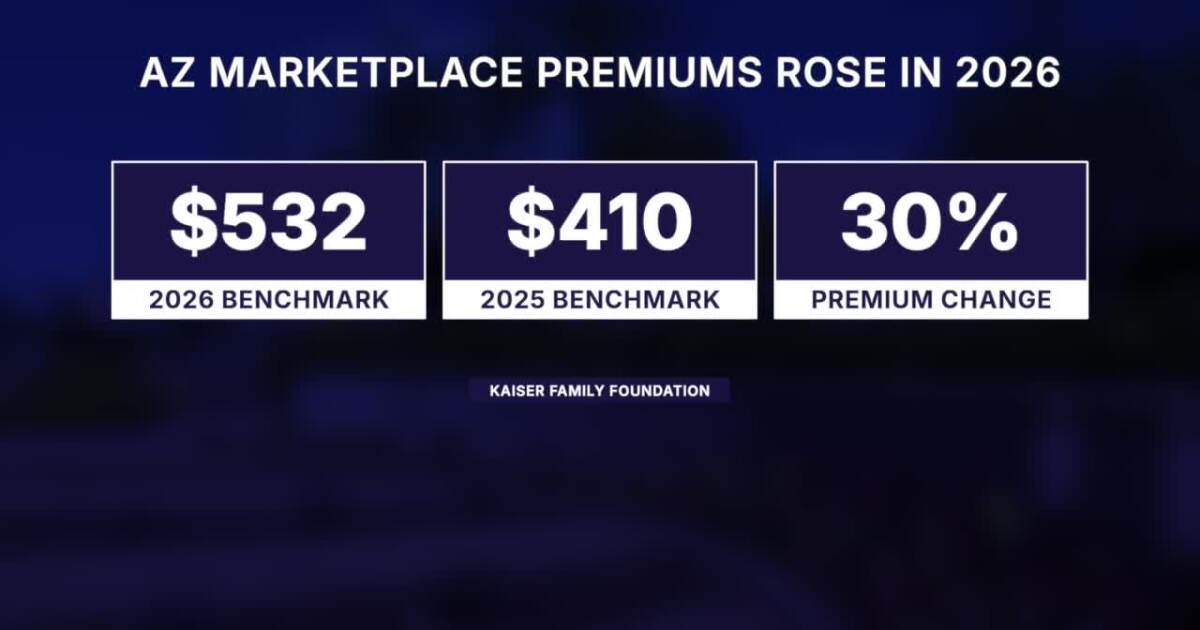
PHOENIX — Arizona’s ACA marketplace enrollment fell from 363,000 to just over 255,000 in a single year — a nearly 30% decline and the third-largest annual drop in the country.
Rising premiums and expired tax credits are driving the trend, with the average benchmark plan premium in Arizona now at $532 — up 30% from 2025.
In the player above, ABC15 Data Analyst Garrett Archer takes a look inside the numbers on how healthcare premiums are impacting health insurance enrollment.
This story was reported on-air by a journalist and has been converted to this platform with the assistance of AI. Our editorial team verifies all reporting on all platforms for fairness and accuracy.
Want more news in your community? Add ABC15 as a preferred source on Google below:

Arizona
Arizona man pleads guilty after illegally living in forest for years among ‘1,000lbs of trash’

A man in Arizona has pleaded guilty to violating federal fire restrictions and unlawfully residing in a national forest, after authorities said he spent years living at a makeshift campsite surrounded by what officials described as “approximately 1,000 pounds of trash”.
Mark Aaron Gatz was arrested on 25 June at his illegal campsite in Arizona’s Tonto national forest, according to court records. A United States Forest Service (USFS) officer wrote in documents submitted to court that Gatz had been operating an “illegal campsite” with a “hot wood burning campfire” despite fire restrictions and that he had told investigators that he had been living in the forest for about eight years.
The officer wrote that a records check found that Gatz had previously received multiple citations and was the subject of six outstanding federal arrest warrants for earlier violations, including for building fires during fire restrictions, constructing on national forest service lands, unsanitary conditions and occupying national forest as a residence.
Gatz “said that he knew about current fire restrictions but had to have fire to eat”, authorities said. The documents show that USFS officers made contact with Gatz multiple times over the last year or so, and issued him warnings as well as a violation notice for having campfires during fire restrictions.
Notes from officers’ previous encounters with Gatz earlier this year, submitted into the court docket, state that authorities observed “trash such as clothing, pans, tools, and plastic cups scattered throughout the campsite along with a structure that was four feet in height build using wood panels”.
During an encounter with Gatz in May, officers reported observing “approximately 1,000 pounds of trash” at the site, which they said included tires, plastic bags, trash bags, aluminum cans and other items. They also wrote that they found that the campfire site had been left unattended by Gatz the previous day while still hot.
In a separate report filed by law enforcement from an encounter in February, one officer wrote that “upon arrival at the camp, I was flabbergasted by the amount of debris in the area”.
Investigators said that during that encounter, the debris consisted of three ladders, six to eight totes “overfilled with debris”, five 55-gallon drums, eight tires, multiple bicycle frames, 5 gallons of motor oil, plywood and other “miscellaneous lumber”, and they wrote that trash was scattered over approximately half an acre of Forest Service land and creating what officers described as public safety concerns.
In a separate report from July 2025, officers said they observed what they described as a “large messy campsite” while patrolling the area due to complaints “from the district office abut one large messy camp”.
“There was roughly half an acre of resources ruined due to so much trash and goods on the ground for an extended period of time,” the officer wrote.
This week, after Gatz pleaded guilty, he was sentenced to time served and three years of probation, according to court records.
A representative for Gatz did not immediately respond to a request for comment.
-

 Connecticut6 minutes ago
CBIA BizCast: Snapshot of Connecticut’s Economy » CBIA
-

 Delaware9 minutes ago
Delaware will collab with 2 Chainz, years after huge event canceled
-

 Florida14 minutes ago
Florida Airport Officially Renamed After Trump. Here’s What to Know
-

 Georgia21 minutes ago
West Nile infections starting to raise concerns in Georgia
-

 Hawaii24 minutes ago
First 5 Hawaii is a comprehensive online resource that helps families with young children find and connect to state and federal programs and services.
-
 Idaho29 minutes ago
Brush fire prompts GO NOW evacuations near Mesa in Adams County
-

 Illinois36 minutes ago
Illinois waives tax penalties for 11 counties hit by storms, including Stephenson and Winnebago
-

 Indiana39 minutes ago
Attempted murder suspect arrested in Indianapolis for Bloomington shooting

