Arizona
Audit on Arizona's voter data coding problem released

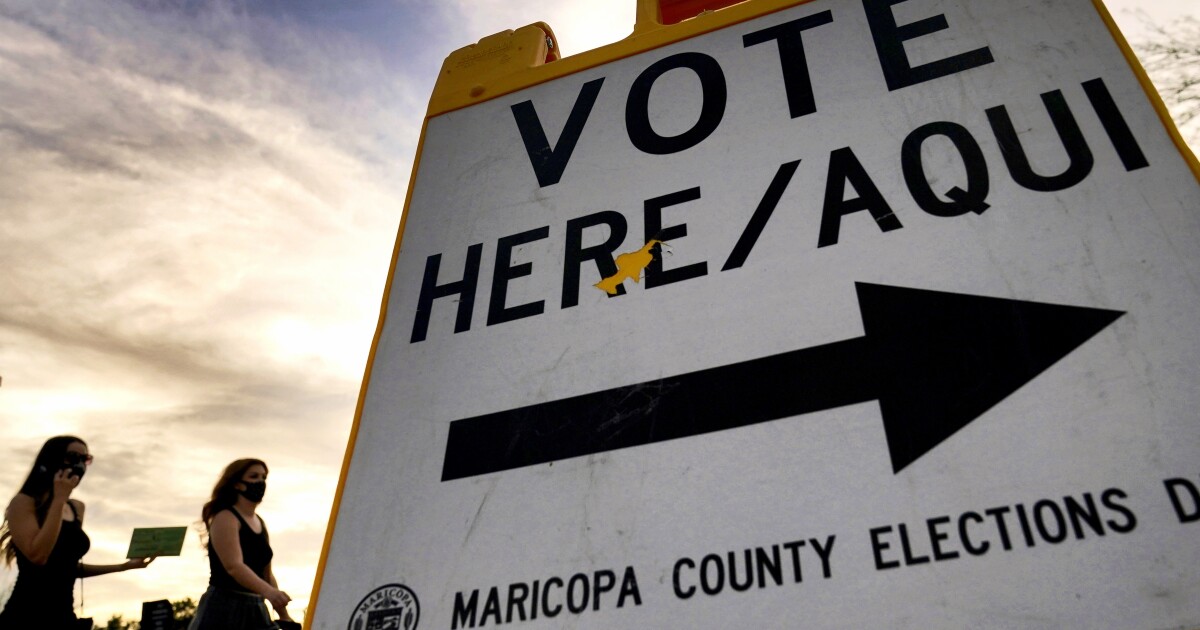
A review of how some noncitizens were allowed to register to vote in Arizona confirms an ABC15 Investigators report that uncovered incompatibilities between state laws for obtaining driver licenses and registering to vote.
Arizona is the only state in the nation to require proof of citizenship to register to vote. About 218,000 voters may not have provided proof due to systemic database issues stretching back 20 years. The problems became public in September, shortly before the 2024 election.
Gov. Katie Hobbs on Friday released a bipartisan audit she ordered in the fall after the issues came to light. It recommends closer coordination between the Motor Vehicle Division, which issues driver licenses, and the Secretary of State’s Office, which maintains voter rolls, as well as county recorders.
“Finding regular time to share information and build relationships between the MVD and election officials will help eliminate issues in the future,” the report states.
ABC15 is committed to finding the answers you need and holding those accountable.
Submit your news tip to Investigators@abc15.com
The MVD and voter roll systems have been reprogrammed, but the audit also notes that state law could still allow some U.S. nationals who are not citizens to register to vote. Arizona law accepts passports as proof of citizenship, but passports are issued to some people who are not citizens, such as U.S. nationals from American Samoa and Swains Island.
The MVD does not know how many people this could affect but believes the number is very small, according to the audit.
Audit cites ABC15 reporting from 2016 on noncitizen who registered to vote
The audit details how the problems affecting Arizona’s voter rolls persisted for decades and confirms ABC15 reporting that the database issues could have been identified and fixed years ago.
In September, then-Maricopa County Recorder Stephen Richer and Secretary of State Adrian Fontes announced they had found a data coding error in Arizona’s driver’s license database that allowed at least one non-citizen to register to vote.
Initial estimates found the data errors affected about 218,000 people, 5% of all Arizona voters, who may not have provided documentary proof of citizenship to register as required by Proposition 200, which became law in 2004. These voters were initially issued a driver’s license prior to 1996, before state law required proof of citizenship for licenses.
In October 2016, ABC15 reported on how a non-citizen was able to register to vote in Maricopa County. At the time, Alan Faygenblat described his actions as an attempt to see “if the system really worked” in preventing voter fraud.
“I didn’t want to get in trouble,” he told ABC15 then.
Faygenblat was criminally charged with false voter registration and pleaded guilty in 2017.
According to court records, Faygenblat was an Israeli citizen who was legally in the United States, but he falsely checked a box saying he was a citizen on the Service Arizona website. He received a voter registration card in the mail.
The Maricopa County Recorder’s Office in 2016 described his registration as a loophole.
“Any person who got a driver’s license after 1996 had to prove citizenship to the MVD. (The individual) had gotten a driver’s license in 1994 so he did not need to prove citizenship. However, for some reason after 1996, he had to get a new license reissued to him and he was never scanned for citizenship at that point,” a recorder’s spokesperson had told ABC15.
Then-Recorder Helen Purcell dismissed the idea this could lead to widespread fraud.
“I think we check it thoroughly enough that’s not the case,” she told ABC15.
Neither the secretary of state nor other election officials asked for changes after the ABC15 story, the audit says.
The same loophole was again discovered in 2024 – eight years later – with a new noncitizen who registered to vote in Maricopa County.
According to an internal report from December, Secretary of State’s Office staffers also discovered the miscoding in two separate instances in 2017 and 2020.
Hobbs, who was secretary of state in 2020, sent current Secretary of State Adrian Fontes a letter critical of that report’s findings, saying the review appeared to be focused on finding someone to blame.
The governor in her letter indicated that the Maricopa County Recorder’s Office, which Fontes headed in 2020, had been made aware of the incident.
The voters affected by the miscoding were allowed to cast a full ballot in November. But county recorders still need to contact those voters for proper documentation of citizenship before the next election.
State and county elections officials also need to decide what to do about a list of approximately 7,000 voters who have an inactive MVD record, according to the governor-ordered audit.



PHOENIX — Despite broad support for public transportation, Arizona lawmakers leave funding up to local governments.
The Legislature’s Republican majority doesn’t support state funding for transit, saying the use of state dollars would take money away from rural areas.
“What do we tell the people in all the rural areas, which is the whole state other than, you know, Flagstaff, Phoenix, the Phoenix metro area and Tucson?” Senate Majority Leader John Kavanagh said. “I mean, what do we give them? What do we say about their transportation needs?”
Kavanagh, who represents Legislative District 3, told ABC15 that areas that use public transportation should be the ones to pay for it.
“To the extent that we spend transportation money in a particular city’s mass transit, [that] is less money for the state road system, which most people use,” he said.
Public transit is one of the fundamental differences between Republicans and Democrats at the state Capitol.
“I feel as though we will not see a change in priorities as long as Republicans continue to be in the majority in the Senate and the House,” state Sen. Analise Ortiz told ABC15.
Ortiz, a Democrat who represents Legislative District 24, said everyone benefits from public transportation.
“As we grow as a state, we need to be smarter about how we are building our cities, and we should be investing in public transit so it’s easier for people to get around,” she said.
Why Maricopa County can’t go to voters
Maricopa County voters have backed public transit numerous times, passing a 20-year extension of the half-cent sales tax for transportation in 2024 and voting four separate times to support light rail.
“The people support public transportation,” said Sandy Bahr, director of the Sierra Club’s Grand Canyon Chapter. “I don’t understand why the majority of the legislators don’t.”
But Maricopa County can’t just go to voters to ask for more public transit dollars. State law requires the county to get lawmaker approval before asking voters for a transportation tax.
“Maricopa County is the only county that has to go through the Legislature to get permission to go to the voters,” Bahr said, calling it “a ridiculous provision.”
She said lawmakers keep erecting roadblocks to public transit.
“It really helps people who are on low or limited incomes or who otherwise can’t drive,” she said.
GOP opposition killed light rail extension to Capitol
The Phoenix City Council earlier this year nixed a proposed extension of light rail to the state Capitol, voting instead to focus on expanding into west Phoenix via Indian School Road.
The decision came after Republican lawmakers, whose approval the city would have needed, introduced legislation to block the expansion.
Kavanagh is moving ahead with legislation to require the state to study the feasibility of light rail, which he said doesn’t suit Arizona.
“Light rail is designed more for densely populated metropolitan areas where a lot of people live near the line,” he said.
The study would look at electric autonomous buses, which Kavanagh says could be an alternative that’s much cheaper, more flexible and less disruptive to local businesses.
When asked what he would say to people who think lawmakers should fund more public transit options, Kavanagh replied: “Not my job.”

Here is The Arizona Republic’s 2025-26 All-Arizona Boys High School wrestling team with honorable mentions and Coach of the Year. The 12 All-Arizona players (listed alphabetically) also are nominees for Player of the Year, which will be announced in a later story. They were selected with coaches input and consideration of state title meet performances. The list below notes weight class for each wrestler.
The Republic sports staff will select the top wrestler, but readers can offer their opinion in the poll below, which closes on April 3 at 6 p.m. Print readers can find the poll online with this story at azcentral.com/sports/high-schools.
Republic’s 2025-26 All-Arizona Boys Wrestling Team
Brett Bates, Sahuarita Walden Grove, 126, Sr.
He was an undefeated (58-0) state champion in Division III. He also won titles at the Flowing Wells Invitational, Mile High Challenge, Marana and Mesa Mountain View duals and the Salpointe Invitational.
Justin Beauvais, Mesa Mountain View, 138, Sr.
Repeated as Division I state champion, going 28-1, with his only setback coming out of state. Nationally ranked. He won his state title match by a technical fall, 20-3.
Travis Cardenas, Chandler, 165, Sr.
The Arizona State commit won the Division I state championship in his weight class with a technical fall. He gained bonus points in each of his state tournament matches
Jax Finch, Cave Creek Cactus Shadows, 285, Sr.
His only loss was to Division I runner-up and two-time state heavyweight champion Zayne Candelaria of Sunnyside. He defeated Division IV state champion Layne James by a technical fall.
Joshua Finch-Logan, Phoenix Brophy Prep, 285, Sr.
He went 22-6, but really turned it on at state, pinning two-time state champion Zayne Candelaria of Tucson Sunnyside in the Division I heavyweight state championship match, coming back from the No. 10 seed in the tournament.
Nathaniel Gallardo, Sahuarita, 175, Jr.
He went 59-2, winning the state title after finishing second in 2025 and third in ’24. He scored bonus points in every match throughout the state tournament.
Marcus Killgore, Sahuarita, 157, So.
He went 57-0, helping his school win a fifth consecutive Division III championship. He was first at the Maran Duals, Mountain View Duals, Mile High Challenge, Temecula Valley Battle for the Belt and the Salpointe Invitational. Was named Outstanding Wrestler at every tournament. He’s a two-time state champion who won by three technical falls and a fall at the AIA state championships.
Julian Macias, Glendale Ironwood, 146, Sr.
He went 38-1 on the season and won by a major decision in the Division II state championship match. He was a three-time state champion.
Nicolaus Meza, Laveen Cesar Chavez, 144, Sr.
He defeated three-time state champion Julian Macius. Meza won the Division I state title at 144 pounds. He also won the Peoria Inviational title and the Diego Gadea Invitational. His only loss during the season was avenged at state.
Ryder Schulte, Peoria Liberty, 177, So.
He repeated as state champions, going 48-0 on the season and gaining a No. 7 national ranking.
Jozeph Smith, Tucson Pueblo, 165, Sr.
He repeated as state champion in Division II, going 65-2. He went 198-18 in his career, placing every year in high school. He was fourth as a freshman at state and third as a sophomore. He was a four-time Division II sectional champion.
Jack Thrush, Sunnyside, 108, Fr.
He won the Division I state championship with a 14-1 decision. He went 38-5 with all of his losses coming against out-of-state opponents.
Honorable mention
Sebastian Serrano, Sahuarita, 132; Trey Kessinger, Campo Verde, 113; Zandon Hopson, Liberty, 190; Jeremy LeBlanc, Liberty, 215; Trace Nielsen, St. Johns, 192; Reese Crosby, St. Johns, 146; Riley Nollet, Bradshaw Mountain, 108; Gage Palace, Payson, 138; David Elias, Yuma Kofa, 132; Zayne Cadelaria, Sunnyside, 285; Malik Hoskins, Sunnyside, 115; Cannon Farrar, Yuma Gila Ridge, 122; Carson Miles, Liberty, 126; Anthony Lopez, Ironwood, 152; Steven Robles, Canyon View, 159; Christopher Ramirez, Canyon View, 122; Sean Luedy, Arizona College Prep, 192; Andrei Davis-Lopez, Cienega, 285; Jayden Preston, Somerton, 115; Romeo Chavez, Eloy Santa Cruz, 134; Xavier Chavez, Sunnyside, 152; Alejandro De La Rosa, Tucson Flowing Wells, 108.
Coach of the Year
Paul Vasquez, Sahuarita
Paul Vasquez led Sahuarita to a fifth consecutive Division III championship. He is building a dynasty at the smaller division the way Sunnyside started to stack titles among larger schools in the 1980s.
“This team and group really mesh well together,” Vasquez said. “They push each other hard and expect everyone to carry their weight. They hold each other accountable but still have a lot of fun together.”
He said the five titles have come from four different groups of wrestlers with different personalties.
“We have different teams, different kids every year and each team comes with different challenges and obstacles to conquer in order to get the job done,” Vasquez said. “One of my favorite parts of coaching is trying to figure out how to get the very best out of each kid and getting them to perform their best in February.”
Richard Obert has been covering high school sports since the 1980s for The Arizona Republic. Catch the best high school sports coverage in the state. Sign up for Azcentral Preps Now. And be sure to subscribe to our daily sports newsletters so you don’t miss a thing. To suggest human-interest story ideas and other news, reach Obert at richard.obert@arizonarepublic.com or 602-316-8827. Follow him on X, formerly Twitter:@azc_obert

If you have been coughing more, feeling chest tightness or battling bad allergies in the Phoenix area, you are not alone and there are multiple culprits. Forecasters say rough air could linger through the week. Steven Sarabia has what is making Valley air quality worse and what you can do to protect yourself.

April showdowns: 4 key races to watch this month that will test Trump, GOP grip on power

Aggressive brain cancer may respond to high-dose vitamin therapy, study suggests

Raiders coach Klint Kubiak favors veteran QB, hesitant to start rookie early in season

10 things to stop paying for to save money now
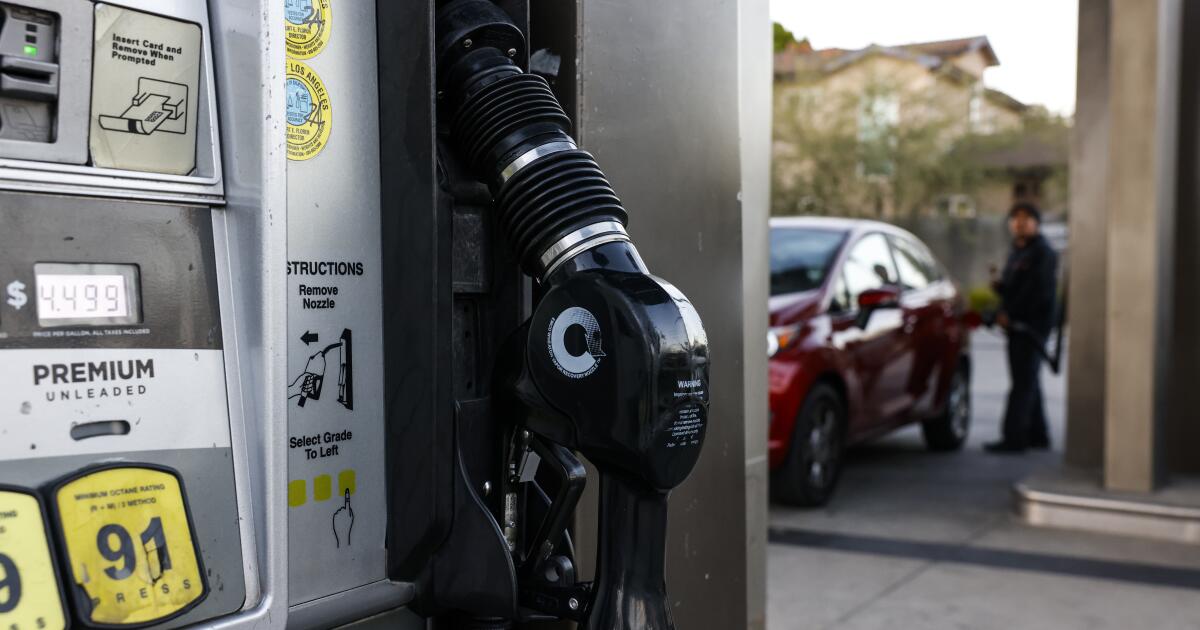
Gas just hit $6 in Los Angeles. Here’s where you can still find it for $5

Florida High School Football Rankings: Top 25 teams – Oct. 21

How old is Bo Nix? What to know about Oregon quarterback ahead of 2024 NFL Draft

Cleary's 21 help Le Moyne down Central Connecticut State 69-64 in OT

99th annual Pony Swim held in Virginia

Indiana Members Credit Union announced as new anchor tenant at Bottleworks District
April showdowns: 4 key races to watch this month that will test Trump, GOP grip on power

Newsletter: Energy shock has Brussels on edge

Suspension lifted for helicopter pilots who hovered near Kid Rock’s home

Read the Judge’s Decision on the Trump Administration’s Subpoena Against Penn

Man wearing ICE uniform brutally beaten in Honolulu not affiliated with agency, DHS says
-

 South-Carolina3 days ago
South Carolina vs TCU predictions for Elite Eight game in March Madness
-

 Miami, FL6 days ago
Jannik Sinner’s Girlfriend Laila Hasanovic Stuns in Ab-Revealing Post Amid Miami Open
-

 New Mexico1 week ago
Clovis shooting leaves one dead, four injured
-

 Minneapolis, MN6 days ago
Boy who shielded classmate during school shooting receives Medal of Honor
-

 Tennessee1 week ago
Tennessee Police Investigating Alleged Assault Involving ‘Reacher’ Star Alan Ritchson
-

 Culture1 week ago
Do You Know the Comics That Inspired These TV Adventures?
-
 Science1 week ago
As mosquitoes go year-round in L.A., a promising fix hits a snag
-

 Technology1 week ago
YouTube job scam text: How to spot it fast