West
Alleged MS-13 gang leader linked to nearly a dozen murders, on the run for years nabbed in Long Island: DOJ

A senior leader of the brutal MS-13 gang was arrested in Long Island for his alleged role in nearly a dozen murders, the Justice Department announced Wednesday.
Joel “Momia” Vargas-Escobar was the alleged leader of the “Parkview clique” of MS-13 operating out of the Las Vegas area, federal prosecutors said.
JUDGE RULES ALLEGED MS-13 LEADER ARRESTED BY FBI TO REMAIN IN CUSTODY FOR NOW
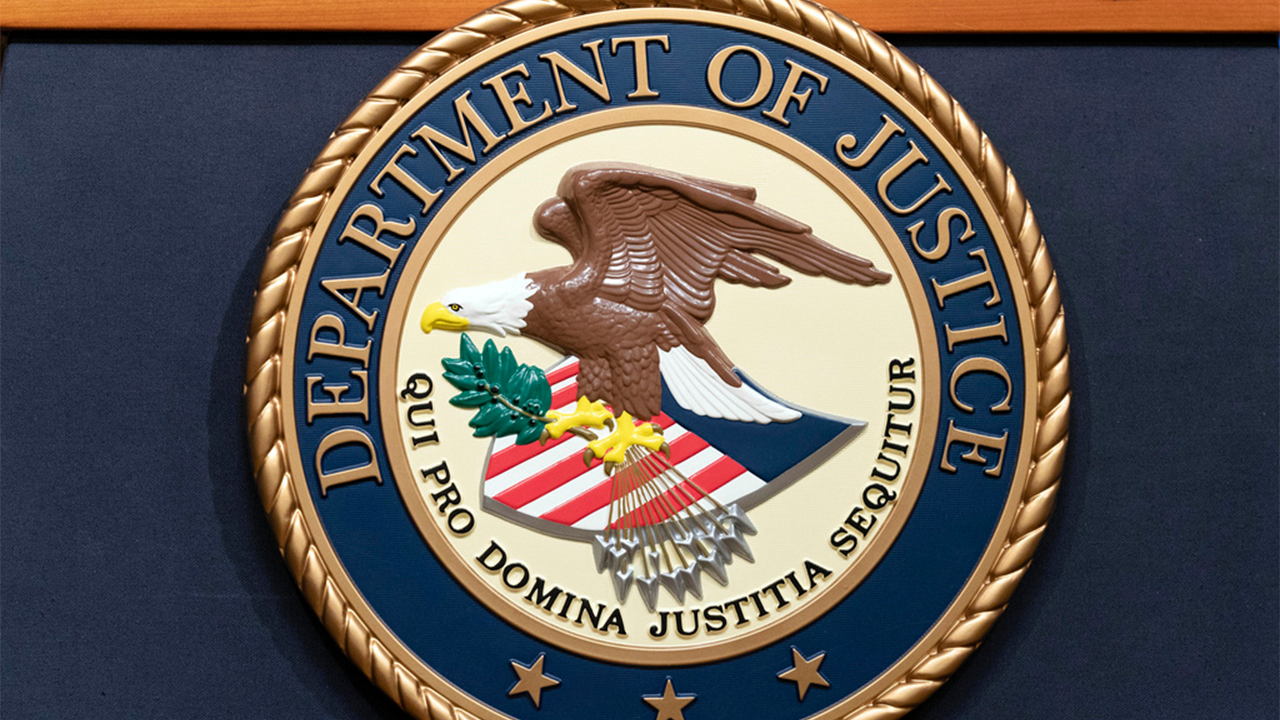
The Department of Justice seal is seen during a news conference at the DOJ office in Washington, May 16, 2023. (AP Photo/Jose Luis Magana)
Vargas-Escobar was deported to El Salvador in 2018 but illegally reentered the country and had been on the run for nearly four years, the DOJ said.
An indictment from the District of Nevada charges Vargas-Escobar, and other alleged members of the “Parkview clique,” with committing 11 murders over about a year in Nevada and California. The indictment alleges that MS-13 members kidnapped victims and drove them to remote locations in the mountains and desert where they were tortured and killed.
Prosecutors say Vargas-Escobar personally ordered at least two of the charged murders.
Attorney General Pam Bondi speaks before President Donald Trump at the Justice Department in Washington, Friday, March 14, 2025. (POOL)
“The American people are safer following the arrest of yet another MS-13 leader thanks to the Department of Justice’s Criminal Division and Joint Task Force Vulcan,” Attorney General Pamela Bondi said in a statement. “This terrorist entered our country illegally and is accused of orchestrating 11 murders — under President Trump’s leadership, we will not rest until this terrorist organization is completely dismantled and its members are behind bars.”
Read the full article from Here

San Francisco, CA
Newlyweds celebrate Pride-themed weddings inside SF City Hall as parade preparations underway

SAN FRANCISCO (KGO) — On Friday in San Francisco, hundreds of newlyweds began the next chapter of their love story at City Hall.
As they got married inside, Pride preparations were also underway outside of City Hall.
These Pride-themed City Hall weddings were all happening as the setup for the Pride celebration at Civic Center were wrapping up in preparation for Pride Saturday and Sunday.
More than 250 couples arrived for Pride Friday, some of them getting commemorative Pride marriage licenses.
2026 SAN FRANCISCO PRIDE PARADE: How to watch exclusively on ABC7, what to know
Couples like Chris Parker and Jared Duensing got a very special officiant: San Francisco Mayor Daniel Lurie.
“This is such a wonderful day, and so happy to finally be married after four years of knowing each other in such a wonderful location. Being married by the mayor was so special,” said newlywed Chris Parker.
“Just happy and excited for those couples, and I’m happy and excited for our city to show off what makes San Francisco so great — and our LGBTQ+ community is a huge part of why San Francisco is so special,” Lurie said.
All of this leads to a huge weekend in San Francisco.
The stage being set up just outside of City Hall will mark the end of the parade route — but there’s a lot happening before that.
MORE: San Francisco Pride insiders reveal their must-know tips for the weekend
On Friday afternoon, the annual Trans March takes place at Dolores Park.
On Saturday, both the Trans Ally March and Rally and the Dyke March will take place.
On Saturday, performers will start taking the stage at Civic Center Plaza starting at noon.
All of this, of course, is leading up to Sunday’s big parade when thousands will line Market Street.
Zach Fuentes will be hosting SF Pride Parade coverage only on ABC7 Eyewitness News this Sunday with Drew Tuma, Cameron Bopp and Tara Campbell — as well as with our community guest hosts.
Copyright © 2026 KGO-TV. All Rights Reserved.
Denver, CO
Denver Transplant Games sets Guinness World Record for mos living donors, recipients in one place at one time

DENVER (KMGH) — The biennial Transplant Games wrapped up in Denver this week, bringing hundreds of organ donors and recipients together to compete in everything from cycling and swimming to darts and trivia at venues all over the city.
In fact, the games set a Guinness World Record for most living donors and recipients in one place at one time, with 966 gathering at the Colorado Convention Center.
Angela Laino, who used to live in Boulder, came back to Colorado to compete in the games. She donated a kidney to a stranger in January before running in the 5K event.
“I’m what they call a non-directed living kidney donor, which means that I don’t know who my recipient was,” she explained. “So I just said, ‘Whoever needs my kidney, I’m sure they’ll find the best match for it.’”
Laino said she was inspired by her job, working “on and off” as a dialysis social worker for 17 years.
“I really saw the challenges that my patients faced,” she said. “I saw what they had to go through to get on the [transplant] wait list… I know what transplant means for people. I’ve seen it firsthand. And to be able to see them come out here, compete, they’re doing basketball, they’re doing badminton, they’re swimming, they’re cycling, they’re running. They are living their full lives, and that’s really what transplant can do for people.”
Laino said the games unite the community and show off its resilience.
“When you go through the transplant process, sometimes you feel alone, you feel like you’re the only one going through this,” Laino said. “And then you come to an event like this and you literally see thousands of people. You see recipients, living donors, donor families coming together for the same cause. It’s really inspiring, because it really helps to get the word out, spread awareness about the organ shortage, and it shows people what recipients and donors can do after they have the surgery.”
Dr. Michael O’Shea — a nephrologist, a doctor who cares for kidney disease patients and the kidneys in general — agrees. But he said more needs to be down to support patients and spread the word about the need for organ donations.
The National Kidney Foundation estimates 37 million Americans have Chronic Kidney Disease, which occurs when kidneys cannot filter the blood properly, leading to serious health issues. Because symptoms can be minimal in early stages of the disease, many patients don’t realize they have it.
“I think education about kidney transplant, both on the patient side as well as on the potential donor side, could be markedly ramped up and improved,” Dr. O’Shea said. “It’s struggles with communication between transplant centers, patients, and community nephrologists. No one’s fault. It’s just a very complicated delivery system.”
In the case of kidneys, people can become diseased donors — who register to donate in the case of their sudden death — or living donors, who donate one kidney will relying on the other. Dr. O’Shea said both are critical to meet nationwide demand for life-saving transplants, though the living donations tend to have a longer lifespan — around roughly 20 years — for recipients.
“A number of folks get transplanted every year off this list,” O’Shea explained. “It is also true that a greater number of folks get added to the list every year.”
To register to become a deceased donor, Coloradans can visit their local Department of Motor Vehicles office or visit registerme.org.
O’Shea said those considering living donations face an “exceedingly small” medical risk for end-stage kidney disease, but should consult with their doctor about the decision.
Even as the games leave Denver, a reminder will stick around through the summer. Denver Parks and Recreation, the Downtown Denver Partnership and DaVita have partnered to set up a basketball court in Skyline Park near Arapahoe and 17th Streets, in order to keep the spirit of the games alive and honor the resilience of organ donors, recipients and their families.

Soccer fans in Seattle have one more chance to catch a World Cup group stage match before the knockout rounds begin next week. And the game is moving forward on the same weekend as Seattle’s Pride festivities despite objections from both teams.
Egypt vs. Iran takes place tonight at 8 p.m. PT. Both teams are trying to advance out of Group G.
Egypt is likely moving on after tying with Belgium in Seattle’s opening World Cup Match and defeating New Zealand 3-1 in their second group stage match. A win could clinch the group for Egypt.
Iran has played two draws against Belgium and New Zealand, and the team needs at least a tie tonight to move on. A win over Egypt would confirm their place in the Round of 32.
How can I watch the Egypt vs. Iran game?
- Location: Seattle, WA
- Date: June 26, 2026
- Kickoff: 8 p.m. PT
- TV: FS1
- Streaming: FOX One, Peacock
How much are tickets for the Egypt vs. Iran game in Seattle?
Tickets for tonight’s World Cup match start at $521.
When are the remaining World Cup games in Seattle?
Where can I buy FIFA World Cup tickets?
Zachary Fletcher is a trending news reporter with USA TODAY Network’s Washington state team. Keep up with him on X (@zdfletch), BlueSky (@zfletcher.bsky.social) or reach him at zfletcher@usatodayco.com.
-

 Detroit, MI11 minutes ago
Metro Detroit weather forecast, June 26, 2026 — 4 p.m. Update
-

 San Francisco, CA21 minutes ago
Newlyweds celebrate Pride-themed weddings inside SF City Hall as parade preparations underway
-

 Dallas, TX25 minutes ago
All Dallas restaurants firing up specials for July 4th and America’s 250th
-

 Miami, FL33 minutes ago
Helping Venezuela: State Department deploys Miami-Dade search-and-rescue team
-

 Boston, MA36 minutes ago
Photos: Norway takes on France in high-powered World Cup matchup in Foxborough – The Boston Globe
-

 Denver, CO41 minutes ago
Denver Transplant Games sets Guinness World Record for mos living donors, recipients in one place at one time
-

 Seattle, WA48 minutes ago
How to watch Egypt vs. Iran World Cup match in Seattle
-

 San Diego, CA51 minutes ago
Sharp Coronado Hospital Holds Meet-and-Greet With NASCAR San Diego Weekend

